Puntos clave
- El Portal de Alertas para Inversores de IOSCO recopila advertencias globales, pero no sustituye la verificación directa del regulador nacional.
- Los brókers a menudo operan con múltiples entidades legales; la protección del inversor depende de qué entidad específica gestione su cuenta.
- Siempre coteje el número de licencia declarado por un bróker directamente en el sitio web oficial del regulador emisor.
- La ausencia de advertencias en el portal de IOSCO no equivale a la legitimidad de una empresa ni garantiza la seguridad del inversor.
- La solidez regulatoria jurisdiccional impacta significativamente en las protecciones al inversor, los esquemas de compensación y el recurso legal.
La Necesidad Urgente de Verificación Multijurisdiccional
Una empresa que opera como 'Global Trade Solutions' podría tener un sitio web atractivo, sugiriendo legitimidad, pero una búsqueda rápida revela advertencias de media docena de autoridades financieras nacionales. Este escenario es común; las plataformas de inversión a menudo operan a través de fronteras, a veces legítimamente a través de múltiples entidades reguladas, pero con frecuencia sin la supervisión adecuada en mercados clave. El acceso en línea facilita que una empresa de un país solicite clientes a nivel mundial, lo que hace que una verificación regulatoria de un solo punto sea insuficiente para evaluar el riesgo real. Un inversor podría consultar a su regulador local, como la Financial Conduct Authority (FCA) en el Reino Unido, no encontrar señales de alerta inmediatas para una entidad específica y proceder. Sin embargo, la misma empresa, o una entidad asociada con una marca sorprendentemente similar, podría operar desde una jurisdicción diferente. Esta operación offshore podría estar sujeta a severas advertencias públicas de ASIC en Australia, CySEC en Chipre, o incluso la CFTC en los Estados Unidos. Ninguna de estas aparecería en el registro de la FCA para la entidad regulada en el Reino Unido. Confiar únicamente en un registro nacional crea un punto ciego crítico, exponiendo a los inversores a riesgos evitables. Muchas empresas, especialmente en el espacio de los Contratos por Diferencia (CFD) y forex, estructuran intencionalmente sus operaciones con múltiples entidades legales para adaptarse a diferentes entornos regulatorios. Esto les permite ofrecer un apalancamiento o una gama de productos variados según las normas locales. Si bien es legítimo cuando es transparente y ético, esta práctica también sirve de cobertura para operadores menos escrupulosos. Pueden dirigir a los clientes a entidades con mínima supervisión cuando su entidad regulada principal se enfrenta a un escrutinio o limitaciones. Verificar el estatus de un bróker requiere revisar no solo su sede declarada, sino cada entidad que utilizan.
El Portal de Alertas para Inversores de IOSCO: Una Puerta de Acceso Centralizada para Advertencias Globales
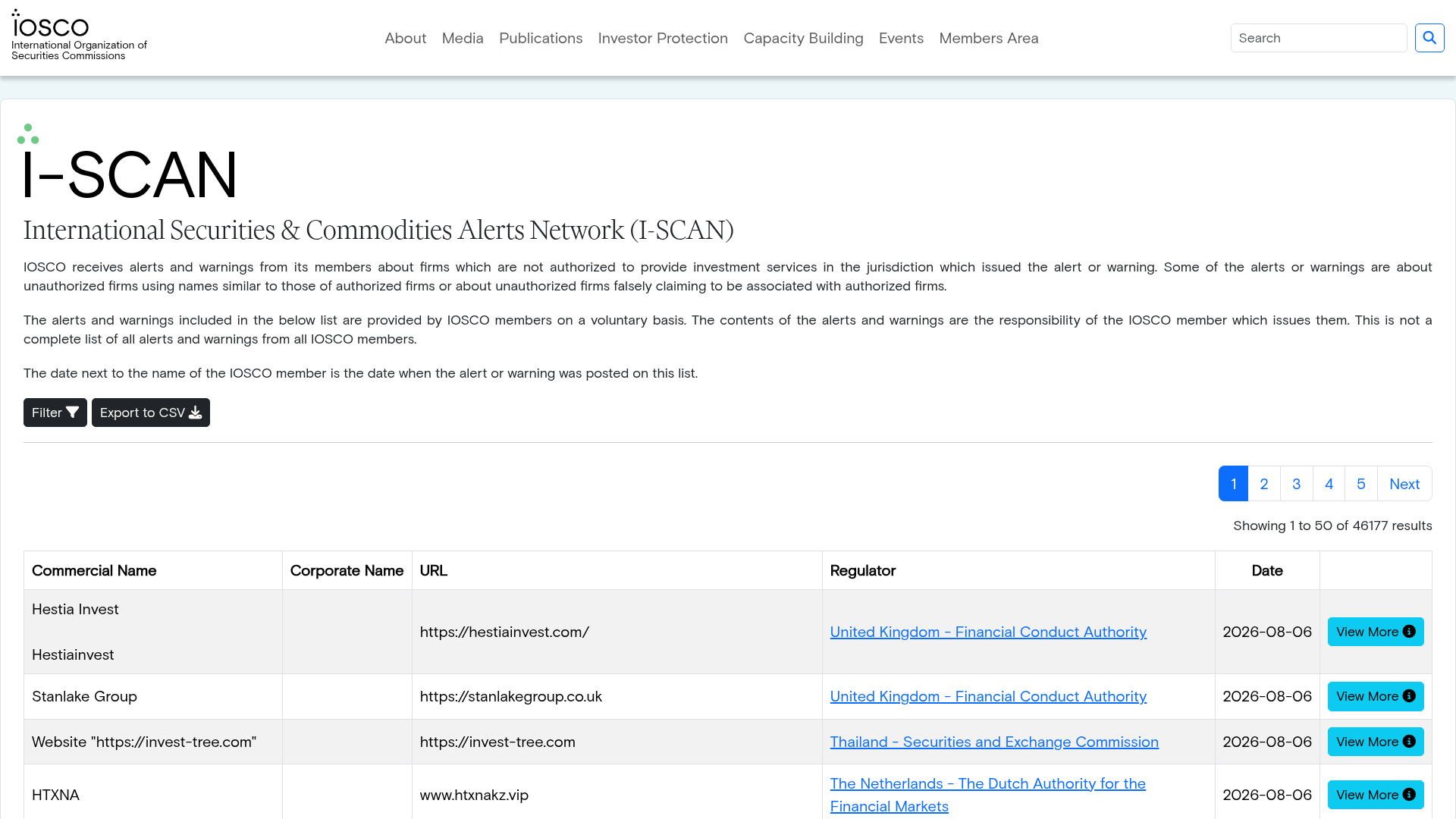
El Portal de Alertas para Inversores de la Organización Internacional de Comisiones de Valores (IOSCO) recopila advertencias oficiales de reguladores financieros de sus numerosas jurisdicciones miembro. Es importante entender que IOSCO no es un regulador en sí mismo; no emite sus propias advertencias ni otorga licencias. En cambio, compila y presenta alertas ya publicadas por autoridades nacionales individuales, creando un recurso detallado para los inversores. Piense en ello como un tablón de anuncios central para las preocupaciones regulatorias globales, haciendo accesibles las advertencias de diversas fuentes. El portal ofrece información crucial. Normalmente detalla las entidades que los reguladores han identificado como que operan potencialmente sin la autorización adecuada dentro de su jurisdicción. Esto incluye empresas que ofrecen servicios de inversión sin una licencia requerida, o aquellas que realizan actividades fuera de su alcance permitido. También destaca prominentemente advertencias sobre entidades que suplantan a empresas legítimas y con licencia, a menudo llamadas 'empresas clon'. También se suelen enumerar alertas sobre estafas de inversión directas o empresas que proporcionan datos de contacto falsos o engañosos, ofreciendo información específica sobre la supuesta mala conducta. Por ejemplo, una advertencia de la FCA sobre una empresa no autorizada que se dirige a residentes del Reino Unido podría aparecer en el portal de IOSCO. Esto podría estar junto a una alerta similar de BaFin en Alemania sobre una entidad diferente, o una advertencia para inversores de la SCB en las Bahamas. Esta centralización reduce significativamente la ardua y laboriosa tarea para los inversores que, de otro modo, tendrían que consultar docenas de registros nacionales individualmente. El portal actúa como un filtro inicial y potente, permitiendo una amplia barrida de actividades preocupantes antes de que se necesiten investigaciones más profundas y específicas.
Un Enfoque Sistemático para Utilizar el Portal de IOSCO
Acceder al Portal de Alertas para Inversores de IOSCO es el primer paso práctico en este proceso de verificación de múltiples capas. Simplemente navegue a https://www.iosco.org/investor_protection/?subsection=investor_alerts_portal. Una vez allí, la principal herramienta de verificación es la función de búsqueda. Debe introducir el nombre legal completo de la empresa de inversión tal como aparece en su sitio web, la URL específica del sitio web que promocionan y cualquier nombre comercial alternativo o variación de marca que puedan utilizar. Dado que las empresas a veces utilizan nombres ligeramente diferentes en varias jurisdicciones o para evadir la detección, a menudo es prudente realizar varias búsquedas. Intente omitir sufijos comunes como 'Ltd' o 'Global', o busque nombres de empresas matrices si están disponibles. Al interpretar los resultados de la búsqueda, leer cuidadosamente los detalles proporcionados por el regulador emisor es crucial. Una coincidencia positiva, es decir, que aparece una alerta, normalmente especificará la razón exacta por la que se emitió la advertencia. Esto podría ser 'operación no autorizada', 'empresa clon', 'proporcionar información falsa' u otras designaciones similares. Preste mucha atención a la fecha de la advertencia y al organismo regulador específico que la emitió. Incluso si no aparece una coincidencia directa para el nombre exacto que buscó, anote cualquier entidad, individuo o sitio web asociado mencionado en alertas que sean ampliamente similares. Esta atención al detalle a menudo distingue una verificación exhaustiva de una superficial. Un punto crítico a menudo pasado por alto en las guías generales es cómo las empresas operan bajo múltiples nombres sutilmente diferentes. Por ejemplo, un bróker podría comercializarse como 'Alpha Investments' pero estar legalmente registrado como 'Alpha Capital Markets Ltd.' Buscar ambos nombres, e incluso permutaciones, aumenta significativamente la posibilidad de descubrir alertas relevantes. Si la empresa se dirige a clientes en varios países, asegúrese de verificar si la advertencia se aplica a la entidad con la que tiene intención de operar. A veces, una advertencia podría aplicarse a una entidad histórica o a una sucursal que ya no está activa, por lo que el contexto es clave.
Deconstruyendo las Diferentes Categorías de Alertas para Inversores
Las advertencias encontradas en el portal de IOSCO, originadas por diversos reguladores nacionales, generalmente se dividen en varias categorías distintas, cada una con implicaciones específicas para la seguridad del inversor y su posible recurso legal. La designación más común es 'empresa no autorizada', lo que indica explícitamente que la entidad está realizando actividades financieras reguladas sin poseer la licencia o autorización necesaria en esa jurisdicción en particular. Esto significa que están operando fuera del marco regulatorio, dejando a los clientes sin protección legal ni acceso a esquemas de compensación para inversores locales.
Una categoría más insidiosa y engañosa es la de 'empresa clon'. Aquí es donde una entidad ilícita utiliza ilegalmente el nombre, número de registro, dirección u otros detalles identificativos de una empresa legítima y regulada para suplantarla. El objetivo es engañar a los inversores para que crean que están tratando con un bróker fiable y con licencia. Una alerta para una empresa clon a menudo indicará explícitamente que la empresa en cuestión no es la entidad genuina y autorizada, y puede proporcionar datos de contacto de la empresa legítima para su comparación. Verificar estos detalles directamente con la empresa genuina o su regulador es la única forma de evitar este engaño.
Otros tipos críticos de advertencia incluyen alertas sobre estafas de inversión directas, que detallan esquemas fraudulentos diseñados para solicitar fondos bajo falsos pretextos, a menudo implicando promesas de retornos imposiblemente altos. Algunas advertencias también destacan empresas que proporcionan datos de contacto falsos o engañosos, lo que imposibilita que los clientes se pongan en contacto con ellas o que los reguladores investiguen. Comprender estas distinciones ayuda a calibrar el nivel real de peligro. Interactuar con una empresa no autorizada podría significar que carece de protección, pero una empresa clon presenta un riesgo inmediato aún mayor de pérdida financiera total debido a un engaño deliberado.
Categorías Comunes de Alertas para Inversores y Sus Implicaciones
| Categoría de Advertencia | Descripción | Riesgo Principal para el Inversor | Ejemplo de Mensaje del Regulador |
|---|---|---|---|
| Firma no Autorizada | Entidad que ofrece servicios financieros sin la licencia requerida en una jurisdicción. | Sin protección regulatoria, sin acceso a compensación. | "Esta firma no está autorizada por nosotros..." |
| Firma Clonada | Entidad ilícita que suplanta a una firma legítima y regulada utilizando sus datos. | Pérdida total de fondos, engaño extremo. | "Tenga cuidado con las firmas que suplantan a [Nombre de la Firma Legítima]..." |
| Estafa de Inversión | Esquema fraudulento diseñado para solicitar fondos bajo falsos pretextos. | Pérdida financiera total, a menudo con tácticas agresivas. | "Hemos recibido informes de una estafa que involucra a..." |
| Información Engañosa | Firma que proporciona información de contacto, dirección o afirmaciones regulatorias falsas. | Imposibilidad de contactar, verificar o buscar recurso. | "Los datos de contacto proporcionados por esta firma son falsos..." |
Verificar el estatus de un bróker significa revisar no solo su sede declarada, sino cada entidad que utilizan, ya que las protecciones varían drásticamente según la jurisdicción.
Alan Reeve
Ampliando la debida diligencia más allá del portal agregado
Mientras que el Portal de Alertas para Inversores de IOSCO ofrece un excelente primer barrido para detectar señales de alerta regulatorias, debe servir fundamentalmente como punto de partida, no como la respuesta definitiva. El siguiente paso crítico, después de consultar el portal, implica cruzar cualquier hallazgo potencial, o incluso la ausencia de este, con los registros oficiales de los reguladores nacionales individuales. Esta verificación directa es crucial porque el portal depende de que los reguladores envíen sus datos, y las comprobaciones directas ofrecen la información más actualizada y detallada. Por ejemplo, si un bróker afirma estar regulado por la Financial Conduct Authority (FCA) del Reino Unido, un inversor debe visitar el Registro de Servicios Financieros oficial de la FCA en https://register.fca.org.uk/ y buscar específicamente la firma y su supuesto número de registro. Esto implica más que simplemente ver un nombre en el registro. Debe asegurarse de que los detalles coincidan exactamente: el nombre legal de la firma, su dirección registrada y los permisos específicos que posee. De manera similar, para la regulación australiana, consultaría los registros profesionales de ASIC en https://asic.gov.au/online-services/search-asics-registers/, y para Chipre, el registro de entidades reguladas de CySEC en https://www.cysec.gov.cy/en-GB/entities/investment-firms/cypriot/. Esta verificación manual de los números de licencia es un paso que muchos inversores omiten o realizan superficialmente. Muchas entidades engañosas muestran números de licencia falsos o números genuinamente válidos que en realidad pertenecen a empresas legítimas completamente diferentes. Por lo tanto, simplemente ver un número de licencia en el sitio web de un bróker es insuficiente y altamente engañoso. El único método fiable es localizar ese número en el sitio web oficial del regulador y verificar meticulosamente que corresponde precisamente a la firma que está investigando, y que los detalles operativos de la firma coinciden. Este proceso puede resultar tedioso, requiriendo navegar por varios sitios web gubernamentales, pero sigue siendo la mejor defensa contra la tergiversación y garantiza que está tratando con una entidad genuinamente autorizada para los servicios específicos que ofrece.
Análisis de la Regulación Multijurisdiccional de Brókers con un Ejemplo
Para ilustrar las complejidades de la regulación multijurisdiccional, considere un bróker como Pepperstone. Los datos verificables muestran que Pepperstone está regulado por autoridades destacadas, incluyendo la FCA (Reino Unido), ASIC (Australia), CySEC (Chipre), DFSA (Dubái), BaFin (Alemania), CMA (Kenia) y SCB (Bahamas). Esta extensa lista significa que Pepperstone opera no como una única entidad global, sino a través de entidades legales distintas, cada una con licencia y supervisada por un regulador específico en una jurisdicción particular. Un inversor en Australia, por ejemplo, normalmente abriría una cuenta con la entidad de Pepperstone regulada por ASIC, mientras que un residente del Reino Unido estaría bajo la entidad regulada por la FCA. La distinción crítica para los inversores es que las protecciones, los límites de apalancamiento y los mecanismos de resolución de disputas varían drásticamente según la entidad específica de Pepperstone que tenga su cuenta. Por ejemplo, la entidad regulada por la FCA se adhiere a límites de apalancamiento más estrictos derivados de ESMA para clientes minoristas (por ejemplo, 1:30 para los pares de divisas principales) y ofrece acceso al Financial Services Compensation Scheme (FSCS) del Reino Unido. En marcado contraste, una cuenta abierta con la entidad de Pepperstone regulada por la SCB podría ofrecer un apalancamiento significativamente mayor, potencialmente de 1:500, pero estaría sujeta a la supervisión regulatoria y los límites de compensación de las Bahamas, que son típicamente menos extensos que los del Reino Unido o la UE. Esto significa que un cliente podría, sin saberlo, optar por una entidad con una supervisión más débil o menos salvaguardias, simplemente por ser dirigido allí en función de su ubicación geográfica o al hacer clic en una parte diferente del sitio web del bróker. Los inversores no deben simplemente asumir que una "marca global" ofrece protección uniforme en todas partes. Confirme siempre con precisión qué entidad legal específica tiene su cuenta y su regulador principal. No acepte una declaración genérica como "regulado por Pepperstone Group", sino que exija el nombre legal específico de la entidad y su número de licencia correspondiente, y luego verifíquelo directamente con ese regulador. En la práctica, la mesa de operaciones le preguntará dos veces para asegurarse de que comprende esta distinción al seleccionar un tipo de cuenta.
Mercado Regulatorio Ilustrativo de Brókers Basado en Datos Verificados
| Nombre del Bróker (Ejemplo) | Nombre de la Entidad Legal (Ilustrativo) | Regulador Principal | Jurisdicción de Operación | Apalancamiento Minorista (Ilustrativo) | Protección al Inversor (Ilustrativo) |
|---|---|---|---|---|---|
| Pepperstone | Pepperstone Ltd | FCA | Reino Unido | 1:30 (Majors) | FSCS hasta £85,000 |
| Pepperstone | Pepperstone Group Ltd | ASIC | Australia | 1:30 (Majors) | Fondos de clientes mantenidos en fideicomiso |
| Pepperstone | Pepperstone Markets Ltd | SCB | Bahamas | 1:500 (Majors) | Protección local limitada |
| XM | Trading Point of Financial Instruments UK Ltd | FCA | Reino Unido | 1:30 (Majors) | FSCS hasta £85,000 |
| XM | Trading Point of Financial Instruments Ltd | CySEC | Chipre | 1:30 (Majors) | Fondo de Compensación para Inversores |
| XM | XM Global Limited | IFSC | Belice | 1:1000 (Pares principales) | Sin esquema de compensación específico |
Los límites inherentes de las alertas y la vigilancia continua
Si bien el IOSCO Investor Alerts Portal ofrece una instantánea inestimable de las preocupaciones regulatorias globales, es crucial reconocer sus limitaciones inherentes. Como cualquier base de datos agregada, no se actualiza en tiempo real. Puede haber un retraso discernible entre la emisión de una advertencia por parte de un regulador nacional y su posterior aparición en el portal. Este retraso, aunque generalmente breve, significa que las amenazas más recientes podrían no estar aún reflejadas. Más importante aún, la ausencia de una alerta para una firma particular en el portal no constituye, de ninguna manera, un respaldo a su legitimidad ni una garantía de su seguridad. Muchas operaciones nuevas o más pequeñas sin licencia pasan completamente desapercibidas durante períodos prolongados antes de que los reguladores las identifiquen y emitan advertencias.
Por lo tanto, la vigilancia personal sigue siendo una piedra angular de la protección efectiva del inversor. Más allá de consultar los registros oficiales, los inversores deben cultivar un ojo crítico para las señales de advertencia comunes. Desconfíe agudamente del contacto no solicitado, especialmente a través de plataformas de redes sociales, aplicaciones de mensajería privada o llamadas en frío, que ofrezcan altos rendimientos 'exclusivos' o 'garantizados' con un riesgo mínimo o no discernible. Las oportunidades financieras legítimas rara vez se presentan a través de canales tan agresivos o informales. Las tácticas de venta de alta presión, particularmente aquellas que instan a depósitos inmediatos o desalientan la investigación independiente, son indicadores significativos de posible fraude.
Otras señales de alerta incluyen solicitudes de métodos de pago inusuales, como transferencias a cuentas bancarias personales, billeteras de criptomonedas o a través de procesadores de pago oscuros que carecen de protecciones al consumidor. Cualquier resistencia por parte de un bróker a proporcionar información regulatoria clara y verificable, o los intentos de disuadirle de consultar los registros oficiales, deben levantar sospechas de inmediato. Si una firma le presiona para invertir más de lo que se siente cómodo, o desaconseja los retiros, estas son señales claras de que algo anda mal. Un escepticismo saludable y la insistencia en la transparencia son sus herramientas más fuertes.
Divergencia regulatoria regional y la jerarquía de la protección al inversor
El nivel de protección al inversor puede variar drásticamente según la jurisdicción específica que regule a su bróker, creando una jerarquía de seguridad para el capital. Por ejemplo, los clientes minoristas que operan Contratos por Diferencia (CFD) con una entidad regulada por la Financial Conduct Authority (FCA) en el Reino Unido se benefician de una estricta supervisión regulatoria. Esto incluye un apalancamiento limitado a 1:30 para los pares de divisas principales, resultado directo de la intervención de producto de ESMA sobre los CFD, diseñada para proteger a los inversores minoristas del riesgo excesivo (consulte https://www.esma.europa.eu/press-news/esma-news/esma-agrees-prohibit-binary-options-and-restrict-cfds-protect-retail). Los clientes elegibles también tienen acceso al Financial Services Compensation Scheme (FSCS) del Reino Unido (https://www.fscs.org.uk/what-we-cover/investments/), que puede compensar reclamaciones hasta £85,000 si una firma regulada quiebra y no puede devolver los fondos de los clientes. En marcado contraste, una cuenta abierta con una firma regulada en una jurisdicción offshore, como Seychelles (FSA) o Bahamas (SCB), podría ofrecer un apalancamiento significativamente mayor, pudiendo alcanzar 1:500 o incluso más. Si bien esto podría atraer inicialmente a algunos traders, generalmente conlleva el costo de esquemas de compensación sustancialmente más débiles o completamente inexistentes y una supervisión operativa menos estricta. El recurso legal para los inversores perjudicados en tales jurisdicciones puede ser prohibitivamente complejo, costoso y difícil de seguir desde el extranjero, a menudo requiriendo la participación en sistemas legales locales que podrían no priorizar las reclamaciones de inversores extranjeros. Esta distinción significa que elegir una entidad bróker regulada en una jurisdicción con marcos de protección al inversor maduros y sólidos – como el Reino Unido (FCA), Australia (ASIC), países dentro de la Unión Europea (a través de CySEC o BaFin), o los Estados Unidos (CFTC/NFA) – es demostrablemente superior a optar por una entidad regulada por un organismo offshore menos estricto. Si bien el atractivo de un mayor apalancamiento o una apertura de cuenta más sencilla podría parecer tentador en las entidades offshore, la compensación en seguridad, transparencia y recurso es sustancial. Los inversores deben evaluar críticamente si los beneficios percibidos superan el riesgo, a menudo incuantificable, para su capital y la capacidad de recuperar fondos en caso de insolvencia o malversación de la firma.
El papel indispensable del inversor en la denuncia y la salvaguarda colectiva
Si encuentra una entidad que parece operar sin las licencias adecuadas, tergiversa su estatus regulatorio o participa en lo que parece ser una actividad fraudulenta, denunciarlo no es solo una opción, sino una responsabilidad crítica. Este acto no solo le protege de posibles daños financieros, sino que también contribuye significativamente a la seguridad e integridad colectiva de la comunidad inversora en general. La mayoría de los reguladores nacionales, incluidos la FCA y ASIC, tienen canales claramente definidos y accesibles para denunciar actividades sospechosas o firmas no autorizadas. Estos informes son inteligencia vital para los organismos reguladores.
Por ejemplo, en el Reino Unido, Action Fraud sirve como centro nacional de denuncia de fraude y ciberdelincuencia, coordinando con la policía y otras agencias de aplicación de la ley. En los Estados Unidos, la herramienta Report Fraud de la Federal Trade Commission (FTC) proporciona un proceso simplificado para que los consumidores presenten quejas, mientras que el Internet Crime Complaint Center (IC3) del FBI recopila estadísticas y recibe informes a través de su portal. Estos informes no son solo registros estáticos; se analizan activamente y se utilizan para construir casos contra operadores ilícitos.
Su informe, combinado con otros de inversores vigilantes, ayuda a los reguladores a recopilar inteligencia, identificar tendencias emergentes y, en última instancia, emitir nuevas advertencias públicas. Esta información crucial se agrega luego en plataformas como el IOSCO Investor Alerts Portal, fortaleciendo la red de protección al inversor para todos. Al tomarse el tiempo para denunciar sus preocupaciones, participa activamente en el esfuerzo continuo para detectar y disuadir el fraude financiero, haciendo que el entorno de inversión sea más seguro para todos los participantes y asegurando que los malos actores enfrenten las consecuencias de sus acciones.
La página que verificamos
Esta es la página propia de la autoridad, capturada tal como la encontramos. Ábrala y realice la misma búsqueda usted mismo — nada en este registro reemplaza la fuente.
Otros registros utilizados en verificaciones de este tipo. Cada uno abre la página propia de la autoridad.
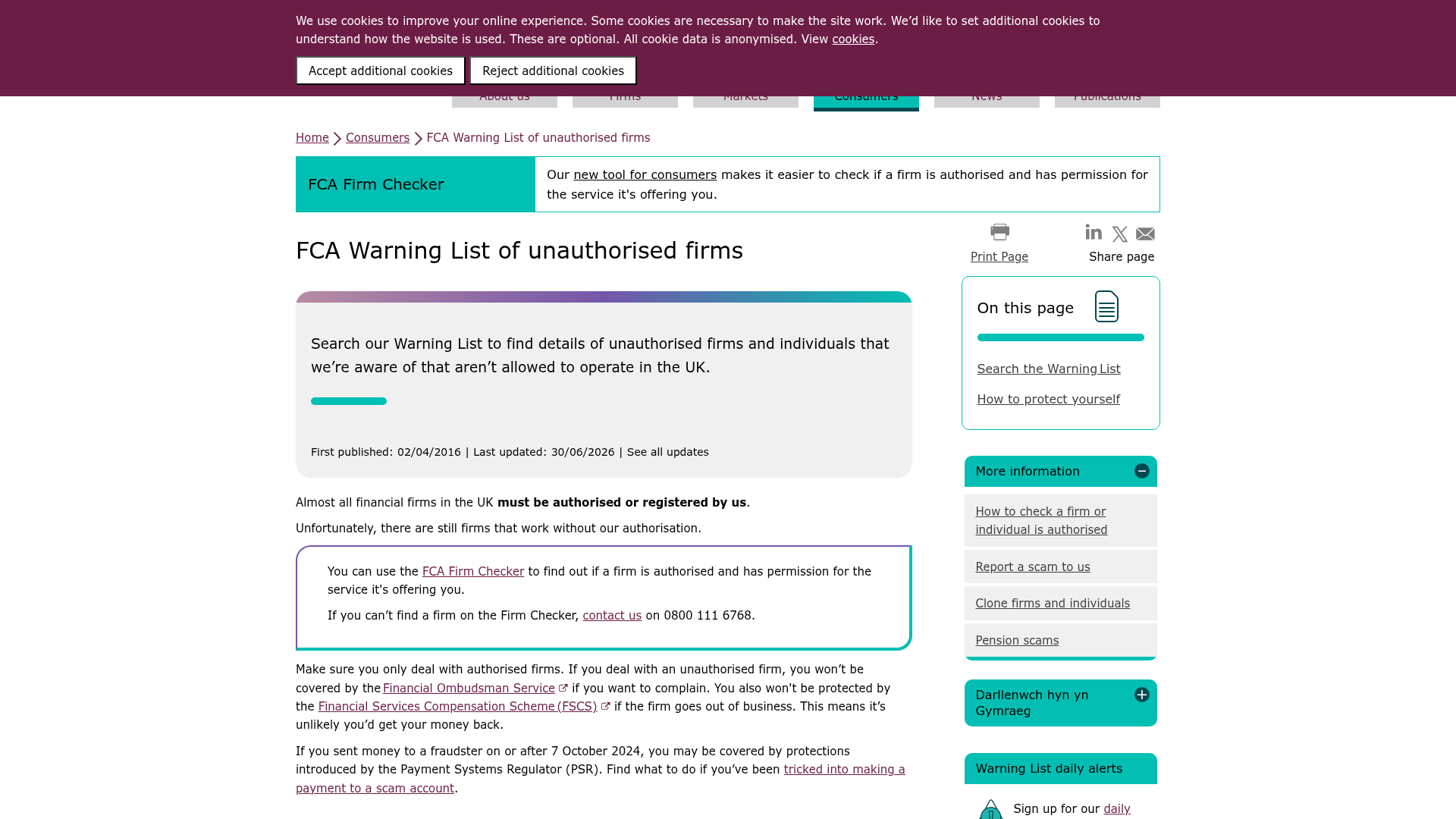
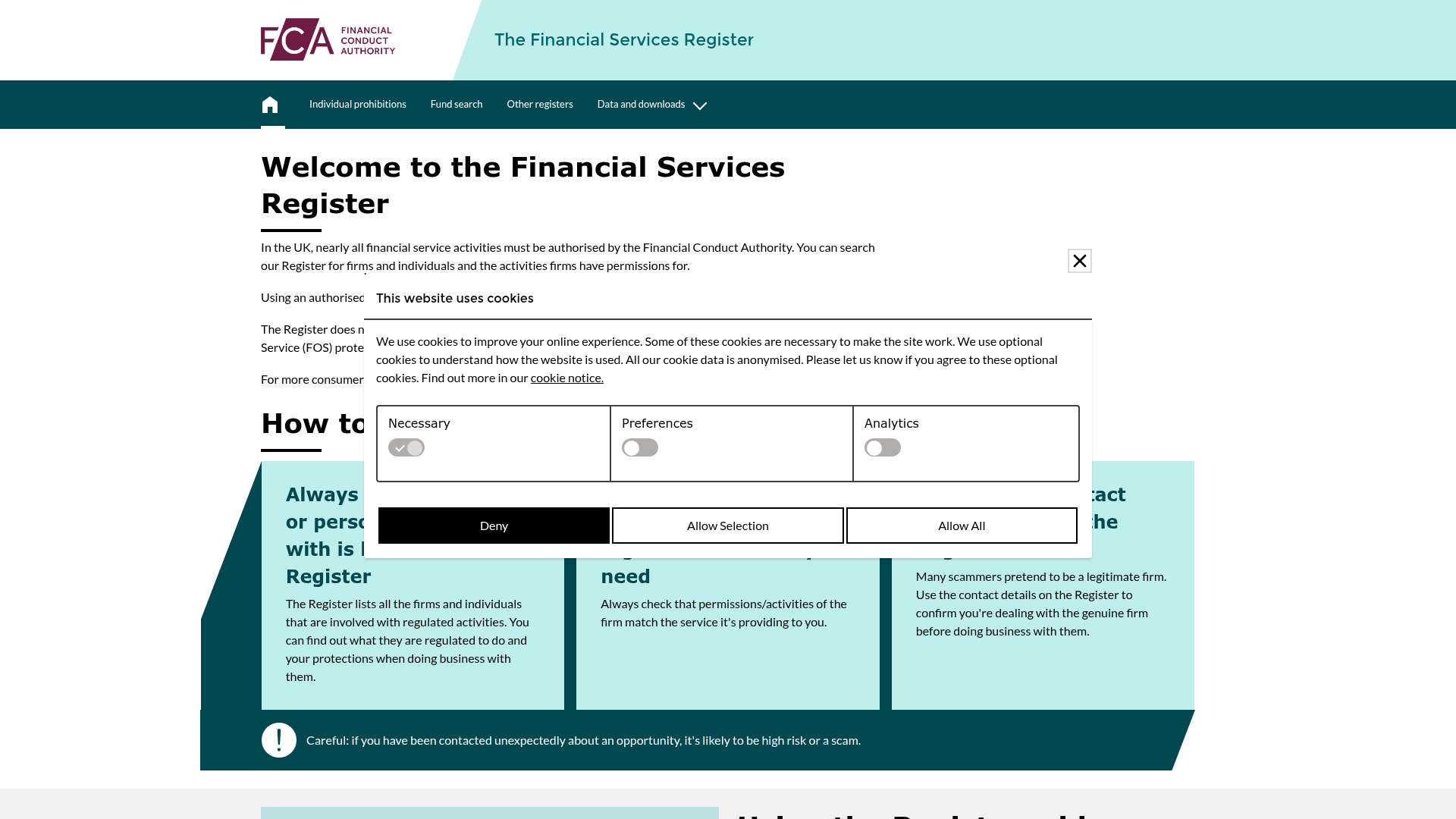
Fuentes primarias
Cada afirmación anterior puede verificarse en la propia página de la autoridad. Se abren en el sitio del regulador, no en el nuestro.
- IOSCO — Investor alerts portaliosco.orghttps://www.iosco.org/investor_protection/?subsection=investor_alerts_portal
- Financial Conduct Authority — Financial Services Registerregister.fca.org.ukhttps://register.fca.org.uk/
- ASIC — Professional registersasic.gov.auhttps://asic.gov.au/online-services/search-asics-registers/
- ESMA — Product intervention on CFDsesma.europa.euhttps://www.esma.europa.eu/press-news/esma-news/esma-agrees-prohibit-binary-options-and-restrict-cfds-protect-retail
- Financial Services Compensation Scheme (FSCS)fscs.org.ukhttps://www.fscs.org.uk/what-we-cover/investments/
Preguntas frecuentes
¿Es el Portal de Alertas para Inversores de la IOSCO un regulador financiero?
No, el portal de la IOSCO es una herramienta de agregación. Recopila advertencias y alertas públicas emitidas por sus reguladores financieros miembros en todo el mundo, pero no emite advertencias ni regula a las empresas por sí mismo.
Si un bróker no figura en el portal de la IOSCO, ¿significa eso que es seguro?
No necesariamente. La ausencia de una alerta solo significa que ningún regulador participante ha emitido aún una advertencia pública que haya sido agregada. Muchas empresas no reguladas operan sin ser detectadas de inmediato.
¿Qué es una 'empresa clon' y cómo puedo evitarla?
Una empresa clon es una entidad que suplanta a una empresa legítima y regulada para engañar a los inversores. Para evitarlas, verifique siempre el número de licencia y los datos de contacto del bróker directamente en el sitio web oficial del regulador con el que afirman estar asociados.
¿Por qué es importante saber qué entidad específica de un bróker tiene mi cuenta?
Las empresas de corretaje a menudo operan múltiples entidades legales bajo la misma marca, cada una regulada en una jurisdicción diferente. El nivel de protección al inversor, la compensación disponible y la supervisión regulatoria dependen completamente de la entidad específica que tenga su cuenta.
¿Qué debo hacer si sospecho que una empresa opera sin la debida autorización?
Debe informar sus preocupaciones a su regulador financiero nacional (por ejemplo, FCA, ASIC) o a un centro nacional de denuncia de fraudes como Action Fraud en el Reino Unido o la FTC en EE. UU. Su informe ayuda a construir casos y a emitir nuevas advertencias.
¿Puedo confiar en un bróker que ofrece un apalancamiento muy alto desde una jurisdicción offshore?
Se aconseja extrema precaución. Aunque un apalancamiento alto pueda parecer atractivo, las jurisdicciones offshore a menudo tienen una supervisión regulatoria más débil, esquemas de compensación al inversor limitados y un recurso legal difícil, aumentando significativamente su riesgo.