
Puntos clave
- La entidad legal específica con la que contrata determina sus protecciones regulatorias y las vías de resolución de disputas.
- Las principales marcas de brókers suelen operar múltiples entidades, cada una regulada por diferentes autoridades nacionales o extraterritoriales.
- Los clientes que buscan jurisdicciones o los brókers que enrutan automáticamente pueden, sin intención, colocar fondos bajo una supervisión regulatoria más débil.
- Los registros oficiales de organismos como la FCA, ASIC o NFA son herramientas esenciales para verificar la legitimidad de una entidad contratante nombrada.
- Los acuerdos con el cliente pueden hacer referencia a una empresa matriz, mientras que el proveedor de servicios real es una subsidiaria extraterritorial con términos diferentes.
- Comprender su entidad contratante es el primer paso para evaluar la segregación de fondos, los límites de apalancamiento y la elegibilidad para esquemas de compensación.
Un Nombre Oculto a Simple Vista
Cuando elige un bróker como Pepperstone o XM, el nombre de la marca presentado en el sitio web es a menudo una fachada de marketing para una compleja estructura operativa. Un cliente en Alemania podría interactuar con la entidad de Pepperstone regulada por BaFin, mientras que otro en los EAU podría estar contratando con su brazo regulado por DFSA, y un tercer cliente, quizás de una región con menos regulaciones locales estrictas, podría ser dirigido a una entidad completamente diferente y menos regulada. Esta compleja configuración no siempre es inmediatamente obvia y puede llevar a una divergencia significativa en las protecciones ofrecidas a diferentes clientes bajo la misma marca.
El proceso inicial de registro a menudo pasa por alto estos detalles, presentando una experiencia de marca unificada. Sin embargo, dentro de la extensa sección de acuerdo con el cliente, términos y condiciones, o documentos legales, encontrará el nombre legal preciso y el número de registro de la entidad con la que está formando un contrato. Podría ser Pepperstone Limited (regulada por FCA) o Pepperstone Markets Limited (regulada por SCB), por ejemplo. La entidad específica determina todo, desde el apalancamiento disponible para usted hasta el esquema de compensación para inversores que podría proteger sus fondos. Esta es la parte que la mayoría de las guías omiten, centrándose solo en el nombre de la marca, pero es una distinción crítica para cualquier trader serio.
Por Qué la Entidad Específica Importa para Su Dinero
La entidad legal con la que formaliza un acuerdo es fundamental para toda su relación de trading. Dicta qué regulador financiero supervisa su cuenta y transacciones. Por ejemplo, si contrata con una entidad regulada por la Financial Conduct Authority (FCA) del Reino Unido, es probable que sus fondos estén segregados del capital operativo del bróker, y usted se beneficiará del Financial Services Compensation Scheme (FSCS) hasta £85,000 en caso de que la firma quiebre. Una entidad regulada por un organismo extraterritorial, como la Financial Services Authority of Seychelles (FSA Seychelles), puede ofrecer protecciones diferentes, a menudo más débiles, si las hubiera.
Más allá de la compensación, el regulador asociado con su entidad contratante también define las reglas que rigen la conducta del mercado, los procesos de resolución de disputas e incluso el apalancamiento máximo que puede utilizar. El regulador específico determina el marco legal disponible para usted si encuentra problemas como retrasos en los retiros, problemas de ejecución o disputas sobre la fijación de precios de las operaciones. Sin una comprensión clara de la entidad y su regulador, no puede evaluar con precisión los riesgos asociados con su capital de trading o las vías disponibles para la reparación. Su capacidad para buscar justicia está directamente ligada a la jurisdicción de la entidad a la que ha decidido confiar su dinero.
La Estrategia de Marca Multijurisdiccional
Grandes brókers internacionales emplean con frecuencia una estrategia de marca multijurisdiccional, operando una única marca visible al público, como OANDA o FxPro, mientras gestionan múltiples entidades legales, cada una con licencia en un país diferente. Esto les permite atender a una base de clientes global, adaptándose a diversos entornos regulatorios y demandas del mercado. Por ejemplo, OANDA tiene entidades reguladas por la FCA (Reino Unido), CFTC/NFA (EE. UU.), ASIC (Australia), IIROC (Canadá) y MAS (Singapur). Cada una de estas entidades se adhiere a las reglas específicas y protecciones para inversores exigidas por su respectiva autoridad.
Si bien esta estrategia proporciona un acceso más amplio al mercado para el bróker, recae en el cliente la responsabilidad de comprender con qué entidad específica está interactuando. Un cliente podría registrarse a través del sitio web principal del bróker, pero su cuenta podría abrirse bajo una entidad en Chipre (CySEC) o las Bahamas (SCB), dependiendo de su país de residencia. Esta diferenciación es crucial porque el marco regulatorio y los esquemas de protección al inversor varían significativamente. Por ejemplo, la intervención de producto de ESMA para clientes minoristas limita el apalancamiento a 1:30 para los pares de divisas principales en la UE, una regla que podría no aplicarse a clientes incorporados por una entidad en una jurisdicción sin tales restricciones.
Esta estructura también puede influir en los productos ofrecidos y las condiciones de trading. Una entidad regulada por un organismo más estricto podría tener limitaciones en los CFD que puede ofrecer o podría estar obligada a mantener una mayor adecuación de capital. Por lo tanto, identificar su entidad contratante específica no es meramente una tarea administrativa; es fundamental para comprender su entorno de trading y las salvaguardas legales que se aplican a sus fondos.
Comprendiendo la Letra Pequeña: Dónde Buscar
Identificar su entidad contratante real requiere un enfoque metódico de la documentación legal de un bróker. El primer lugar donde buscar suele ser el pie de página del sitio web principal del bróker. A menudo, en letra pequeña, encontrará un descargo de responsabilidad que enumera las diversas entidades legales que operan bajo el nombre de la marca, junto con sus números de registro y reguladores principales. Esto podría indicar algo como: 'Servicios de trading proporcionados por [Entidad A] regulada por [Regulador X] para clientes en la región Y, y por [Entidad B] regulada por [Regulador Z] para clientes en la región W.'
Sin embargo, la información definitiva siempre estará en el 'Acuerdo con el Cliente', 'Términos y Condiciones', 'Documentos Legales' o 'Acuerdo de Apertura de Cuenta' que debe aceptar antes de depositar fondos en una cuenta. Estos documentos suelen ser accesibles a través de un enlace durante el proceso de registro o dentro del portal del cliente después del registro. Dentro de estos extensos textos, busque frases como 'Este acuerdo es entre usted y...' o 'Los servicios son proporcionados por...' seguidas del nombre legal completo de la empresa, su número de registro y la jurisdicción de constitución. Preste mucha atención a cualquier cláusula que defina la ley aplicable al acuerdo, ya que esto se alineará con la jurisdicción del regulador. Asegúrese de que el nombre coincida precisamente con lo que tiene la intención de verificar en el sitio web de un regulador. Esta revisión meticulosa previene suposiciones sobre la supervisión regulatoria que pueden tener graves implicaciones financieras.
La entidad legal específica con la que usted formaliza un acuerdo es la pieza clave de toda su relación de trading, dictando sus protecciones y vías de recurso.
Mei Tanaka
Fortalezas y Debilidades Regulatorias: Una Comparación
No todos los reguladores financieros son iguales, y comprender sus diversas fortalezas es clave para la protección del cliente. Reguladores como la FCA del Reino Unido y la ASIC de Australia son ampliamente considerados entre los más estrictos a nivel mundial. Hacen cumplir rigurosos requisitos de adecuación de capital, exigen la segregación de fondos de los clientes y operan sofisticados mecanismos de resolución de disputas, incluidos los servicios de defensor del cliente independientes. Estos organismos también imponen estrictos requisitos de información y a menudo realizan auditorías regulares para asegurar el cumplimiento. Por ejemplo, ASIC tiene un registro profesional que lista claramente todas las entidades con licencia, el cual puede ser consultado en https://asic.gov.au/online-services/search-asics-registers/.
En contraste, si bien reguladores como la Cyprus Securities and Exchange Commission (CySEC) también ofrecen protecciones sustanciales, incluyendo la segregación de fondos de clientes y un fondo de compensación para inversores, su aplicación y supervisión podrían percibirse de manera diferente. Más abajo en el espectro se encuentran reguladores de jurisdicciones como Belice (IFSC) o Seychelles (FSA). Si bien estos organismos emiten licencias, el nivel de supervisión, los requisitos de capital y las medidas de protección al inversor pueden ser menos extensos. Esto significa que un cliente que contrata con una entidad regulada por IFSC, por ejemplo, podría tener menos vías de recurso y garantías más débiles con respecto a la seguridad de sus fondos en comparación con un cliente bajo la supervisión de la FCA. Esta disparidad significa que una firma regulada por la FCA es generalmente una opción más segura que una regulada únicamente por un organismo extraterritorial, incluso si ambas operan bajo el mismo nombre de marca.
Es imperativo investigar el organismo regulador específico asociado con su entidad contratante. Una firma regulada por una autoridad fuerte proporcionará una mayor tranquilidad y protecciones más tangibles. La calidad de un regulador no se trata solo de tener una licencia, sino de la extensión de sus poderes, su historial de cumplimiento y los marcos de protección que realmente proporciona a los inversores minoristas.
Verificación de la Licencia: Herramientas y Técnicas
Una vez que haya identificado el nombre legal preciso de su entidad contratante y su regulador declarado en el acuerdo con el cliente, el siguiente paso crítico es la verificación independiente. No confíe únicamente en los enlaces proporcionados por el bróker; navegue directamente al sitio web oficial del regulador.
Para entidades reguladas en el Reino Unido, visite el Financial Services Register de la Financial Conduct Authority en https://register.fca.org.uk/. Ingrese el nombre legal de la firma o el número de registro para confirmar su autorización y el alcance de sus actividades. Para entidades australianas, utilice los ASIC Professional Registers en https://asic.gov.au/online-services/search-asics-registers/. De manera similar, para entidades chipriotas, consulte el CySEC Regulated Entities Register en https://www.cysec.gov.cy/en-GB/entities/investment-firms/cypriot/. En los Estados Unidos, para brókers de futuros y forex, la base de datos NFA BASIC en https://www.nfa.futures.org/basicnet/ es la fuente autorizada. La MAS de Singapur también proporciona un directorio de instituciones financieras en https://eservices.mas.gov.sg/fid.
Verifique que el estado de la licencia sea 'autorizada' o 'activa' y que el alcance de las actividades permitidas se alinee con los servicios que el bróker afirma ofrecer. Compare la dirección registrada y los detalles de contacto con los proporcionados por el bróker. Si la información no coincide, o si la entidad no está listada, es una advertencia significativa. En la práctica, el servicio de soporte del bróker podría intentar inicialmente tranquilizarlo sin abordar directamente la entidad, requiriendo persistencia al exigir detalles de verificación específicos. Nunca proceda a depositar fondos en una cuenta hasta que haya confirmado los detalles de la licencia directamente con el regulador.
Sistemas de Compensación: Una Red de Seguridad Fundamental
Una de las razones más convincentes para comprender su entidad contractual es su impacto en los sistemas de compensación para inversores. Estos sistemas están diseñados para proteger los fondos de los clientes en caso de que una institución financiera regulada entre en insolvencia. Sin embargo, la disponibilidad y el alcance de estas protecciones varían drásticamente según la jurisdicción.
Por ejemplo, si usted contrata con una entidad regulada por la FCA, sus depósitos e inversiones elegibles están protegidos por el Financial Services Compensation Scheme (FSCS) del Reino Unido hasta un límite de £85,000 por persona, por empresa. Esta es una sólida red de seguridad. De manera similar, las entidades reguladas por CySEC forman parte del Investor Compensation Fund (ICF), que protege a los clientes cubiertos hasta €20,000. Estos sistemas proporcionan una capa crucial de seguridad, asegurando que, incluso si su bróker quiebra, usted tiene un mecanismo para recuperar una porción sustancial de sus fondos.
Muchas jurisdicciones offshore, sin embargo, no ofrecen sistemas de compensación comparables. Si su entidad contractual está regulada por la FSA Seychelles o la IFSC Belize, es altamente improbable que sus fondos estuvieran protegidos por algún fondo de compensación respaldado por el gobierno en caso de quiebra del bróker. Esta ausencia representa un riesgo mucho mayor para su capital. Por lo tanto, la presencia y los límites de un sistema de compensación deberían ser un factor principal en su proceso de toma de decisiones. Un bróker como AvaTrade, por ejemplo, regulado por el Banco Central de Irlanda, ofrece las protecciones asociadas con los marcos de la UE, que son generalmente más fuertes que las de entidades con licencia únicamente en regiones menos estrictas.
Límites de los Sistemas de Compensación para Inversores por Regulador
| Regulador | Jurisdicción | Sistema de Compensación | Cobertura Máxima para Inversiones |
|---|---|---|---|
| FCA | Reino Unido | Fondo de Compensación de Servicios Financieros (FSCS) | £85,000 |
| CySEC | Chipre | Fondo de Compensación de Inversores (ICF) | €20,000 |
| ASIC | Australia | Ningún esquema específico respaldado por el gobierno para la quiebra de inversiones | N/A (se centra en la indemnización profesional) |
| CFTC/NFA | Estados Unidos | SIPC para brókers de valores; reglas específicas para futuros | Varía según el producto y el tipo de bróker |
| FSA (Seychelles) | Seychelles | Ninguno típicamente | N/A |
La ilusión de elección: Cuentas dirigidas
Algunos brókeres, a pesar de poseer licencias en múltiples jurisdicciones, aplican lo que se conoce como 'apertura de cuentas dirigida'. Esto significa que, incluso si un cliente de, por ejemplo, Sudáfrica, visita el sitio web principal de un bróker que muestra de forma destacada su licencia FCA o ASIC, podría ser redirigido automáticamente a una entidad offshore, quizás una regulada por la FSCA en Sudáfrica o incluso una licencia offshore completamente diferente, como la SCB en las Bahamas. Este enrutamiento a menudo se basa en la dirección IP del cliente o en el país de residencia declarado durante el proceso de registro, a veces sin una notificación explícita y clara de que está siendo dirigido lejos de la entidad más sólidamente regulada.
La consecuencia de esta práctica es que los clientes podrían terminar operando inadvertidamente bajo términos significativamente diferentes y con menos protecciones de las que esperaban inicialmente. Por ejemplo, un cliente que espera los límites de apalancamiento de una entidad regulada por ESMA (1:30 para minoristas) podría encontrarse con una cuenta que ofrece un apalancamiento de 1:500 a través de una entidad offshore. Si bien un apalancamiento más alto puede parecer atractivo, también significa un entorno regulatorio diferente que permite dicho riesgo, a menudo sin los mecanismos de protección al inversor que lo acompañan. Esta situación puede crear una ilusión de elección, donde el cliente cree que se está beneficiando de las licencias de primer nivel del bróker cuando, en realidad, su cuenta está bajo una jurisdicción menos estricta. Es crucial examinar la confirmación de apertura de cuenta y los documentos legales posteriores para confirmar la entidad contractual real, no solo las afirmaciones regulatorias generales de la marca.
Cuando una entidad parece no tener licencia
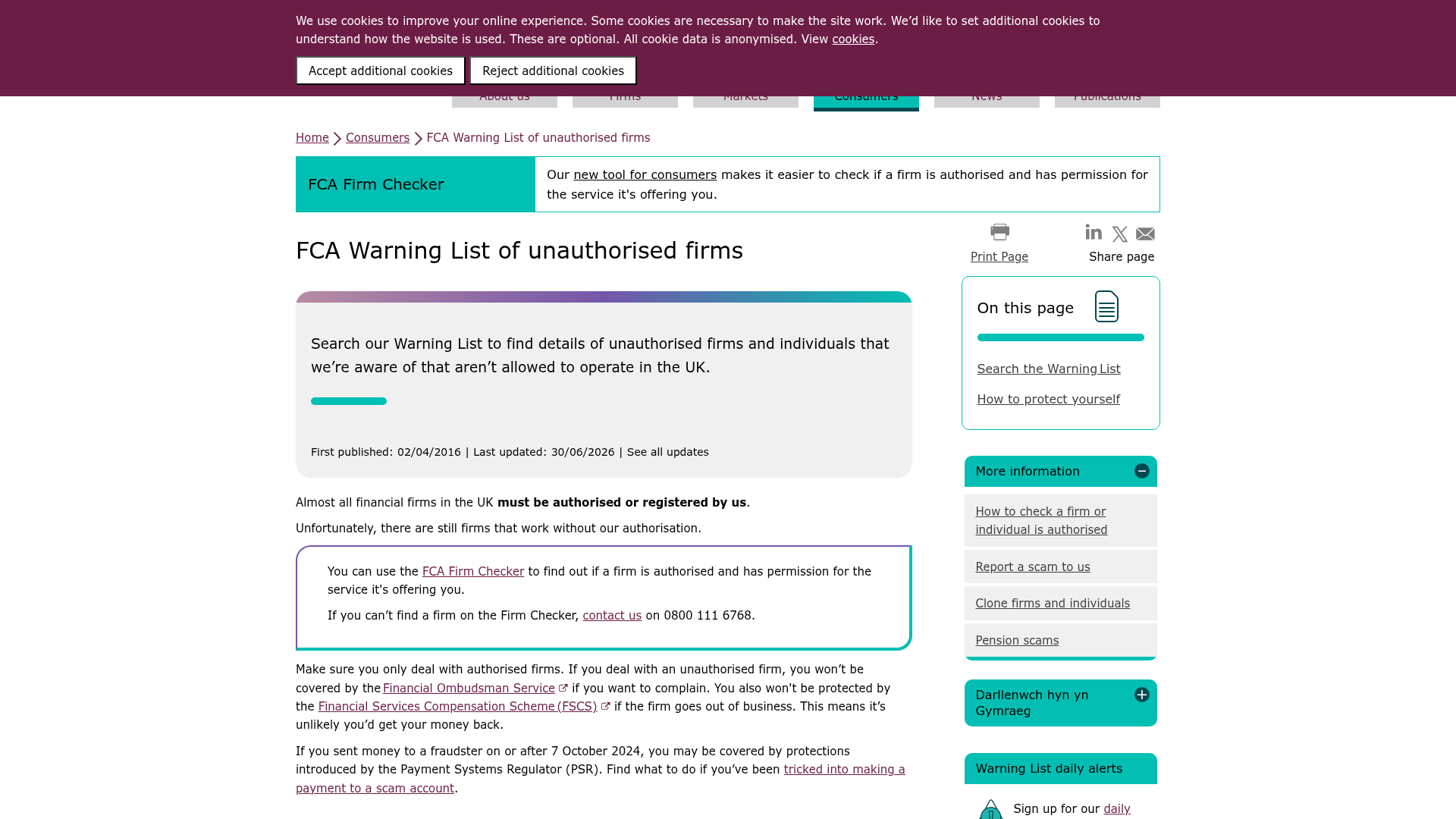
Una señal de advertencia grave es cuando la entidad legal nombrada en su acuerdo de cliente no aparece en el registro de ningún regulador financiero de buena reputación, o peor aún, aparece en una lista de advertencias. La Financial Conduct Authority (FCA) del Reino Unido mantiene una 'Warning list of unauthorised firms' en https://www.fca.org.uk/consumers/warning-list-unauthorised-firms, y la CFTC tiene su 'Registration Deficient (RED) List' en https://www.cftc.gov/check. Estas listas identifican a las firmas que parecen estar operando sin la debida autorización o solicitando clientes en jurisdicciones donde no tienen licencia. Si la entidad identificada de su bróker o incluso el nombre de la marca aparece en una de estas listas, es una indicación crítica para cesar toda interacción de inmediato.
Proceder con una entidad sin licencia significa que opera completamente fuera del marco protector de la regulación financiera. Es poco probable que sus fondos estén segregados, no habrá un esquema de compensación al inversor y no tendrá prácticamente ningún recurso legal a través de los canales convencionales si surgen disputas o los fondos desaparecen. En efecto, está colocando su capital directamente con una contraparte no regulada, dependiendo únicamente de su buena voluntad. Este escenario conlleva un nivel extremo de riesgo. Si se encuentra en una situación así, es importante denunciar a la firma ante las autoridades competentes, como Action Fraud (Reino Unido) en https://www.actionfraud.police.uk/ o la FTC (EE. UU.) en https://reportfraud.ftc.gov/. No financie una cuenta con una entidad que no pueda ser verificada en los registros regulatorios oficiales.
Resolución de disputas: A quién acudir
La entidad contractual es lo más importante al buscar la resolución de disputas. Si tiene un problema con un bróker regulado, como un inconveniente con la ejecución de operaciones, una solicitud de retiro o una queja sobre información engañosa, su primer paso suele ser el departamento interno de quejas del bróker. Si su resolución no es satisfactoria, puede escalar la queja a la autoridad reguladora pertinente o a un servicio de defensor del cliente (ombudsman) independiente. Por ejemplo, una entidad regulada por la FCA estaría bajo el Financial Ombudsman Service (FOS) en el Reino Unido, mientras que una entidad regulada por CySEC estaría sujeta al Financial Ombudsman of the Republic of Cyprus.
Sin embargo, si su entidad contractual tiene su sede en una jurisdicción offshore que carece de un organismo formal e independiente de resolución de disputas, sus opciones se vuelven severamente limitadas. Podría verse obligado a recurrir al arbitraje en una jurisdicción que favorezca al bróker, o a entablar litigios internacionales costosos. Tales procesos suelen ser financieramente prohibitivos y legalmente complejos para los traders individuales, lo que hace que un recurso efectivo sea casi imposible. Esta marcada diferencia en las vías de resolución de disputas subraya la importancia de elegir una entidad regulada de una jurisdicción sólida. El camino hacia la justicia no es universal; está trazado por la letra pequeña de su acuerdo de cliente.
Organismos de resolución de disputas por jurisdicción reguladora
| Jurisdicción del regulador | Principal organismo de resolución de disputas (después de la queja interna) | Accesibilidad para clientes minoristas |
|---|---|---|
| Reino Unido (FCA) | Servicio del Defensor Financiero (FOS) | Alta |
| Chipre (CySEC) | Ombudsman Financiero de la República de Chipre | Alta |
| Australia (ASIC) | Autoridad Australiana de Reclamaciones Financieras (AFCA) | Alto |
| Estados Unidos (CFTC/NFA) | Arbitraje de la NFA / Programa de Reparaciones de la CFTC | Moderado a Alto (se aplican reglas específicas) |
| Seychelles (FSA) | Tribunales Locales / Arbitraje (si se especifica) | Bajo (a menudo complejo y costoso) |
Debida Diligencia Proactiva: Antes de Financiar una Cuenta
La responsabilidad de identificar su entidad contractual recae, en última instancia, en usted, el cliente, antes de comprometer cualquier fondo. Comience siempre revisando el acuerdo completo con el cliente, no solo leyéndolo por encima. Este documento es su fuente principal de verdad con respecto a los detalles legales de su relación comercial. Localice el nombre legal exacto de la entidad que presta los servicios, su número de registro y el regulador principal que supervisa sus operaciones. No dude en ponerse en contacto con el bróker directamente a través de sus canales de soporte oficiales para pedir aclaraciones sobre qué entidad específica gestionará su cuenta, especialmente si su sitio web enumera múltiples licencias.
Una vez que tenga esta información, proceda inmediatamente a verificar la licencia de la entidad utilizando los registros oficiales en línea del regulador declarado. Confirme que la licencia está activa, que los detalles de la entidad coinciden y que está autorizada para proporcionar los servicios financieros específicos ofrecidos. Simultáneamente, investigue el esquema de compensación al inversor, si lo hubiera, asociado con ese regulador y comprenda sus límites de cobertura. Asegúrese de que los límites de apalancamiento y las ofertas de productos sean coherentes con lo que espera de un entorno regulado. No financie una cuenta hasta que haya verificado completamente la entidad contractual y esté satisfecho con la supervisión regulatoria que proporciona; esta diligencia es su defensa más sólida contra posibles riesgos financieros.
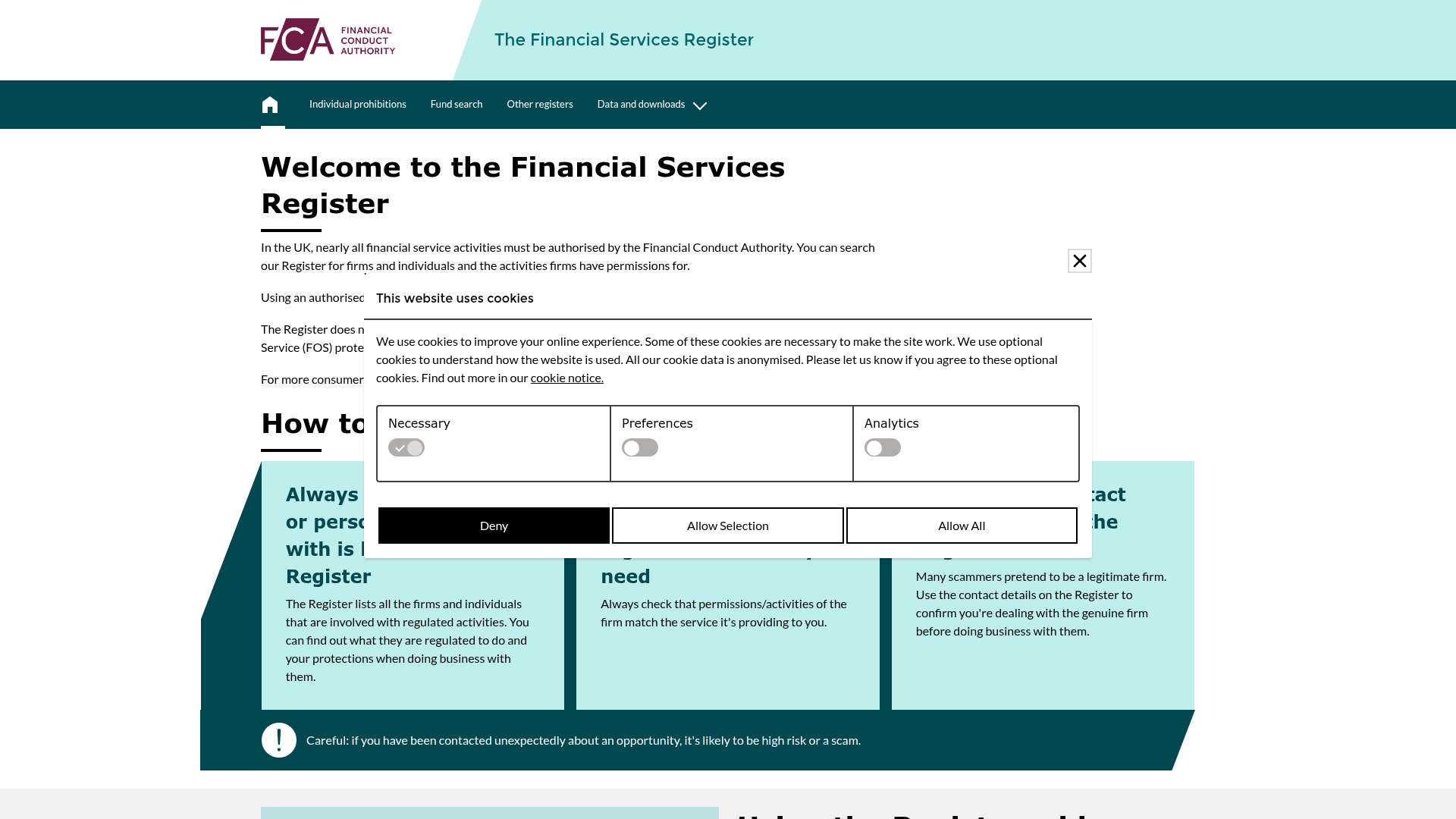
La página que verificamos
Esta es la página propia de la autoridad, capturada tal como la encontramos. Ábrala y realice la misma búsqueda usted mismo — nada en este registro reemplaza la fuente.
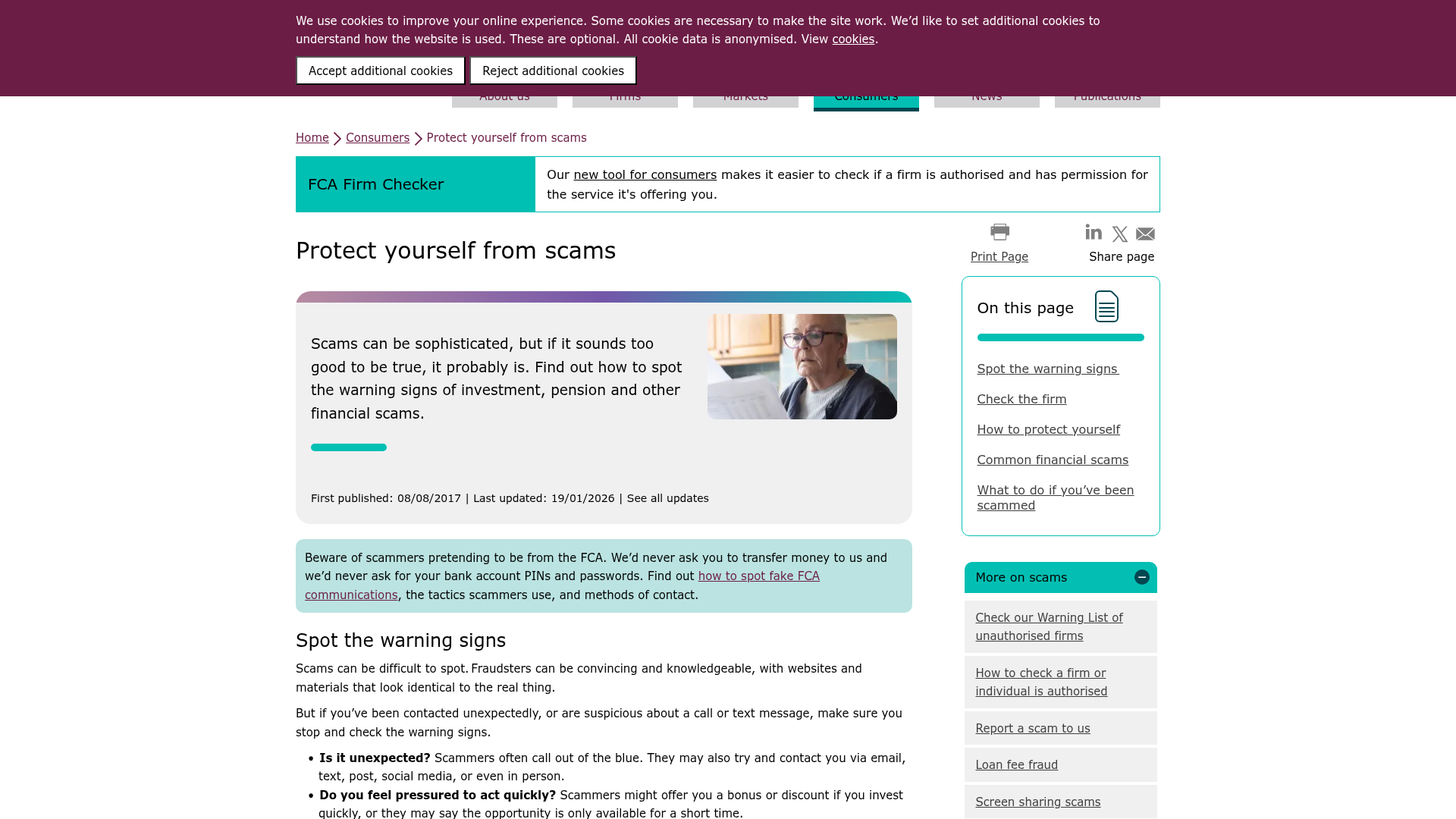
Otros registros utilizados en verificaciones de este tipo. Cada uno abre la página propia de la autoridad.
Fuentes primarias
Cada afirmación anterior puede verificarse en la propia página de la autoridad. Se abren en el sitio del regulador, no en el nuestro.
- Financial Conduct Authority — Financial Services Registerregister.fca.org.ukhttps://register.fca.org.uk/
- ASIC — Professional registersasic.gov.auhttps://asic.gov.au/online-services/search-asics-registers/
- CySEC — Regulated entities registercysec.gov.cyhttps://www.cysec.gov.cy/en-GB/entities/investment-firms/cypriot/
- NFA BASIC — background affiliation statusnfa.futures.orghttps://www.nfa.futures.org/basicnet/
- Financial Services Compensation Scheme (FSCS)fscs.org.ukhttps://www.fscs.org.uk/what-we-cover/investments/
- ESMA — Product intervention on CFDsesma.europa.euhttps://www.esma.europa.eu/press-news/esma-news/esma-agrees-prohibit-binary-options-and-restrict-cfds-protect-retail
Preguntas frecuentes
¿Qué es una 'entidad contractual' en términos sencillos?
La entidad contractual es la empresa legal específica dentro del grupo de un bróker con la que usted, como cliente, establece un acuerdo vinculante. Es el negocio real que mantiene sus fondos y proporciona servicios de trading.
¿Por qué los brókers utilizan múltiples entidades legales?
Los brókers operan múltiples entidades para cumplir con diferentes regulaciones nacionales, acceder a varios mercados y ofrecer servicios con términos variables (por ejemplo, apalancamiento) a clientes en diferentes regiones.
¿Cómo puedo saber con qué entidad estoy contratando?
Puede encontrar esta información en el pie de página del sitio web del bróker, pero la fuente definitiva es el documento de 'Acuerdo con el Cliente' o 'Términos y Condiciones' que acepta al abrir la cuenta. Busque el nombre legal completo y los detalles de registro.
¿Qué sucede si contrato con una entidad offshore?
Contratar con una entidad offshore generalmente significa menos protecciones regulatorias, potencialmente ningún esquema de compensación al inversor y un recurso legal limitado en comparación con las entidades reguladas por autoridades financieras importantes como la FCA o ASIC.
¿Son todos los reguladores financieros igualmente efectivos?
No. Reguladores como la FCA y ASIC son conocidos por una supervisión rigurosa y fuertes protecciones para el inversor, mientras que algunos reguladores offshore pueden ofrecer marcos menos extensos, lo que lleva a niveles variables de seguridad para el cliente.
¿Dónde puedo verificar la licencia de un bróker?
Debe consultar directamente los registros oficiales del regulador declarado. Ejemplos incluyen el Financial Services Register de la FCA, los Professional Registers de ASIC, el Regulated Entities Register de CySEC o NFA BASIC para brókers estadounidenses.
¿Qué es un esquema de compensación al inversor y estaré cubierto?
Un esquema de compensación al inversor protege los fondos del cliente si una firma regulada quiebra. La cobertura depende enteramente del regulador específico de su entidad contractual; por ejemplo, el FSCS del Reino Unido cubre hasta £85,000 para inversiones elegibles, mientras que muchas entidades offshore no ofrecen dicha protección.