
Puntos clave
- Una lista de advertencia regulatoria identifica a las empresas no autorizadas para prestar servicios financieros en una jurisdicción específica, no necesariamente un veredicto global de 'estafa'.
- Las empresas no autorizadas a menudo carecen de protecciones cruciales para el inversor, como fondos segregados o esquemas de compensación, lo que eleva significativamente el riesgo.
- Verificar de forma independiente la licencia de una empresa en los registros gubernamentales oficiales es crucial, cotejando meticulosamente los números de registro y las direcciones físicas.
- La jurisdicción importa: una empresa regulada en otro lugar podría seguir operando ilegalmente en su país, afectando gravemente su recurso legal.
- Las promesas de un apalancamiento inusualmente alto o rendimientos poco realistas por parte de entidades no autorizadas suelen ser tácticas para atraer a inversores desinformados a entornos de alto riesgo.
- Denunciar las empresas presuntamente no autorizadas a los organismos nacionales pertinentes es un paso vital para la protección más amplia del consumidor en la comunidad financiera.
El Aviso Público del Regulador: Una Primera Línea de Defensa
Imagine recibir un correo electrónico no solicitado que promociona una oportunidad de inversión con promesas de rendimientos desproporcionados, o hacer clic en un anuncio de una plataforma de trading que ofrece un apalancamiento muy superior al habitual. Para millones, estos son puntos de entrada comunes a los mercados financieros. Afortunadamente, los reguladores financieros nacionales, como la Financial Conduct Authority (FCA) del Reino Unido o la US Commodity Futures Trading Commission (CFTC) de EE. UU., mantienen 'Listas de Advertencia' o 'Listas Rojas' accesibles al público, específicamente para señalar entidades que parecen operar sin la debida autorización. Estas listas sirven como un sistema de advertencia proactivo y crítico para el público.La 'Lista de Advertencia' de la FCA contiene detalles de empresas e individuos que el regulador ha identificado como proveedores, o que pretenden proveer, servicios o productos financieros en el Reino Unido sin la autorización necesaria. Esto no es meramente una formalidad; significa que estas entidades no han cumplido con los estrictos requisitos de integridad financiera, protección al consumidor y solidez operativa exigidos por el regulador. La intención es evitar que los consumidores se involucren con empresas que puedan exponerlos a un detrimento financiero sustancial.Críticamente, estas advertencias se emiten después de que un regulador ha realizado investigaciones preliminares y ha determinado que una empresa está operando ilegalmente o tergiversando su estado. A menudo se actualizan con frecuencia, lo que refleja la naturaleza dinámica del sector financiero y los continuos esfuerzos de los reguladores para monitorear el mercado en busca de actividades no conformes. Es un servicio público vital, pero su verdadero significado y limitaciones a menudo son malinterpretados por los inversores comunes.
La Mecánica de una Operación No Autorizada: Más Allá del Simple Incumplimiento
Cuando una empresa aparece en una lista de advertencia regulatoria, no siempre se debe a un simple descuido administrativo. A menudo, estas entidades se dedican a lo que se conoce como 'negocio no autorizado', que puede abarcar desde infracciones menores hasta sofisticados esquemas fraudulentos diseñados para adquirir ilícitamente fondos de clientes. Una táctica común implica las 'empresas clonadas' (clone firms), donde los estafadores copian el nombre, la dirección e incluso el número de registro de una empresa legítima y regulada para engañar a los inversores y hacerles creer que están tratando con una entidad establecida.Estas operaciones clonadas son particularmente insidiosas porque aprovechan la reputación de brokers genuinos para ganarse la confianza. Un inversor podría consultar el Registro de la FCA, encontrar la empresa legítima y asumir erróneamente que los datos de contacto proporcionados por la empresa clonada también son auténticos. Este es un punto de vulnerabilidad que los estafadores explotan activamente. La empresa no autorizada solicita entonces depósitos, a menudo bajo el pretexto de productos de inversión de alto rendimiento que son inexistentes o están estructurados para asegurar la pérdida del capital del cliente.La falta de supervisión regulatoria significa que estas empresas no están sujetas a requisitos como la segregación de fondos de clientes, las normas de adecuación de capital o las auditorías independientes. Esta ausencia de salvaguardias crea un entorno en el que los fondos de los clientes corren un riesgo extremo, a menudo mezclados con fondos operativos o simplemente desviados. La velocidad y la escala con la que estas operaciones pueden desaparecer o cambiar de identidad hacen que la recuperación de los fondos sea excepcionalmente difícil para los consumidores afectados.
Qué Significa Específicamente una Lista de 'Peligro'
Una lista de 'peligro' o 'advertencia' de un regulador financiero nacional, como la FCA o la CFTC, significa específicamente que la entidad en cuestión no está autorizada para proporcionar servicios o productos financieros a los consumidores dentro de la jurisdicción de ese regulador. Este es el significado central. Por ejemplo, si la FCA emite una advertencia sobre una entidad, significa que esa entidad carece de los permisos necesarios para operar legalmente en el Reino Unido.Este estado conlleva implicaciones inmediatas y graves para los consumidores. En primer lugar, significa que la empresa opera fuera del marco legal y regulatorio diseñado para proteger a los inversores. No hay garantías con respecto a la seguridad de los fondos de los clientes, la equidad de las prácticas de trading o la integridad de los informes financieros. En segundo lugar, implica un riesgo sustancialmente mayor de pérdida financiera, ya que la empresa puede no estar sujeta a ningún esquema de compensación que reembolsaría a los inversores en caso de insolvencia o fraude. Por ejemplo, los clientes del Reino Unido que operen con una empresa no autorizada por la FCA no estarían protegidos por el Financial Services Compensation Scheme (FSCS).Es crucial entender que dicha lista no es una declaración de que la empresa sea una 'estafa' en todo el sentido coloquial de la palabra, ni es un juicio legal final de fraude. En cambio, es un aviso formal de que la empresa está operando sin la debida autorización, lo que crea un nivel de riesgo inaceptable para los consumidores en ese territorio específico. El papel principal del regulador es advertir al público sobre entidades no conformes dentro de su ámbito, no llevar a cabo una persecución legal global.
La Diferencia Crucial: Entidades No Autorizadas vs. Reguladas
El contraste entre una empresa no autorizada y un broker legítimamente regulado no podría ser más marcado, especialmente en lo que respecta a la protección del inversor. Brokers regulados como Pepperstone (FCA, ASIC, CySEC) u OANDA (FCA, CFTC/NFA, ASIC, IIROC, MAS) están sujetos a estrictas normas operativas. Estas incluyen el mantenimiento de cuentas de clientes segregadas, lo que significa que sus fondos se mantienen separados del capital operativo de la empresa, impidiendo su uso para gastos corporativos y protegiéndolos en caso de insolvencia del broker. También deben cumplir con auditorías regulares, requisitos de adecuación de capital y estándares de informes transparentes.Las entidades no autorizadas, por definición, eluden todas estas salvaguardias. No existe un organismo independiente que garantice la seguridad de los fondos de los clientes, la equidad de los precios de trading o que se respeten los retiros. Esta falta inherente de supervisión convierte cualquier interacción con una empresa de este tipo en una aventura especulativa con un riesgo significativo. Mientras que una empresa regulada debe adherirse a estrictas directrices publicitarias y divulgación de riesgos, una entidad no regulada es libre de hacer afirmaciones extravagantes sobre rendimientos u ofrecer condiciones de trading poco realistas sin rendir cuentas.Esta es la parte que la mayoría de las guías omiten: comprender el alcance del poder de un regulador. Una licencia ASIC protege a los clientes australianos, asegurando el cumplimiento de la ley financiera australiana, pero no extiende ese mismo nivel de protección directa a clientes en, por ejemplo, Canadá o Alemania si la empresa no está también licenciada allí. Un inversor siempre debe confirmar que la empresa está autorizada en su propia jurisdicción para los servicios específicos que desea utilizar. Esta alineación jurisdiccional es fundamental para acceder a recursos legales y esquemas de compensación para inversores.
Ejemplos de Protección al Inversor por Jurisdicción y Regulador
| Jurisdicción | Regulador | Esquema de Protección al Inversor (Ejemplo) | Límite de Cobertura (Aproximado) |
|---|---|---|---|
| Reino Unido | FCA | Fondo de Compensación de Servicios Financieros (FSCS) | £85,000 |
| Chipre (UE) | CySEC | Fondo de Compensación para Inversores (ICF) | €20,000 |
| Estados Unidos | CFTC/NFA | N/A para Forex/Futures | N/A |
| Australia | ASIC | Resolución Interna de Disputas/AFCA | N/A (sin compensación directa) |
Operar con una empresa no autorizada en su país de residencia es una propuesta inherentemente más arriesgada, que a menudo convierte cualquier 'derecho' teórico a compensación en algo sin sentido.
Alan Reeve
Más allá de la Advertencia: Pasos de Verificación Independiente
La presencia de una empresa en la lista de advertencias de un regulador debería detener inmediatamente cualquier interacción. Los inversores también deberían saber cómo verificar proactivamente la legitimidad de una empresa antes de cualquier compromiso. Este proceso implica la comprobación directa de los registros oficiales, sin depender del estado autodeclarado de una empresa en su sitio web o materiales promocionales. Siempre acceda directamente al sitio web oficial del regulador a través de un motor de búsqueda o un enlace conocido y de confianza, en lugar de hacer clic en un enlace proporcionado por la propia empresa.Para operaciones con sede en el Reino Unido, el FCA Financial Services Register (register.fca.org.uk) es la fuente definitiva. Puede buscar por nombre de la empresa, número de registro o incluso nombres individuales. Fundamentalmente, preste atención a las secciones de 'estado' y 'permisos'. Una empresa podría estar registrada pero no autorizada para las actividades específicas que está promocionando. Para las empresas que afirman tener regulación australiana, los ASIC Professional Registers (asic.gov.au/online-services/search-asics-registers/) ofrecen una funcionalidad similar. En Estados Unidos, para futuros y forex, la base de datos NFA BASIC (nfa.futures.org/basicnet/) detalla el estado de registro de empresas e individuos en la National Futures Association y la CFTC. La CFTC también mantiene una Registration Deficient (RED) List (cftc.gov/check).De manera similar, para entidades reguladas en Chipre, el CySEC Regulated Entities Register (cysec.gov.cy/en-GB/entities/investment-firms/cypriot/) es el lugar para verificar. En la práctica, verificar el registro de una empresa a menudo requiere consultar múltiples portales gubernamentales, a veces poco intuitivos. Es un paso tedioso pero absolutamente esencial que puede salvar a un inversor de una pérdida sustancial. Coteje el nombre legal exacto de la empresa, su dirección registrada y su número de registro en múltiples fuentes independientes para asegurar la coherencia.
Los Límites de una Advertencia: Lo que No Afirma
Si bien una lista de advertencias regulatorias es un potente indicador de riesgo, es igualmente importante comprender lo que no afirma. Una inclusión en la lista es fundamentalmente una declaración de operación no autorizada dentro de una jurisdicción específica, no una condena legal definitiva de fraude que se aplique globalmente. Por ejemplo, una empresa podría figurar en la Warning List de la FCA por operar en el Reino Unido sin autorización, pero al mismo tiempo estar legítimamente regulada por otra autoridad, como CySEC o la FSCA, para ofrecer servicios en otras regiones. Esta distinción es vital.La advertencia no etiqueta automáticamente a la empresa como una empresa criminal ni declara definitivamente que cada aspecto de sus operaciones globales es fraudulento. Su alcance es jurisdiccional. Este matiz explica por qué los reguladores redactan cuidadosamente sus advertencias, centrándose en la falta de autorización en lugar de hacer acusaciones generales que podrían ser legalmente impugnadas e impedir sus esfuerzos de protección al consumidor. Sin embargo, la ausencia de una inclusión en la lista de 'peligro' no garantiza la integridad de una empresa; simplemente significa que el regulador aún no la ha identificado como no autorizada o no ha recibido quejas que justifiquen una advertencia pública. La vigilancia constante sigue siendo necesaria.Una lista de advertencias también es reactiva hasta cierto punto. Significa que la empresa ha llamado la atención del regulador, a menudo a través de quejas públicas o recopilación de inteligencia. Puede haber un lapso de tiempo entre el inicio de una operación no autorizada y su aparición en dicha lista. Por lo tanto, confiar únicamente en la ausencia de una advertencia es insuficiente; la verificación proactiva es siempre el enfoque superior.
Apoyo Jurisdiccional y Vías de Recurso para el Inversor
El domicilio legal de una firma financiera y el regulador específico al que responde son críticos para determinar el potencial de un inversor para obtener reparación si algo sale mal. Si un inversor en el Reino Unido se relaciona con una firma que está en la Lista de Advertencias de la FCA porque carece de autorización en el Reino Unido, su capacidad para buscar reparación a través de los canales legales del Reino Unido o esquemas de compensación como el FSCS se ve gravemente comprometida, si no totalmente anulada. La autoridad de la FCA se extiende a las firmas reguladas por ella o que operan dentro de su jurisdicción. Cuando una firma opera más allá de estos límites sin permiso, el poder directo del regulador para intervenir o hacer cumplir la compensación es limitado.En contraste, si un inversor de Australia opera con, por ejemplo, Pepperstone, que está regulado por ASIC, tiene acceso a los mecanismos australianos de resolución de disputas financieras y a la supervisión regulatoria. Si surge una disputa, el inversor tiene un camino claro para presentar una queja y una posible resolución. Sin embargo, si ese mismo inversor australiano se relacionara con una firma regulada únicamente en Seychelles por la FSA, sus vías de recurso serían significativamente más desafiantes, implicando tratar con sistemas legales extranjeros y costos potencialmente más altos.Por eso pipvet.com adopta una posición clara: relacionarse con una firma que no está autorizada en su país de residencia es una propuesta intrínsecamente más arriesgada. Si bien una firma podría ser 'legítima' en su país de origen, esa legitimidad rara vez se extiende a través de las fronteras sin acuerdos de licencia específicos. La dificultad práctica de presentar reclamos contra una entidad offshore no regulada a menudo hace que cualquier 'derecho' teórico a compensación carezca de sentido. Cuanto más alejada esté una firma de su marco regulatorio local, más débil será su poder de negociación como inversor.
El Caso de los Límites de Apalancamiento: Un Ejemplo Concreto de Protección
Uno de los ejemplos más tangibles de cómo la regulación protege a los inversores minoristas, y cómo las firmas no autorizadas eluden estas protecciones, es a través de los límites de apalancamiento. En 2018, la Autoridad Europea de Valores y Mercados (ESMA) introdujo medidas significativas de intervención de productos para los Contratos por Diferencia (CFD), incluyendo la limitación del apalancamiento disponible para clientes minoristas. Para los pares de divisas principales, el apalancamiento máximo permitido bajo las reglas de ESMA es de 1:30. Para activos menos volátiles como pares de divisas menores, oro e índices principales, es de 1:20, y para materias primas distintas del oro, baja a 1:10. Las criptomonedas, debido a su extrema volatilidad, están restringidas a un apalancamiento de 1:2.
Estos límites no son arbitrarios; están diseñados para mitigar el riesgo amplificado que introduce el alto apalancamiento. Un apalancamiento de 1:500, comúnmente ofrecido por entidades no reguladas, significa que un pequeño movimiento del mercado en contra de una posición puede aniquilar el capital total de un inversor muy rápidamente. Una firma no autorizada, sin la carga de la intervención de ESMA o regulaciones similares de otros organismos como la FCA, a menudo publicitará de manera prominente ratios de apalancamiento de 1:200, 1:500 o incluso superiores como un punto de venta clave. Presentan esto como una 'ventaja' para atraer a clientes que buscan ganancias rápidas, ocultando deliberadamente el aumento proporcional del riesgo.
Esta oferta deliberada de apalancamiento excesivo es un fuerte indicador de una operación no autorizada dirigida a inversores minoristas que quizás no comprendan completamente las implicaciones. Brókeres legítimos y regulados que operan en jurisdicciones relevantes, como XM (CySEC, ASIC) o Exness (FCA, CySEC), se adhieren estrictamente a estos límites de apalancamiento para sus clientes minoristas. Cuando vea un anuncio de apalancamiento de 1:500 para pares de forex, particularmente si la firma afirma servir a clientes europeos o del Reino Unido, es una señal de advertencia significativa de que la entidad probablemente está operando sin la debida autorización en esa región, o está dirigiendo intencionalmente a los clientes a subsidiarias offshore menos reguladas.
Comparando la Conformidad Regulatoria de los Brókeres
Comprender qué reguladores supervisan a un bróker proporciona una visión esencial de sus estándares operativos y del nivel de protección que se ofrece al cliente. Los brókeres reputados a menudo poseen múltiples licencias en diferentes jurisdicciones, lo que refleja su base de clientes global y su compromiso con la conformidad regulatoria. Por ejemplo, Pepperstone, fundada en 2010 con sede en Melbourne, Australia, cuenta con la regulación de la FCA (Reino Unido), ASIC (Australia), CySEC (Chipre), DFSA (Dubái), BaFin (Alemania), CMA (Kenia) y SCB (Bahamas). Esta amplitud de regulación indica una voluntad de adherirse a requisitos nacionales diversos y a menudo estrictos.En contraste, un bróker como IC Markets, fundado en 2007 en Sídney, Australia, está regulado por ASIC (Australia), CySEC (Chipre) y la FSA (Seychelles). Aunque estos son reguladores legítimos, la inclusión de la FSA Seychelles a menudo significa una entidad separada y menos estrictamente supervisada que podría ofrecer diferentes condiciones de trading, como un mayor apalancamiento, a clientes fuera de áreas más estrictamente reguladas. Esta distinción es crucial para los inversores que podrían estar tratando con una entidad offshore de una marca aparentemente reputada. De manera similar, FOREX.com, con sede en Nueva Jersey, EE. UU. (parte de StoneX), está regulado por la CFTC/NFA (EE. UU.), FCA (Reino Unido), ASIC (Australia), CIRO (Canadá) y CIMA (Islas Caimán), lo que demuestra una amplia supervisión de primer nivel.El número y la reputación de los reguladores de una firma se correlacionan directamente con el entorno de protección para los inversores. Un bróker con solo una o dos licencias, particularmente de jurisdicciones con una supervisión menos rigurosa, debería incitar a un escrutinio adicional. Si bien no es inherentemente problemático, requiere una mirada más cercana a las protecciones específicas ofrecidas por ese regulador y cómo se aplican a su ubicación.
Brókeres Seleccionados y Sus Afiliaciones Regulatorias Principales
| Nombre del Bróker | Año de Fundación | Sede Central | Reguladores Clave (Ejemplos) |
|---|---|---|---|
| Pepperstone | 2010 | Melbourne, Australia | FCA, ASIC, CySEC |
| IC Markets | 2007 | Sídney, Australia | ASIC, CySEC, FSA (Seychelles) |
| XM | 2009 | Limassol, Chipre | CySEC, ASIC, IFSC, DFSA |
| OANDA | 1996 | Nueva York, EE. UU. | FCA, CFTC/NFA, ASIC, IIROC, MAS |
| FOREX.com | 2001 | Nueva Jersey, EE. UU. | CFTC/NFA, FCA, ASIC, CIRO |
| eToro | 2007 | Tel Aviv, Israel | FCA, CySEC, ASIC, FinCEN |
| Exness | 2008 | Limassol, Chipre | FCA, CySEC, FSCA, FSA (Seychelles) |
Denuncia de Entidades Sospechosas: Su Rol en la Integridad del Mercado
Si, tras una diligencia debida exhaustiva, usted se encuentra con una firma que opera sin la debida autorización o que figura en una lista de advertencias regulatorias, denunciarla a las autoridades pertinentes es un paso crucial para proteger a la comunidad financiera en general. Su denuncia puede proporcionar información valiosa que ayuda a los reguladores a actualizar sus listas, iniciar investigaciones y evitar que otros sean víctimas de esquemas similares. Aunque no haya perdido dinero, sus observaciones pueden contribuir significativamente a los esfuerzos de protección al consumidor.Para los consumidores del Reino Unido, la actividad sospechosa puede denunciarse a la FCA a través de su línea de ayuda al consumidor o directamente a través de su sitio web. En los Estados Unidos, las denuncias pueden presentarse ante la Federal Trade Commission (FTC) a través de reportfraud.ftc.gov o ante la CFTC, particularmente para asuntos relacionados con futuros de materias primas y forex. El Centro de Quejas de Delitos en Internet (IC3) del FBI también recopila informes sobre fraudes habilitados por internet. Para aquellos en Australia, ASIC fomenta la denuncia de entidades sospechosas a través de su sitio web.Al denunciar, proporcione tantos detalles específicos como sea posible: el nombre de la firma, sitio web, números de teléfono, direcciones de correo electrónico, nombres de las personas involucradas y cualquier afirmación o promesa específica realizada. Incluya fechas de contacto, detalles de cualquier transacción y copias de la correspondencia. Cuantos más detalles contenga su denuncia, con mayor eficacia podrán actuar las autoridades. Recuerde, estas denuncias son fundamentales para que los reguladores mantengan la vigilancia y respondan a las amenazas cambiantes en los mercados financieros.
La Diligencia en la Verificación como Primera Línea de Defensa del Inversor
La presencia de una firma en una lista de advertencias regulatorias señala un aumento directo del riesgo, y uno que todo inversor debería atender sin dudarlo. Sin embargo, la verdadera protección del inversor comienza antes de que se emita dicha advertencia, con una verificación diligente e independiente de cualquier firma financiera con la que considere operar. No confíe en promesas, sitios web atractivos o incluso testimonios en redes sociales. En su lugar, comprométase a la verificación sistemática de los registros oficiales para confirmar la autorización. Este enfoque proactivo asegura que usted está tratando con entidades que operan dentro de marcos legales y de protección al consumidor establecidos.Confirme siempre que la firma está regulada en su jurisdicción específica para los servicios que ofrece. Comprenda el alcance de esa regulación y los mecanismos de compensación al inversor disponibles para usted. Si las ofertas de una firma, como un leverage excepcionalmente alto o rendimientos garantizados, parecen demasiado buenas para ser verdad, casi con toda seguridad lo son, y justifican una investigación inmediata y exhaustiva. Su vigilancia no es solo una salvaguarda personal; contribuye a un ecosistema financiero más transparente y seguro para todos. En el complejo mundo del trading online, unos minutos dedicados a la verificación pueden ahorrarle años de arrepentimiento financiero.
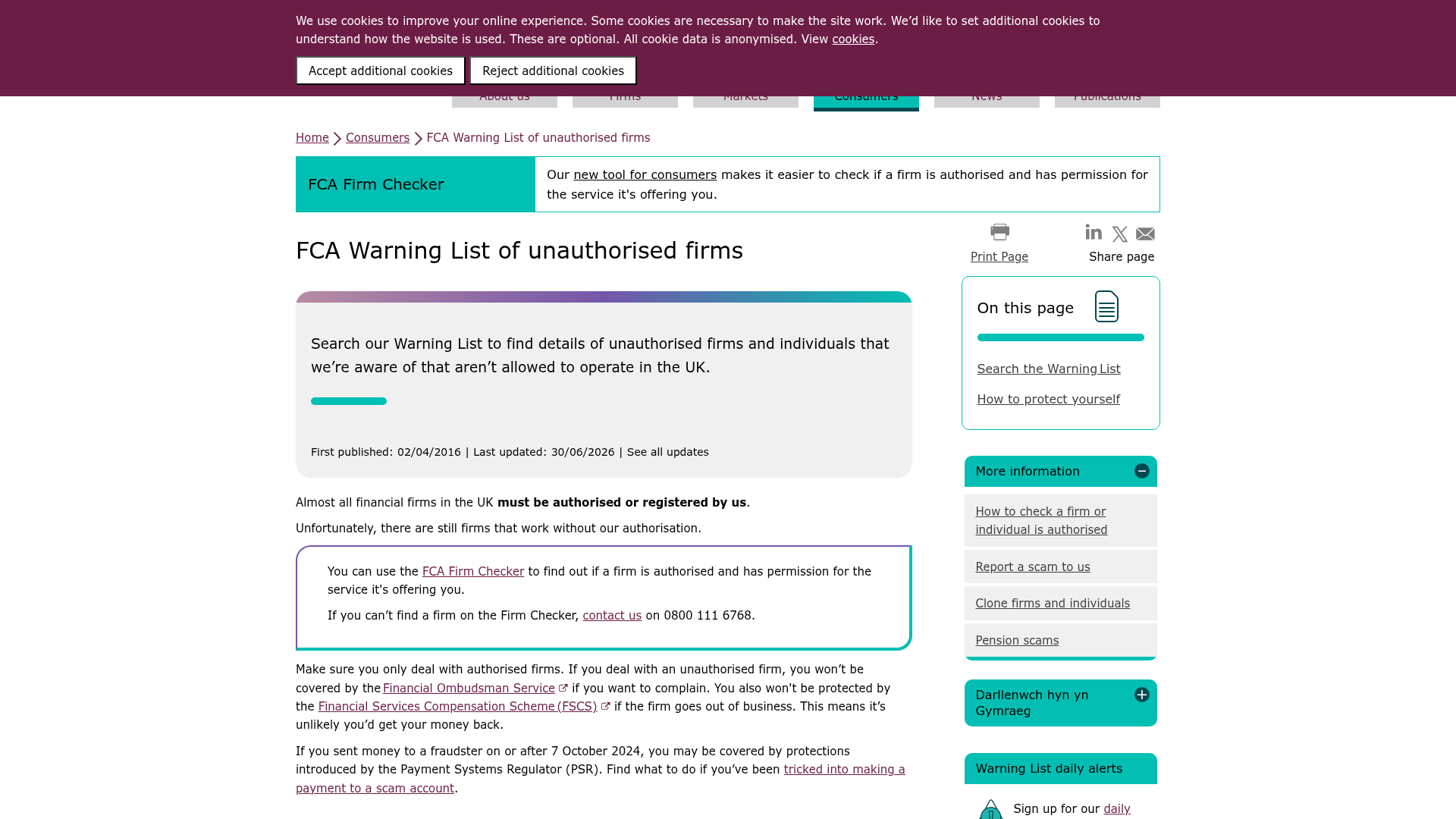
La página que verificamos
Esta es la página propia de la autoridad, capturada tal como la encontramos. Ábrala y realice la misma búsqueda usted mismo — nada en este registro reemplaza la fuente.
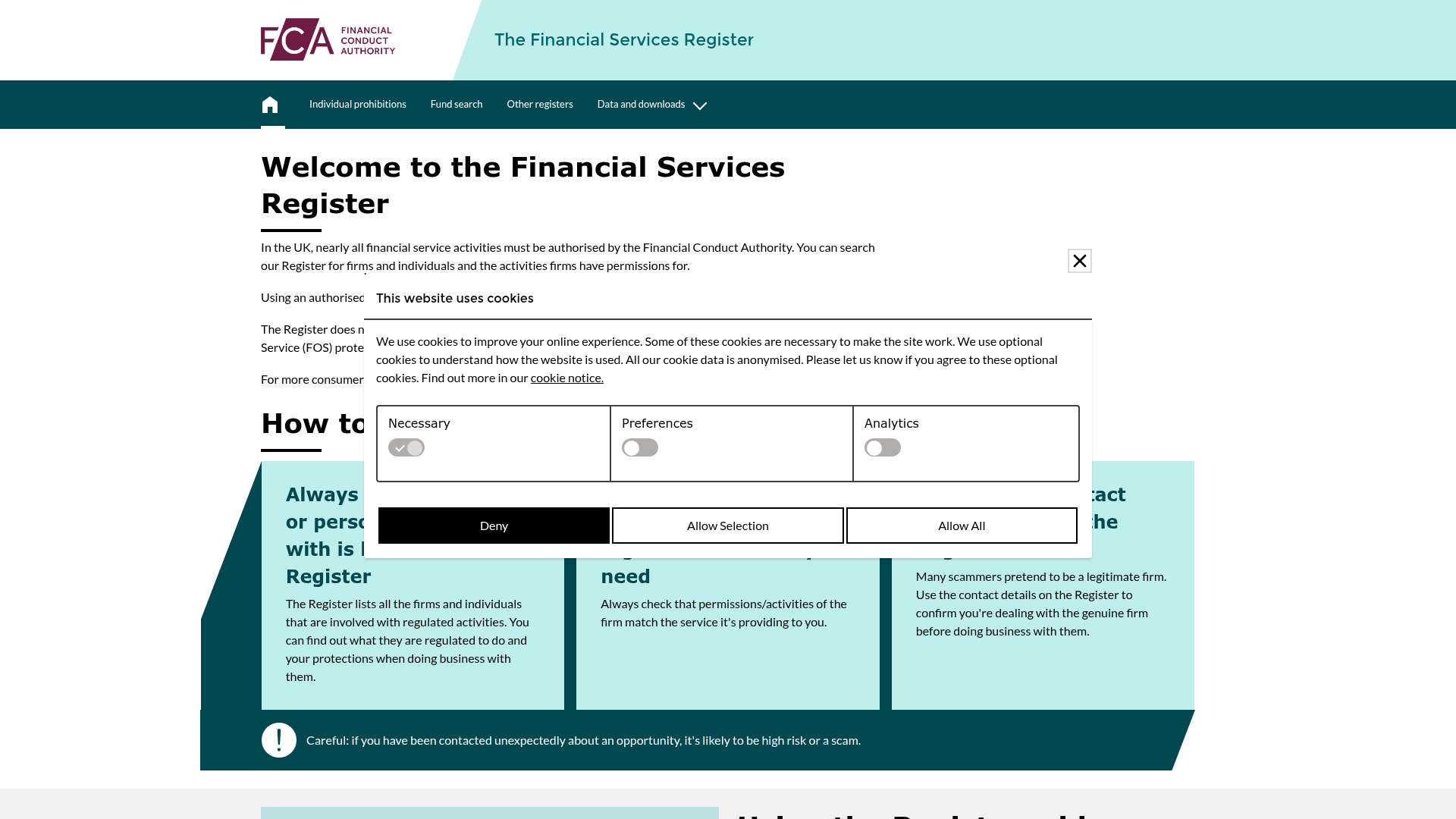
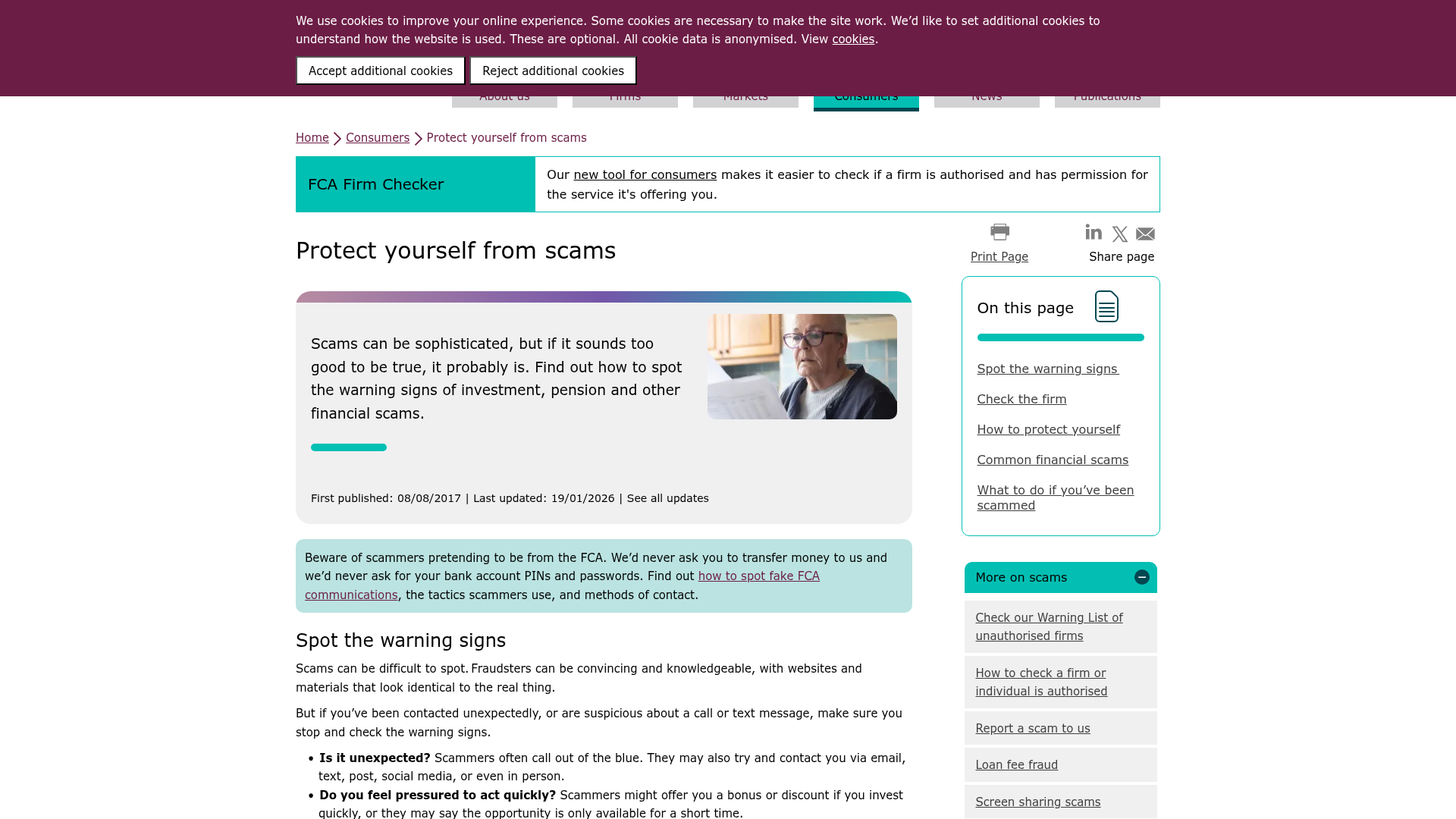
Otros registros utilizados en verificaciones de este tipo. Cada uno abre la página propia de la autoridad.
Fuentes primarias
Cada afirmación anterior puede verificarse en la propia página de la autoridad. Se abren en el sitio del regulador, no en el nuestro.
- FCA — Warning list of unauthorised firmsfca.org.ukhttps://www.fca.org.uk/consumers/warning-list-unauthorised-firms
- Financial Conduct Authority — Financial Services Registerregister.fca.org.ukhttps://register.fca.org.uk/
- CFTC — Registration Deficient (RED) Listcftc.govhttps://www.cftc.gov/check
- ESMA — Product intervention on CFDsesma.europa.euhttps://www.esma.europa.eu/press-news/esma-news/esma-agrees-prohibit-binary-options-and-restrict-cfds-protect-retail
- Financial Services Compensation Scheme (FSCS)fscs.org.ukhttps://www.fscs.org.uk/what-we-cover/investments/
- FTC — Report fraudreportfraud.ftc.govhttps://reportfraud.ftc.gov/
Preguntas frecuentes
¿Qué significa exactamente 'no autorizada' para una firma financiera?
No autorizada significa que la firma carece del permiso legal o la licencia necesaria de un regulador financiero específico para ofrecer sus servicios a los consumidores en esa jurisdicción particular. Opera fuera del marco regulatorio diseñado para proteger a los inversores allí.
Si una firma figura en una lista de advertencias, ¿significa que es definitivamente una estafa?
No necesariamente en un sentido legal. Una lista de advertencias indica que la firma opera sin la debida autorización, lo que presenta un alto riesgo de perjuicio financiero para los consumidores. Si bien muchas firmas no autorizadas son fraudulentas, el aviso del regulador se centra principalmente en la falta de permiso, lo cual es un claro incumplimiento de la ley.
¿Cómo puedo verificar si una empresa financiera es legítima y está regulada?
Visite siempre el sitio web oficial de su regulador financiero nacional (por ejemplo, la FCA en el Reino Unido, la ASIC en Australia, la CFTC/NFA en EE. UU.) y utilice su registro público o herramienta de búsqueda. Introduzca el nombre legal y el número de registro de la empresa. Nunca confíe en los enlaces proporcionados por la propia empresa para la verificación.
¿Qué sucede si invierto con una empresa no autorizada y pierdo dinero?
Si invierte con una empresa no autorizada y pierde dinero, sus vías de recurso son extremadamente limitadas. Normalmente, no estará cubierto por los esquemas de compensación para inversores, y emprender acciones legales contra una entidad sin licencia, a menudo extraterritorial, puede ser extremadamente difícil y costoso.
¿Puede una empresa estar regulada en un país pero no autorizada en otro?
Sí. Una empresa podría tener una licencia legítima en una jurisdicción (por ejemplo, Chipre) pero operar sin permiso en otra (por ejemplo, el Reino Unido) al ofrecer servicios a los residentes de ese lugar. Por eso es fundamental verificar la regulación específica de su país de residencia.
¿Debo denunciar a una empresa no autorizada incluso si no he perdido dinero?
Sí, absolutamente. Denunciar a una empresa no autorizada, incluso si no ha sufrido una pérdida financiera, proporciona información crucial a los reguladores. Su informe puede ayudarles a actualizar las listas de advertencia, iniciar investigaciones y proteger a otras posibles víctimas de interactuar con entidades de riesgo.