
Puntos clave
- Los ataques de homoglifos utilizan caracteres visualmente similares (p. ej., 'l' y '1') para imitar dominios de bróker legítimos, explotando la percepción visual humana.
- El registro WHOIS proporciona datos críticos y de acceso público, como las fechas de creación del dominio y la información del registrante, lo que puede exponer sitios fraudulentos.
- Siempre verifique manualmente el estado regulatorio de un bróker en los sitios web oficiales de los reguladores (FCA, ASIC, CFTC, CySEC) utilizando sus números de licencia registrados, no enlaces del sitio del bróker.
- Los dominios engañosos a menudo presentan fechas de registro recientes y utilizan servicios de privacidad para ocultar la verdadera identidad del registrante, lo que contrasta con los brókers establecidos.
- Los guiones y subdominios creativos son herramientas comunes para crear sitios de *phishing* que parecen legítimos a primera vista, redirigiendo a los usuarios a plataformas maliciosas.
- El soporte genuino de un bróker nunca solicitará contraseñas o información sensible de la cuenta a través de enlaces o correos electrónicos inesperados; trate dichas solicitudes como advertencias inmediatas.
El Dominio en la Sombra del Engaño
Un solo carácter, una 'l' confundida con un '1', puede redirigir a un inversor del dominio legítimo de Pepperstone, pepperstone.com, a una réplica maliciosa, pepp3rstone.com o pepp1rstone.com. Este sutil truco visual, conocido como ataque de homoglifos, no es un incidente aislado, sino una táctica generalizada empleada por aquellos que buscan explotar la confianza depositada en las instituciones financieras establecidas. Estos dominios engañosos son trampas digitales cuidadosamente elaboradas, diseñadas para parecer idénticas o casi idénticas a los sitios web de brókers reputados como XM, OANDA o IC Markets, induciendo a los usuarios a una falsa sensación de seguridad.
La consecuencia de aterrizar en un sitio fraudulento de este tipo es inmediata y a menudo catastrófica. Un inversor, creyendo que está interactuando con el bróker elegido, podría proceder a introducir credenciales de inicio de sesión, depositar fondos o compartir datos financieros personales. Esta información es entonces recolectada por los operadores del dominio suplantado, lo que lleva a accesos no autorizados a cuentas, robo de capital o compromiso de identidad. La sofisticación de estos ataques varía, pero el principio subyacente permanece constante: aprovechar la similitud visual y la mímica técnica para engañar.
El escaparate digital de un bróker es su interfaz principal con los clientes, y su integridad es crucial. Cuando esta interfaz es replicada por actores maliciosos, toda la base de la seguridad del trading online se ve socavada. Comprender los mecanismos específicos por los cuales operan estos dominios suplantados – desde los sutiles matices visuales de los homoglifos hasta la manipulación estructural de las URL con guiones y subdominios – no es meramente conocimiento técnico; es una defensa fundamental contra el fraude financiero en el entorno del trading online. Identificar estas falsificaciones digitales requiere un enfoque metódico, escudriñando detalles que la mayoría de los usuarios ocasionales pasan por alto.
Homoglifos y Mimetismo Visual
El término homoglifo se refiere a caracteres que se ven idénticos o muy similares entre sí, particularmente en diferentes tipografías o cuando se observan rápidamente. Los atacantes explotan esta ambigüedad visual para registrar nombres de dominio que son visualmente indistinguibles de los legítimos. Por ejemplo, la 'l' minúscula (ele) puede confundirse fácilmente con el numeral '1' (uno) o la 'I' mayúscula (i). De manera similar, la 'O' mayúscula (o) podría ser cambiada por el numeral '0' (cero). Estos no son solo errores tipográficos simples; son elecciones deliberadas destinadas al engaño.
Considere un usuario que tiene la intención de visitar forex.com. Un actor malicioso podría registrar f0rex.com (usando un cero en lugar de una 'o') o incluso forex.corn (usando una 'c' cirílica que se parece a una 'm' dependiendo de la fuente). Los navegadores y sistemas operativos modernos utilizan Unicode, lo que permite una amplia gama de caracteres, incluyendo aquellos de diferentes alfabetos (latín, cirílico, griego, etc.). Este sistema de nombres de dominio internacionalizados (IDN) puede ser abusado para crear ataques de homógrafos IDN, donde un nombre de dominio completo utiliza caracteres de diferentes escrituras que, sin embargo, parecen idénticos a un equivalente latino.
El peligro aquí es que incluso el usuario más vigilante podría no detectar la mínima diferencia en una URL, especialmente cuando se presenta dentro de un correo electrónico o un enlace aparentemente inofensivo. El cerebro está entrenado para reconocer patrones rápidamente, a menudo pasando por alto ligeras variaciones. Este atajo cognitivo se convierte en una vulnerabilidad cuando se enfrenta a homoglifos elaborados por expertos. La mejor defensa no es confiar únicamente en el reconocimiento visual, sino participar en un proceso de verificación más activo, examinando cada carácter de una dirección web en lugar de simplemente escanearla. Esta es la parte que la mayoría de las guías omiten: simplemente mirar la barra de URL no es suficiente; cada carácter necesita atención consciente, especialmente si aparece en un contexto o correo electrónico inesperado.
Guiones, Subdominios y Manipulación de URL
Más allá de la sustitución de caracteres, los estafadores manipulan con frecuencia la estructura de los nombres de dominio mediante el uso estratégico de guiones y subdominios. Un bróker legítimo como FxPro podría usar fxpro.com. Una versión engañosa podría ser fxpro-support.com o fxpro.co.uk.com. La adición de guiones puede crear una sensación de legitimidad, sugiriendo un servicio relacionado o una variación regional, pero dirigiendo al usuario a un servidor malicioso completamente diferente. Estas ligeras modificaciones suelen ser suficientes para confundir a los usuarios que están acostumbrados a ver guiones en nombres de marca legítimos o sufijos de dominio regionales.
Los subdominios también juegan un papel importante en esta manipulación. El portal de soporte de un bróker genuino podría residir en support.fxpro.com, donde support es un subdominio de fxpro.com. Esto indica que la sección de support es una parte integral del dominio principal fxpro.com. Sin embargo, un sitio de estafa podría registrar fxpro.support.com, que es un dominio completamente diferente (support.com) con fxpro como su subdominio. La disposición visual es engañosamente similar, pero la propiedad y el control subyacentes son completamente distintos. El usuario cree erróneamente que está en el sitio de un bróker legítimo, cuando en realidad ha navegado a un dominio de terceros controlado por estafadores.
La diferencia radica en cómo se analizan los nombres de dominio: el dominio principal se lee de derecha a izquierda, deteniéndose en el primer punto único antes del dominio de nivel superior (p. ej., .com, .net, .org). Así, para fxpro.support.com, el dominio principal es support.com, no fxpro.com. Este detalle técnico rara vez es comprendido por el inversor promedio, lo que lo convierte en un terreno fértil para la explotación. Siempre verificar el dominio base real, que es la parte que precede inmediatamente al dominio de nivel superior, es un paso vital para confirmar la legitimidad. Si espera avapartner.com y la URL lee avapartner.online-login.net, todo el dominio base ha cambiado, lo que indica un problema.
Desenmascarando la Propiedad: El Registro WHOIS
La base de datos WHOIS es un directorio de acceso público que lista a los registrantes de nombres de dominio. Sirve como una herramienta vital para verificar la propiedad y el historial de un sitio web, proporcionando información crucial que puede exponer operaciones fraudulentas. Cada dominio registrado en línea tiene un registro WHOIS asociado, que detalla su fecha de creación, fecha de vencimiento, el registrador y, a menudo, la información de contacto del registrante. Acceder a esta información es sencillo: numerosos servicios gratuitos de búsqueda WHOIS están disponibles en línea, donde simplemente introduce el nombre de dominio en cuestión.
Al examinar un registro WHOIS, varios puntos de datos indican particularmente un posible fraude. La fecha de creación es crítica. Brókers establecidos como OANDA (fundada en 1996) o FOREX.com (fundada en 2001) tendrán dominios registrados hace muchos años. Un dominio que afirma representar a una de estas entidades pero registrado solo unas semanas o meses antes es una señal de advertencia significativa. Aunque los subdominios genuinos pueden ser más recientes, el dominio raíz debe reflejar el historial operativo del bróker. La información del registrante también puede ser reveladora; las empresas legítimas suelen listar su nombre y dirección corporativos, mientras que los sitios de estafa a menudo utilizan servicios de protección de privacidad para ocultar la identidad del registrante, o listan detalles genéricos e irrastreables. Si bien los servicios de privacidad son legítimos, su uso para un dominio que pretende ser una institución financiera importante puede ser sospechoso.
Los servidores de nombres listados en el registro WHOIS también ofrecen pistas. Estos apuntan a los servidores que alojan el sitio web. Si un dominio afirma ser icmarkets.com pero sus servidores de nombres apuntan a un proveedor de hosting genérico no relacionado con IC Markets, justifica una investigación adicional. Verificar el estado del dominio también puede revelar si un dominio ha sido marcado o suspendido debido a abuso. El registro WHOIS actúa como una huella digital, y cualquier discrepancia entre la identidad proclamada de un bróker y los detalles de registro de su dominio debería impulsar una diligencia debida inmediata y exhaustiva.
Siempre escriba las URL del bróker directamente en su navegador o utilice marcadores verificados, ya que hacer clic en enlaces en correos electrónicos no solicitados es un vector principal de engaño financiero.
Alan Reeve
La Agenda de Direcciones de Internet: DNS y Cadenas de Confianza
El Sistema de Nombres de Dominio (DNS) funciona como la agenda telefónica de internet, traduciendo nombres de dominio legibles para humanos como exness.com en direcciones IP numéricas que las computadoras utilizan para localizar sitios web. Cuando escribe un nombre de dominio en su navegador, los resolvedores DNS trabajan entre bastidores para encontrar el servidor correcto. Este sistema es fundamental para el funcionamiento de internet y, aunque es fiable, no es completamente impermeable a la manipulación por parte de aquellos que buscan engañar.
Los atacantes normalmente no comprometen los registros DNS de los principales brókers para redirigir el tráfico, ya que eso sería un ataque de alto perfil y difícil de mantener. En su lugar, registran nombres de dominio nuevos, con sonoridad similar, como se discutió con los homoglifos y guiones. Estos dominios recién registrados tienen sus propios registros DNS legítimos, que luego dirigen a los usuarios al servidor del estafador. La cadena de confianza en DNS significa que si el registro del dominio en sí es legítimo (incluso si es para fines engañosos), la resolución DNS funcionará según lo previsto, llevando a los usuarios directamente al contenido fraudulento.
Si bien existen las Extensiones de Seguridad de DNS (DNSSEC) para añadir una capa de seguridad criptográfica, asegurando que los datos DNS no sean alterados durante la resolución, DNSSEC no previene el registro de nombres de dominio visualmente similares pero técnicamente distintos. Su propósito es prevenir el envenenamiento de caché DNS u otras formas de manipulación de DNS, no supervisar el registro de dominios engañosos. Por lo tanto, confiar únicamente en DNSSEC para identificar dominios suplantados es insuficiente. El punto crítico para los usuarios es comprender que una búsqueda DNS válida para un dominio sospechoso simplemente significa que ese dominio existe y apunta a un servidor; no valida la identidad reclamada del dominio ni su asociación con un bróker legítimo. El registro WHOIS, por el contrario, ofrece una visión de quién está detrás del dominio, lo cual es un indicador más directo de legitimidad.
Indicadores Clave del Registro WHOIS para la Legitimidad del Dominio
| Campo WHOIS | Patrón de Bróker Legítimo | Patrón de Dominio Sospechoso |
|---|---|---|
| Fecha de Creación del Dominio | Años, a menudo décadas (ej. OANDA desde 1996) | Registrado recientemente (hace semanas o meses) |
| Nombre del Registrante | Entidad corporativa que cotiza en bolsa (ej. StoneX Group Inc. para FOREX.com) | Servicio de privacidad utilizado o nombre individual genérico |
| Contacto del Registrante | Dirección comercial, teléfono/correo electrónico verificable | Datos ocultos, imposibles de rastrear o inexistentes |
| Registrador | Registrador de dominios de buena reputación y conocido | Registradores menos comunes, oscuros o de reciente creación |
| Servidores de Nombres | Apuntan a la infraestructura propia del bróker o a un proveedor de DNS empresarial conocido | Apuntan a alojamiento web genérico, DNS gratuito o direcciones sospechosas |
Phishing por Correo Electrónico: La Puerta de Entrada al Engaño
Un dominio suplantado a menudo sirve como la piedra angular para sofisticadas campañas de phishing. Los estafadores registrarán un dominio como support-etoro.net o plus5oo.com y luego lo usarán para enviar correos electrónicos que parecen originarse del bróker legítimo, eToro o Plus500. Estos correos electrónicos están meticulosamente diseñados para imitar comunicaciones oficiales, completos con logotipos, marcas y hasta un lenguaje específico adaptado a la industria financiera. El objetivo es engañar a los destinatarios para que hagan clic en enlaces maliciosos o divulguen información sensible directamente en respuesta al correo electrónico.
El contenido de estos correos electrónicos de phishing frecuentemente incluye advertencias urgentes sobre la seguridad de la cuenta, solicitudes de verificación de cuenta u ofertas tentadoras que parecen demasiado buenas para ser verdad. Podrían exigir que el destinatario actualice sus datos personales haciendo clic en un enlace proporcionado que, sin que la víctima lo sepa, lleva al sitio web suplantado. Una vez en el sitio falso, cualquier información introducida, desde credenciales de inicio de sesión hasta datos de tarjetas de crédito, es capturada por los atacantes.
Para identificar un correo electrónico de phishing, examine cuidadosamente la dirección de correo electrónico del remitente – no solo el nombre de visualización, sino la dirección de correo electrónico real en el campo 'De'. Debe coincidir precisamente con el dominio del bróker legítimo. En la práctica, el servicio de soporte de un bróker legítimo nunca le pedirá su contraseña por correo electrónico o teléfono, especialmente no a través de un enlace que requiera que inicie sesión para 'verificar' algo. La revisión de los encabezados del correo electrónico para protocolos de autenticación como SPF (Sender Policy Framework), DKIM (DomainKeys Identified Mail) y DMARC (Domain-based Message Authentication, Reporting, and Conformance) puede proporcionar evidencia técnica de suplantación. Si estas verificaciones fallan, es una fuerte indicación de un correo electrónico fraudulento. Siempre desconfíe de los correos electrónicos que exigen una acción inmediata, especialmente aquellos que contienen enlaces incrustados o archivos adjuntos. Verificar la información yendo directamente al sitio del bróker, en lugar de hacer clic en cualquier enlace del correo electrónico, es una medida de protección crucial.
Verificación del Estatus Regulatorio Legítimo
La forma más definitiva de determinar la legitimidad de un bróker es verificar su estatus regulatorio directamente con las autoridades financieras apropiadas. Este proceso requiere una búsqueda proactiva e independiente, evitando cualquier enlace proporcionado por el propio bróker, particularmente si el contacto inicial no fue solicitado o resultó sospechoso. Los principales reguladores globales incluyen la Financial Conduct Authority (FCA) en el Reino Unido, la Australian Securities and Investments Commission (ASIC), la Cyprus Securities and Exchange Commission (CySEC), y la Commodity Futures Trading Commission (CFTC) junto con la National Futures Association (NFA) en los EE. UU.
Cada uno de estos organismos mantiene un registro público de entidades autorizadas. Por ejemplo, para verificar Pepperstone en el Reino Unido, usted visitaría el Financial Services Register de la FCA (register.fca.org.uk), introduciendo 'Pepperstone' o su número de referencia de empresa. Luego cotejaría los detalles registrados – el nombre exacto de la empresa, la dirección y las actividades permitidas – con la información proporcionada por el bróker. Si un bróker afirma estar regulado por ASIC, buscaría en los registros profesionales de ASIC (asic.gov.au/online-services/search-asics-registers/) su ABN o ACN. Este enfoque meticuloso asegura que la entidad con la que está interactuando es la autorizada para prestar servicios financieros.
Es imperativo cotejar no solo el nombre, sino también el número de licencia específico y la entidad corporativa bajo la cual se concede la licencia. Muchos estafadores afirmarán falsamente estar regulados o proporcionarán números de licencia falsos. Los registros oficiales proporcionan la fuente autorizada de verdad. Por ejemplo, la intervención de producto de ESMA limitó el apalancamiento para clientes minoristas a 1:30 para CFD dentro de la UE, un detalle que puede verificar a través de la supervisión de CySEC sobre brókeres como XM que operan en Chipre. Si un bróker afirma tener regulación de la UE pero ofrece un apalancamiento significativamente mayor a clientes minoristas, es una clara indicación de incumplimiento y posible fraude. Realice siempre esta verificación como un paso fundamental antes de interactuar con cualquier proveedor de servicios financieros.
Registros Regulatorios Esenciales para la Verificación de Brókeres
| Organismo Regulador | URL del Portal Oficial de Búsqueda | Información Clave a Verificar |
|---|---|---|
| FCA (Reino Unido) | https://register.fca.org.uk/ | Número de Referencia de la Firma (FRN), Nombre Registrado, Estado, Actividades Permitidas |
| ASIC (Australia) | https://asic.gov.au/online-services/search-asics-registers/ | Número de Licencia de Servicios Financieros Australianos (AFS), Nombre de la Empresa, Dirección Registrada |
| CFTC / NFA (EE. UU.) | https://www.cftc.gov/check | Número de Identificación NFA, Estado de FCM, Detalles del Principal, Historial Disciplinario |
| CySEC (Chipre) | https://www.cysec.gov.cy/en-GB/entities/investment-firms/cypriot/ | Número de Licencia CIF, Nombre de la Empresa Registrada, Dominio del Sitio Web, Servicios Prestados |
| MAS (Singapur) | https://eservices.mas.gov.sg/fid | Nombre de la Institución Financiera, Tipo de Licencia, Estado, Actividades Reguladas |
| FSCA (Sudáfrica) | https://www.fsca.co.za/Regulated%20Entities/Pages/default.aspx | Número FSP, Nombre de la Empresa, Estado, Categorías de Servicios Financieros |
Señales de Alerta en las Listas de Vigilancia de los Reguladores
Los reguladores financieros de todo el mundo no solo proporcionan registros de empresas autorizadas; también mantienen listas de entidades o individuos no autorizados que han llamado su atención por actividades sospechosas. Estas listas de advertencia sirven como un sistema de alerta temprana para los consumidores, destacando a las empresas que operan sin las licencias necesarias o que han sido reportadas por comportamiento fraudulento. Ejemplos clave incluyen la Warning List de la FCA de firmas no autorizadas en el Reino Unido, la Registration Deficient (RED) List de la CFTC en EE. UU., y el IOSCO Investor Alerts Portal, que agrega advertencias de múltiples reguladores internacionales.
Consultar estas listas de advertencia es un paso crucial y complementario para verificar un registro válido. Si una firma aparece en una de estas listas, es una señal clara e inequívoca para evitar cualquier interacción. La FCA Warning List, por ejemplo, nombra explícitamente a las firmas que están 'clonando' empresas legítimas, lo que significa que están utilizando los detalles de una firma autorizada en un intento de engañar a los inversores. La RED List de la CFTC identifica entidades extranjeras que están solicitando ilegalmente a residentes de EE. UU. sin la debida registración. Estas listas se actualizan activamente y representan un esfuerzo colectivo de los reguladores para proteger al público del delito financiero.
Sin embargo, es importante reconocer las limitaciones de estas listas. No son exhaustivas; el gran volumen de esquemas fraudulentos significa que no todos los dominios engañosos o firmas no autorizadas pueden ser identificadas y listadas de inmediato. La ausencia de una firma en una lista de advertencia no confiere automáticamente legitimidad. Simplemente significa que aún no ha sido identificada o reportada a ese regulador específico. Por lo tanto, depender únicamente de las listas de advertencia sin verificar también de forma independiente el registro válido de un bróker es una estrategia de defensa incompleta. Una verificación exhaustiva implica tanto confirmar la presencia en un registro autorizado como confirmar la ausencia en las listas de advertencia. Desafortunadamente, una vez que los fondos son transferidos a una entidad no autorizada, la recuperación suele ser extremadamente difícil, lo que subraya la importancia de la verificación proactiva sobre las medidas reactivas.
Más Allá de la URL: Pistas en el Contenido del Sitio Web
Si bien el escrutinio de los nombres de dominio y los registros regulatorios es primordial, el contenido y la presentación de un sitio web en sí mismo pueden proporcionar fuertes indicadores de engaño. Los sitios web fraudulentos a menudo exhiben una serie de características que, tras una inspección más cercana, delatan su naturaleza ilegítima. Un rasgo común es el contenido genérico, mal redactado o plagiado. Los sitios de estafa con frecuencia copian texto directamente de brókers legítimos o emplean un lenguaje vago y excesivamente entusiasta, lleno de promesas poco realistas de altos rendimientos garantizados. Errores gramaticales, faltas de ortografía y frases torpes también son habituales en estos sitios, lo que refleja una falta de supervisión profesional.
Otra pista significativa es la ausencia de descargos de responsabilidad regulatorios específicos. Brókers legítimos y regulados como OANDA o IC Markets muestran prominentemente sus licencias regulatorias, advertencias de riesgo (por ejemplo, 'los CFD son instrumentos complejos y conllevan un alto riesgo de perder dinero rápidamente debido al apalancamiento'), y términos de servicio. Los sitios fraudulentos o bien los omiten por completo, proporcionan descargos de responsabilidad superficiales o incorrectos, o los incrustan en secciones oscuras del sitio. La falta de datos de mercado en tiempo real, plataformas de trading funcionales o amplios recursos educativos también puede ser una señal. Si bien un sitio web falsificado podría mostrar gráficos estáticos, rara vez tendrá una integración MT4, MT5 o TradingView completamente funcional que permita el trading en vivo y la gestión de cuentas.
Un diseño web deficiente, enlaces rotos, canales de atención al cliente no funcionales (más allá de una dirección de correo electrónico) y la demanda de métodos de pago no convencionales (como transferencias de criptomonedas a billeteras personales o procesadores de pago oscuros) son señales de alerta adicionales. Considere el contraste: un bróker legítimo como eToro o AvaTrade invierte fuertemente en una plataforma sofisticada, fácil de usar y segura. Un sitio web falsificado, por el contrario, es una fachada, a menudo construido rápidamente y con una inversión mínima, centrado únicamente en la recolección de fondos o datos. Al evaluar el sitio web de un bróker, busque profundidad, transparencia y ejecución profesional. Si el sitio se siente superficial, apresurado o fundamentalmente diferente en tono o información de lo que esperaría de una institución financiera de buena reputación, extreme la precaución.
El Costo del Compromiso y Medidas de Protección
El costo financiero y emocional de ser víctima de un dominio de bróker suplantado puede ser devastador. Más allá de la pérdida inmediata de fondos depositados, las víctimas pueden enfrentar robo de identidad, acceso no autorizado a cuentas bancarias y períodos prolongados de angustia emocional. Recuperar los fondos perdidos es una tarea ardua, a menudo imposible, especialmente cuando los estafadores operan a través de fronteras internacionales y disipan rápidamente los activos robados. Esto subraya que la mejor defensa es siempre la vigilancia proactiva y la verificación meticulosa, en lugar de intentar recuperar las pérdidas a posteriori. El impacto financiero puede extenderse a puntuaciones de crédito comprometidas e inestabilidad financiera a largo plazo, afectando la capacidad de un individuo para obtener préstamos o realizar futuras inversiones.
Protegerse de estos esquemas sofisticados requiere adoptar un conjunto sólido de hábitos. Siempre escriba las URL del bróker directamente en su navegador o utilice marcadores verificados. Nunca haga clic en enlaces de correos electrónicos o mensajes de texto no solicitados, incluso si parecen provenir de una entidad conocida. Implemente contraseñas fuertes y únicas para todas las cuentas financieras y habilite la autenticación de dos factores (2FA) siempre que sea posible. Revise regularmente sus extractos bancarios para detectar cualquier transacción no autorizada. Mantenerse informado sobre tácticas de estafa comunes, como las detalladas en la iniciativa FCA ScamSmart o los avisos para clientes de la CFTC, puede reducir significativamente su vulnerabilidad.
Si sospecha que ha encontrado un dominio suplantado o ha sido víctima de fraude, la acción inmediata es crucial. Cese toda comunicación con la entidad sospechosa. Contacte a su banco o proveedor de pagos para intentar detener cualquier transacción reciente. Reporte el incidente a las autoridades pertinentes, como el FBI IC3 en EE. UU., Action Fraud en el Reino Unido o Interpol para casos internacionales. Proporcionar información detallada, incluyendo el nombre de dominio sospechoso, los encabezados de correo electrónico y cualquier registro de transacción, puede ayudar en las investigaciones. Si bien la recuperación no está garantizada, la denuncia contribuye a un esfuerzo más amplio para rastrear y desmantelar estas redes criminales, protegiendo a otros de daños similares. Su acción rápida, aunque parezca pequeña, es un componente crucial de la defensa colectiva contra el delito financiero.
La página que verificamos
Esta es la página propia de la autoridad, capturada tal como la encontramos. Ábrala y realice la misma búsqueda usted mismo — nada en este registro reemplaza la fuente.
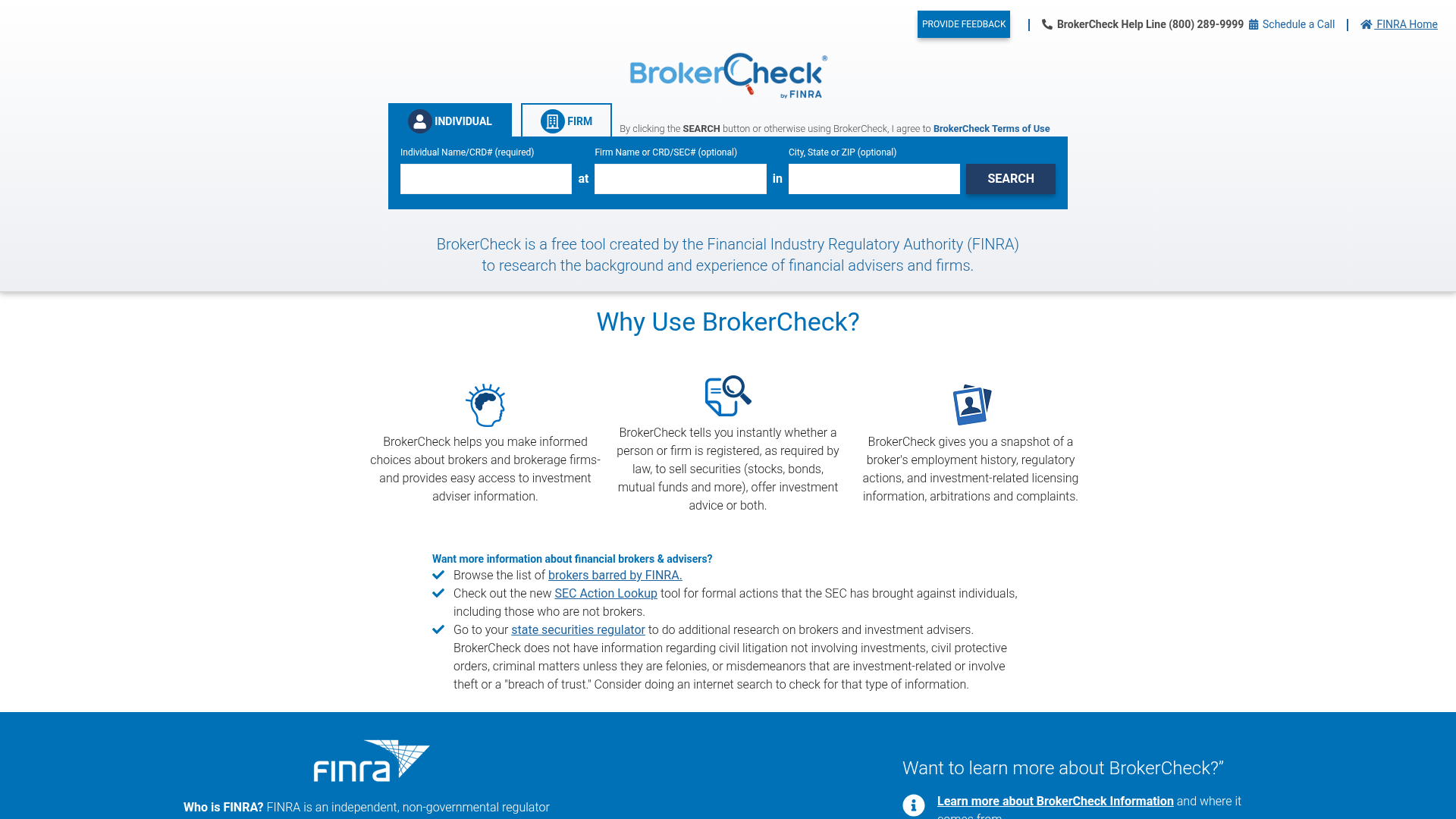
Otros registros utilizados en verificaciones de este tipo. Cada uno abre la página propia de la autoridad.
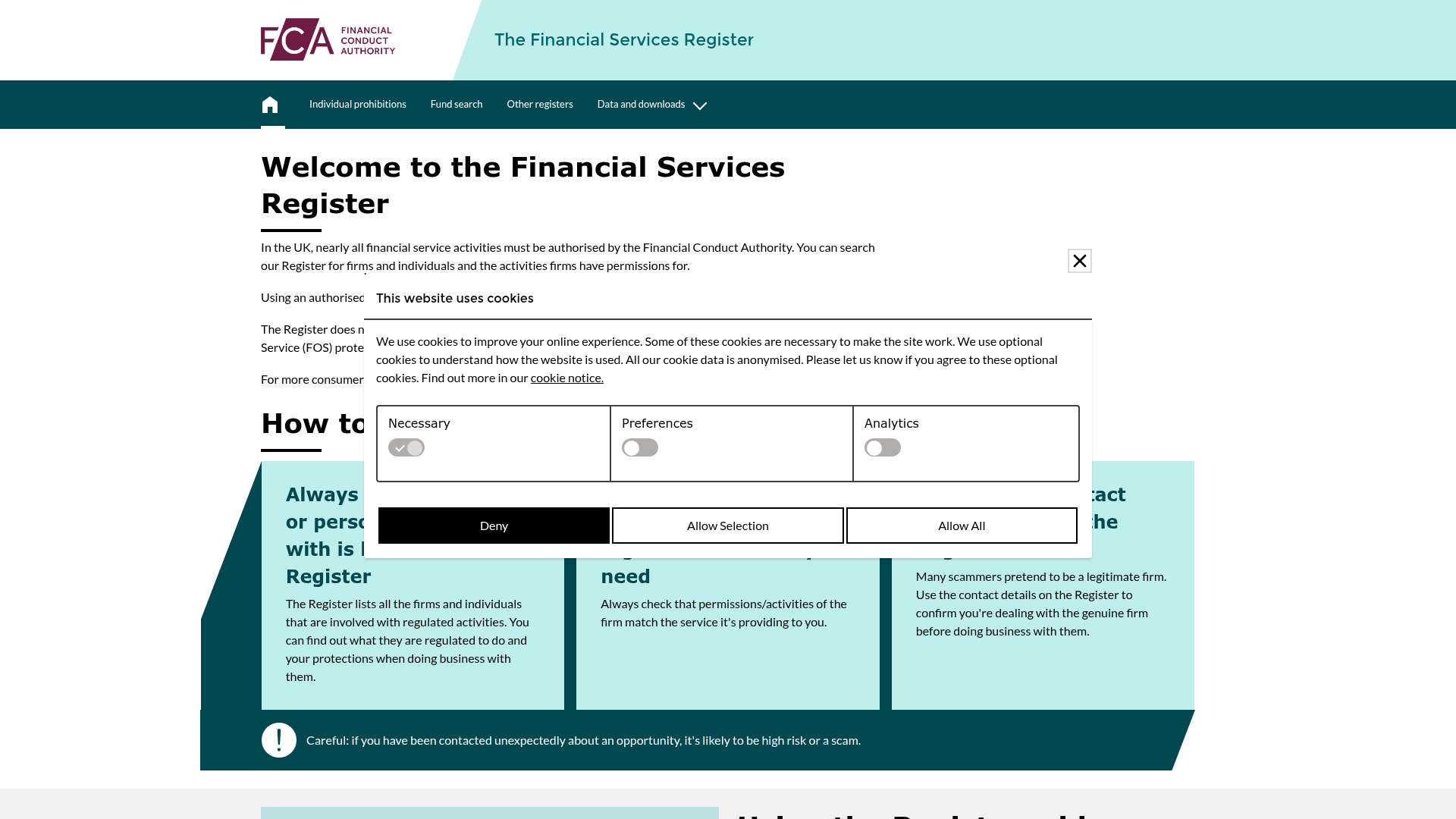
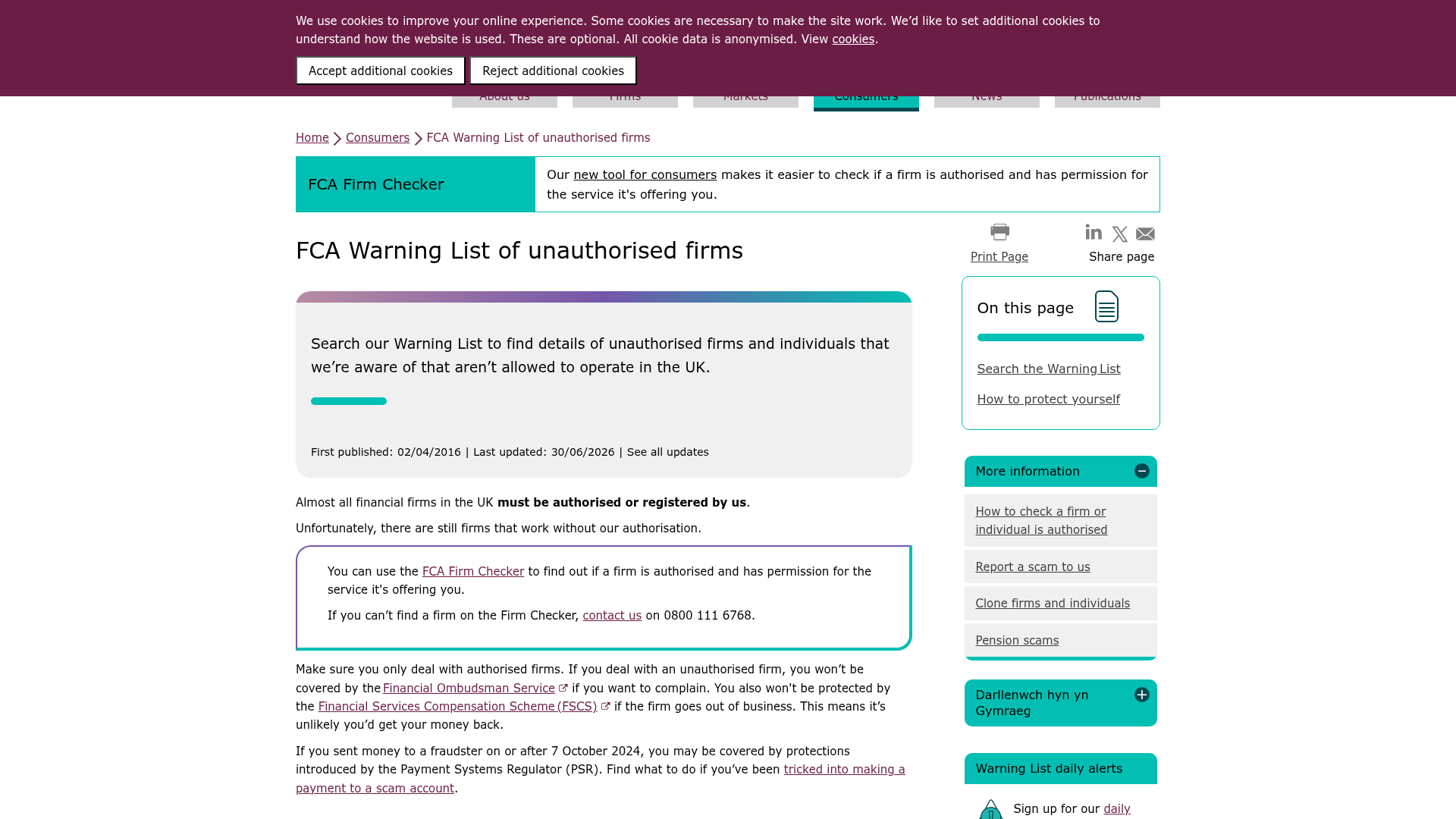
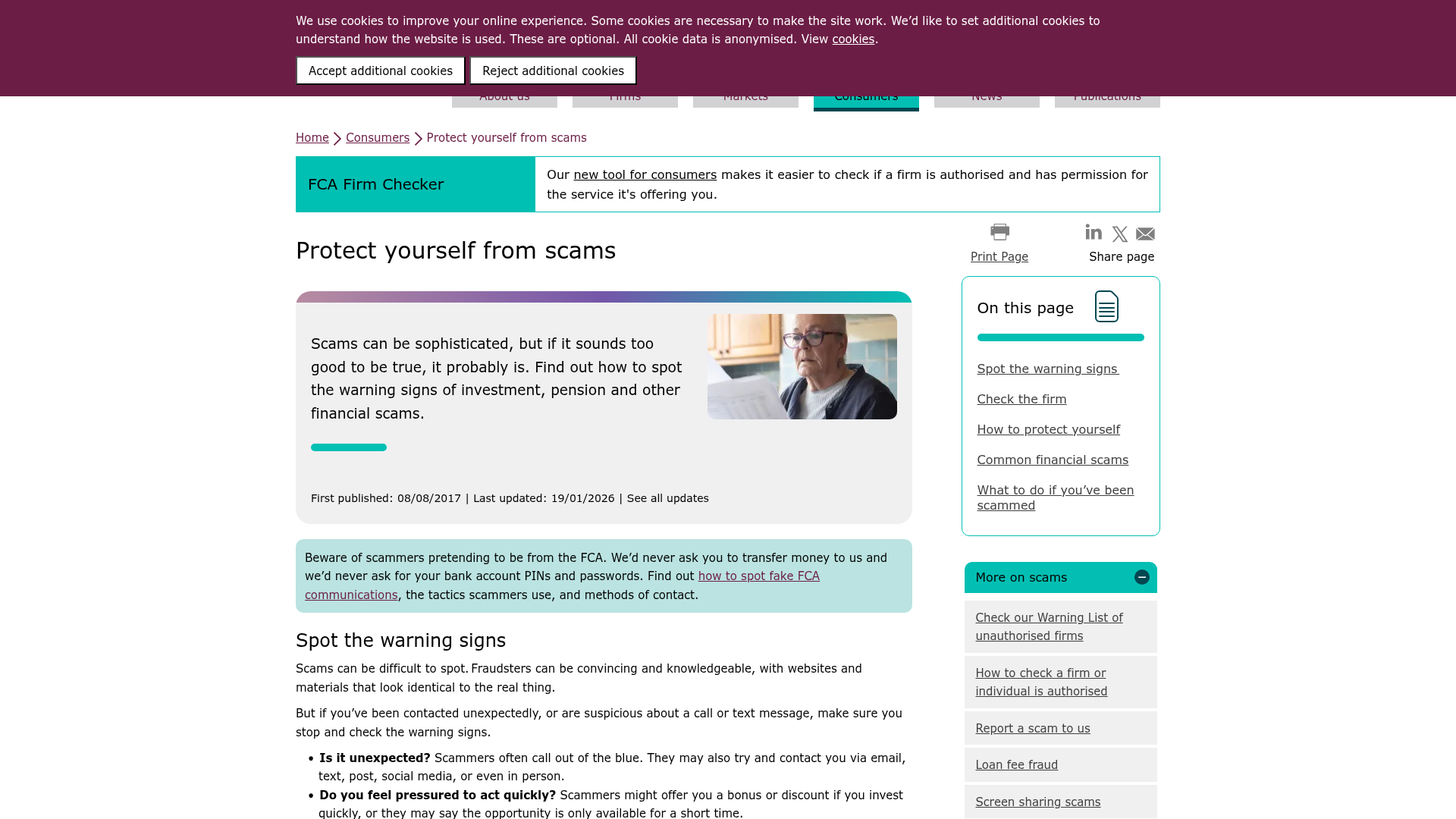
Fuentes primarias
Cada afirmación anterior puede verificarse en la propia página de la autoridad. Se abren en el sitio del regulador, no en el nuestro.
- FBI IC3 — Internet Crime Reportic3.govhttps://www.ic3.gov/AnnualReport/Reports
- FCA ScamSmartfca.org.ukhttps://www.fca.org.uk/scamsmart
- Financial Conduct Authority — Financial Services Registerregister.fca.org.ukhttps://register.fca.org.uk/
- FCA — Warning list of unauthorised firmsfca.org.ukhttps://www.fca.org.uk/consumers/warning-list-unauthorised-firms
- CFTC — Customer advisories on fraudcftc.govhttps://www.cftc.gov/LearnAndProtect/AdvisoriesAndArticles/index.htm
- CFTC — Registration Deficient (RED) Listcftc.govhttps://www.cftc.gov/check
Preguntas frecuentes
¿Cómo puedo saber si el dominio del sitio web de un bróker es real o falso?
Verifique el nombre de dominio carácter por carácter en busca de cambios sutiles como 'l' en lugar de '1' (homóglifos), o guiones adicionales. Utilice una herramienta de búsqueda WHOIS para examinar la fecha de creación del dominio y los detalles del registrante; los brókers legítimos tienen dominios antiguos y un registro corporativo público. Siempre verifique manualmente la URL en la barra de direcciones de su navegador.
¿Qué es un ataque de homóglifos y cómo funciona?
Un ataque de homóglifos utiliza caracteres visualmente similares (por ejemplo, 'o' vs. '0', 'l' vs. '1') para crear un nombre de dominio engañoso que parece casi idéntico a uno legítimo. Cuando un usuario ve el dominio falso, su cerebro a menudo lo procesa como el real, lo que los lleva a un sitio web fraudulento donde su información puede ser robada.
¿Puedo confiar en un bróker si aparece en la lista de advertencias de un regulador?
No, si un bróker aparece en la lista de advertencias de un regulador (como la lista de Empresas No Autorizadas de la FCA o la Lista Roja de la CFTC), significa que está operando sin la autorización adecuada o ha sido señalado por actividad sospechosa. Debe evitar cualquier interacción con dichas entidades, ya que representan un alto riesgo de fraude.
¿Cómo verifico eficazmente la licencia regulatoria de un bróker?
Para verificar la licencia de un bróker, navegue directamente al sitio web oficial del regulador financiero pertinente (por ejemplo, FCA, ASIC, CySEC). Utilice su función de búsqueda de registro público para encontrar al bróker por su nombre oficial o número de licencia. Coteje todos los detalles, incluido el nombre de la empresa registrada, la dirección y las actividades permitidas, con la información que proporciona el bróker.
¿Qué debo hacer si sospecho que he encontrado un dominio de bróker suplantado?
Cese inmediatamente toda interacción con el sitio web o la entidad sospechosa. No introduzca ninguna información personal o financiera. Reporte el dominio a su regulador financiero local (por ejemplo, FCA, ASIC, CFTC) y a las autoridades de delitos cibernéticos (por ejemplo, FBI IC3, Action Fraud). Si ya ha perdido dinero, contacte a su banco o proveedor de pagos de inmediato.
¿Es suficiente usar una VPN o un software antivirus para protegerse contra dominios suplantados?
Si bien las VPN y el software antivirus son importantes para la seguridad en línea general, no son suficientes por sí solos para proteger contra dominios suplantados. Estas herramientas protegen principalmente contra malware y amenazas a nivel de red. Identificar un dominio suplantado requiere vigilancia manual y verificación de URL, registros WHOIS y estado regulatorio, ya que el sitio malicioso en sí mismo podría no alojar malware.