
Điểm chính
- Các cảnh báo của cơ quan quản lý sử dụng ngôn ngữ chính xác, có thể bảo vệ về mặt pháp lý và hiếm khi công khai tuyên bố 'lừa đảo' (scam) do rủi ro phỉ báng và quy trình pháp lý.
- Một công ty có thể được cấp phép ở một khu vực pháp lý (ví dụ: CySEC cho XM) nhưng hoạt động mà không có giấy phép ở một khu vực khác, dẫn đến cảnh báo ở khu vực sau.
- Nhà đầu tư phải chủ động xác minh giấy phép của một công ty bằng cách sử dụng các sổ đăng ký chính thức của cơ quan quản lý như FCA Financial Services Register hoặc ASIC Professional Registers.
- Các cảnh báo chủ yếu đề cập đến hoạt động không được cấp phép; chúng không đề cập đến chất lượng dịch vụ, spread, hoặc hiệu quả rút tiền của một công ty được cấp phép.
- Bỏ qua cảnh báo có nghĩa là mất quyền truy cập vào các chương trình bồi thường (như FSCS) và các kênh giải quyết tranh chấp chính thức.
- Nhiều dấu hiệu đáng ngờ (red flags), như liên hệ không mong muốn hoặc đảm bảo lợi nhuận, thường xuất hiện trước hoặc đi kèm với các cảnh báo chính thức và đòi hỏi sự cảnh giác tương đương.
Báo Động Thầm Lặng: Giải Mã Cảnh Báo Của Cơ Quan Quản Lý
Hãy tưởng tượng bạn tìm thấy một nhà môi giới, có thể là một nhà môi giới tự xưng đạt giải thưởng danh giá như OANDA's 'Voted Most Popular and Best Forex Broker (TradingView Broker Awards 2021),' nhưng sau đó lại phát hiện ra cảnh báo từ cơ quan quản lý của một quốc gia khác. Tình huống này không phải là hiếm. Một thông báo cảnh báo từ cơ quan tài chính không chỉ đơn thuần là một lời khuyên; đó là một cảnh báo nghiêm trọng, được công bố công khai nhằm bảo vệ người tiêu dùng khỏi những thiệt hại tài chính đáng kể. Nó cho thấy một công ty đang hoạt động ngoài khuôn khổ pháp lý đã được thiết lập, thường là không có các giấy phép cần thiết để cung cấp dịch vụ tài chính tại một khu vực pháp lý cụ thể. Ngôn ngữ trong các cảnh báo này được cố ý giữ trung lập, tránh các thuật ngữ gây kích động như 'lừa đảo' (scam) vì mỗi từ đều mang trọng lượng pháp lý và phải chịu sự xem xét kỹ lưỡng. Mục đích của nó là trình bày các sự thật có thể kiểm chứng về tình trạng không được cấp phép của một công ty, để nhà đầu tư tự suy luận về những rủi ro tiềm ẩn. Tuy nhiên, giọng điệu thận trọng này đôi khi có thể dẫn đến việc đánh giá thấp những hậu quả nghiêm trọng đối với tiền và dữ liệu. Nguy hiểm thực sự thường nằm ở những điều mà các cảnh báo này không thể nêu rõ ràng, do những ràng buộc pháp lý và tính chất phức tạp của quy định tài chính.
Giải Mã Ngôn Ngữ Chính Thức: Tại Sao 'Không Được Cấp Phép' Không Phải Là 'Lừa Đảo'
Khi Cơ quan Quản lý Tài chính (FCA) tại Vương quốc Anh đưa ra cảnh báo, tuyên bố một công ty đang 'hoạt động mà không có giấy phép của chúng tôi,' đó là một tuyên bố thực tế về tình trạng đăng ký của công ty, chứ không phải một phán xét về đạo đức của nó. Cách diễn đạt cẩn trọng này xuất phát từ một số cân nhắc pháp lý và hoạt động. Thứ nhất, các cơ quan quản lý hoạt động theo các nhiệm vụ pháp lý nghiêm ngặt, ưu tiên quy trình tố tụng hợp pháp. Trước khi tuyên bố một công ty là 'lừa đảo' (scam), cần phải có các cuộc điều tra sâu rộng, bao gồm thu thập bằng chứng, các thách thức pháp lý tiềm ẩn và thường là hợp tác quốc tế. Quá trình này có thể kéo dài, và các cảnh báo thường được đưa ra như một biện pháp chủ động khi có đủ bằng chứng về hoạt động không được cấp phép. Thứ hai, việc dán nhãn một công ty là 'lừa đảo' (scam) có thể khiến cơ quan quản lý phải đối mặt với các vụ kiện phỉ báng nếu tuyên bố đó không thể được chứng minh rõ ràng trước tòa. Các công ty, ngay cả những công ty hoạt động bất hợp pháp, vẫn giữ quyền pháp lý. Do đó, các cơ quan quản lý chọn ngôn ngữ thực tế và có thể kiểm chứng, tập trung vào việc thiếu giấy phép hợp lệ thay vì đưa ra những lời lên án chủ quan, rộng lớn hơn. Đây là phần mà hầu hết các hướng dẫn bỏ qua: việc bỏ qua từ 'lừa đảo' (scam) là một chiến lược pháp lý có chủ ý, chứ không phải dấu hiệu của rủi ro thấp hơn.
Bàn Cờ Toàn Cầu: Khu Vực Pháp Lý và Chênh Lệch Quy Định
Nhiều nhà môi giới lớn, uy tín hoạt động với nhiều giấy phép trên các khu vực pháp lý toàn cầu khác nhau. Ví dụ, Pepperstone được quản lý bởi FCA, ASIC, CySEC, DFSA, BaFin, CMA và SCB. OANDA nắm giữ giấy phép với FCA, CFTC/NFA, ASIC, IIROC và MAS. Sự hiện diện đa khu vực pháp lý này cho phép họ phục vụ khách hàng trên toàn cầu trong khi tuân thủ luật pháp địa phương. Tuy nhiên, một số công ty lợi dụng những khác biệt này, tham gia vào cái gọi là 'chọn khu vực pháp lý' (jurisdiction shopping) hoặc chênh lệch quy định (regulatory arbitrage). Một công ty có thể được cấp phép hợp pháp ở một khu vực pháp lý, chẳng hạn với CySEC ở Síp, nhưng sau đó lại tích cực chào mời khách hàng từ một quốc gia như Úc mà không có giấy phép ASIC cần thiết. Trong trường hợp như vậy, cơ quan quản lý Úc sẽ đưa ra cảnh báo về việc công ty hoạt động mà không có giấy phép, ngay cả khi công ty đó có giấy phép hợp lệ ở nơi khác. Điều này tạo ra một vùng xám nguy hiểm cho các nhà đầu tư, vì công ty có thể viện dẫn giấy phép hợp pháp của mình ở Síp trong khi từ chối sự giám sát của cơ quan quản lý ở Úc. Thực tiễn này khiến khách hàng không có được sự bảo vệ từ cơ quan quản lý địa phương của họ, bao gồm quyền truy cập vào các chương trình bồi thường địa phương hoặc dịch vụ giải quyết tranh chấp. Các hệ lụy pháp lý đối với khách hàng là nghiêm trọng: nếu có điều gì đó sai sót, quyền khiếu nại của họ thường bị giới hạn trong khu vực pháp lý nơi công ty thực sự được quản lý, nơi có thể cách xa hàng nghìn dặm và có các biện pháp bảo vệ pháp lý khác nhau.
Phòng Thủ Đầu Tiên Của Bạn: Xác Minh Tình Trạng Pháp Lý Của Một Công Ty
Biện pháp hiệu quả nhất để chống lại các công ty không được cấp phép là xác minh tình trạng pháp lý của họ trực tiếp với cơ quan quản lý chính thức. Quá trình này khá đơn giản nhưng đòi hỏi sự cẩn trọng. Mọi cơ quan quản lý tài chính hợp pháp đều duy trì một danh bạ công khai về các công ty được cấp phép. Nếu một nhà môi giới, chẳng hạn như IC Markets hoặc FOREX.com, tuyên bố được ASIC quản lý, bước đầu tiên là truy cập vào Professional Registers của ASIC và tìm kiếm tên công ty hoặc ABN của họ. Tương tự, đối với các công ty tuyên bố được FCA quản lý, Financial Services Register là nguồn thông tin chính xác nhất. Đừng chỉ dựa vào các liên kết được cung cấp trên trang web của công ty; những liên kết này có thể bị làm giả hoặc chuyển hướng đến các trang không chính thức. Thay vào đó, hãy truy cập trực tiếp trang web chính thức của cơ quan quản lý và sử dụng chức năng tìm kiếm của họ. Hãy chú ý kỹ đến tên pháp nhân cụ thể và các dịch vụ mà họ được phép cung cấp. Một chiến thuật phổ biến của các công ty không được cấp phép là mạo danh các tổ chức hợp pháp, sử dụng những biến thể nhỏ trong tên hoặc logo. Ví dụ, một công ty có thể tuyên bố là 'Plus500 Global' trong khi thực thể được quản lý thực sự là 'Plus500CY Ltd' hoặc 'Plus500UK Ltd.' Nếu một công ty tuyên bố được CFTC/NFA quản lý, hãy sử dụng hệ thống NFA BASIC để kiểm tra thông tin và tình trạng thành viên của họ. Quá trình này thường chỉ mất vài phút nhưng mang lại sự rõ ràng quan trọng.
Các Danh Bạ Cơ Quan Quản Lý Chính để Xác Minh Giấy Phép
| Cơ Quan Quản Lý | Liên Kết Xác Minh | Những Điều Cần Tìm |
|---|---|---|
| FCA (Vương quốc Anh) | https://register.fca.org.uk/ | Tên công ty, số tham chiếu công ty (FRN), các hoạt động được cấp phép |
| ASIC (Úc) | https://asic.gov.au/online-services/search-asics-registers/ | Tên công ty, ACN/ABN, loại giấy phép (ví dụ: AFSL) |
| CySEC (Síp) | https://www.cysec.gov.cy/en-GB/entities/investment-firms/cypriot/ | Tên Công Ty Đầu Tư, Số Giấy Phép |
| CFTC/NFA (Hoa Kỳ) | https://www.nfa.futures.org/basicnet/ | ID NFA của công ty, tình trạng thành viên, lịch sử kỷ luật |
| MAS (Singapore) | https://eservices.mas.gov.sg/fid | Tên pháp nhân, loại giấy phép, tình trạng |
Việc bỏ qua từ 'lừa đảo' (scam) trong cảnh báo của cơ quan quản lý là một chiến lược pháp lý có chủ ý, chứ không phải dấu hiệu của rủi ro thấp hơn.
Mei Tanaka
Ngoài Giấy Phép: Những Điều Cảnh Báo Không Đề Cập
Cảnh báo của cơ quan quản lý chủ yếu tập trung vào tính hợp pháp trong hoạt động của một công ty, đặc biệt là tình trạng cấp phép của họ. Những gì nó cố tình bỏ qua và không thể bao gồm là bất kỳ đánh giá nào về chất lượng hoạt động, dịch vụ khách hàng hoặc cấu trúc giá của công ty. Một công ty có thể được quản lý đầy đủ, ví dụ, AvaTrade bởi Central Bank of Ireland, nhưng vẫn có spread cao, thời gian xử lý rút tiền chậm hoặc hỗ trợ khách hàng không hữu ích. Đây là những cân nhắc thương mại nằm ngoài phạm vi của một cảnh báo quy định. Việc không có cảnh báo không đồng nghĩa với việc xác nhận dịch vụ vượt trội. Ngay cả các công ty không được cấp phép ban đầu cũng có thể cung cấp dịch vụ có vẻ tốt để xây dựng lòng tin trước khi tham gia vào các hành vi bất hợp pháp. Nhà đầu tư phải hiểu rằng quy định thiết lập một nền tảng tuân thủ pháp luật và bảo vệ chống lại gian lận trắng trợn hoặc sự sụp đổ hoạt động; nó không đảm bảo trải nghiệm giao dịch tích cực. Sự phân biệt này rất quan trọng để đánh giá rủi ro một cách thực tế. Một cái bẫy phổ biến là cho rằng vì không có cảnh báo, tất cả các khía cạnh khác trong hoạt động của công ty đều ổn. Đây là một tiền đề sai lầm. Quy định là một sàn, không phải là một trần, cho chất lượng và hành vi đạo đức.
Những Lời Hứa Phi Thực Tế: Dấu Hiệu Cảnh Báo Trước Hành Động Chính Thức
Nhiều công ty cuối cùng nhận được cảnh báo từ cơ quan quản lý thường có những dấu hiệu đáng ngờ phổ biến rất lâu trước khi có bất kỳ hành động chính thức nào được thực hiện. Các dấu hiệu này thường bao gồm chiến thuật bán hàng áp lực cao, liên hệ không mong muốn và hứa hẹn lợi nhuận phi thực tế. Hãy cảnh giác với bất kỳ nền tảng hoặc cá nhân nào đưa ra 'lợi nhuận đảm bảo,' đặc biệt là trong các thị trường biến động như forex hoặc Hợp đồng chênh lệch (CFD). Việc ESMA can thiệp vào năm 2018 đã giới hạn đòn bẩy ở mức 1:30 cho các nhà đầu tư bán lẻ tại EU, chính xác là để giảm thiểu rủi ro mất vốn nhanh chóng. Bất kỳ công ty nào cung cấp đòn bẩy cao hơn đáng kể cho các nhà đầu tư bán lẻ tại các khu vực pháp lý được quản lý đều phải gây ra sự nghi ngờ ngay lập tức. Áp lực nạp số tiền lớn nhanh chóng, yêu cầu thông tin đăng nhập cá nhân, hoặc khăng khăng sử dụng các phương thức thanh toán không thông thường (như chuyển tiền điện tử vào ví cá nhân) là những dấu hiệu mạnh mẽ của gian lận tiềm ẩn. Những hành vi này được thiết kế để bỏ qua các biện pháp bảo vệ của cơ quan quản lý và lợi dụng lòng tin của nhà đầu tư. Mặc dù các cơ quan quản lý nỗ lực xác định và cảnh báo về các thực thể như vậy, nhưng quy trình của họ cần thời gian. Trên thực tế, bộ phận hỗ trợ sẽ yêu cầu nạp tiền lớn hơn hai, đôi khi ba lần, thường viện dẫn lý do 'cơ hội bị bỏ lỡ' hoặc 'ưu đãi độc quyền.' Sự cảnh giác của bạn trong việc nhận diện những dấu hiệu này thường có thể là biện pháp phòng vệ sớm nhất và hiệu quả nhất, rất lâu trước khi bất kỳ cảnh báo chính thức nào xuất hiện trên sổ đăng ký công khai.
Chi phí hữu hình khi bỏ qua cảnh báo
Việc bỏ qua cảnh báo của cơ quan quản lý sẽ gây ra những hậu quả tài chính nghiêm trọng và rõ ràng. Điều quan trọng nhất là mất quyền truy đòi pháp lý. Khi bạn giao dịch với một công ty không được ủy quyền, bạn đang hoạt động bên ngoài ô bảo vệ của luật pháp và quy định tài chính. Điều này có nghĩa là: không có quyền tiếp cận các chương trình bồi thường chính thức, chẳng hạn như Financial Services Compensation Scheme (FSCS) tại Vương quốc Anh, quỹ này bảo hiểm các khoản đầu tư đủ điều kiện lên đến £85,000 cho mỗi người mỗi công ty. Tương tự, nếu bạn giao dịch với một công ty không được ASIC quản lý, bạn sẽ từ bỏ các biện pháp bảo vệ và cơ chế giải quyết tranh chấp do Australian Financial Complaints Authority (AFCA) cung cấp. Không có cơ quan thanh tra chính thức để hòa giải tranh chấp, và không có cơ quan quản lý nào để buộc công ty phải trả lại tiền của bạn. Việc thu hồi vốn trở thành một quá trình khó khăn, thường là bất khả thi, thường đòi hỏi hành động pháp lý quốc tế tốn kém với cơ hội thành công thấp. Bảo mật dữ liệu của bạn cũng bị xâm phạm, vì các công ty không được ủy quyền khó có thể tuân thủ các quy định bảo vệ dữ liệu, làm tăng nguy cơ đánh cắp danh tính. Chi phí không chỉ giới hạn ở số vốn đã mất; chúng bao gồm phí pháp lý, căng thẳng tinh thần và khả năng lộ thông tin cá nhân nhạy cảm. Sự khác biệt giữa việc giao dịch với một công ty như eToro (được FCA, CySEC, ASIC, FinCEN quản lý) và một bản sao không được quản lý có thể là sự khác biệt giữa việc thu hồi các khoản lỗ và mất tất cả.
Hậu quả khi giao dịch với các công ty được quản lý so với không được quản lý
| Yếu tố rủi ro | Công ty được quản lý (ví dụ: FxPro FCA) | Công ty không được quản lý trong danh sách cảnh báo |
|---|---|---|
| Bảo vệ quỹ | Tiếp cận các chương trình bồi thường (ví dụ: FSCS lên đến £85k) | Không tiếp cận được bồi thường chính thức |
| Giải quyết tranh chấp | Quy trình do thanh tra chính thức/cơ quan quản lý chỉ định | Không có giải quyết tranh chấp chính thức; chỉ có quy trình nội bộ của công ty (nếu có) |
| Quyền truy đòi pháp lý | Khung pháp lý theo thẩm quyền, các phán quyết có thể thi hành | Giới hạn trong thẩm quyền đăng ký của công ty, khó thực thi |
| Bảo mật dữ liệu | Tuân thủ luật bảo vệ dữ liệu (ví dụ: GDPR) | Không đảm bảo bảo vệ dữ liệu, rủi ro lạm dụng dữ liệu cao hơn |
| Minh bạch | Kiểm toán định kỳ, báo cáo tài chính, cấu trúc phí rõ ràng | Hoạt động mờ ám, phí ẩn, tiềm năng thao túng |
| Mất vốn | Rủi ro thị trường, nhưng có các biện pháp bảo vệ theo quy định chống gian lận | Rủi ro thị trường bị khuếch đại bởi gian lận, không có cơ hội đòi lại tiền bị đánh cắp |
Chi tiết về Giám sát theo Quy định: Hiểu rõ các Biện pháp Bảo vệ Đa dạng
Không phải tất cả các môi trường quản lý đều cung cấp cùng một mức độ bảo vệ khách hàng, một chi tiết thường bị bỏ qua khi chỉ kiểm tra giấy phép. Cảnh báo của một cơ quan quản lý có thể chỉ ra rằng một công ty không có giấy phép tại khu vực pháp lý của họ, nhưng nó không tự động nêu chi tiết các biện pháp bảo vệ đáng lẽ đã có nếu công ty đó là hợp pháp. Ví dụ, một sàn môi giới hoạt động dưới giấy phép của Financial Conduct Authority (FCA) của Vương quốc Anh phải tuân thủ các quy tắc nghiêm ngặt về việc tách biệt tiền của khách hàng. Điều này có nghĩa là tiền của khách hàng phải được giữ trong các tài khoản ngân hàng riêng biệt với vốn hoạt động của công ty, bảo vệ chúng khỏi các chủ nợ trong trường hợp công ty vỡ nợ. FCA cũng yêu cầu tham gia vào Financial Services Compensation Scheme (FSCS), có thể bồi thường cho các khiếu nại đủ điều kiện lên đến £85,000 nếu một công ty được cấp phép thất bại.
So sánh điều này với một công ty có giấy phép từ một khu vực pháp lý nước ngoài như Seychelles Financial Services Authority (FSA Seychelles) hoặc Securities Commission of The Bahamas (SCB). Mặc dù các cơ quan này có thực thi các quy tắc, nhưng họ thường cung cấp sự bảo vệ nhà đầu tư kém vững chắc hơn đáng kể. Việc tách biệt quỹ khách hàng có thể được yêu cầu, nhưng sự tồn tại hoặc mức độ của một chương trình bồi thường được chính phủ hỗ trợ thường bị hạn chế hoặc không tồn tại. Ngoài ra, sự giám sát theo quy định về hành vi hoạt động, tính minh bạch và các cơ chế giải quyết tranh chấp có thể khác nhau rất nhiều. Ví dụ, giới hạn đòn bẩy (leverage) cho khách hàng bán lẻ thường được giới hạn ở mức 1:30 tại Vương quốc Anh và EU để giảm thiểu rủi ro, trong khi các cơ quan quản lý nước ngoài có thể cho phép đòn bẩy 1:500 hoặc cao hơn, khiến khách hàng phải đối mặt với các khoản lỗ tiềm ẩn lớn hơn.
Hiểu rõ những khác biệt này là rất quan trọng. Khi một cơ quan quản lý đưa ra cảnh báo về một công ty không được cấp phép, đó không chỉ là việc thiếu giấy phép; mà còn là việc thiếu một khuôn khổ bảo vệ cụ thể mà khách hàng đáng lẽ sẽ mong đợi. Khả năng theo đuổi khiếu nại thông qua một thanh tra độc lập, sự đảm bảo bảo vệ số dư âm (negative balance protection), hoặc quyền yêu cầu bồi thường trong trường hợp công ty sụp đổ đều trực tiếp gắn liền với cơ quan giám sát sàn môi giới. Nếu không có những biện pháp bảo vệ này, vốn của bạn sẽ phải đối mặt với những rủi ro vượt xa biến động thị trường. Do đó, tình trạng "được cấp phép" chỉ là một điểm khởi đầu; chất lượng và bản chất của giấy phép đó mới thực sự quyết định mạng lưới an toàn của bạn.
Tổng quan so sánh về các Biện pháp Bảo vệ theo Quy định Chính theo Khu vực Pháp lý (Ví dụ)
| Cơ quan quản lý/Khu vực pháp lý | Tách biệt quỹ khách hàng | Chương trình bồi thường nhà đầu tư | Đòn bẩy tối đa cho khách hàng bán lẻ (Điển hình) | Giải quyết tranh chấp độc lập |
|---|---|---|---|---|
| Financial Conduct Authority (FCA) / Vương quốc Anh | Bắt buộc, tài khoản được tách biệt hoàn toàn | FSCS (lên đến £85,000) | 1:30 | Dịch vụ Thanh tra Tài chính (FOS) |
| Ủy ban Chứng khoán và Đầu tư Úc (ASIC) / Úc | Bắt buộc, tài khoản được tách biệt hoàn toàn | Không có chương trình bồi thường trực tiếp (bảo hiểm tư nhân khác nhau) | 1:30 | Cơ quan Khiếu nại Tài chính Úc (AFCA) |
| Ủy ban Chứng khoán và Giao dịch Síp (CySEC) / EU | Bắt buộc, tài khoản được tách biệt hoàn toàn | Investor Compensation Fund (lên đến €20,000) | 1:30 | Thanh tra Tài chính của Cộng hòa Síp |
| Uỷ ban Chứng khoán Bahamas (SCB) / Ngoại biên | Thường được yêu cầu, nhưng mức độ giám sát khác nhau | Nhìn chung là không có | Thay đổi, thường là 1:500+ | Hạn chế, thường là nội bộ hoặc dựa trên tòa án |
Nhận diện Chiêu trò Lừa đảo 'Công ty Mạo danh': Một Thách thức Xác minh Cụ thể
Ngoài việc chỉ hoạt động mà không có giấy phép, một chiến thuật đặc biệt thâm hiểm được các thực thể bất hợp pháp sử dụng là giả mạo các công ty hợp pháp, được quản lý đầy đủ. Hiện tượng này được gọi là 'công ty mạo danh'. Ở đây, những kẻ lừa đảo cố tình sử dụng tên, số đăng ký, địa chỉ và thậm chí cả các yếu tố thiết kế trang web của một nhà môi giới uy tín, đã có tên tuổi để lừa gạt người tiêu dùng tin rằng họ đang giao dịch với một thực thể được ủy quyền. Phương pháp này đặc biệt nguy hiểm vì nó có thể bỏ qua bước ban đầu, tưởng chừng như cẩn trọng là kiểm tra sổ đăng ký công khai của cơ quan quản lý. Một người tiêu dùng có thể tìm kiếm, ví dụ, 'Pepperstone FCA' trên sổ đăng ký của FCA, tìm thấy một mục nhập hợp pháp, và sau đó nhầm lẫn kết luận rằng trang web hoặc địa chỉ email của kẻ lừa đảo có liên quan đến công ty được ủy quyền đó.
Điểm khác biệt quan trọng nằm ở thông tin liên hệ. Các công ty mạo danh sẽ trình bày số điện thoại, địa chỉ email gian lận của riêng họ và thường là các URL trang web bị thay đổi một chút. Để xác minh chống lại một công ty mạo danh, bạn phải thực hiện kiểm tra 'đối chiếu'. Sau khi tìm thấy mục nhập của công ty hợp pháp trên trang web chính thức của cơ quan quản lý (ví dụ: fca.org.uk đối với FCA), hãy so sánh thông tin liên hệ được liệt kê ở đó — cụ thể là số điện thoại, địa chỉ email và URL trang web chính thức — với những thông tin được cung cấp bởi thực thể mà bạn đang liên hệ. Không nên dựa vào bất kỳ thông tin liên hệ nào do chính công ty đáng ngờ cung cấp, vì điều này chắc chắn là sai. Một công ty hợp pháp sẽ luôn có thông tin chính xác được công bố trên sổ đăng ký của cơ quan quản lý. Nếu số điện thoại hoặc địa chỉ email trên sổ đăng ký khác với những gì bạn có, gần như chắc chắn bạn đang giao dịch với một công ty mạo danh.
Hãy xem xét một tình huống mà bạn nhận được một email không mong muốn tự xưng là từ 'XM' cung cấp một cơ hội đầu tư độc quyền. Việc thẩm định của bạn sẽ bao gồm việc truy cập trực tiếp trang web của CySEC (CySEC là cơ quan quản lý của XM), tìm kiếm mục nhập của XM, và sau đó gọi điện hoặc gửi email cho XM chỉ sử dụng thông tin liên hệ được cung cấp trên sổ đăng ký chính thức của CySEC. Nếu địa chỉ email từ đề nghị không mong muốn không khớp, hoặc nếu số điện thoại được cung cấp trong email dẫn đến một thực thể khác, bạn đã xác định một công ty mạo danh tiềm năng. Cách tiếp cận tỉ mỉ này, mặc dù đòi hỏi thêm một bước, là biện pháp phòng thủ mạnh mẽ nhất của bạn chống lại hình thức giả mạo tài chính cụ thể, tinh vi này. Cảnh báo của cơ quan quản lý thường bao gồm các cảnh báo cụ thể về các công ty mạo danh đã được xác định, nêu rõ công ty hợp pháp bị nhắm mục tiêu và các chi tiết gian lận đang được sử dụng. Chú ý kỹ đến những cảnh báo cụ thể này có thể tránh được tổn thất tài chính đáng kể.
Cảnh Giác Chủ Động: Báo Cáo Các Hoạt Động Không Được Cấp Phép
Nếu bạn gặp phải một công ty hoạt động mà không có giấy phép phù hợp, hoặc thể hiện các dấu hiệu cảnh báo đã được thảo luận, việc báo cáo cho các cơ quan có thẩm quyền liên quan là một bước quan trọng để bảo vệ người khác. Đừng cho rằng người khác đã báo cáo rồi. Tại Vương quốc Anh, Action Fraud là trung tâm báo cáo quốc gia về gian lận và tội phạm mạng. Tại Hoa Kỳ, cổng reportfraud.ftc.gov của FTC và FBI IC3 là các kênh chính. Đối với các hoạt động tài chính cụ thể, CFTC cung cấp các khuyến nghị cho khách hàng về gian lận và duy trì Danh sách Thiếu đăng ký (RED). FCA cũng có một trang dành riêng để báo cáo các công ty không được cấp phép. Khi thực hiện báo cáo, hãy cung cấp càng nhiều chi tiết cụ thể càng tốt: tên công ty, trang web, bất kỳ thông tin liên hệ nào (số điện thoại, địa chỉ email), tên của các cá nhân liên quan và dòng thời gian tương tác. Ảnh chụp màn hình cuộc trò chuyện, hồ sơ giao dịch và bất kỳ tài liệu tiếp thị nào đều vô giá. Ngay cả khi bạn chưa chịu tổn thất tài chính, báo cáo của bạn có thể đóng góp vào thông tin tình báo quản lý và kích hoạt các cuộc điều tra nhằm ngăn chặn thiệt hại trong tương lai. Báo cáo là một trách nhiệm chung giúp củng cố tính toàn vẹn của hệ thống tài chính. Đừng chần chừ; thông tin đến tay các cơ quan quản lý càng nhanh, họ càng sớm có thể hành động để đưa ra cảnh báo hoặc thực hiện các biện pháp cưỡng chế.
Trang chúng tôi kiểm tra
Đây là trang chính thức của cơ quan quản lý, được chụp lại như khi chúng tôi tìm thấy. Hãy mở nó và tự mình thực hiện tìm kiếm tương tự — không có gì trên sổ đăng ký này thay thế được nguồn gốc.
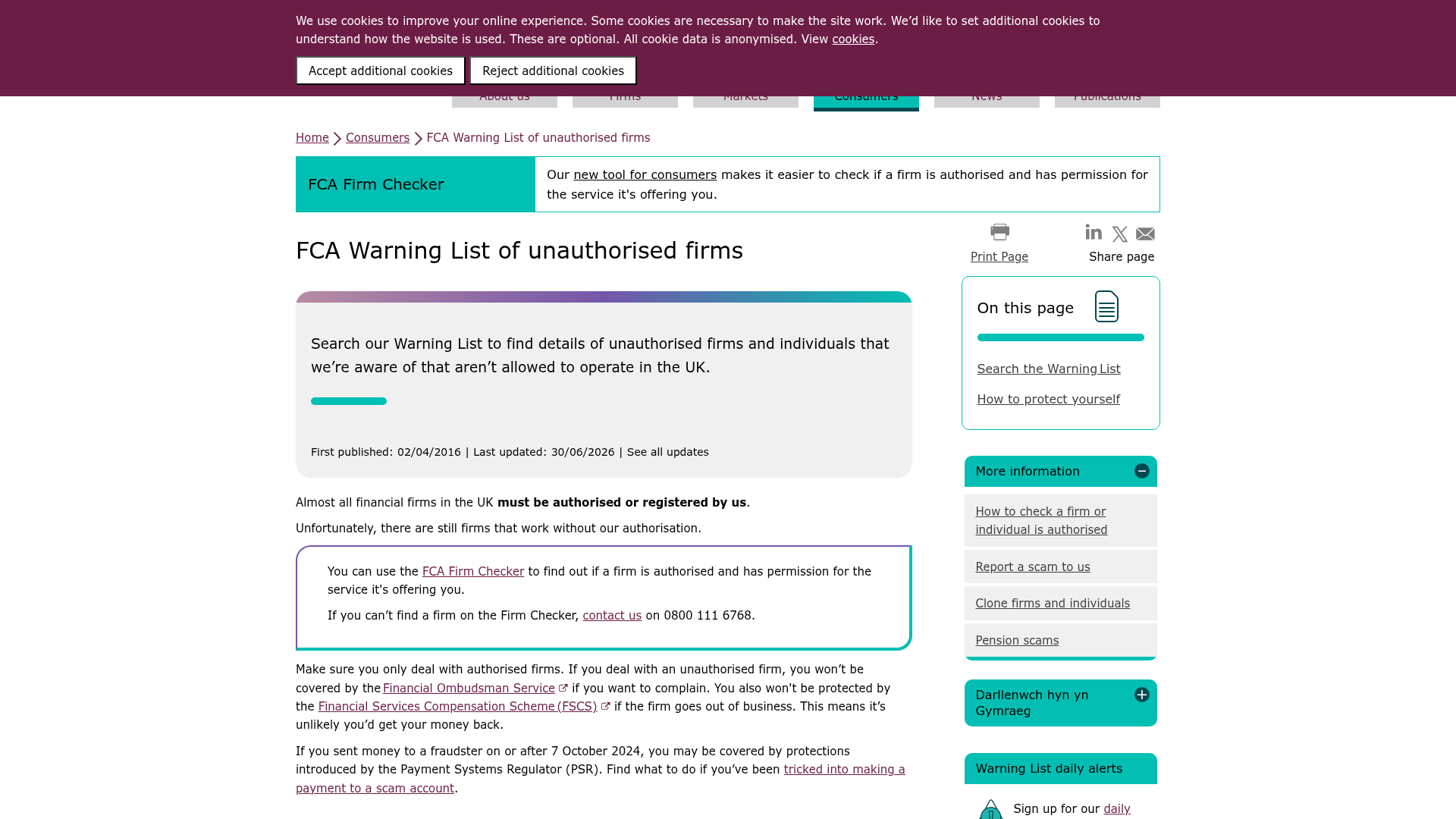
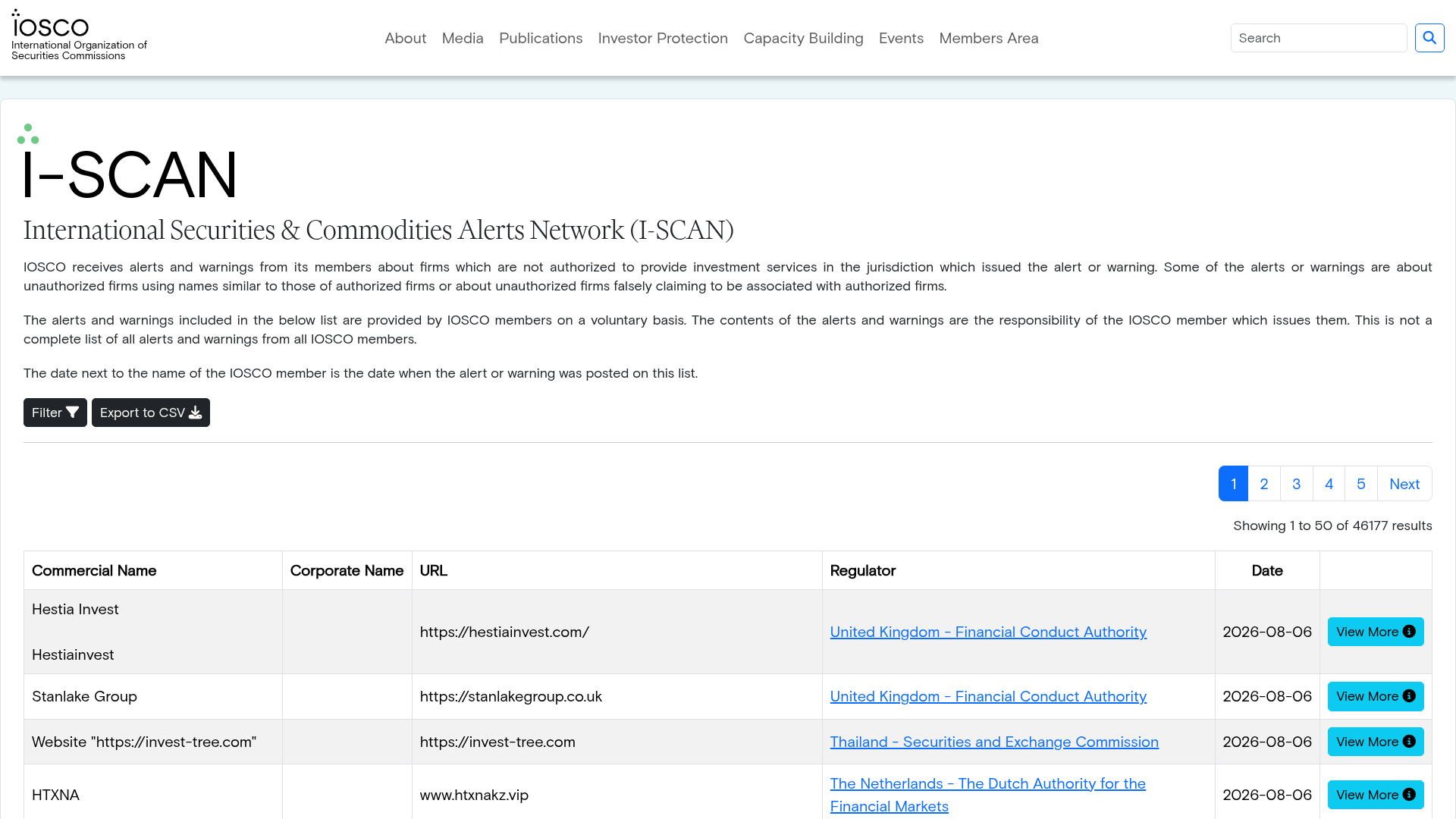
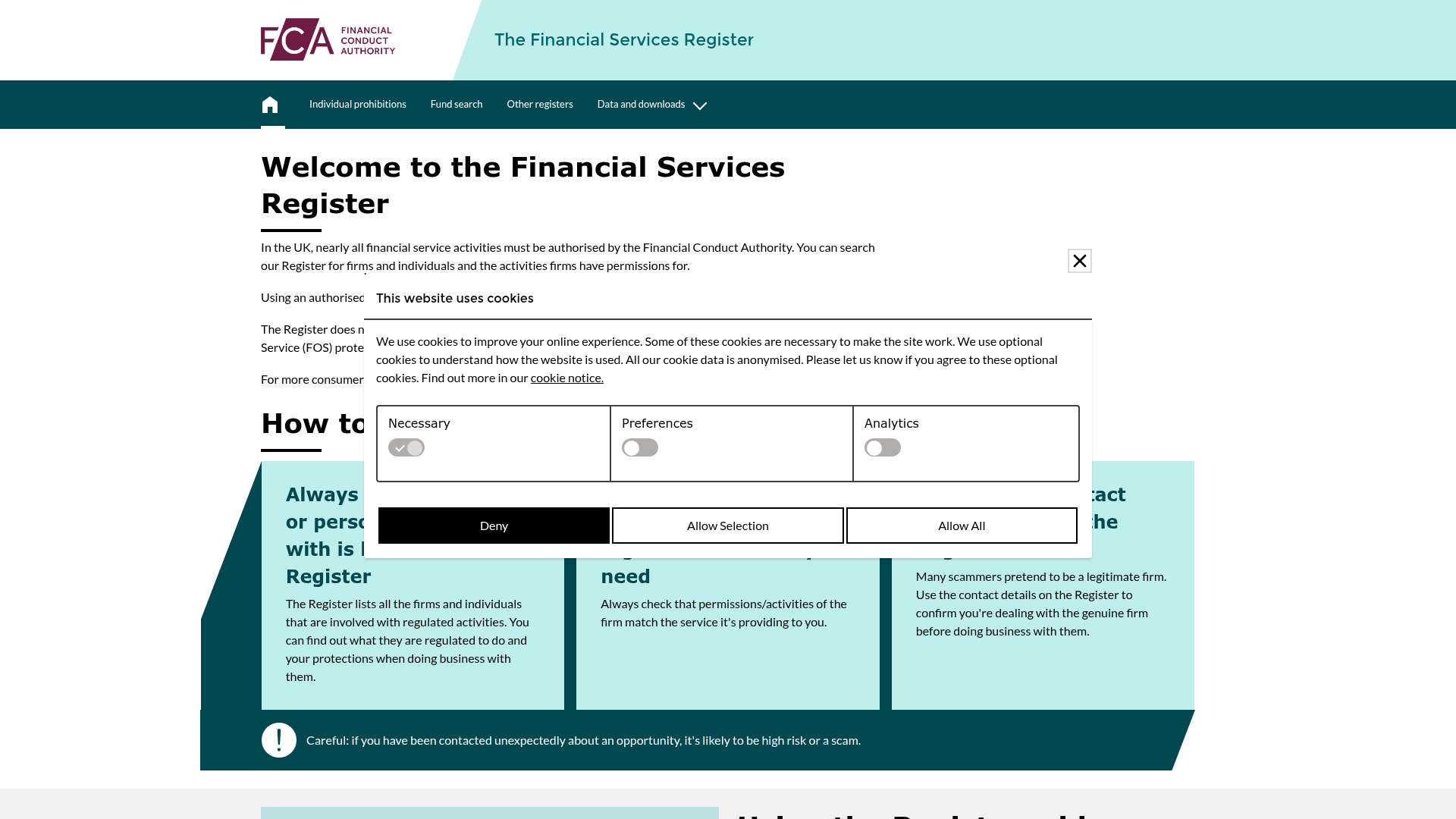
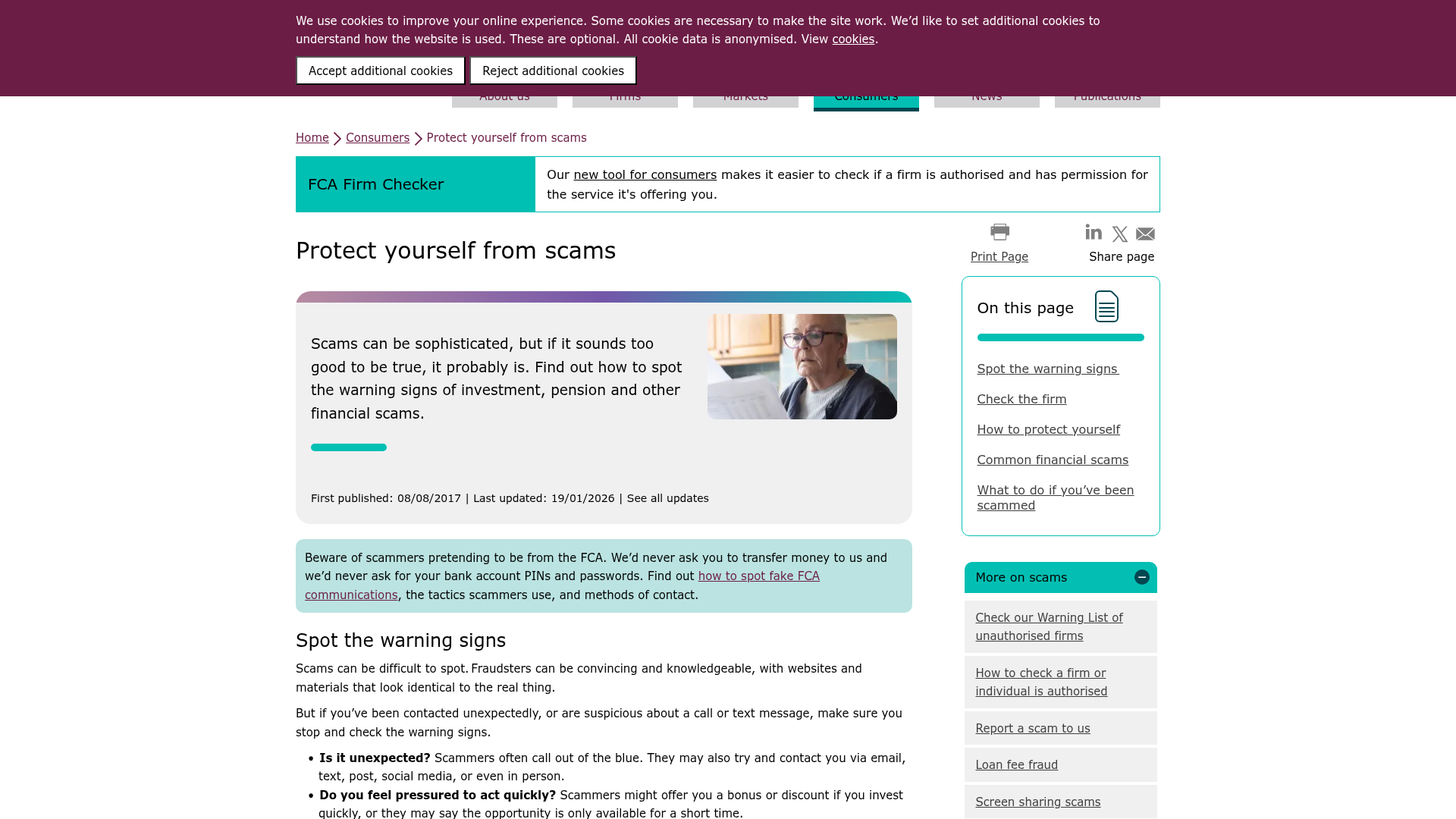
Các sổ đăng ký khác được sử dụng trong các kiểm tra loại này. Mỗi sổ sẽ mở trang riêng của cơ quan quản lý.
Nguồn chính
Mọi khiếu nại trên đều có thể được kiểm tra trên trang của cơ quan quản lý. Các trang này mở trên trang web của cơ quan quản lý, không phải của chúng tôi.
- Financial Conduct Authority — Financial Services Registerregister.fca.org.ukhttps://register.fca.org.uk/
- FCA — Warning list of unauthorised firmsfca.org.ukhttps://www.fca.org.uk/consumers/warning-list-unauthorised-firms
- ASIC — Professional registersasic.gov.auhttps://asic.gov.au/online-services/search-asics-registers/
- CFTC — Registration Deficient (RED) Listcftc.govhttps://www.cftc.gov/check
- NFA BASIC — background affiliation statusnfa.futures.orghttps://www.nfa.futures.org/basicnet/
- ESMA — Product intervention on CFDsesma.europa.euhttps://www.esma.europa.eu/press-news/esma-news/esma-agrees-prohibit-binary-options-and-restrict-cfds-protect-retail
Câu hỏi thường gặp
Sự khác biệt giữa 'cảnh báo' của cơ quan quản lý và 'danh sách đen' là gì?
Cảnh báo của cơ quan quản lý thường thông báo cho công chúng về một công ty hoạt động mà không có giấy phép phù hợp hoặc giả mạo một thực thể hợp pháp. 'Danh sách đen' hoặc 'Danh sách RED' (như của CFTC) là một loại cảnh báo cụ thể nhằm xác định các công ty được biết là thiếu đăng ký hoặc tham gia vào các hoạt động đáng ngờ. Cả hai đều cho thấy rủi ro cao, nhưng cảnh báo có thể có phạm vi rộng hơn.
Nếu một công ty được quản lý ở một quốc gia, liệu nó có thể hoạt động hợp pháp ở bất cứ đâu không?
Không. Một công ty phải được ủy quyền bởi cơ quan quản lý tài chính cụ thể ở mỗi quốc gia hoặc khu vực nơi nó cung cấp dịch vụ. Ví dụ, giấy phép từ CySEC ở Síp không cho phép một công ty phục vụ khách hàng ở Úc mà không có giấy phép của ASIC, hoặc ở Vương quốc Anh mà không có giấy phép của FCA.
Các cơ quan quản lý đưa ra cảnh báo nhanh như thế nào sau khi một công ty bắt đầu hoạt động bất hợp pháp?
Tốc độ khác nhau. Các cơ quan quản lý đưa ra cảnh báo khi họ có đủ bằng chứng về hoạt động không được cấp phép, việc này có thể mất thời gian để thu thập. Các công ty có thể hoạt động trong nhiều tháng hoặc thậm chí lâu hơn trước khi một cảnh báo chính thức được công bố. Đây là lý do tại sao sự cảnh giác cá nhân và việc chủ động kiểm tra sổ đăng ký là rất quan trọng.
Điều gì sẽ xảy ra nếu tôi đã đầu tư vào một công ty nằm trong danh sách cảnh báo?
Các lựa chọn của bạn bị hạn chế. Ngừng ngay lập tức tất cả các khoản tiền gửi và tương tác tiếp theo. Thu thập tất cả tài liệu (thông tin liên lạc, hồ sơ giao dịch). Báo cáo công ty cho cơ quan quản lý tài chính địa phương và cơ quan thực thi pháp luật của bạn (ví dụ: FTC, Action Fraud, FBI IC3). Việc thu hồi tiền thường khó khăn nhưng ghi lại mọi thứ là bước đầu tiên tốt nhất của bạn.
Liệu các công ty hợp pháp đôi khi có thể xuất hiện trên danh sách cảnh báo không?
Có, nhưng thường là dưới dạng cảnh báo mạo danh. Ví dụ, một thực thể không được cấp phép có thể sao chép tên và thương hiệu của một công ty hợp pháp như Pepperstone. Cảnh báo sau đó sẽ nêu rõ rằng bản sao là không được cấp phép, trong khi Pepperstone thực sự, được quản lý vẫn hợp pháp. Luôn kiểm tra chính xác trang web và thông tin liên hệ.
Tất cả các cơ quan quản lý tài chính có duy trì danh bạ công khai hoặc danh sách cảnh báo không?
Hầu hết các cơ quan quản lý tài chính uy tín đều duy trì danh bạ công khai các tổ chức được cấp phép và thường xuyên công bố các cảnh báo về các công ty không được phép hoạt động. Các ví dụ bao gồm FCA Financial Services Register, ASIC Professional Registers, CySEC Regulated Entities Register và hệ thống NFA BASIC. Luôn tham khảo trực tiếp các nguồn chính thức này.