
Poin-poin penting
- Penipuan 'pig-butchering' dimulai dengan manipulasi psikologis jangka panjang, seringkali melalui aplikasi kencan atau media sosial, membangun kepercayaan sebelum menyebutkan investasi apa pun.
- Korban diarahkan ke platform trading palsu yang dirancang menyerupai broker sah, menunjukkan keuntungan palsu untuk mendorong deposit yang lebih besar.
- Broker asli yang teregulasi seperti Pepperstone, OANDA, atau XM menyediakan informasi regulasi yang transparan dan beroperasi di bawah pengawasan ketat, yang dapat diverifikasi secara independen.
- Upaya penarikan dana dihadapkan pada tuntutan 'pajak' atau 'biaya' tambahan, yang merupakan penipuan lebih lanjut untuk memeras lebih banyak uang.
- Memverifikasi status regulasi broker langsung dengan regulator resmi dan mewaspadai saran investasi yang tidak diminta adalah langkah-langkah perlindungan yang krusial.
Pendekatan Awal: Koneksi yang Tampak Tidak Berbahaya
Penipuan investasi 'pig-butchering', yang dalam bahasa Mandarin dikenal sebagai 'Sha Zhu Pan', adalah bentuk penipuan keuangan canggih yang mengandalkan manipulasi psikologis berkepanjangan daripada penipuan cepat. Ini dimulai dengan pesan tak terduga, seringkali tampak tidak berbahaya, dari orang asing di aplikasi kencan, platform media sosial, atau bahkan melalui pesan teks yang tidak diharapkan. Tujuan awal penipu bukanlah untuk membicarakan uang, melainkan untuk membangun koneksi pribadi, membangun hubungan dan kepercayaan selama berminggu-minggu atau bahkan berbulan-bulan.
Kontak awal ini mungkin melibatkan percakapan santai tentang kehidupan sehari-hari, hobi, atau minat yang sama. Penipu memainkan permainan jangka panjang, menciptakan persona yang dapat dipercaya—mungkin seorang pengusaha sukses, kekasih yang menarik, atau kenalan jauh. Pesan-pesan mereka konsisten, menarik, dan dirancang untuk menumbuhkan rasa persahabatan atau minat romantis yang tulus, membuat pergeseran akhirnya ke saran investasi terasa alami, bahkan membantu.
Membangun Kepercayaan dan Mengungkap 'Rahasia'
Setelah ikatan kepercayaan terbentuk dengan kuat, penipu secara halus memperkenalkan topik kesuksesan finansial mereka sendiri. Mereka mungkin secara santai menyebutkan telah menghasilkan keuntungan signifikan melalui peluang investasi eksklusif, seringkali dalam forex, cryptocurrency, atau komoditas. Pengungkapan ini biasanya dibingkai sebagai keberuntungan, rahasia keluarga, atau wawasan unik dari 'ahli' kerabat atau mentor yang terpercaya. Penipu akan sering membagikan tangkapan layar 'penghasilan' palsu mereka, menciptakan ilusi kekayaan yang mudah. Mereka menolak tekanan langsung untuk berinvestasi pada awalnya, sebaliknya memposisikan diri sebagai pemandu dermawan yang bersedia berbagi 'rahasia' mereka dengan teman yang dipercaya. Ini menciptakan daya tarik emosional yang kuat: korban merasa istimewa, penting, dan berutang budi kepada orang kepercayaan baru mereka, membuat mereka lebih rentan terhadap tahap penipuan berikutnya.
Platform Trading Ilusi
Dengan kepercayaan yang telah terjalin dan minat korban yang terpicu, penipu mengarahkan mereka ke platform atau aplikasi investasi yang tampak sah. Platform ini dirancang dengan cermat untuk meniru antarmuka trading profesional, lengkap dengan data pasar real-time, grafik, dan saldo akun. Namun, semuanya adalah penipuan, dikendalikan oleh para penipu itu sendiri. Korban didorong untuk memulai dengan deposit awal yang kecil. Platform palsu tersebut kemudian menampilkan keuntungan yang segera, konsisten, dan mengesankan, memperkuat klaim penipu dan membangun kepercayaan korban. Keberhasilan awal ini sangat penting; ini meyakinkan korban bahwa investasi tersebut sah dan menguntungkan. Broker asli, seperti Pepperstone (didirikan 2010, Kantor Pusat Melbourne, Australia, diregulasi oleh FCA, ASIC, CySEC, DFSA, BaFin, CMA, SCB) atau XM (didirikan 2009, Kantor Pusat Limassol, Siprus, diregulasi oleh CySEC, ASIC, IFSC, DFSA), akan selalu transparan mengenai status regulasi mereka dan menyediakan detail yang dapat diverifikasi, yang dapat diperiksa silang dengan otoritas keuangan resmi.
Eskalasi: Tekanan untuk Berinvestasi Lebih Banyak
Setelah korban percaya bahwa mereka berhasil trading dan menghasilkan keuntungan besar, penipu meningkatkan tekanan untuk menginvestasikan jumlah yang lebih besar. Mereka mungkin menyarankan bahwa deposit yang lebih besar diperlukan untuk mengakses keuntungan yang lebih besar lagi, membuka akun 'VIP', atau memanfaatkan peluang pasar sementara. Desakan ini seringkali disertai dengan manipulasi emosional, bermain pada keserakahan korban, ketakutan akan ketinggalan (FOMO), atau keinginan mereka untuk menyenangkan 'teman' atau 'pasangan' baru mereka. Platform palsu terus menunjukkan saldo akun yang terus meningkat, terkadang menampilkan jumlah enam atau bahkan tujuh digit. Korban, yang kini telah berinvestasi secara emosional dan finansial, mungkin dibujuk untuk mencairkan tabungan, mengambil pinjaman, atau bahkan meminjam uang dari keluarga dan teman untuk mendanai deposit yang lebih besar ini. Tahap ini merepresentasikan 'penggemukan' 'babi'—korban dipersiapkan untuk kerugian finansial yang signifikan.
Jebakan Penarikan dan Biaya Palsu
Momen kebenaran tiba ketika korban mencoba menarik 'keuntungan' mereka. Tiba-tiba, muncul hambatan tak terduga. Platform atau penipu akan mengklaim bahwa biaya penarikan, pajak, atau biaya komisi yang besar diperlukan sebelum dana dapat dilepaskan. Biaya-biaya ini sepenuhnya dibuat-buat dan tidak memiliki dasar dalam praktik keuangan yang sah. Alasan umum meliputi:
- "Anda perlu membayar pajak 20% atas keuntungan Anda sebelum penarikan."
- "Akun Anda dibekukan karena aktivitas mencurigakan; bayar deposit keamanan untuk membukanya."
- "Biaya administrasi diperlukan untuk transfer besar."
Penipu bahkan mungkin menawarkan untuk membantu membayar sebagian dari biaya ini, semakin menjerat korban dan membuat permintaan tersebut tampak lebih kredibel. Setiap pembayaran hanya mengarah pada pembayaran lain, hingga korban kehabisan uang atau akhirnya menyadari penipuan tersebut. Pada titik ini, semua komunikasi biasanya terhenti, dan penipu, bersama dengan investasi korban, menghilang.
Melindungi Aset Anda: Memverifikasi Legitimasi
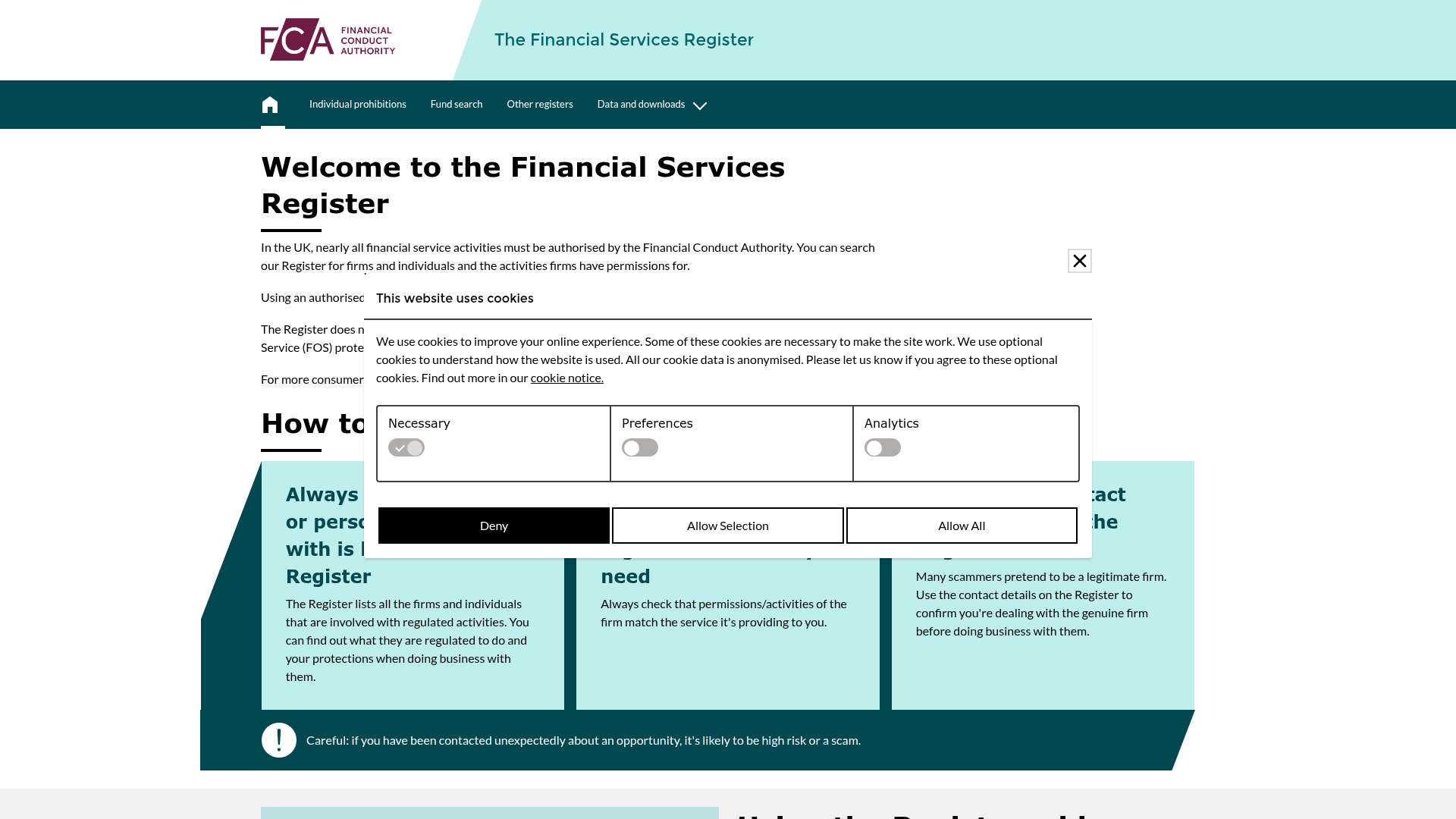
Pertahanan utama terhadap penipuan 'pig-butchering' adalah skeptisisme dan verifikasi yang ketat. Jangan pernah berinvestasi hanya berdasarkan saran dari seseorang yang baru Anda temui secara daring, terutama jika mereka terburu-buru membahas peluang investasi. Selalu asumsikan bahwa pendekatan investasi yang tidak diminta membawa risiko signifikan. Sebelum terlibat dengan platform investasi apa pun, konfirmasikan status regulasinya langsung dengan otoritas keuangan yang relevan. Misalnya, jika broker mengklaim diregulasi oleh FCA (Financial Conduct Authority) di Inggris, kunjungi situs web resmi FCA dan gunakan daftar mereka untuk mencari detail perusahaan. Jangan mengandalkan tautan atau informasi yang diberikan oleh orang yang menghubungi Anda. Broker sah seperti OANDA (didirikan 1996, diregulasi oleh FCA, CFTC/NFA, ASIC, IIROC, MAS) dan FOREX.com (didirikan 2001, diregulasi oleh CFTC/NFA, FCA, ASIC, CIRO, CIMA) secara jelas menampilkan lisensi regulasi dan informasi kontak mereka, yang dapat diverifikasi. Jika detail regulasi broker tidak dapat diverifikasi secara independen, atau jika mereka mengklaim diregulasi oleh otoritas yang tidak jelas atau tidak dikenal, berhati-hatilah secara ekstrem.
Langkah-Langkah yang Harus Diambil Jika Anda Curiga Menjadi Korban
Jika Anda yakin telah menjadi korban penipuan 'pig-butchering', bertindaklah dengan cepat. Pertama, hentikan semua komunikasi dengan penipu dan blokir mereka di semua platform. Jangan mencoba memulihkan uang Anda dengan membayar lebih banyak 'biaya' atau dengan menggunakan apa yang disebut 'layanan pemulihan', yang seringkali merupakan penipuan sekunder. Kumpulkan semua bukti yang tersedia, termasuk tangkapan layar percakapan, catatan transaksi, dan alamat situs web platform palsu. Segera hubungi bank atau lembaga keuangan Anda untuk melaporkan transaksi penipuan tersebut. Mereka mungkin dapat membantu melacak dana atau membalikkan transfer baru-baru ini. Terakhir, laporkan penipuan tersebut kepada penegak hukum setempat dan badan regulasi keuangan yang relevan. Di AS, ini bisa berupa Internet Crime Complaint Center (IC3) FBI; di Inggris, Action Fraud; dan di Australia, Scamwatch. Laporan Anda dapat membantu pihak berwenang melacak jaringan kriminal ini dan berpotensi mencegah orang lain menjadi korban.
Halaman yang kami periksa
Ini adalah halaman resmi otoritas, diambil seperti yang kami temukan. Buka dan lakukan pencarian yang sama sendiri — tidak ada di daftar ini yang menggantikan sumber aslinya.
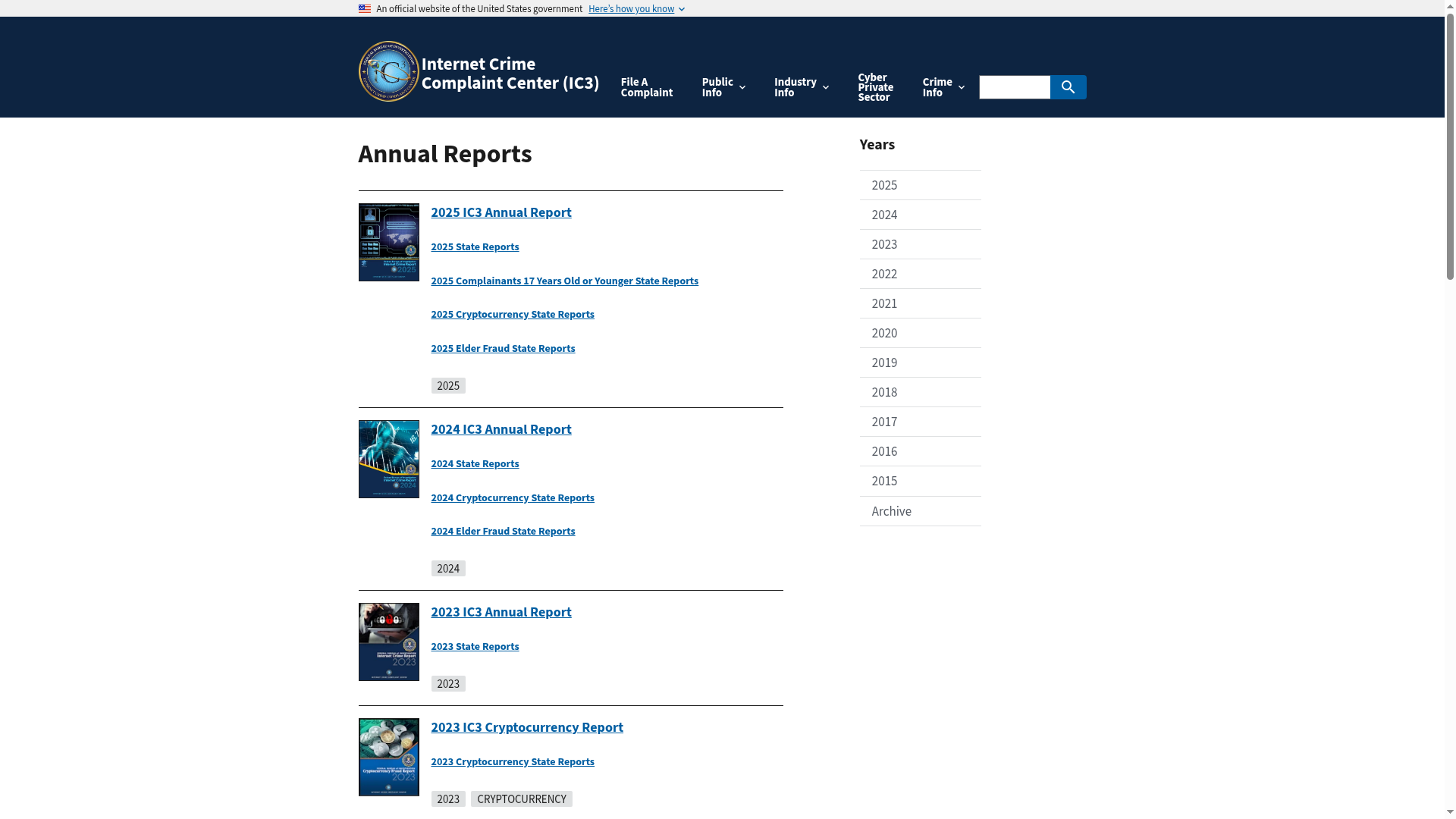
Daftar lain yang digunakan dalam pemeriksaan semacam ini. Setiap tautan membuka halaman otoritas terkait.
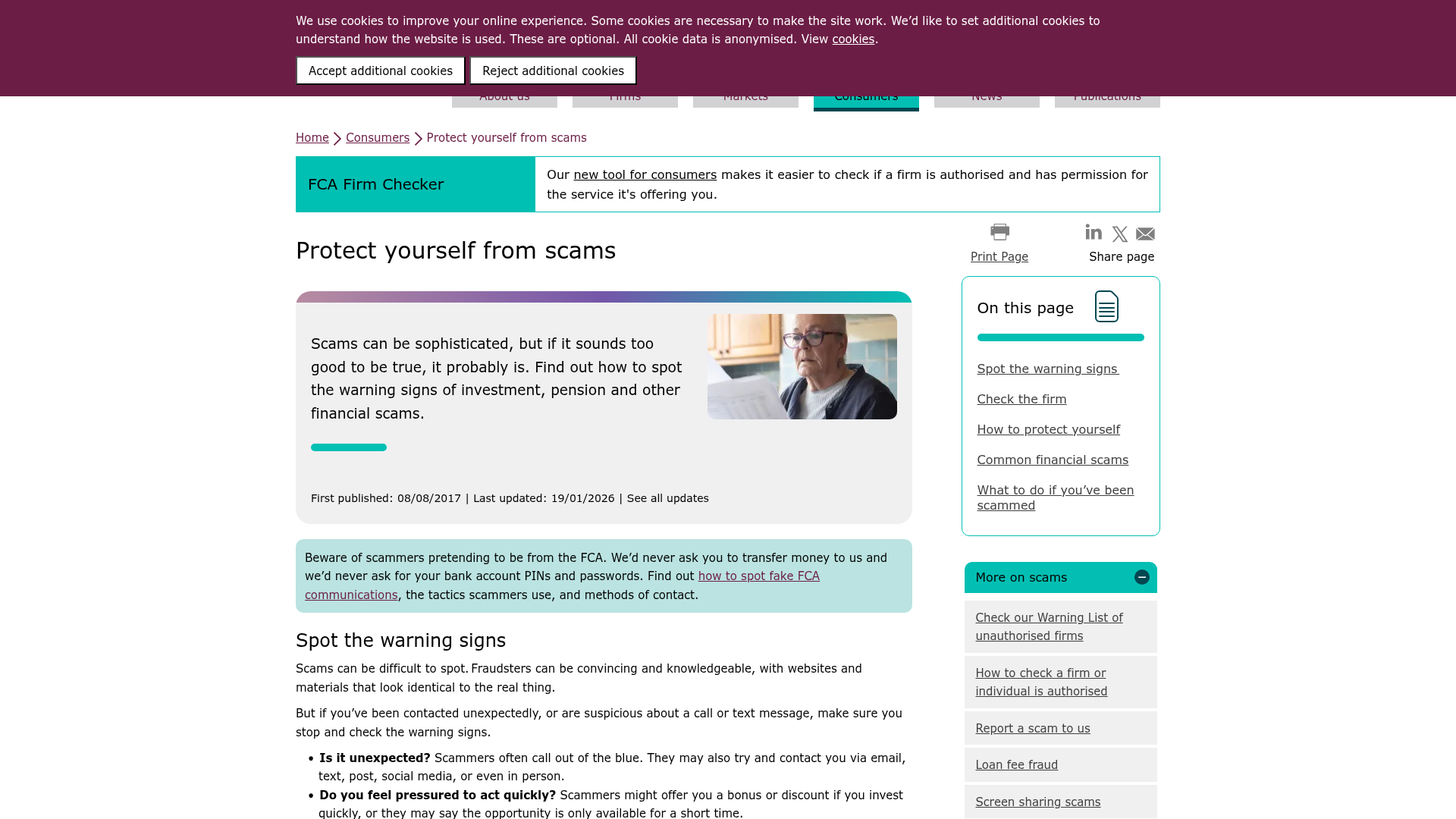
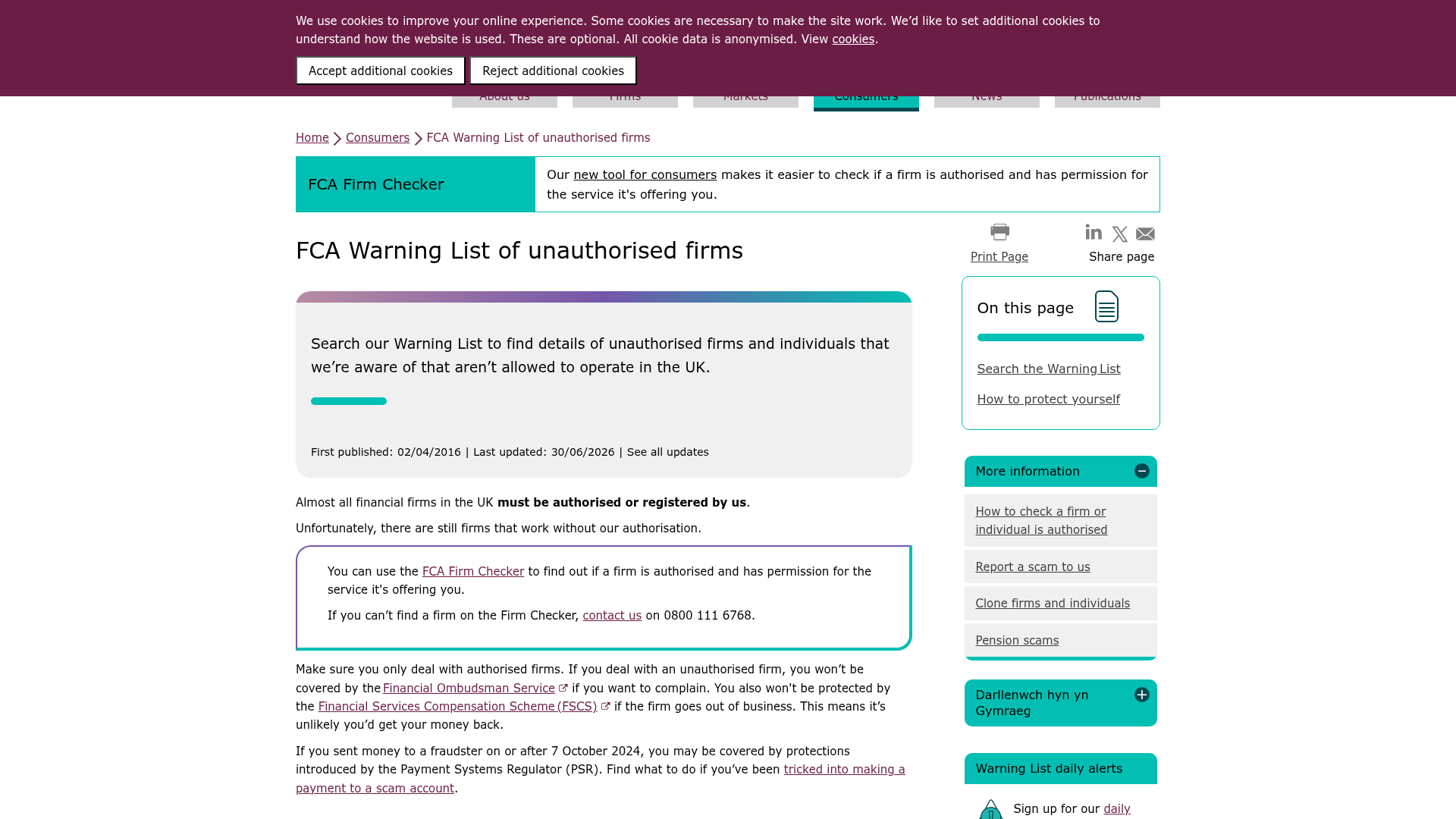
Sering ditanyakan
Apa perbedaan utama antara penipuan 'pig-butchering' dan penipuan investasi lainnya?
Penipuan 'pig-butchering' membedakan diri melalui periode manipulasi psikologis yang berkepanjangan, membangun kepercayaan yang mendalam atau bahkan hubungan romantis sebelum memperkenalkan komponen investasi. Tidak seperti penipuan cepat, mereka 'menggemukkan' korban selama berminggu-minggu atau berbulan-bulan, menyebabkan kerugian yang jauh lebih besar.
Bagaimana saya dapat memverifikasi apakah broker benar-benar teregulasi?
Untuk memverifikasi regulasi broker, kunjungi situs web resmi otoritas regulasi yang disebutkan (misalnya, FCA untuk Inggris, ASIC untuk Australia, CySEC untuk Siprus) dan gunakan daftar publik mereka untuk mencari nomor lisensi broker atau nama perusahaan. Jangan percaya lencana regulasi atau tautan yang disediakan langsung oleh broker atau individu. Broker yang sah seperti IC Markets (diregulasi oleh ASIC, CySEC, FSA Seychelles) atau FxPro (diregulasi oleh FCA, CySEC, FSCA, SCB) akan memiliki entri yang dapat diverifikasi pada daftar resmi ini.
Apa saja 'tanda bahaya' umum pada tahap awal penipuan ini?
Tanda bahaya awal meliputi pesan yang tidak diminta dari orang asing yang berupaya membangun kedekatan dengan cepat, 'teman' atau 'kekasih' baru di dunia maya yang dengan cepat membicarakan kekayaan mereka yang luar biasa, saran terus-menerus untuk memindahkan percakapan ke aplikasi pesan terenkripsi, dan setiap penyebutan peluang investasi hasil tinggi yang 'eksklusif' atau 'dijamin' yang terdengar terlalu bagus untuk menjadi kenyataan.
Bisakah saya memulihkan uang yang hilang dalam penipuan 'pig-butchering'?
Memulihkan dana yang hilang bisa menjadi tantangan, tetapi penting untuk segera bertindak. Hubungi bank Anda, laporkan penipuan tersebut kepada penegak hukum dan regulator keuangan, serta berikan semua dokumentasi. Waspadai 'layanan pemulihan' yang menjanjikan pengembalian uang Anda dengan imbalan biaya; ini hampir selalu merupakan penipuan tambahan.