
Puntos clave
- El registro en el FSPR por sí solo no significa que se tenga una licencia de la FMA; muchas empresas en el FSPR no están reguladas por la FMA para sus actividades principales.
- Siempre coteje la entrada de una empresa en el FSPR con el registro de la FMA para confirmar las licencias específicas para los servicios ofrecidos.
- Tenga cuidado con las 'empresas clon' que imitan a entidades legítimas; verifique los números de licencia y los datos de contacto directamente en los registros oficiales.
- Las empresas reguladas únicamente en el extranjero, incluso si están registradas en el FSPR, ofrecen menos protección al consumidor para los residentes de Nueva Zelanda.
- Confirmar las licencias específicas de proveedor de asesoramiento financiero (FAP) en el registro de la FMA es vital para los servicios de asesoramiento.
- Denunciar cualquier empresa que afirme tener una licencia de la FMA sin aparecer en el registro es un paso crítico para la seguridad del consumidor.
La Búsqueda Inicial de un Proveedor Financiero Neozelandés
Imagine que ha encontrado un anuncio de una plataforma de inversión con sede en Nueva Zelanda que promete rendimientos atractivos. Su primera acción, e inmediata, no debe ser depositar fondos ni compartir datos personales. En su lugar, debe realizar una verificación exhaustiva de su situación regulatoria. Este proceso comienza con dos recursos oficiales distintos pero interconectados: el registro de la Financial Markets Authority (FMA) y el Financial Service Providers Register (FSPR). Muchas personas creen erróneamente que la aparición de una empresa en el FSPR es prueba suficiente de legitimidad y supervisión adecuada. Esta es una simplificación peligrosa, ya que el FSPR cumple un propósito diferente y más amplio que las funciones específicas de concesión de licencias de la FMA. Comprender esta distinción es fundamental para proteger su capital.
La FMA es el principal regulador de los mercados financieros de Nueva Zelanda, responsable de la concesión de licencias y la supervisión de los proveedores de servicios financieros, la aplicación de la legislación sobre mercados financieros y la promoción de mercados justos y eficientes. Cuando una empresa posee una licencia de la FMA, significa que ha cumplido criterios específicos, está sujeta a supervisión continua y debe adherirse a estrictos estándares de conducta. El FSPR, administrado por la Companies Office, simplemente enumera las entidades que están legalmente autorizadas a prestar servicios financieros en Nueva Zelanda, independientemente de si esos servicios están específicamente regulados por la FMA u otro organismo, o si la empresa solo está registrada para realizar negocios internacionalmente desde una base en Nueva Zelanda. No distinguir entre estos dos registros, y la información que transmiten, deja a los inversores vulnerables.
Comprendiendo el Marco Regulatorio de Nueva Zelanda
La regulación de los servicios financieros de Nueva Zelanda opera bajo un sistema escalonado. En la cúspide, la FMA actúa como la máxima autoridad para la mayoría de las actividades financieras reguladas dentro del país. Esto incluye la concesión de licencias a emisores de derivados, proveedores de asesoramiento financiero, esquemas de inversión gestionada y otros. La supervisión de la FMA proporciona un grado de protección a través de normas de conducta, requisitos de capital y mecanismos de resolución de disputas. Su registro especifica el tipo exacto de licencia que posee una empresa y el alcance de los servicios que está autorizada a prestar.
El FSPR, por el contrario, es una base de datos de acceso público que identifica a todas las personas y organizaciones que prestan servicios financieros en Nueva Zelanda, o desde Nueva Zelanda a clientes extranjeros. Un punto clave a entender aquí es que el mero hecho de estar 'registrado' en el FSPR no significa que la FMA otorgue licencias o supervise un servicio financiero particular que se ofrece. Por ejemplo, un bróker de divisas podría estar registrado en el FSPR porque opera desde Nueva Zelanda, pero su cumplimiento regulatorio real podría estar bajo una autoridad extranjera, o para ciertas actividades, podría no requerir una licencia de la FMA en absoluto. Esto significa que una empresa podría estar en el FSPR, parecer tener presencia local, pero ofrecer servicios sin las protecciones directas al consumidor proporcionadas por la FMA para los residentes de Nueva Zelanda. Es una distinción que a menudo escapa a los inversores menos experimentados.
La diferencia crítica radica en el nivel y el tipo de escrutinio regulatorio. La concesión de licencias de la FMA implica una evaluación de la capacidad de una empresa, su solidez financiera y sus estructuras de cumplimiento, junto con una supervisión continua. El registro en el FSPR es un proceso más administrativo, esencialmente una declaración de intención de prestar servicios financieros, con controles centrados principalmente en la idoneidad de los directores y el cumplimiento de las normas contra el blanqueo de dinero, en lugar de los productos o servicios financieros específicos ofrecidos.
Diferencias Clave: Licencia de la FMA vs. Registro en el FSPR
| Aspecto | Licencia de la FMA | Registro en el FSPR |
|---|---|---|
| Propósito | Autorización y supervisión para actividades financieras reguladas específicas | Listado público de entidades que prestan servicios financieros (locales o internacionales) |
| Organismo Regulador | Autoridad de Mercados Financieros (FMA) | Companies Office (administra el FSPR) |
| Protección al Consumidor | Supervisión directa de la FMA, normas de conducta, marcos de resolución de disputas | Identificación del proveedor; protecciones directas de la FMA solo si está licenciado por la FMA |
| Lo que Significa | Cumple con estándares regulatorios específicos para actividades licenciadas | Legalmente capacitado para ofrecer algunos servicios financieros desde Nueva Zelanda, o desde Nueva Zelanda a clientes en el extranjero |
| Fuente de Verificación | Registro de la FMA (fma.govt.nz) | Registro de Proveedores de Servicios Financieros (fsp-register.companiesoffice.govt.nz) |
El Registro de la FMA: Qué Buscar
Para verificar correctamente una entidad licenciada por la FMA, debe visitar el sitio web oficial de la FMA en fma.govt.nz. Una vez allí, localice la función de búsqueda 'Financial Service Providers Register' o 'Find a provider'. Ingrese el nombre legal exacto de la empresa o, si está disponible, su número FSP. El registro de la FMA mostrará información crucial: el nombre legal de la empresa, el número FSP, la dirección y, lo más importante, las licencias específicas que posee.
Por ejemplo, si busca un emisor de derivados, esperaría ver 'Licensed as a Derivative Issuer' listado. Si busca asesoramiento financiero, confirmaría que están 'Licensed as a Financial Advice Provider'. No es suficiente que la empresa simplemente aparezca; el tipo de licencia debe coincidir con el tipo de servicio que le ofrecen. Si una empresa afirma ofrecer trading de forex con apalancamiento pero solo posee una licencia como 'Financial Advice Provider – Class 1', esto indica una grave discrepancia. El registro de la FMA es la fuente definitiva para estos detalles. También debe verificar si hay advertencias públicas o acciones disciplinarias asociadas con la empresa en el sitio de la FMA, que estarán vinculadas a su entrada o se encontrarán en una sección separada de 'Warnings & Alerts'. Esta es la parte que la mayoría de las guías omiten, pero es esencial para una evaluación de riesgo completa.
Preste mucha atención al 'status' de la licencia. ¿Está 'Active'? ¿Está 'Suspended' o 'Cancelled'? Una empresa podría haber tenido una licencia en el pasado pero ya no la posee. Una licencia activa sin advertencias proporciona la indicación más sólida de una operación legítima bajo la supervisión de la FMA para los servicios declarados. Sin esta licencia específica de la FMA para el servicio proporcionado, cualquier afirmación de regulación local es engañosa.
El Registro de Proveedores de Servicios Financieros (FSPR): Más Allá de las Licencias
El Registro de Proveedores de Servicios Financieros (FSPR) es administrado por la Companies Office y se puede acceder a él en fsp-register.companiesoffice.govt.nz. Este registro es una base de datos de todas las entidades que están proporcionando servicios financieros en Nueva Zelanda o que los proporcionan desde Nueva Zelanda a clientes en el extranjero. Encontrar una empresa aquí confirma su existencia legal y su registro como proveedor de servicios financieros en Nueva Zelanda. Sin embargo, y esta es una distinción crítica, el registro FSPR en sí mismo no es una licencia para realizar actividades reguladas específicas como la emisión de derivados o la provisión de asesoramiento financiero.
Al buscar en el FSPR, ingrese el nombre legal de la empresa o el número FSP. La entrada mostrará detalles como su fecha de registro, dirección, información del director y los 'servicios financieros' que están registrados para proporcionar. Estos servicios registrados son a menudo categorías amplias como 'proporcionar un producto financiero', 'actuar como creador de mercado' u 'operar un servicio de transferencia de dinero o valor'. Es importante comparar estos servicios listados con lo que la empresa le está ofreciendo realmente. Por ejemplo, una empresa podría estar registrada en el FSPR para 'actuar como creador de mercado', pero sin una licencia explícita de Emisor de Derivados (Derivative Issuer) de la FMA, no se les permite ofrecer derivados extrabursátiles (como trading de forex o CFD) a clientes minoristas de Nueva Zelanda. El FSPR simplemente confirma su estado como proveedor de servicios financieros; el registro de la FMA confirma lo que están licenciados para hacer.
Muchas empresas en el FSPR están registradas para proporcionar servicios únicamente a clientes fuera de Nueva Zelanda, o podrían estar registradas para actividades que no requieren una licencia específica de la FMA, como ciertos tipos de distribución de productos financieros. Esto significa que una inclusión en el FSPR, sin una licencia FMA correspondiente para la actividad en cuestión, no proporciona protección al consumidor respaldada por la FMA para los neozelandeses que participan en actividades reguladas. Es un registro de una entidad comercial, no un respaldo de sus métodos operativos o la seguridad de sus ofertas.
El FSPR simplemente confirma la capacidad legal de una entidad para prestar servicios financieros; el registro de la FMA confirma qué actividades reguladas específicas están autorizadas a realizar.
Alan Reeve
Trampas Comunes en la Verificación: Similitudes de Nombres y Empresas Clonadas
Una táctica particularmente insidiosa empleada por operadores ilícitos es la 'empresa clonada'. Estas entidades asumen el nombre, o un nombre muy similar, de una empresa legítima y licenciada por la FMA para engañar a los inversores. Incluso podrían utilizar una marca, un diseño de sitio web y una información de contacto idénticos, cambiando solo un detalle sutil como un dominio de correo electrónico o un solo carácter en el nombre de la empresa. Esto hace que la verificación sea excepcionalmente difícil para un ojo inexperto. Su mejor defensa aquí es una atención meticulosa a los detalles y la negativa a confiar en cualquier información proporcionada directamente por la propia empresa durante su verificación inicial.
Al verificar los registros de la FMA y el FSPR, asegúrese siempre de que el número FSP, la dirección física y el nombre legal específico coincidan precisamente con los detalles del registro oficial, no con lo que se presenta en el sitio web o los materiales de marketing de la empresa. Si una empresa lo contacta sin que usted lo solicite, afirmando ser de una entidad conocida, manténgase muy escéptico. Verifique su identidad buscando de forma independiente los datos de contacto oficiales de la empresa legítima en el registro de la FMA y contactándolos directamente, en lugar de utilizar cualquier información de contacto proporcionada por la persona que llama o en un correo electrónico.
Otra trampa involucra a empresas que se registran en el FSPR con una dirección en Nueva Zelanda, y luego utilizan ese registro para dar la impresión de una supervisión completa de la FMA, incluso si solo poseen un tipo de registro muy básico o solo están autorizadas a proporcionar servicios a clientes en el extranjero. Esto crea una falsa sensación de seguridad. Siempre cuestione el alcance de su registro en Nueva Zelanda y, fundamentalmente, si poseen la licencia específica de la FMA requerida para el producto o servicio financiero que le están ofreciendo a usted, como residente de Nueva Zelanda. Sin eso, su dinero no está protegido por las normas de la FMA.
Errores Comunes en la Verificación y Contramedidas
| Error | Descripción | Medida de Verificación |
|---|---|---|
| Firmas Clon | Entidades ilícitas que imitan a firmas legítimas reguladas (nombre, marca). | Verifique el número FSP, el nombre legal y los datos de contacto directamente en la FMA/FSPR; inicie el contacto de forma independiente. |
| Registro FSPR Engañoso | Firmas que utilizan el registro FSPR para implicar una licencia de la FMA para servicios regulados. | Confirme la licencia específica de la FMA para el servicio ofrecido (ej., Emisor de Derivados), no solo el listado FSPR. |
| Contacto No Solicitado | Ser contactado por 'brókeres' por teléfono, correo electrónico o redes sociales. | Asuma que es sospechoso; nunca utilice los datos de contacto proporcionados. Verifique la firma y la información de contacto a través de registros oficiales. |
| Reclamaciones de Regulación Extranjera | Firmas que afirman estar reguladas por organismos extranjeros poco conocidos para clientes de NZ. | Priorice las firmas con licencia de la FMA para servicios ofrecidos dentro de Nueva Zelanda; la regulación extranjera ofrece protección limitada en NZ. |
El Riesgo de la Regulación Extranjera y la Presencia Local
Algunos proveedores de servicios financieros registrados en el FSPR pueden declarar abiertamente que están regulados por una autoridad extranjera en lugar de la FMA. Si bien no es intrínsecamente ilegal que una entidad registrada en Nueva Zelanda esté regulada en el extranjero para ciertas actividades, esto presenta un perfil de riesgo significativamente diferente para un cliente neozelandés. Por ejemplo, una firma podría estar registrada en el FSPR y afirmar estar regulada por la Financial Services Authority (Seychelles) o la Securities Commission of the Bahamas. Aunque estos son reguladores legítimos en sus propias jurisdicciones, su supervisión no se extiende a la protección de los residentes de Nueva Zelanda que interactúan con esa firma desde Nueva Zelanda.
La consecuencia práctica es contundente. Si surge una disputa, o si la firma se declara insolvente, su recurso estará bajo las leyes y los esquemas de protección al consumidor de la jurisdicción extranjera, los cuales pueden ser muy diferentes e inferiores a los de Nueva Zelanda. Esto generalmente significa tiempos de resolución más largos, costos más altos y límites de compensación potencialmente más bajos o nulos en comparación con las entidades reguladas por la FMA. Los servicios de resolución de disputas independientes y gratuitos de Nueva Zelanda, Financial Services Complaints Limited (FSCL) y Insurance & Financial Services Ombudsman Scheme (IFSO), generalmente solo cubren a las firmas con licencia de la FMA o aquellas con obligaciones FSPR específicas para clientes de Nueva Zelanda.
Por estas razones, es una postura prudente favorecer a las firmas con licencia directa de la FMA para los productos o servicios financieros que usted, como residente de Nueva Zelanda, pretenda utilizar. Si bien la regulación offshore podría ser aceptable para traders experimentados que comprenden plenamente las implicaciones de los marcos legales transfronterizos, para el inversor minorista promedio, la ausencia de protección directa de la FMA significa un mayor grado de riesgo. La conveniencia percibida de tratar con una firma registrada en el FSPR con regulación offshore a menudo no compensa la red de seguridad reducida.
Verificación de Asesores Financieros y Roles Específicos
El proceso para verificar a los asesores financieros sigue un camino similar, pero aún más específico, dentro del ámbito de la FMA. Desde marzo de 2021, la Financial Services Legislation Amendment Act (FSLAA) introdujo un nuevo régimen de licencias para los proveedores de asesoramiento financiero (FAPs). Esto significa que los individuos o entidades que brindan asesoramiento financiero deben poseer una licencia FAP ellos mismos, o operar bajo el paraguas de un FAP con licencia. Ya no es suficiente que un individuo simplemente esté registrado en el FSPR como asesor financiero; deben estar claramente vinculados a un FAP con licencia.
Para verificar a un asesor financiero, primero busque el FAP que afirman representar en el registro de la FMA. Asegúrese de que el FAP posea una licencia activa. Dentro de la entrada del FAP, debería haber una lista de asesores financieros (conocidos como 'asesores financieros, representantes nominados o agentes') vinculados a esa licencia. Confirme que el nombre del asesor individual aparece en esta lista. Si está tratando con un asesor individual que afirma ser autónomo, debe poseer su propia licencia FAP. El registro de la FMA especificará si su licencia es 'Clase 1' (capaz de proporcionar asesoramiento sobre una amplia gama de productos) o 'Clase 2' (asesoramiento restringido a productos específicos).
Un asesor financiero podría estar registrado en el FSPR, pero sin un vínculo a una licencia FAP en el registro de la FMA, o sin poseer la suya propia, carece de autorización legítima para proporcionar asesoramiento financiero en Nueva Zelanda. Este proceso de verificación no debería llevar más de unos minutos, pero proporciona una capa crucial de confianza. En la práctica, la mesa de atención solicitará la documentación y los detalles de verificación dos veces, ya que este es un punto clave de cumplimiento para ellos, no solo para usted.
El Alcance Limitado del FSPR para Servicios Transfronterizos
El FSPR a menudo incluye entidades que realizan servicios financieros principalmente, o incluso exclusivamente, para clientes fuera de Nueva Zelanda. Estas firmas utilizan Nueva Zelanda como base para sus operaciones, pero no están necesariamente reguladas por la FMA para los servicios específicos que ofrecen a clientes no residentes. Si bien deben cumplir con ciertos requisitos para ser listadas en el FSPR, como tener una oficina física y cumplir con las obligaciones contra el lavado de dinero, su supervisión regulatoria para los servicios financieros centrales que proporcionan generalmente recaerá bajo una autoridad extranjera, o, en relación con algunas ofertas, ningún regulador de servicios financieros específico en absoluto.
Esto puede ser particularmente confuso para un inversor internacional que se encuentra con una firma registrada en el FSPR. La presencia en el FSPR podría sugerir un nivel de solidez regulatoria asociado con Nueva Zelanda, lo cual no siempre es preciso para los servicios transfronterizos. Por ejemplo, una empresa podría estar registrada en el FSPR como 'administrador de fondos' pero operar esquemas de inversión exclusivamente para clientes en otros países, con los productos de inversión reales regulados por una jurisdicción como las Islas Caimán o Vanuatu. Los mecanismos de protección al consumidor y los esquemas de resolución de disputas de la FMA no se aplicarán a estos clientes extranjeros, ni tampoco a los residentes de Nueva Zelanda que sean dirigidos inadvertidamente a una rama offshore de dicha firma.
Por lo tanto, para cualquier persona, sea residente de Nueva Zelanda o no, que esté considerando una firma encontrada en el FSPR, es imperativo aclarar quiénes son los clientes previstos y qué regulador tiene la responsabilidad principal de los servicios específicos que se ofrecen. Si una firma se dirige principalmente a clientes extranjeros, incluso si está registrada en el FSPR, es poco probable que el paraguas regulatorio de la FMA proporcione protección.
Actuar según sus Hallazgos: Cuándo Retirarse
Tras realizar sus verificaciones exhaustivas tanto en los registros de la FMA como del FSPR, podría encontrar discrepancias. Quizás la empresa que está investigando no figura en absoluto, o figura pero carece de la licencia específica de la FMA para los servicios que ofrece. Tal vez los detalles en el registro (dirección, número FSP, razón social) no coinciden exactamente con lo que la empresa ha proporcionado. En cualquiera de estos escenarios, su acción inmediata debe ser desvincularse. No proceda a abrir una cuenta ni a depositar fondos.
Si una empresa afirma tener licencia de la FMA pero no aparece en el registro de la FMA para el tipo de licencia relevante, o si aparece en el FSPR pero sin la licencia necesaria de la FMA para actividades reguladas, esto es un motivo de gran preocupación. Es mucho mejor perderse una 'oportunidad' percibida que arriesgar toda su inversión con una entidad no regulada o con licencia inadecuada. Recuerde, las empresas legítimas y reguladas siempre serán transparentes sobre su licenciamiento y aparecerán en los registros oficiales con información precisa y verificable.
Si se encuentra con una empresa que sospecha que opera sin la debida autorización, o si cree que ha sido objetivo de una empresa clonada, tiene la responsabilidad de denunciarlo. La FMA mantiene una sección de 'Advertencias y Alertas' y proporciona canales para que los consumidores denuncien actividades sospechosas. Proporcionar detalles de la empresa y la naturaleza de sus preocupaciones puede ayudar a proteger a otros posibles inversores. Esta vigilancia es una salvaguarda colectiva contra aquellos que buscan explotar las ambigüedades regulatorias.
Protección y Recurso para Clientes de Nueva Zelanda
Para los clientes de Nueva Zelanda que operan con un proveedor de servicios financieros con licencia de la FMA, existen vías establecidas para la protección y resolución de disputas. Si tiene una queja contra una empresa con licencia de la FMA que no puede resolverse directamente con el proveedor, puede escalarla a un esquema independiente de resolución externa de disputas (EDR). Nueva Zelanda tiene dos esquemas EDR principales: Financial Services Complaints Limited (FSCL) y el Insurance & Financial Services Ombudsman Scheme (IFSO). Todos los proveedores de servicios financieros con licencia de la FMA deben pertenecer a uno de estos esquemas.
Estos esquemas proporcionan servicios gratuitos e imparciales para ayudar a resolver disputas entre consumidores y proveedores de servicios financieros. Tienen el poder de tomar decisiones vinculantes sobre las empresas, incluyendo ordenar compensación hasta límites específicos. Para FSCL, el límite de compensación actual para quejas es de NZD 200,000, mientras que IFSO típicamente tiene un límite de NZD 200,000 por queja. Es importante entender estos límites; aunque ofrecen una red de seguridad significativa, no garantizan la recuperación total para pérdidas muy grandes. Este es un detalle práctico que muchos inversores solo aprenden demasiado tarde.
Es esencial verificar a qué esquema EDR pertenece una empresa, lo cual generalmente figura en su entrada del registro de la FMA o en su propio sitio web. Esta información es un indicador clave de protección genuina del cliente. Las empresas que están solo registradas en el FSPR y reguladas únicamente en el extranjero generalmente no serán miembros de estos esquemas EDR con sede en Nueva Zelanda, reduciendo significativamente sus vías de recurso local. La presencia de la licencia de la FMA, y por lo tanto la membresía en un esquema EDR de Nueva Zelanda, representa la forma más sólida de protección al consumidor disponible dentro del país.
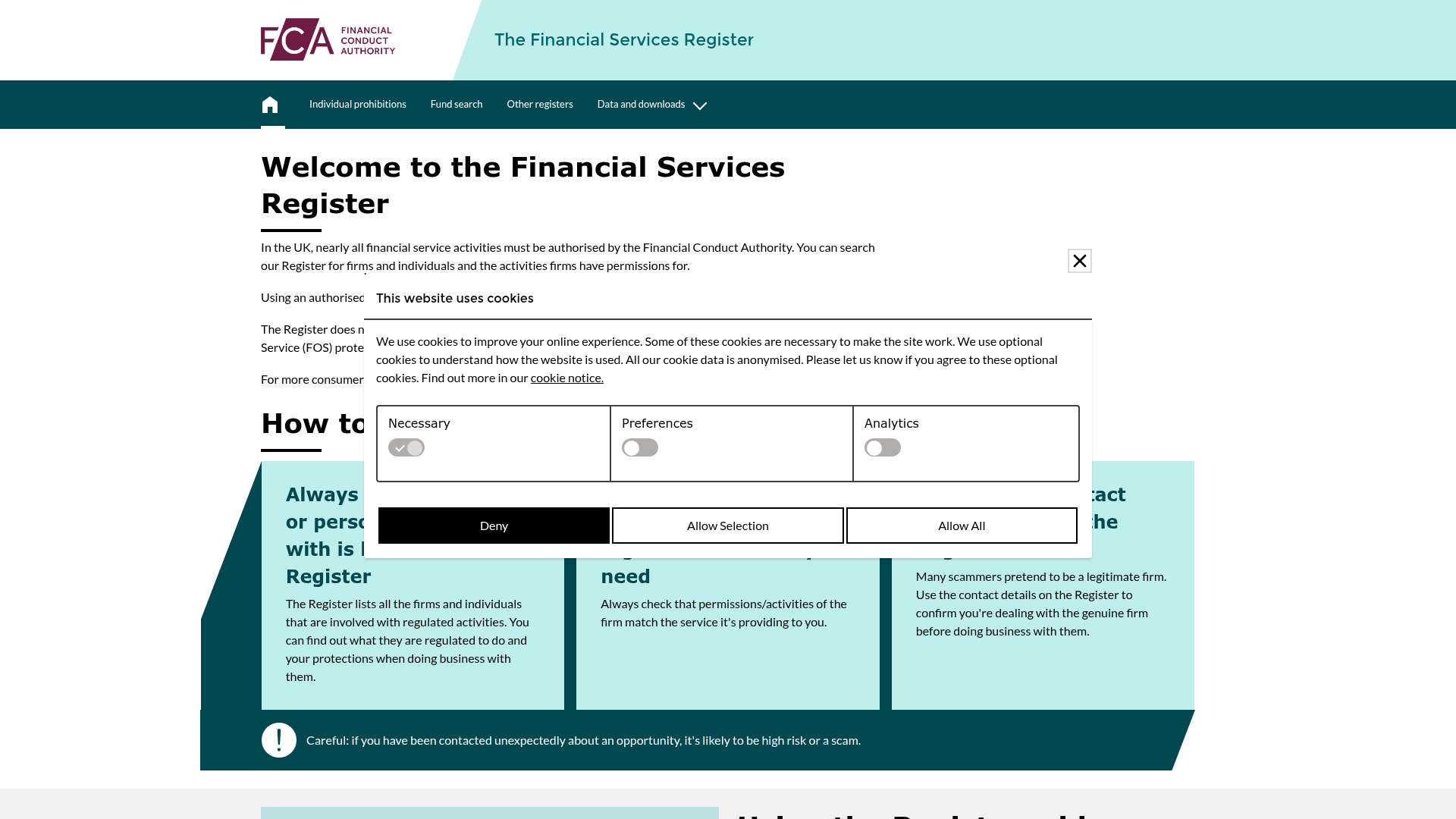
La página que verificamos
Esta es la página propia de la autoridad, capturada tal como la encontramos. Ábrala y realice la misma búsqueda usted mismo — nada en este registro reemplaza la fuente.
Otros registros utilizados en verificaciones de este tipo. Cada uno abre la página propia de la autoridad.
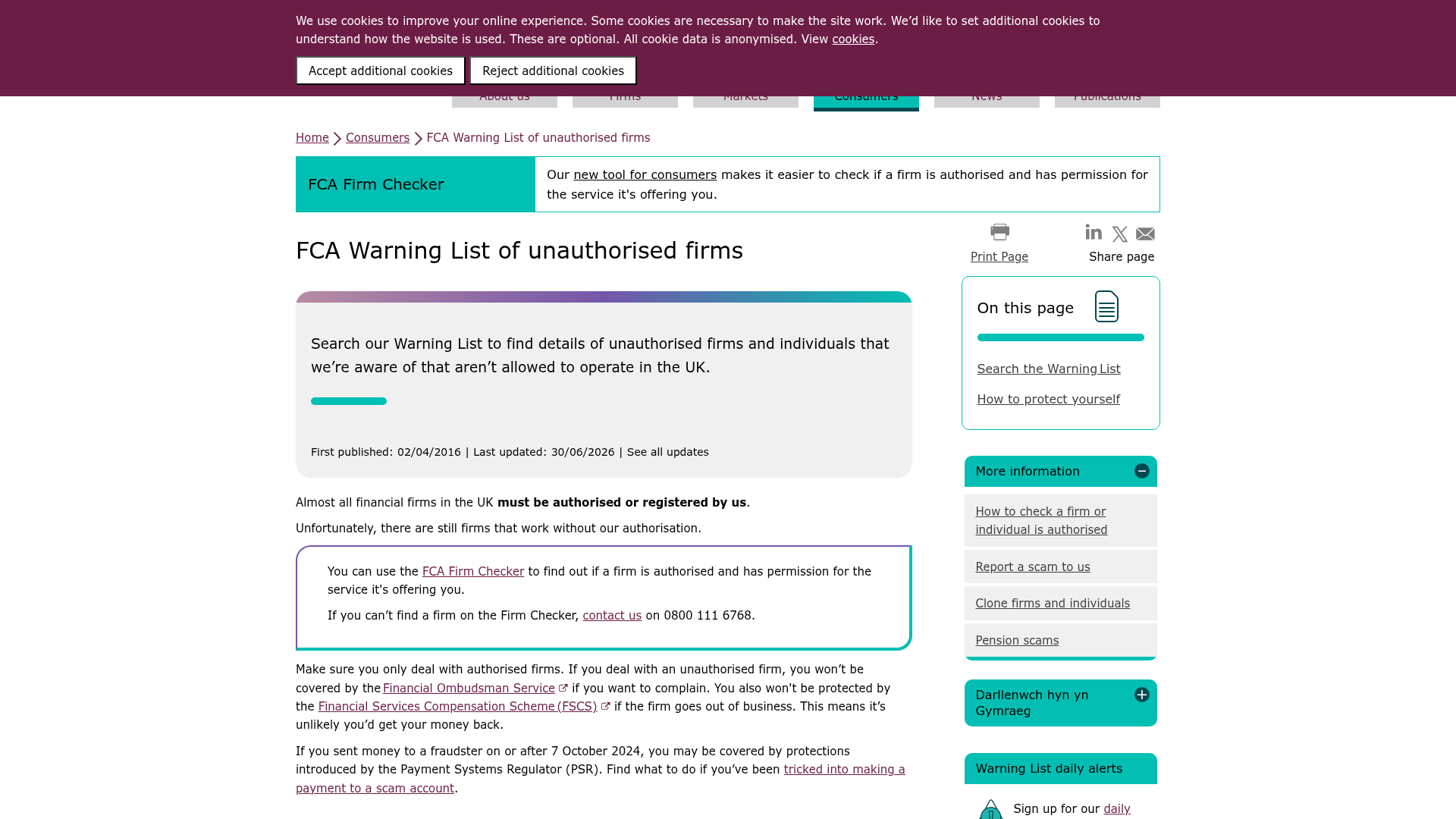
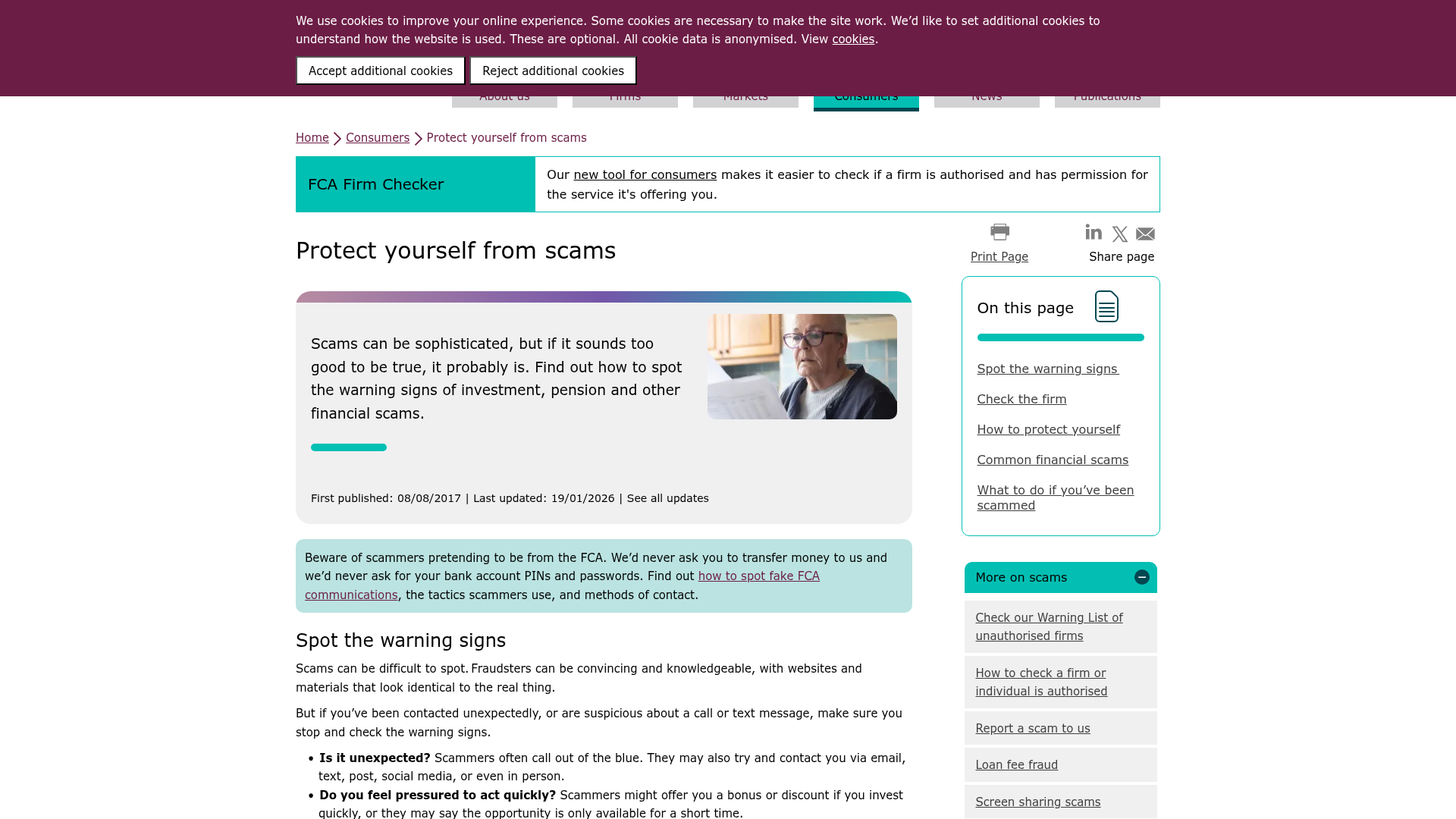
Fuentes primarias
Cada afirmación anterior puede verificarse en la propia página de la autoridad. Se abren en el sitio del regulador, no en el nuestro.
- Financial Services Compensation Scheme (FSCS)fscs.org.ukhttps://www.fscs.org.uk/what-we-cover/investments/
- Financial Conduct Authority — Financial Services Registerregister.fca.org.ukhttps://register.fca.org.uk/
- IOSCO — Investor alerts portaliosco.orghttps://www.iosco.org/investor_protection/?subsection=investor_alerts_portal
- FCA — Warning list of unauthorised firmsfca.org.ukhttps://www.fca.org.uk/consumers/warning-list-unauthorised-firms
Preguntas frecuentes
¿Cuál es la principal diferencia entre el registro de la FMA y el FSPR?
El FSPR (Registro de Proveedores de Servicios Financieros) enumera las entidades registradas para proporcionar servicios financieros en Nueva Zelanda, o desde Nueva Zelanda a clientes en el extranjero. El registro de la FMA especifica cuáles de estas empresas poseen licencias específicas de la Financial Markets Authority para actividades reguladas como el trading de derivados o el asesoramiento financiero, ofreciendo protecciones directas al consumidor.
¿Significa el registro en el FSPR que una empresa está regulada por la FMA?
No. El registro en el FSPR indica que una empresa está legalmente registrada como proveedor de servicios financieros en Nueva Zelanda. Sin embargo, no significa automáticamente que la empresa esté licenciada o supervisada por la FMA para los servicios financieros específicos que ofrece, particularmente para actividades reguladas a residentes de Nueva Zelanda. Debe consultar el registro de la FMA para licencias específicas.
¿Cómo verifico si un asesor financiero es legítimo en Nueva Zelanda?
Para verificar a un asesor financiero, primero busque el Proveedor de Asesoramiento Financiero (FAP) para el que trabaja en el registro de la FMA. Confirme que el FAP posee una licencia activa. Luego, verifique que el nombre del asesor individual figure bajo la entrada de ese FAP en el registro de la FMA. Si son autónomos, deben poseer su propia licencia FAP.
¿Qué debo hacer si una empresa afirma tener licencia de la FMA pero no puedo encontrarla en el registro?
Si no puede verificar la licencia de la FMA de una empresa en el registro oficial de la FMA, o si sus detalles no coinciden, cese inmediatamente toda interacción. No deposite fondos. Es aconsejable denunciar a la empresa a la FMA a través de la sección 'Advertencias y Alertas' de su sitio web, proporcionando cualquier detalle relevante que tenga.
¿Existen esquemas de compensación para clientes de Nueva Zelanda si una empresa regulada falla?
Sí, las empresas con licencia de la FMA deben pertenecer a un esquema aprobado de Resolución Externa de Disputas (EDR) en Nueva Zelanda, como Financial Services Complaints Limited (FSCL) o el Insurance & Financial Services Ombudsman Scheme (IFSO). Estos esquemas ofrecen resolución de disputas gratuita con límites de compensación, típicamente hasta NZD 200,000 por queja.
¿Es seguro operar con una empresa registrada en el FSPR que está regulada únicamente por una autoridad extranjera?
Operar con una empresa registrada en el FSPR y regulada únicamente por una autoridad extranjera conlleva un mayor riesgo para los clientes de Nueva Zelanda. Sus protecciones al consumidor, opciones de resolución de disputas y posible compensación estarán bajo la jurisdicción extranjera. Estas pueden ser más débiles que la supervisión de la FMA y los esquemas EDR de Nueva Zelanda. Generalmente, es más seguro elegir una empresa con licencia de la FMA para servicios a residentes de Nueva Zelanda.