
نقاط رئيسية
- تحقق دائمًا من الوضع التنظيمي للوسيط مباشرةً مع الجهة الرسمية قبل إيداع أي أموال.
- ابحث بدقة في السجل التشغيلي للوسيط، وهياكل الرسوم، وسياسات السحب لتجنب أي مفاجآت غير سارة.
- تأكد من أن منصات التداول التي يقدمها الوسيط، وعروض الأصول، وإجراءات حماية أموال العملاء تتوافق مع احتياجاتك الاستثمارية وتحمل المخاطر لديك.
- دقق في الشروط والأحكام الكاملة، خاصة فيما يتعلق بـ leverage وتحذيرات المخاطر، لضمان الشفافية التامة.
- امنح الأولوية للوسطاء الذين يقدمون دعم عملاء سهل الوصول إليه وسريع الاستجابة، وقنوات اتصال واضحة ومتسقة.
حجر الزاوية: الرقابة التنظيمية والترخيص
السؤال الأول والأكثر أهمية الذي يجب طرحه على أي وسيط محتمل هو ما إذا كان مرخصًا حقًا من قبل هيئة مالية معترف بها، وما إذا كان بإمكانك تأكيد ذلك مباشرة. فالوسيط الذي يعمل دون ترخيص مناسب في نطاق خدمته يمثل خطرًا كبيرًا على رأس مالك. يوفر التنظيم إطارًا من القواعد المصممة لحماية المستثمرين، وضمان ممارسات تداول عادلة، وتقديم سبل للانتصاف في حال نشوء نزاعات.
تشمل الهيئات المالية المرموقة هيئة السلوك المالي (FCA) في المملكة المتحدة، ولجنة الأوراق المالية والاستثمارات الأسترالية (ASIC)، ولجنة الأوراق المالية والبورصات القبرصية (CySEC)، ولجنة تداول السلع الآجلة (CFTC) إلى جانب الرابطة الوطنية للعقود الآجلة (NFA) في الولايات المتحدة. غالبًا ما يحمل العديد من الوسطاء المعروفين، مثل Pepperstone، الذي يخضع لتنظيم FCA و ASIC و CySEC، أو OANDA، الذي تشرف عليه FCA و CFTC/NFA و ASIC، تراخيص متعددة من هيئات مختلفة، مما يعكس عملياتهم العالمية والتزامهم بالمعايير التنظيمية المتنوعة. يمكن أن يوفر هذا التنظيم الواسع طبقة إضافية من الطمأنينة.
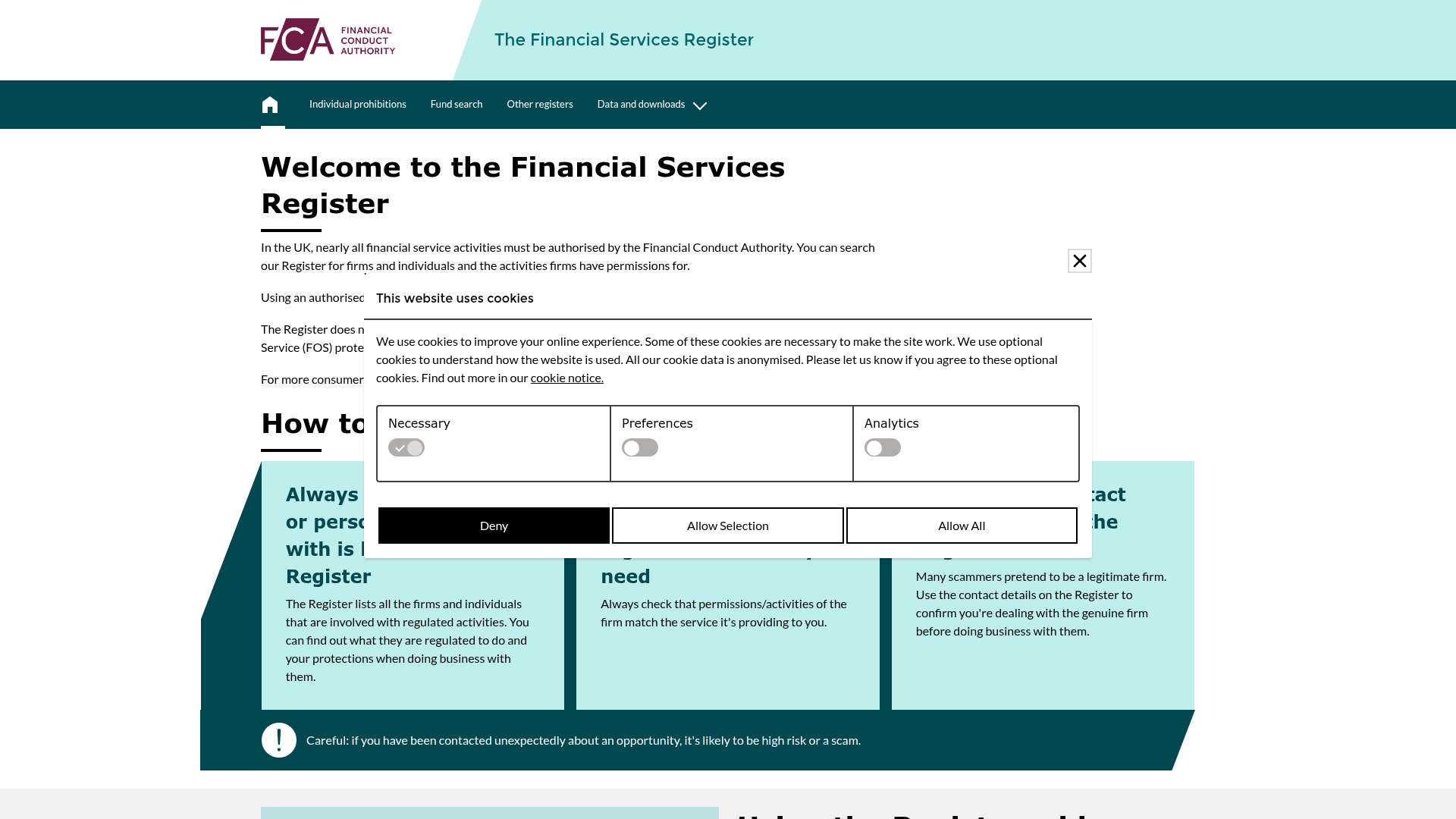
التحقق مباشر وغير قابل للتفاوض: لا تعتمد فقط على الادعاءات الموجودة على موقع الوسيط الإلكتروني. قم بزيارة الموقع الرسمي للجهة التنظيمية المذكورة واستخدم سجلها العام أو أداة البحث لتأكيد رقم ترخيص الوسيط ووضعه التشغيلي. على سبيل المثال، إذا ادعى وسيط أنه يخضع لتنظيم FCA، فانتقل إلى السجل المالي لهيئة FCA وابحث عن اسم الشركة. تساعدك هذه الخطوة الاستباقية على تجنب الكيانات التي قد تبدو مشروعة ولكنها تفتقر إلى التفويض اللازم لممارسة الأعمال التجارية.
تقييم مكانة الوسيط وإطاره المالي
بمجرد تأكيد الوضع التنظيمي، استفسر عن السجل التشغيلي للوسيط وسمعته العامة. غالبًا ما يشير السجل الطويل إلى الاستقرار والموثوقية، على الرغم من أنه ليس ضمانًا. يتمتع وسطاء مثل OANDA، الذي تأسس عام 1996، و FOREX.com، الذي تأسس عام 2001، بعقود من الخبرة في السوق. بينما لا يعتبر الوسطاء الجدد غير جديرين بالثقة بطبيعتهم، فإن تاريخ التشغيل الأطول يسمح بسجل عام أكثر شمولاً لسلوكهم وتفاعلاتهم مع العملاء. ابحث عن معلومات حول الإجراءات التنظيمية السابقة، أو شكاوى العملاء الهامة، أو أي تقارير قد تشير إلى عدم الاستقرار.
بعد ذلك، افحص بدقة هيكل رسوم الوسيط: هل جميع الـ spreads، والعمولات، ورسوم التمويل الليلي المحتملة (swaps) معلنة بوضوح وتنافسية؟ يمكن أن تؤدي الرسوم الخفية إلى تآكل الأرباح بشكل كبير بمرور الوقت. سيوفر الوسيط الشفاف تفصيلاً دقيقًا لجميع التكاليف المرتبطة بالتداول، بما في ذلك أي رسوم للإيداعات أو السحوبات أو الحسابات غير النشطة. قارن هذه التكاليف عبر عدة وسطاء منظمين لفهم ما يشكل سعرًا عادلًا في السوق. غالبًا ما يركز وسطاء مثل IC Markets و Pepperstone على فروقات أسعار (spreads) ضيقة في عروضهم، والتي يمكن أن تكون عاملًا رئيسيًا للمتداولين النشطين.
احذر من الوسطاء الذين يقدمون فروقات أسعار (spreads) منخفضة للغاية أو صفرية دون شرح كيفية تحقيقهم للإيرادات، حيث قد يشير هذا إلى نموذج عمل غامض يتم فيه استرداد التكاليف في مكان آخر أو من خلال ممارسات غير مواتية للمتداول. يعد فهم التكلفة الإجمالية للتداول أمرًا ضروريًا لوضع الميزانية وتقييم الربحية المحتملة.
فهم بيئة التداول الخاصة بك وحماية الأموال
فكر في منصات وأدوات التداول المتاحة، وما إذا كانت تتوافق مع استراتيجية التداول ومستوى خبرتك. يقدم معظم الوسطاء منصات شائعة مثل MetaTrader 4 (MT4) و MetaTrader 5 (MT5)، والمعروفة بأدوات الرسوم البيانية وقدرات التداول الآلي. بعض الوسطاء، مثل Pepperstone، يدمجون أيضًا مع TradingView، المعروف بميزاته الاجتماعية والرسوم البيانية المتقدمة. قد يقدم وسطاء آخرون منصاتهم الخاصة، والتي يمكن أن توفر ميزات فريدة أو واجهة مستخدم أكثر انسيابية. جرب حسابات تجريبية على منصات مختلفة لترى أيها يبدو الأكثر سهولة وقوة لاحتياجاتك.
يتعلق سؤال رئيسي آخر بالأصول المحددة التي يمكنك تداولها عبر الوسيط. هل يقدمون أزواج العملات، أو السلع، أو المؤشرات، أو الأسهم، أو العملات الرقمية التي تهتم بها؟ يختلف الوسطاء بشكل كبير في عروض أصولهم. على سبيل المثال، تسلط IC Markets الضوء على التداول في العملات، والأسهم، وعقود الفروقات على السلع، والعقود الآجلة، والسندات، والأصول الرقمية. تأكد من أن اختيار الوسيط يتوافق مع أهدافك الاستثمارية واستراتيجية التنويع الخاصة بك.
أخيرًا، والأهم من ذلك، اسأل عن كيفية حماية أموالك المودعة وما هي الضمانات المتوفرة. يفصل الوسطاء الموثوقون والمنظمون أموال العملاء عن رأس مالهم التشغيلي الخاص. هذا يعني أن أموالك تُحتفظ بها في حسابات بنكية منفصلة، مما يجعلها غير قابلة للوصول للوسيط لتغطية نفقاته التجارية الخاصة، ويحميها في حال إفلاس الوسيط غير المحتمل. يفرض العديد من المنظمين أيضًا المشاركة في خطط تعويض المستثمرين. على سبيل المثال، يندرج الوسطاء الخاضعون لتنظيم FCA عمومًا تحت خطة تعويض الخدمات المالية (FSCS) في المملكة المتحدة، والتي يمكن أن توفر تعويضًا يصل إلى حد معين إذا فشلت الشركة. تأكد دائمًا من هذه الحماية مباشرة مع الوسيط والجهة التنظيمية المعنية.
تقييم سهولة الوصول والدعم
تعتبر الجوانب العملية لإدارة حسابك بنفس أهمية التداول نفسه. استفسر عن عملية إيداع وسحب الأموال. هل تتوفر طرق دفع متنوعة، مثل التحويلات المصرفية، أو بطاقات الائتمان/الخصم، أو المحافظ الإلكترونية؟ ما هي أوقات المعالجة المعتادة لكل من الإيداعات والسحوبات؟ والأهم من ذلك، هل هناك أي تكاليف مرتبطة أو حدود دنيا/قصوى؟ يمكن أن تكون التأخيرات أو الرسوم الخفية في عمليات السحب مصدر إحباط كبير وعلامة تحذير. سيمتلك الوسيط الجدير بالثقة سياسات واضحة وسريعة ومعقولة لتحويل أموالك داخل وخارج حساب التداول الخاص بك.
بعد ذلك، قم بتقييم جودة وإمكانية الوصول إلى دعم عملاء الوسيط. عندما يكون لديك سؤال أو مشكلة ملحة، ما مدى سهولة الحصول على المساعدة؟ ابحث عن الوسطاء الذين يقدمون قنوات اتصال متعددة، مثل الهاتف، والدردشة المباشرة، والبريد الإلكتروني، ويحددون بوضوح ساعات عملهم. من الناحية المثالية، يجب أن يكون الدعم متاحًا على مدار الساعة طوال 5 أيام في الأسبوع (24/5) ليتناسب مع ساعات سوق الفوركس العالمية، وبلغات تفهمها. على سبيل المثال، تعلن Plus500 عن دعم عملاء على مدار الساعة طوال أيام الأسبوع (24/7)، والذي يمكن أن يكون ميزة قيمة. اختبر استجابتهم للدعم بنفسك: أرسل بريدًا إلكترونيًا أو جرب الدردشة المباشرة بسؤال بسيط قبل أن تلتزم بالأموال.
يعكس دعم العملاء الجيد التزام الوسيط تجاه عملائه. يمكن أن يتركك الدعم الضعيف أو غير المستجيب عالقًا عندما تكون في أمس الحاجة إلى المساعدة، مما قد يؤثر على تداولاتك أو قدرتك على الوصول إلى أموالك.
تحليل التفاصيل الدقيقة والعروض التعليمية
قبل إجراء الإيداع، استفسر عن أي موارد تعليمية يقدمها الوسيط. بينما يوفر بعض الوسطاء مواد تعليمية قيمة، وندوات عبر الإنترنت (webinars)، أو تحليلات للسوق، كن حذرًا من الوسطاء الذين يروجون بشدة لإشارات تداول 'مضمونة' أو 'مستشارين خبراء' كعرض أساسي. في حين أن بعض المحتوى التعليمي يمكن أن يكون مفيدًا، تذكر أنه لا توجد إشارة يمكن أن تضمن الأرباح، والاعتماد على مثل هذه الوعود يمكن أن يؤدي إلى خسائر كبيرة. يذكر وسطاء مثل XM التعليم المباشر كفائدة، والذي يمكن أن يكون أداة بناءة للمتداولين الذين يسعون لتحسين فهمهم للأسواق.
الأهم من ذلك، يجب أن تسأل نفسك: هل قرأت وفهمت تمامًا الشروط والأحكام الكاملة للوسيط، لا سيما فيما يتعلق بـ leverage والمخاطر؟ تحدد هذه الوثيقة، التي غالبًا ما تكون طويلة ومكتوبة بلغة قانونية، الاتفاق التعاقدي بينك وبين الوسيط. انتبه جيدًا للأقسام المتعلقة بـ leverage، و margin calls، ومستويات stop-out، وأي إخلاء مسؤولية بخصوص تقلبات السوق أو الأحداث غير المتوقعة. الـ leverage العالي، بينما يوفر إمكانية تحقيق أرباح أكبر، فإنه يضخم الخسائر بشكل كبير أيضًا. تأكد من أنك تدرك الآثار الكاملة للـ leverage المقدمة والمخاطر الكامنة في تداول المنتجات ذات الـ leverage مثل عقود الفروقات. يُطلب من الوسطاء المنظمين قانونًا عرض تحذيرات واضحة للمخاطر، مثل "عقود الفروقات هي أدوات معقدة وتأتي مع مخاطر عالية لخسارة الأموال بسرعة بسبب leverage." يمكن أن يكون لتجاهل هذه التحذيرات أو عدم فهم الشروط عواقب مالية وخيمة.
إن طرح هذه الأسئلة العشرة بجدية قبل إيداع سنت واحد يمكن أن يحدث فرقًا بين تجربة تداول آمنة وتجربة مليئة بالمخاطر غير الضرورية والندم. إن النهج المسؤول في اختيار الوسيط هو خط دفاعك الأول في الأسواق المالية.
الصفحة التي نتحقق منها
هذه هي صفحة الهيئة نفسها، تم التقاطها كما وجدناها. افتحها وقم بإجراء البحث نفسه بنفسك — لا شيء في هذا السجل يحل محل المصدر.
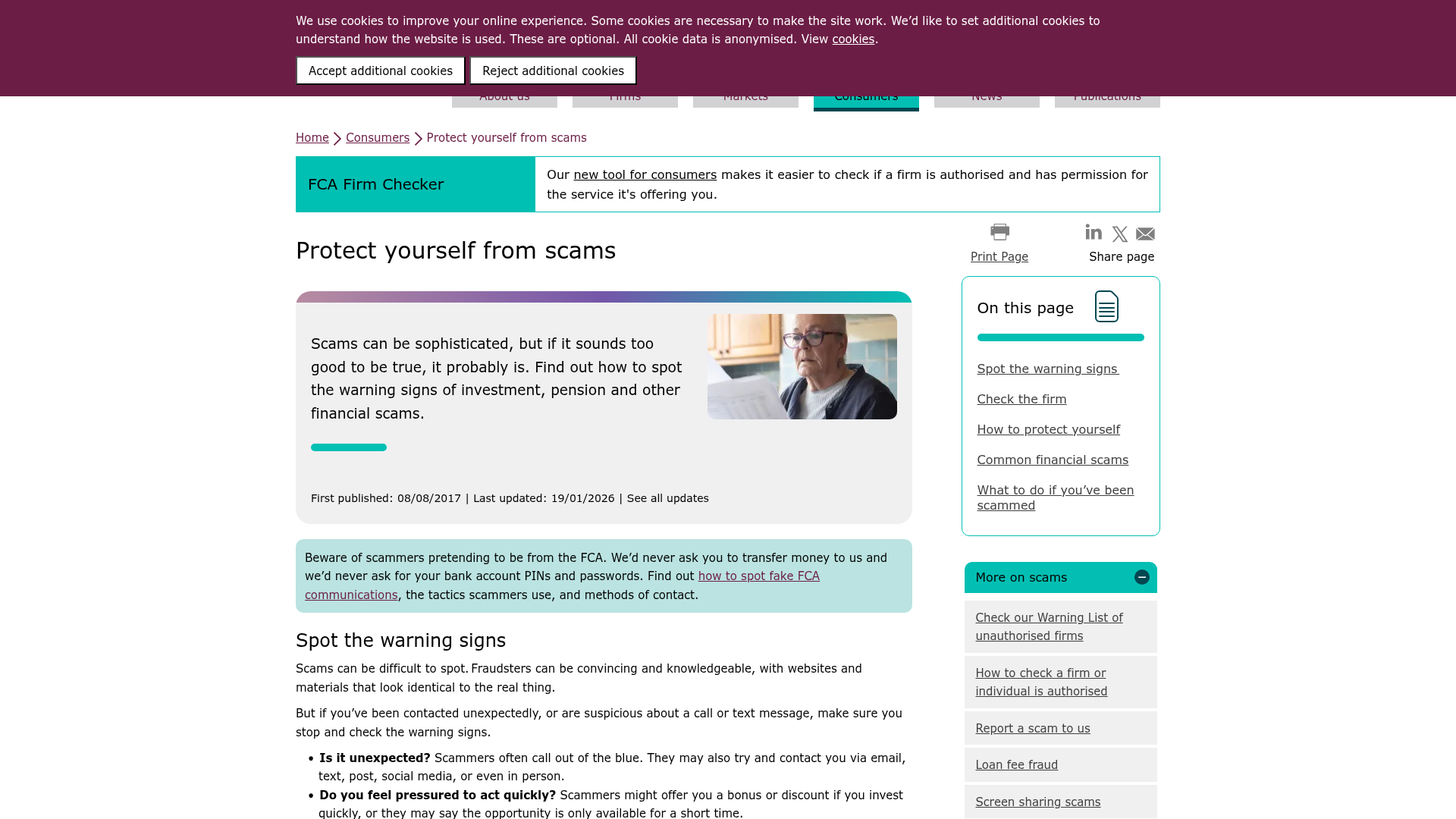
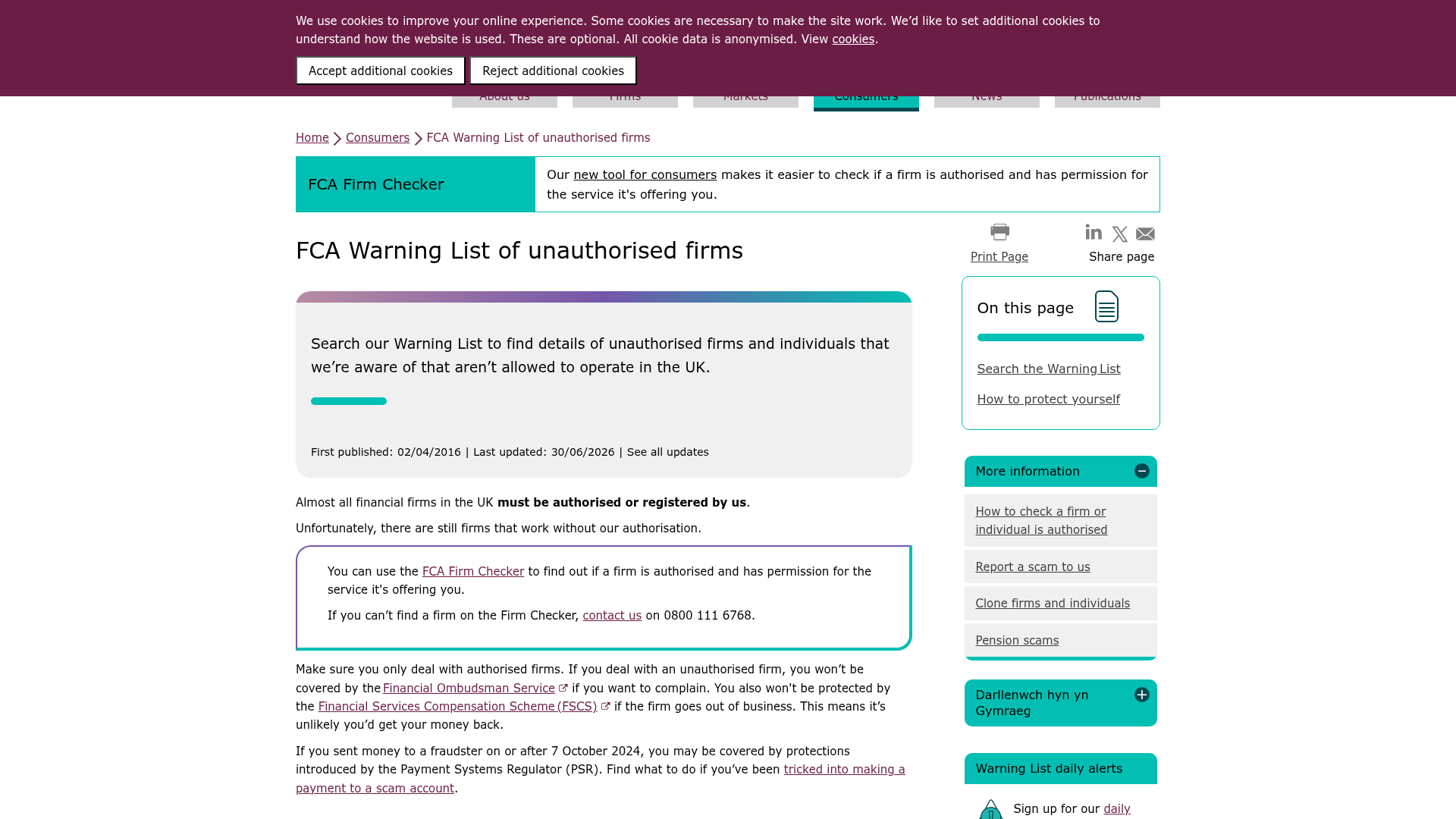
سجلات أخرى مستخدمة في هذا النوع من الفحوصات. كل منها يفتح صفحة الجهة التنظيمية الخاصة بها.
الأسئلة المتكررة
لماذا يعتبر التنظيم مهمًا جدًا لوسيط الفوركس؟
يضمن التنظيم أن يعمل الوسيط وفقًا لقواعد محددة مصممة لحماية المستثمرين، والحفاظ على ممارسات تداول عادلة، وتوفير سبل لحل النزاعات، مما يقلل بشكل كبير من المخاطر مثل الاحتيال أو سوء إدارة الأموال.
كيف يمكنني التحقق من ترخيص الوسيط؟
يجب عليك زيارة الموقع الرسمي للجهة التنظيمية المذكورة (مثل FCA، ASIC، CFTC) واستخدام سجلها العام أو أداة البحث لتأكيد رقم ترخيص الوسيط ووضعه التشغيلي الحالي بشكل مستقل. لا تعتمد أبدًا فقط على ادعاءات الوسيط.
ما هي الحسابات المنفصلة، ولماذا هي مهمة؟
تعني الحسابات المنفصلة أن أموالك المودعة تُحتفظ بها بشكل منفصل عن رأس المال التشغيلي للوسيط. هذا يحمي أموالك من استخدامها من قبل الوسيط لتغطية نفقاته التجارية ويضمن بقاءها متاحة لك حتى لو واجه الوسيط صعوبات مالية.
هل يجب أن أثق بوسيط يقدم leverage عالية جدًا؟
في حين أن الرافعة المالية العالية يمكن أن تضخم الأرباح المحتملة، إلا أنها تزيد بشكل كبير من مخاطر تعرضك لخسائر فادحة. غالبًا ما تضع الهيئات التنظيمية المرموقة سقفًا للرافعة المالية للمتداولين الأفراد للتخفيف من هذا الخطر. توخَ الحذر الشديد مع الوسطاء الذين يقدمون رافعة مالية عالية بشكل غير عادي، حيث قد يشير هذا إلى تنظيم متساهل أو نية لتشجيع الإفراط في المخاطرة.