
نقاط رئيسية
- يؤكد إدخال السجل الترخيص القانوني للوسيط، لكنه لا يؤكد وضعه المالي.
- تسرد الهيئات التنظيمية الأنشطة المسموح للشركة بممارستها، مما يحد من نطاق عملها.
- غالبًا ما تكون الإجراءات التأديبية والتحذيرات السابقة مرئية، مما يشير إلى سوء سلوك سابق.
- لا تفصل السجلات شروط التداول الفعلية، مثل السبريد (spread)، أو العمولات، أو سرعة التنفيذ.
- تقع جودة خدمة العملاء، والموثوقية التكنولوجية، والأداء المستقبلي خارج نطاق السجل.
- يختلف مستوى حماية المستثمر بشكل كبير حسب الولاية القضائية التنظيمية وأنظمة التعويض الوطنية.
خط الدفاع الأول: التحقق من الوضع التنظيمي
في كل عام، يواجه آلاف المستثمرين حول العالم كيانات خدمات مالية تعمل دون ترخيص مناسب. خطوة واحدة وحاسمة غالبًا ما يتم إغفالها هي التحقق من الوضع التنظيمي لمزود الخدمة المالية. هذا التحقق الأولي ليس تفصيلاً ثانويًا؛ إنه الضمان الأساسي ضد العمليات غير المصرح بها والخسارة المالية المحتملة.
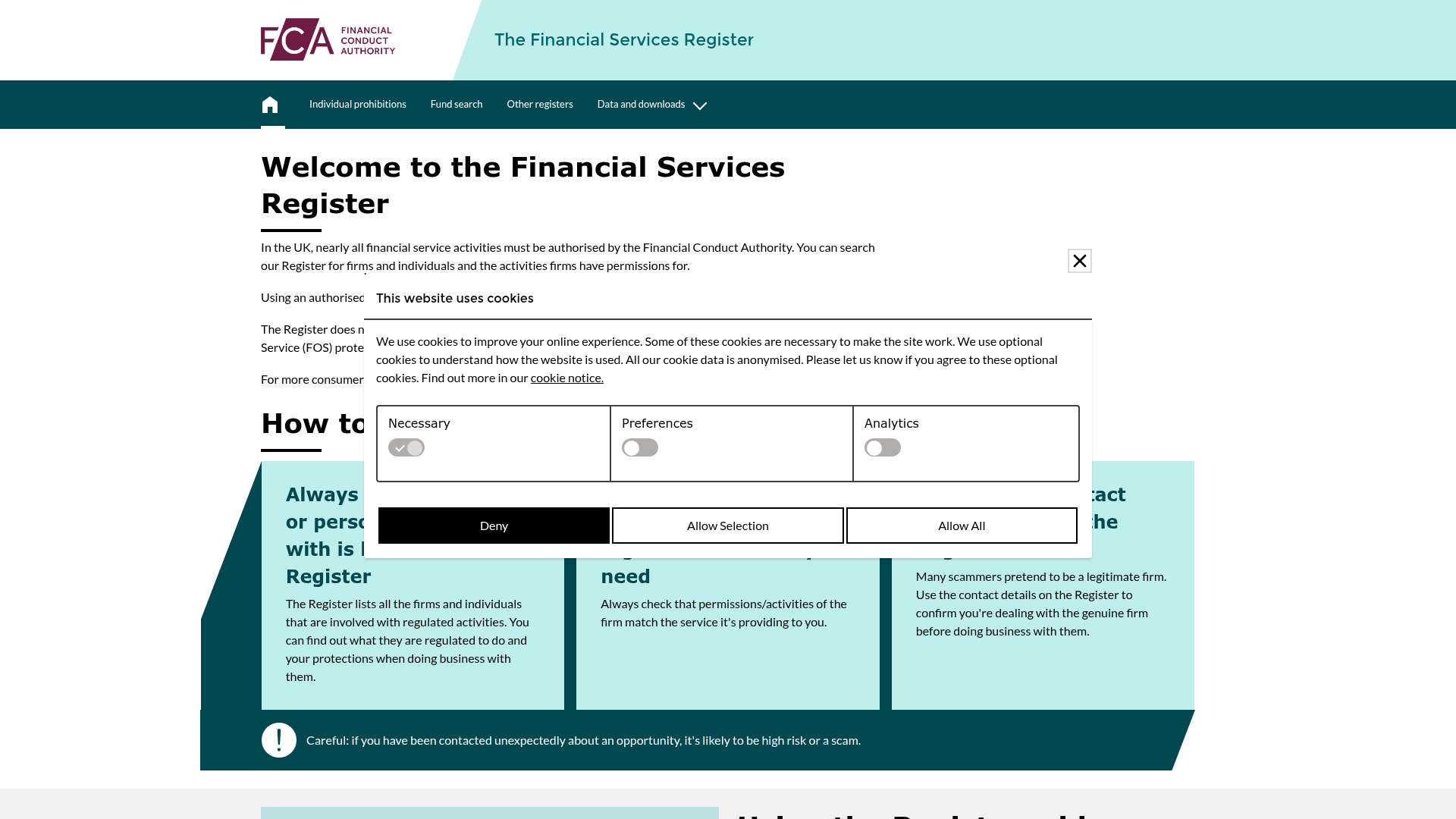
يعمل السجل التنظيمي، الذي تحتفظ به الهيئات الحكومية الرسمية، كقاعدة بيانات عامة للشركات المرخصة. على سبيل المثال، توفر هيئة السلوك المالي (FCA) في المملكة المتحدة سجل الخدمات المالية، بينما تقدم هيئة الأوراق المالية والاستثمارات الأسترالية (ASIC) سجلاتها المهنية. الغرض من هذه السجلات واضح: توفير الشفافية بشأن الشركات المسموح لها قانونًا بممارسة الأنشطة المالية ضمن ولاياتها القضائية.
العثور على شركة في أحد هذه السجلات يعني أن سلطة مختصة قد قيمت أهليتها للعمل. يشمل هذا التقييم عادةً كفاية رأس المال، وكفاءة الإدارة، والالتزام بمعايير تشغيلية محددة مصممة لحماية المستهلكين. بدون هذا التسجيل، فإن أي شركة تقدم خدمات مالية تعمل خارج الحدود القانونية، مما يشكل خطرًا فوريًا وخطيرًا على أموال العملاء. من الضروري التأكد من أن الاسم القانوني الدقيق للكيان الذي تتعامل معه يتطابق مع الإدخال في السجل الرسمي، حيث يمكن أن تشير التناقضات الطفيفة إلى محاولة شركة لتقليد شركة شرعية.
ما يكشفه إدخال السجل عن تراخيص الشركة
أبعد من مجرد تأكيد وجود الشركة، يحدد إدخال السجل التنظيمي نطاق الأنشطة التي يُسمح للشركة المرخصة بممارستها. وهذا تفصيل بالغ الأهمية.
قد تكون الشركة منظمة، ولكن فقط لأنواع معينة من الخدمات أو المنتجات، وليس للنشاط المحدد الذي تنوي الانخراط فيه.
على سبيل المثال، قد تكون بعض الشركات مرخصة فقط لخدمات الاستشارات المالية، بينما تحمل شركات أخرى تراخيص لخدمات الوساطة، بما في ذلك التعامل في المشتقات مثل عقود الفروقات (CFDs) أو العملات الأجنبية. سيوضح الإدخال عادةً "فئات التراخيص" أو "الأذونات" المحددة الممنوحة. إذا كان الوسيط مدرجًا كمرخص لتقديم المشورة الاستثمارية ولكنه يقدم لك حساب تداول عقود فروقات (CFD) برافعة مالية، فإن هذا التضارب يمثل مصدر قلق كبير. عادةً ما يمتلك الوسطاء ذوو السمعة الطيبة، مثل Pepperstone أو IC Markets، تراخيص تغطي مجموعة واسعة من أنشطة التداول، بما يتماشى مع خدماتهم المعلن عنها.
تساعد هذه الدقة في منع الشركات من تجاوز حدودها القانونية. كما تسمح للهيئات التنظيمية بتطبيق قواعد محددة مصممة خصيصًا للمنتجات المالية المعينة، والتي غالبًا ما تحمل ملفات مخاطر مختلفة. يساعد التحقق من هذه التراخيص في ضمان تعاملك مع شركة مخولة قانونًا لتقديم الخدمات التي تسعى إليها، مما يقلل من مخاطر الانخراط في معاملات غير مغطاة بالرقابة التنظيمية أو خطط حماية المستثمرين.
أمثلة على الوضع التنظيمي للوسطاء والولايات القضائية لمقراتهم الرئيسية
| اسم الوسيط | المقر الرئيسي | الهيئات التنظيمية الرئيسية | مقتطف من شعار الموقع |
|---|---|---|---|
| Pepperstone | ملبورن، أستراليا | FCA, ASIC, CySEC, BaFin | الوسيط الرائد في أستراليا لتداول الفوركس وعقود الفروقات (CFD) عبر الإنترنت. |
| IC Markets | سيدني، أستراليا | ASIC, CySEC, FSA (سيشل) | تداول العملات والأسهم وعقود الفروقات على السلع... |
| XM | ليماسول، قبرص | CySEC, ASIC, IFSC, DFSA | تداول بثقة لدى XM. |
| OANDA | نيويورك، الولايات المتحدة الأمريكية | FCA, CFTC/NFA, ASIC, MAS | صُنف الأكثر شعبية وأفضل وسيط فوركس. |
| FOREX.com | نيو جيرسي، الولايات المتحدة الأمريكية | CFTC/NFA, FCA, ASIC, CIRO | ابدأ التداول مع وسيط الفوركس رقم 1 في الولايات المتحدة. |
| FxPro | لندن، المملكة المتحدة | FCA, CySEC, FSCA, SCB | ابدأ تداول الفوركس عبر الإنترنت مع وسيط الفوركس رقم 1 عالميًا. |
الكشف عن المشكلات السابقة: السجلات التأديبية وقوائم التحذير
يمكن أن يكشف قيد السجل أيضًا عن التاريخ التأديبي للشركة، مما يوفر رؤى حول سوء السلوك السابق أو التحذيرات التنظيمية. غالبًا ما تنشر الهيئات التنظيمية الإجراءات التنفيذية أو الغرامات أو العقوبات المفروضة على الشركات التي انتهكت القواعد. هذه السجلات عامة ويمكن العثور عليها إما مباشرة ضمن ملف تعريف الشركة في السجل أو من خلال قوائم التحذير المخصصة.
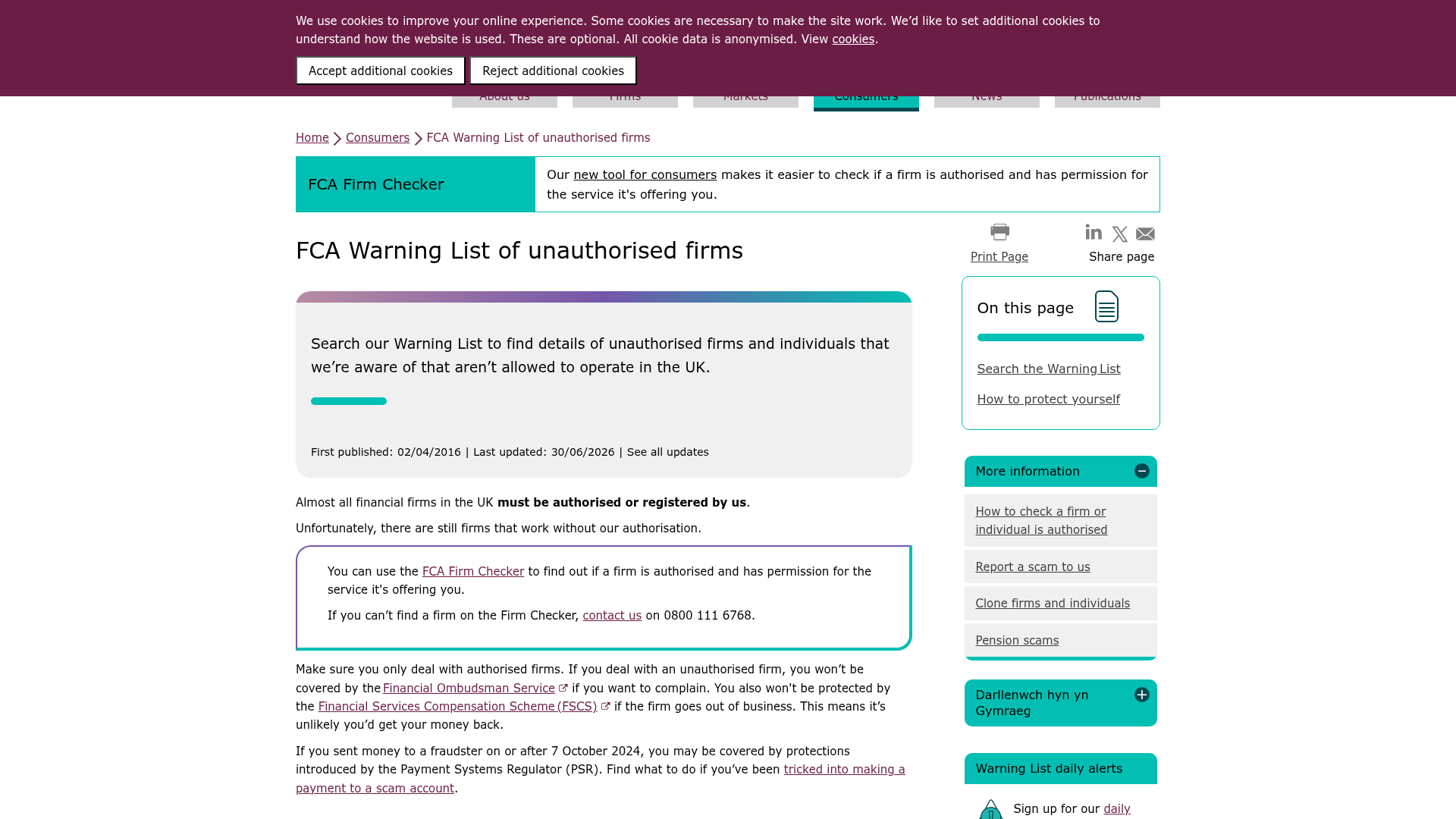
على سبيل المثال، تحتفظ FCA بـ "Warning list of unauthorised firms" تسرد الكيانات المعروفة بأنها تعمل دون ترخيص أو تستهدف المستهلكين عمدًا في المملكة المتحدة دون الحصول على التصاريح المناسبة. وبالمثل، تنشر CFTC "Registration Deficient (RED) List" لتسليط الضوء على الكيانات غير المسجلة ولكن التي يبدو أنها تعمل كوسطاء في الولايات المتحدة. هذه القوائم ليست ثابتة؛ يتم تحديثها بانتظام لتعكس النتائج الجديدة وهي مورد مهم للمستثمرين المحتملين.
بينما قد تظل الشركة منظمة بعد إجراء تأديبي، فإن وجود مثل هذا القيد يستدعي مزيدًا من التحقيق. يشير ذلك إلى فشل سابق في تلبية التوقعات التنظيمية، والذي، اعتمادًا على شدته وتكراره، يمكن أن يشير إلى نمط سلوكي. هذا هو الجزء الذي تتجاهله معظم الأدلة: فهم أن المشكلات التنظيمية السابقة يمكن أن تكون مؤشرًا قويًا على المخاطر التشغيلية المستقبلية. من المتوقع أن تحافظ شركة مثل eToro، التي تخضع لرقابة هيئات تنظيمية متعددة وذات مستوى عالٍ، على سجل نظيف عبر جميع عملياتها المرخصة، مما يعكس امتثالًا داخليًا قويًا.
ما وراء الترخيص: ما لا تكشفه السجلات عن الاستقرار المالي
بينما تؤكد السجلات التنظيمية ترخيص الشركة وامتثالها التاريخي، فإنها لا تقدم تقييمًا فوريًا لصحتها المالية أو ملاءتها. قد تستوفي شركة وساطة متطلبات رأس المال الأولية وتحافظ على أموال العملاء منفصلة وفقًا للوائح، ولكن هذا لا يضمن استقرارها المالي المستمر في مواجهة الانكماشات السوقية أو التحديات التشغيلية.
تفرض الهيئات التنظيمية عادةً حدًا أدنى من متطلبات رأس المال على الشركات المرخصة، وهي مصممة لضمان امتلاكها أموالًا كافية للوفاء بالتزاماتها. على سبيل المثال، يجب على الشركات الخاضعة لرقابة CySEC الحفاظ على مستويات محددة من رأس المال التنظيمي. ومع ذلك، فإن هذه الأرقام هي حدود دنيا ولا تعكس الميزانية العمومية الأوسع للشركة، أو سيولتها، أو ربحيتها. قد تكون الشركة ذات رأس مال قليل جدًا، بالكاد تتجاوز الحدود الدنيا، مما يجعلها أكثر عرضة للأحداث غير المتوقعة.
عادةً ما لا تكون التفاصيل المتعلقة بالوضع المالي للشركة، مثل الميزانيات العمومية المفصلة، أو بيانات الأرباح والخسائر، أو تقارير التدفقات النقدية، معلومات عامة يمكن الوصول إليها من خلال السجلات التنظيمية. غالبًا ما تكون هذه التفاصيل خاصة أو متاحة فقط من خلال التقارير السنوية للشركات المتداولة علناً. وبالتالي، حتى الكيان المنظم بالكامل قد يواجه صعوبات مالية لا تكون واضحة على الفور من خلال قيده في السجل، مما يخلق فجوة في العناية الواجبة للمستثمر.
التسجيل الصحيح يؤكد أن الوسيط *مسموح* له بالعمل، لكنه ليس تأييدًا لجودة خدماته، أو استقراره المالي، أو ما إذا كان مناسبًا لاحتياجاتك التجارية.
Mei Tanaka
شروط التداول: التفاصيل التي لا تتبعها السجلات
لن يوفر قيد السجل معلومات محددة حول شروط تداول الوسيط، بما في ذلك السبريد، والعمولات، وسرعة التنفيذ، أو أسعار السواب. هذه شروط تجارية تحددها شركات الوساطة الفردية ويمكن أن تختلف بشكل كبير بين الشركات وحتى بين أنواع الحسابات المختلفة التي يقدمها نفس الوسيط.
على سبيل المثال، قد تعلن AvaTrade عن سبريد تنافسي على أزواج العملات الرئيسية، ولكن هذه الأرقام المحددة ليست إلزامية أو مراقبة في سجل عام. وبالمثل، قد تسلط Exness الضوء على التنفيذ السريع، ولكن هذا المقياس التشغيلي ليس شيئًا تتبعه هيئة تنظيمية في قاعدة بيانات عامة. هذه التفاصيل ديناميكية وتخضع للتغيير بناءً على ظروف السوق، ومزودي السيولة للوسيط، وسياسات التسعير الداخلية.
لفهم بيئة التداول الفعلية للوسيط، يجب على المرء الرجوع إلى موقع الوسيط الخاص به، وشروطه وأحكامه الخاصة بالحساب، أو، من الناحية المثالية، اختبار منصته باستخدام حساب تجريبي. يؤكد السجل الإطار القانوني لعملياتهم، ولكن ليس تفاصيل كيفية إجرائهم لأعمال التداول اليومية. هذه الفجوة تعني أن المستثمر يجب أن يجري بحثًا إضافيًا للتأكد مما إذا كانت عروض الوسيط تتوافق مع استراتيجية تداوله وتوقعات التكلفة.
العنصر البشري: جودة خدمة العملاء والسجلات
جودة خدمة عملاء الوسيط، وسرعة استجابته للاستفسارات، أو فعاليته في حل النزاعات هي جوانب لا تلتقطها السجلات التنظيمية. بينما تضع الهيئات التنظيمية معايير للتعامل مع الشكاوى وعمليات حل النزاعات، فإنها لا تقدم تقييمًا نوعيًا للأداء الفعلي للشركة في هذه المجالات.
لنتأمل التجربة: الاتصال بوسيط مثل Plus500 بخصوص مشكلة تداول مقابل شركة أخرى. سيخبرك قيد السجل ما إذا كانت Plus500 منظمة من قبل FCA وCySEC وASIC، لكنه لن يخبرك ما إذا كان دعم العملاء لديهم على مدار الساعة طوال أيام الأسبوع مفيدًا حقًا، أو ما إذا كانت أوقات الحل سريعة، أو ما إذا كان تواصلهم واضحًا. هذه العناصر هي نتاج العمليات الداخلية للشركة، وتوظيفها، والتزامها برضا العميل، وليست مقياسًا تنظيميًا قابلاً للقياس الكمي.
يتطلب تقييم خدمة العملاء النظر إلى ما وراء قواعد البيانات الرسمية. يتضمن ذلك استشارة منصات المراجعة المستقلة، أو المنتديات، أو، من الناحية المثالية، اختبار الخدمة بنفسك باستفسارات بسيطة قبل الالتزام برأس مال كبير. من الناحية العملية، غالبًا ما يطلب المكتب ذو السمعة الطيبة التأكيد مرتين على فهمك لعملية معقدة، مما يدل على مستوى من العناية يتجاوز مجرد الامتثال. يمكن أن يكون عدم وجود إجراءات تأديبية سلبية علامة جيدة، لكنه ليس مؤشرًا مباشرًا لتجربة عملاء إيجابية.
المستقبل والملاءمة: السجلات ليست تأييدات
ربما يكون الجانب الأكثر سوء فهمًا في السجلات التنظيمية هو أن القيد ليس تأييدًا لأداء الوسيط المستقبلي، ولا هو مؤشر على الملاءمة لأي مستثمر فردي. يؤكد التسجيل الصالح أن الوسيط مسموح له بالعمل، لكنه ليس توصية لخدماته. هذا يعني أنه يلبي المتطلبات القانونية والتشغيلية الأساسية التي يحددها المنظم.
ينطوي التداول، لا سيما في المنتجات ذات الرافعة المالية مثل العقود مقابل الفروقات (CFDs)، على مخاطر كبيرة، ولا يقلل قيد السجل من هذا الخطر السوقي المتأصل. على سبيل المثال، تم تطبيق تدخل ESMA في المنتجات على العقود مقابل الفروقات (CFDs)، بحد أقصى 1:30 للعملاء الأفراد، لحماية المستثمرين من المخاطر المفرطة، بغض النظر عن الوضع التنظيمي للوسيط. يؤكد السجل ببساطة أن الوسيط يلتزم بهذه الحدود إذا كان يعمل في تلك الولاية القضائية.
يبقى قرار اختيار الوسيط بالكامل مع المستثمر. يجب أن يستند إلى تقييم شامل لوضعه المالي الشخصي، وتحمل المخاطر، وأهداف التداول، والعروض المحددة للوسيط. يعد القيد التنظيمي نقطة انطلاق ضرورية، لكنه لا ينبغي أبدًا أن يكون الأساس الوحيد لاتخاذ قرار استثماري. إنه يعمل كحارس بوابة، وليس وسيطًا، مما يضمن عمل الكيانات المرخصة فقط، ولكنه يترك اختيار الملاءمة للفرد.
الولايات القضائية التنظيمية: مسألة حماية
تحدد السلطة التنظيمية المحددة التي تشرف على الوسيط مستوى ونوع حماية المستثمر التي تتلقاها. ليست جميع الهيئات التنظيمية متساوية، ويمكن أن تختلف القواعد في ولاية قضائية بشكل كبير عن ولاية أخرى. على سبيل المثال، يعمل الوسيط المنظم من قبل Financial Conduct Authority (FCA) في المملكة المتحدة بموجب بعض من أشد اللوائح المالية صرامة على مستوى العالم، مما يعني غالبًا متطلبات رأس مال صارمة وقواعد حماية أصول العملاء.
قد يواجه الوسيط المنظم في ولاية قضائية خارجية مثل سيشيل (FSA Seychelles) أو بليز (IFSC) رقابة أقل صرامة ويوفر حماية أقل للمستثمرين. بينما لا يزال هذا التنظيم تنظيمًا، قد لا يوفر الإطار نفس المستوى من الضمانات، أو خطط التعويض، أو سبل الانتصاف في حالة النزاع أو إفلاس الشركة. شركات مثل XM، على سبيل المثال، تحمل تراخيص من كل من ASIC (أستراليا) وIFSC (بليز)، مما يعني أن الحماية المتاحة تعتمد بالكامل على الكيان الذي يفتح المستثمر حسابًا لديه.
من الأهمية بمكان أن يفهم المستثمرون أي كيان محدد من مجموعة الوسيط يتعاملون معه وأي منظم محدد يشرف على هذا الكيان. غالبًا ما توجد هذه التفاصيل في تذييل موقع الوسيط أو في شروطه وأحكامه. المستثمر في أوروبا الذي يتعامل مع كيان منظم من قبل CySEC يستفيد من قواعد تدخل منتجات ESMA وشفافية أكبر على الأرجح من المستثمر الذي يتعامل مع كيان منظم فقط في ولاية قضائية أقل صرامة.
مقارنة السلطات التنظيمية ومستوى الرقابة النموذجي لها
| المنظم | الولاية القضائية | المستوى النموذجي | ملاحظات حول الرقابة |
|---|---|---|---|
| FCA | المملكة المتحدة | Tier 1 | من بين الأكثر صرامة، حماية قوية للمستهلكين ومتطلبات رأس مال عالية. |
| ASIC | أستراليا | Tier 1 | رقابة قوية وذات سمعة طيبة على الخدمات المالية. |
| CySEC | قبرص | فئة 2 (EU) | تلتزم بتوجيهات ESMA، جيدة لعملاء الاتحاد الأوروبي، ولكنها تعتبر عمومًا أقل صرامة بقليل من FCA/ASIC. |
| CFTC/NFA | الولايات المتحدة | فئة 1 | صارمة للغاية، بقواعد محددة للمقيمين في الولايات المتحدة، وغالبًا ما تحظر عقود الفروقات (CFDs) على المتداولين الأفراد. |
| MAS | سنغافورة | فئة 1 | ذات سمعة عالية، وإطار تنظيمي قوي. |
| FSCA | جنوب إفريقيا | فئة 3 | Developing oversight, generally considered less stringent than Tier 1/2. |
| FSA (سيشل) | سيشيل | فئة 4 | جهة تنظيمية خارجية، توفر حماية أقل شمولاً للمستثمر مقارنة بـ Tier 1/2. |
ضمانات المستثمرين: خطط التعويض والأموال المفصولة
أحد أهم أشكال الحماية الملموسة التي توفرها التنظيمات القوية هو إلزام الوسطاء بفصل أموال العملاء وتوفير إمكانية الوصول إلى خطط تعويض المستثمرين. يُلزم الوسطاء المرخصون عادةً بالاحتفاظ بأموال العملاء في حسابات بنكية منفصلة، ومميزة عن رأس مال الشركة التشغيلي. يهدف هذا الإجراء إلى حماية أموال المستثمرين في حال إفلاس الوسيط، مما يجعل من الصعب على دائني الشركة المطالبة بأصول العملاء. بالإضافة إلى الفصل، توفر العديد من الهيئات التنظيمية رفيعة المستوى خطط تعويض للمستثمرين. على سبيل المثال، يحمي صندوق تعويض الخدمات المالية (FSCS) في المملكة المتحدة العملاء المؤهلين في حال فشل شركة منظمة من قبل FCA، مقدمًا تعويضًا يصل إلى 85,000 جنيه إسترليني لكل شخص. وبالمثل، ضمن الاتحاد الأوروبي، تساهم الشركات الخاضعة لتنظيم CySEC في صندوق تعويض المستثمرين (ICF)، والذي يوفر تغطية تصل إلى 20,000 يورو لكل مستثمر. من المهم إدراك أن حدود التعويض هذه تختلف بشكل كبير حسب الولاية القضائية. قد يتمتع المستثمر الذي يمتلك حساب OANDA تحت تنظيم FCA بحماية مختلفة عن المستثمر الذي يمتلك حساب OANDA تحت تنظيم ASIC، حيث لا توفر ASIC خطة تعويض مباشرة مدعومة حكوميًا من نفس النوع. إن فهم هذه التفاصيل، الخاصة بالكيان الذي تختاره، أمر حيوي لتقييم أقصى تعرض محتمل لك في سيناريو فشل الشركة. لا تحمي هذه الخطط من خسائر السوق، بل من فشل الوسيط نفسه.
ما وراء السجل: العناية الواجبة والخطوات العملية
في حين أن السجل التنظيمي هو خطوة أولى لا غنى عنها، فإن عملية العناية الواجبة الكاملة تتجاوز مجرد التحقق من ترخيص الشركة. يجب على المستثمرين أيضاً التدقيق في موقع الوسيط الإلكتروني للتحقق من وضوح الرسوم وسياسات السحب وشروط الحساب. ستقدم الشركات ذات السمعة الطيبة هذه التفاصيل متاحة بسهولة وشفافة، دون الحاجة إلى بحث مكثف أو التواصل مع خدمة العملاء.
ضع في اعتبارك الاختبار العملي: فتح حساب تجريبي لتقييم منصة التداول وسرعة التنفيذ واستجابة خدمة العملاء. حتى إجراء إيداع أولي صغير واختبار عملية السحب يمكن أن يوفر رؤى قيمة حول الكفاءة التشغيلية للوسيط ونزاهته. غالباً ما تكشف هذه التجربة المباشرة عن جوانب لا يمكن لأي سجل رسمي أن يفصلها على الإطلاق.
يمكن أن توفر استشارة المراجعات المستقلة ومنتديات المجتمع رؤى نوعية حول تجارب المتداولين الآخرين. في حين أنه يجب التعامل مع هذه المعلومات بعين فاحصة دائماً، إلا أنها يمكن أن تسلط الضوء على الشكاوى الشائعة أو نقاط الثناء فيما يتعلق بدعم العملاء، أو استقرار المنصة، أو معالجة السحب. يشكل مزيج من التحقق الرسمي والتحقيق العملي أقوى دفاع ضد مقدمي الخدمات المالية غير المناسبين أو غير المرخصين.
التصرف عند الاشتباه: الإبلاغ عن العمليات غير المصرح بها
إذا صادفت، بعد إجراء العناية الواجبة، شركة تدعي أنها مرخصة ولكن لا يمكن العثور عليها في سجل رسمي، أو إذا اشتبهت في نشاط احتيالي، فإن اتخاذ إجراء فوري أمر ضروري. لا تتعامل أكثر مع هذا الكيان. بدلاً من ذلك، أبلغ عن شكوكك إلى السلطات المختصة.
بالنسبة للمقيمين في الولايات المتحدة، يمكن تقديم البلاغات إلى Federal Trade Commission (FTC) عبر بوابة الإبلاغ عن الاحتيال الخاصة بها أو إلى FBI's Internet Crime Complaint Center (IC3). في المملكة المتحدة، يعمل Action Fraud كمركز وطني للإبلاغ عن الاحتيال والجرائم الإلكترونية. تتعاون المنظمات الدولية مثل Interpol أيضاً في مكافحة الجرائم المالية، وتحتفظ IOSCO ببوابة تنبيهات المستثمرين التي تجمع التحذيرات من مختلف الهيئات التنظيمية العالمية.
تلعب يقظتك واستعدادك للإبلاغ عن الأنشطة المشبوهة دوراً حاسماً في حماية المستهلك. يساهم كل بلاغ في فهم أوسع للتهديدات الجديدة ويساعد الهيئات التنظيمية ووكالات إنفاذ القانون على تحديد الشركات غير المصرح بها واتخاذ إجراءات ضدها. تبدأ حماية رأس مالك بالتحقق الدقيق وتمتد إلى الإبلاغ عن الكيانات التي لا تلتزم بالمعايير القانونية، مما يحمي مجتمع الاستثمار الأوسع.
الصفحة التي نتحقق منها
هذه هي صفحة الهيئة نفسها، تم التقاطها كما وجدناها. افتحها وقم بإجراء البحث نفسه بنفسك — لا شيء في هذا السجل يحل محل المصدر.
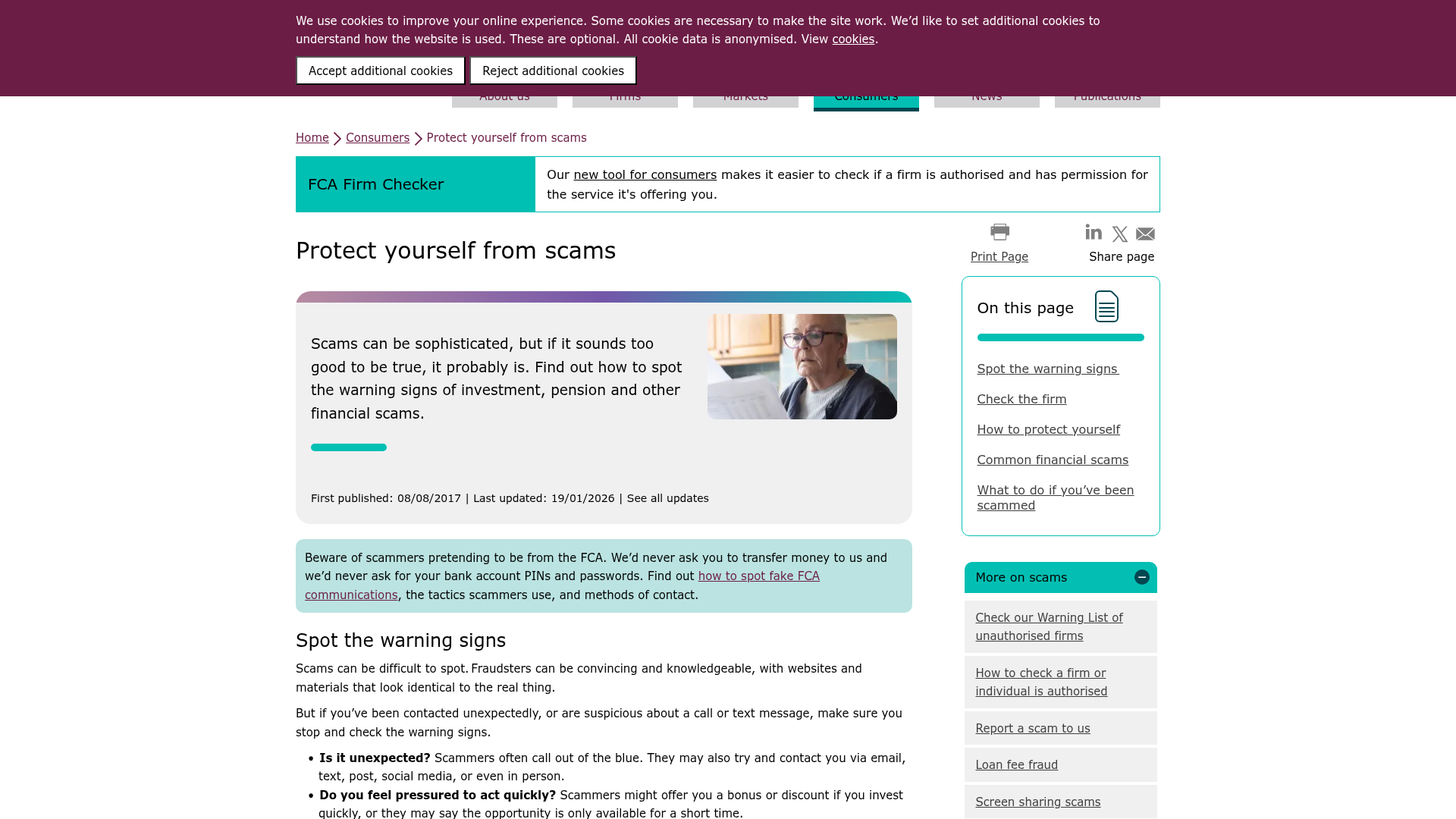
سجلات أخرى مستخدمة في هذا النوع من الفحوصات. كل منها يفتح صفحة الجهة التنظيمية الخاصة بها.
مصادر أساسية
يمكن التحقق من كل ادعاء أعلاه بالرجوع إلى صفحة الهيئة نفسها. تفتح هذه الروابط على موقع الجهة التنظيمية، وليس موقعنا.
- Financial Conduct Authority — Financial Services Registerregister.fca.org.ukhttps://register.fca.org.uk/
- ASIC — Professional registersasic.gov.auhttps://asic.gov.au/online-services/search-asics-registers/
- CFTC — Registration Deficient (RED) Listcftc.govhttps://www.cftc.gov/check
- FCA — Warning list of unauthorised firmsfca.org.ukhttps://www.fca.org.uk/consumers/warning-list-unauthorised-firms
- Financial Services Compensation Scheme (FSCS)fscs.org.ukhttps://www.fscs.org.uk/what-we-cover/investments/
- IOSCO — Investor alerts portaliosco.orghttps://www.iosco.org/investor_protection/?subsection=investor_alerts_portal
الأسئلة المتكررة
ما هو أهم شيء يخبرني به السجل التنظيمي؟
يؤكد ما إذا كانت الشركة مرخصة قانونياً لتقديم الخدمات المالية في تلك الولاية القضائية المحددة، وتحت أي هيئة تنظيمية تقع. هذا هو أساس الحماية، حيث تشكل الشركة غير المرخصة خطراً فورياً وجسيماً.
هل يمكن أن يكون الوسيط مرخصاً في بلد واحد وليس في بلد آخر؟
نعم، قد يحمل الوسيط تراخيص في ولايات قضائية متعددة، لكل منها قواعد مختلفة. من الضروري التحقق مما إذا كان الكيان المحدد الذي تتعامل معه مرخصاً في *منطقتك* أو المنطقة التي تنوي التداول فيها، حيث تختلف الحماية.
إذا كان الوسيط مرخصاً، فهل هذا يعني أن أموالي آمنة؟
يوفر الترخيص إطاراً لحماية المستثمرين، غالباً ما يشمل فصل أموال العملاء وخطط التعويض. ومع ذلك، فإنه لا يضمن أن الوسيط لن يفشل أبداً، ولا يحمي من خسائر السوق المتأصلة في التداول.
كيف أعرف ما إذا كانت هيئة تنظيمية ذات سمعة طيبة؟
الهيئات التنظيمية من الدرجة الأولى مثل FCA (UK)، ASIC (Australia)، CySEC (Cyprus)، و CFTC/NFA (USA) معترف بها عموماً لرقابتها الصارمة. غالباً ما توفر مواقعها الإلكترونية إرشادات واضحة وسجلات قابلة للبحث، مما يشير إلى الشفافية والصرامة.
وسيط يدعي أنه مرخص، لكن لا أستطيع العثور عليه في أي سجل. ماذا يجب أن أفعل؟
هذه علامة تحذير مهمة. لا تتعامل مع هذا الوسيط. أبلغ عن الكيان إلى سلطتك المالية المحلية، مثل FTC (للولايات المتحدة) أو Action Fraud (للمملكة المتحدة)، وتحقق من قوائم التحذير الصادرة عن الهيئة التنظيمية.
هل يخبرني إدخال السجل عن تكاليف تداول الوسيط؟
لا، لا تفصل إدخالات السجل عادةً تكاليف التداول المحددة مثل السبريد، والعمولات، أو معدلات السواب. توجد هذه المعلومات على موقع الوسيط الإلكتروني الخاص به، ضمن شروط وأحكام حسابه، ويمكن التحقق منها باستخدام حساب تجريبي.
ماذا لو استخدم وسيط اسماً مختلفاً للشركة عن الاسم الموجود في السجل؟
تحقق دائماً من تطابق الاسم القانوني الدقيق للكيان المدرج في السجل مع الاسم الذي يعمل ويقوم بمعالجة أموالك. يمكن أن تكون التناقضات علامة على شركة غير مرخصة تحاول التضليل أو "شركة مستنسخة"، مما يشكل خطراً جسيماً.