
نقاط رئيسية
- تسجيل الشركة (على سبيل المثال، في سانت فنسنت وجزر غرينادين) يؤكد فقط وضع الكيان القانوني، وليس ترخيصًا لتقديم الخدمات المالية.
- تفرض التراخيص المالية متطلبات رأس مال صارمة، وفصل أموال العملاء، وآليات حل النزاعات التي تفتقر إليها عمليات التسجيل.
- يستفيد المستثمرون لدى الوسطاء المرخصين عادةً من برامج التعويض، مثل FSCS في المملكة المتحدة بحد أقصى 85,000 جنيه إسترليني أو ICF التابع لـ CySEC بحد أقصى 20,000 يورو.
- تحقق دائمًا من ترخيص الوسيط مباشرة على الموقع الرسمي للجهة التنظيمية، باستخدام الاسم القانوني للشركة ورقم الترخيص.
- غالبًا ما تغري الكيانات غير المرخصة العملاء برافعة مالية مبالغ فيها أو مكافآت، لكنها لا تقدم أي تعويض قانوني أو حماية للأموال إذا نشأت مشاكل.
المفهوم الخاطئ الشائع: مسجل ولكن غير خاضع للرقابة
تخيل أنك تصادف منصة تداول عبر الإنترنت تعرض بفخر شهادة تأسيس من ولاية قضائية تبدو نائية، ربما سانت فنسنت وجزر غرينادين أو جزر مارشال. ينص النص على 'نحن شركة مسجلة'، مما يوحي بمستوى من الشرعية. قد يعتقد العديد من المستثمرين المحتملين، عند رؤية هذه الوثيقة ذات المظهر الرسمي، خطأً أنها تشير إلى أن الكيان مرخص له بتقديم الخدمات المالية ويخضع للتدقيق التنظيمي. هذا الافتراض هو نقطة دخول رئيسية لمخاطر مالية كبيرة، حيث أن تسجيل الشركة هو وثيقة مختلفة جوهريًا عن ترخيص الخدمات المالية.
يثبت تسجيل الشركة مجرد وجود كيان قانوني في ولاية قضائية معينة. إنه يشبه تسجيل مخبز محلي أو ورشة نجارة. يؤكد هذا التسجيل أن الكيان معترف به من قبل السلطات المحلية لأغراض ضريبية، وله اسم قانوني، ويمكنه إبرام العقود. لا يذكر شيئًا عن طبيعة أنشطته التجارية أو ما إذا كانت هذه الأنشطة تخضع لرقابة متخصصة، خاصة في مجال المعاملات المالية شديد الحساسية. بالنسبة لمقدمي الخدمات المالية، تتجاوز المتطلبات مجرد التسجيل البسيط.
أصدرت الجهات التنظيمية عالميًا تحذيرات صارمة ضد الشركات التي تعتمد فقط على تسجيل الشركة الأساسي للإيحاء بالمصداقية. على سبيل المثال، غالبًا ما تستعرض الكيانات العاملة في الولايات القضائية الخارجية شهادات التسجيل هذه كدليل على وضعها 'الخاضع للرقابة'. ومع ذلك، تتضمن هذه التسجيلات عادة متطلبات رأسمال ضئيلة ولا توفر حماية محددة لأموال العملاء أو آليات لحل النزاعات ذات الصلة بأنشطة الاستثمار. الفرق بين تسجيل الأعمال العام والترخيص المالي المحدد كبير، وفهم هذا الفرق هو الخطوة الأولى الحاسمة في حماية رأس مالك.
تسجيل الشركة: هوية قانونية، وليس تفويضًا ماليًا
عندما تسجل شركة ما، على سبيل المثال، لدى Companies House في المملكة المتحدة أو بموجب قانون الشركات لعام 2001 في أستراليا عبر ASIC، فإنها تحصل على هوية قانونية. يتيح لها ذلك أداء وظائف العمل الأساسية: فتح حساب مصرفي، توقيع عقود الإيجار، توظيف الموظفين، ودفع الضرائب. إنها خطوة أساسية لأي مؤسسة شرعية. تكون العملية إدارية عادةً، وتتضمن تقديم الوثائق التأسيسية، وتفاصيل المديرين، وعنوان مسجل. لا يوجد تقييم لقدرة الشركة على إدارة الأدوات المالية المعقدة أو التعامل مع أموال الأطراف الثالثة بأمان.
على سبيل المثال، شركة أسترالية مثل Pepperstone، ومقرها ملبورن، تأسست عام 2010 وهي مسجلة لدى ASIC. يوفر هذا التسجيل هيكلها المؤسسي القانوني. ومع ذلك، فإن صلاحيتها لتقديم تداول الفوركس وعقود الفروقات (CFD) تأتي من تراخيص مالية محددة صادرة عن ASIC، وFCA (المملكة المتحدة)، وCySEC (قبرص)، وDFSA (دبي)، وBaFin (ألمانيا)، وCMA (كينيا)، وSCB (الباهاماس). تسجيل الشركة الأولي في أستراليا هو مجرد نقطة البداية؛ التراخيص المالية هي التي تسمح بعملياتها التجارية الأساسية.
هذا هو الجزء الذي تتجاهله معظم الأدلة: يمكن للشركة تسجيل نفسها في أماكن متعددة دون أي نية لتقديم خدمات مالية أو، ما هو أسوأ، بقصد تضليل قدراتها. لا تتضمن عملية التسجيل نفسها فحوصات حول مدى ملاءمة الأفراد لإدارة أموال العملاء، ولا تفرض أنظمة لسلوك السوق، أو كفاية رأس المال، أو تعويض المستثمرين. إنه شرط ضروري ولكنه غير كافٍ على الإطلاق لمقدم الخدمات المالية.
المسار الصارم للحصول على ترخيص الخدمات المالية
الحصول على ترخيص الخدمات المالية هو مسعى مختلف تمامًا، يتميز بمتطلبات صارمة ورقابة مستمرة. تمنح هيئة تنظيمية، مثل هيئة السلوك المالي في المملكة المتحدة (FCA) أو لجنة تداول السلع الآجلة الأمريكية (CFTC)، هذا الترخيص. وهي ترخص للشركة بالمشاركة في أنشطة محددة خاضعة للرقابة، مثل تقديم المشورة الاستثمارية، أو إدارة محافظ العملاء، أو تشغيل منصة تداول للمشتقات.
عملية التقديم شاملة. يجب على الشركات إثبات رأس مال أولي كبير، غالبًا ما يكون بالملايين من الدولارات أو اليورو، لضمان قدرتها على تحمل تقلبات السوق وحماية أموال العملاء. يخضعون لفحوصات خلفية شاملة لجميع المديرين والموظفين الرئيسيين لتقييم مدى 'ملاءمتهم وكفاءتهم'. يتم تدقيق الضوابط التشغيلية، وأطر إدارة المخاطر، وإجراءات الامتثال الفعالة. على سبيل المثال، يجب على الشركات الأوروبية الخاضعة لرقابة MiFID II الالتزام بقواعد صارمة فيما يتعلق بأفضل تنفيذ، والشفافية، وتصنيف العملاء.
بعد الموافقة الأولية، تواجه الكيانات المرخصة إشرافًا مستمرًا. يشمل ذلك التقارير المنتظمة، والتدقيقات الخارجية، والالتزام بقواعد فصل أموال العملاء – حيث يتم الاحتفاظ بأموال العملاء في حسابات مصرفية منفصلة عن رأس مال الشركة التشغيلي – والمشاركة في برامج تعويض المستثمرين. أي خرق لهذه الالتزامات يمكن أن يؤدي إلى غرامات، أو تعليق الترخيص، أو حتى إلغائه. هذا الإشراف النشط والمستمر هو الفرق الجوهري بين الشركة المسجلة ومقدم الخدمات المالية الخاضع للرقابة.
حماية المستثمرين الحاسمة التي يوفرها الترخيص
الفائدة الأساسية للتعامل مع كيان مرخص ماليًا هي طبقة حماية المستثمر التي يوفرها. عندما تتداول مع وسيط منظم من قبل سلطة ذات سمعة طيبة، تكون هناك عادةً عدة ضمانات موجودة تمامًا والتي تغيب عند التعامل مع عملية غير مرخصة. تم تصميم هذه الحمايات للتخفيف من المخاطر وتوفير سبل الانتصاف في المواقف السلبية.
أحد أهم أشكال الحماية هو فصل أموال العملاء. يُطلب من الوسطاء المنظمين قانونًا الاحتفاظ بأموال العملاء في حسابات مصرفية منفصلة، ومميزة عن رأس مالهم التشغيلي الخاص. هذا يعني أنه إذا واجه الوسيط صعوبات مالية أو أفلس، فإن أموال العملاء تكون محمية من الدائنين ويمكن إعادتها إلى المستثمرين. على سبيل المثال، تفرض FCA أن يتم الاحتفاظ بأموال العملاء في حسابات مصرفية منفصلة بموجب قواعد أموال العملاء الخاصة بـ FCA.
تقدم العديد من الولايات القضائية أيضًا برامج تعويض المستثمرين. في المملكة المتحدة، يحمي برنامج تعويض الخدمات المالية (FSCS) العملاء المؤهلين حتى 85,000 جنيه إسترليني لكل شخص لكل شركة إذا فشلت شركة مالية مرخصة. وبالمثل، في قبرص، يغطي صندوق تعويض المستثمرين (ICF)، الذي تشرف عليه CySEC، ما يصل إلى 20,000 يورو لكل مستثمر مشمول. توفر هذه البرامج شبكة أمان حاسمة غير موجودة عند التعامل مع كيان غير مسجل أو غير مرخص. الحقيقة العملية هي أنه بدون مثل هذا البرنامج، فإن الأموال المفقودة بسبب عملية فاشلة أو احتيالية تكون دائمًا تقريبًا غير قابلة للاسترداد.
أخيرًا، يجب على الشركات المرخصة الالتزام بقواعد سلوك السوق الصارمة، مما يضمن المعاملة العادلة للعملاء، والتسعير الشفاف، وعمليات حل النزاعات الفعالة. في حال نشوء نزاع، يمكن لعملاء الشركات المنظمة عادةً تصعيد شكواهم إلى خدمة أمين مظالم مستقلة، مثل خدمة أمين المظالم المالية (FOS) في المملكة المتحدة، والتي تعمل كحكم محايد. آلية الانتصاف الرسمية هذه تتناقض بشكل صارخ مع المحاولات التي غالبًا ما تكون عقيمة لاستعادة الأموال من شركة غير منظمة، والتي قد تتوقف ببساطة عن التواصل أو تختفي.
مقارنة بين الحمايات الرئيسية: الكيانات المرخصة مقابل الكيانات غير المرخصة
| الميزة | الوسيط المرخص (على سبيل المثال، FCA، ASIC) | الكيان غير المرخص / المسجل فقط |
|---|---|---|
| فصل أموال العملاء | إلزامي؛ يتم الاحتفاظ بأموال العملاء منفصلة عن رأس مال الشركة. | لا يوجد شرط؛ قد تختلط الأموال، مما يعرضها لخطر الخسارة. |
| نظام تعويض المستثمرين | متاح (على سبيل المثال، FSCS حتى 85,000 جنيه إسترليني، ICF حتى 20,000 يورو). | لا يوجد؛ عادة ما تكون الأموال غير قابلة للاسترداد في حالة إفلاس الشركة. |
| الرقابة التنظيمية | مراقبة مستمرة، وعمليات تدقيق، ورفع تقارير. | رقابة ضئيلة أو معدومة على الأنشطة المالية. |
| تسوية النزاعات | إمكانية الوصول إلى خدمات أمين المظالم المستقلة واللجوء القانوني الرسمي. | لجوء رسمي محدود أو معدوم؛ غالبًا ما يعتمد على تقدير الشركة. |
| متطلبات رأس المال | متطلبات رأسمالية أولية ومستمرة عالية لضمان الملاءة المالية. | متطلبات رأسمالية محددة ضئيلة أو معدومة للخدمات المالية. |
| قواعد سلوك السوق | قواعد صارمة بشأن المعاملة العادلة والشفافية وملاءمة المنتج. | لا توجد قواعد إلزامية؛ قد تكون الممارسات غامضة ومفترسة. |
تسجيل الشركة هو مجرد حقيقة إدارية؛ أما الترخيص المالي فهو شارة الثقة، المبنية على رقابة صارمة وآليات حماية ملموسة للمستثمرين.
Alan Reeve
التحقق: خطواتك العملية
يتطلب التحقق من وضع ترخيص شركة ما اتباع نهج مدروس ودقيق. لا يكفي مجرد التحقق من موقع الوسيط الإلكتروني بحثًا عن الشعارات أو الادعاءات. يجب عليك التوجه مباشرة إلى المصدر: السجل الرسمي للهيئة التنظيمية المالية المعنية. على سبيل المثال، إذا ادعى وسيط أنه منظم من قبل FCA، فإن خطوتك الأولى هي زيارة سجل الخدمات المالية الخاص بـ FCA. لا تتبع الروابط التي يقدمها الوسيط؛ بل اكتب عنوان URL الخاص بالهيئة التنظيمية في متصفحك بشكل مستقل.
بمجرد دخولك إلى السجل الرسمي، ابحث عن الشركة باستخدام اسمها القانوني الدقيق، والذي يجب أن يكون مذكورًا بوضوح على موقعها الإلكتروني، أو باستخدام رقم ترخيصها. على سبيل المثال، سيوضح لك سجل FCA ليس فقط ما إذا كانت الشركة مرخصة، ولكن أيضًا الأنشطة المحددة المسموح لها بممارستها. إذا كانت الشركة مرخصة لتقديم المشورة الاستثمارية ولكنها تقدم تداول عقود الفروقات (CFD)، فهذه علامة حمراء مهمة. وبالمثل، تتيح لك السجلات المهنية لـ ASIC البحث عن حاملي ترخيص الخدمات المالية الأسترالية (AFS)، بينما تحتفظ CySEC بسجل عام للكيانات المنظمة.
من الضروري أيضًا أن تكون على دراية بـ 'الشركات المستنسخة' (clone firms). هذه كيانات احتيالية تنتحل صفة وسطاء شرعيين ومنظمين باستخدام أسماء وشعارات وحتى أرقام تراخيص مشابهة. قارن دائمًا تفاصيل الاتصال (الموقع الإلكتروني، أرقام الهواتف) الموجودة في سجل الهيئة التنظيمية بتلك الموجودة على موقع الوسيط. إذا لم تتطابق، فتعامل بحذر شديد. تعتبر قائمة CFTC للكيانات ذات التسجيل الناقص (RED List) وقائمة تحذير FCA للشركات غير المرخصة موارد لا تقدر بثمن لتحديد الكيانات التي يتم الإبلاغ عنها صراحةً لعملها دون ترخيص مناسب أو لانخراطها في أنشطة مشبوهة. إن عملية التحقق الاستباقية هذه، على الرغم من أنها قد تبدو مملة، هي دفاعك الأكثر فعالية ضد الاحتيال المحتمل.
جاذبية ومخاطر العمليات غير المرخصة
غالبًا ما تقدم الكيانات غير المرخصة عروضًا مغرية لا يستطيع الوسطاء المرخصون مجاراتها، وذلك بشكل أساسي لأنها غير مقيدة بتكاليف الامتثال التنظيمي ومتطلبات حماية المستثمرين. قد تعلن عن رافعة مالية (leverage) عالية بشكل استثنائي – ربما 1:500 أو 1:1000 – متجاوزة بكثير الحد الأقصى البالغ 1:30 للعملاء الأفراد بموجب تدخل ESMA في أوروبا أو الحدود النموذجية التي تفرضها ASIC و FCA. بينما يمكن للرافعة المالية العالية تضخيم الأرباح، فإنها تزيد بشكل كبير أيضًا من احتمالية حدوث خسائر سريعة وكبيرة، وهو خطر غالبًا ما تقلل الشركات غير المنظمة من أهميته.غالبًا ما تقدم هذه الكيانات مكافآت لا تقاوم، أحيانًا تعد بمضاعفة الودائع الأولية، أو تضمن عوائد غير واقعية. مثل هذه التكتيكات التسويقية العدوانية محظورة بشكل عام على الوسطاء المرخصين تحديدًا لأنها قد تضلل المستثمرين وتشجع على المخاطرة المفرطة. الخطر الأساسي هنا هو أن هذه 'المزايا' تأتي بدون شبكة أمان أساسية. لا توجد هيئة مستقلة تضمن التنفيذ العادل للصفقات، ولا يوجد فصل إلزامي لأموال العملاء، ولا توجد وسيلة للتعويض عند حدوث مشاكل.التعامل مع كيان غير مرخص هو أسوأ بلا شك من اختيار كيان مرخص. بينما قد تبدو البيئة المنظمة مقيدة برافعات مالية (leverage) أقل ومكافآت أقل إبهارًا، إلا أنها توفر حماية أساسية: أموالك مفصولة، ولديك حق اللجوء إلى خطط التعويض، وهناك هيئة مستقلة لمعالجة النزاعات. غياب هذه الضمانات لدى الشركات غير المرخصة يعني أن أي رأس مال يتم إيداعه يكون فعليًا تحت رحمة المشغل، مع حماية قانونية أو مالية قليلة أو معدومة ضد سوء السلوك أو الإفلاس. المزايا المفترضة لظروف التداول 'الأفضل' تفوقها دائمًا تقريبًا الافتقار التام للأمان والمساءلة.
لمحة عن الهياكل التنظيمية العالمية وتواجد الوسطاء
تعمل الهيئات التنظيمية المالية الكبرى بنطاقات ومستويات مختلفة لحماية المستثمرين، ومع ذلك، تشترك جميعها في هدف مشترك يتمثل في الحفاظ على نزاهة السوق وحماية المستهلكين. يسعى الوسطاء الذين يهدفون بصدق إلى الانتشار العالمي والمصداقية عادةً للحصول على تراخيص متعددة عبر ولايات قضائية مختلفة. تسمح لهم هذه الشبكة المعقدة من التراخيص بخدمة قواعد عملاء متنوعة مع الالتزام بالأطر التنظيمية الإقليمية. على سبيل المثال، قد يحمل وسيط ترخيص ASIC لعملياته الأسترالية، وترخيص FCA لعملائه في المملكة المتحدة، وترخيص CySEC لعملائه في الاتحاد الأوروبي.
لنأخذ OANDA على سبيل المثال، التي تأسست عام 1996 ويقع مقرها الرئيسي في نيويورك. وهي تحمل تراخيص من FCA (UK), CFTC/NFA (USA), ASIC (Australia), IIROC (Canada), و MAS (Singapore). يسمح هذا النهج متعدد الولايات القضائية لـ OANDA بخدمة العملاء عالميًا تحت رقابة صارمة. وبالمثل، توسع Pepperstone، وهي شركة أسترالية، نطاق عملها من خلال تراخيص من FCA, ASIC, CySEC, DFSA, BaFin, CMA, و SCB. يمثل كل ترخيص التزامًا بمتطلبات رأس المال الخاصة بتلك المنطقة، وقواعد حماية العملاء، ومعايير الإبلاغ. هذا ليس مجرد مجموعة من التسجيلات؛ بل هو التزام بأنظمة تنظيمية متميزة، مع ما يترتب عليها من تكاليف امتثال وتشعبات تشغيلية.
من المهم أن نتذكر أن الكيان التنظيمي المحدد الذي يندرج حسابك تحته هو الذي يحكم حمايتك. إذا كنت مقيمًا في المملكة المتحدة وتتداول مع وسيط دولي لديه ترخيص FCA وترخيص خارجي، فإن التأكد من تسجيل حسابك صراحةً لدى كيانهم الخاضع لتنظيم FCA أمر بالغ الأهمية للوصول إلى الحمايات الخاصة بالمملكة المتحدة مثل FSCS. من الناحية العملية، سيطلب قسم المبيعات لدى الوسيط الشرعي مرتين، أو حتى ثلاث مرات، لضمان تسجيلك ضمن المظلة التنظيمية الصحيحة والمناسبة لولايتك القضائية.
وسطاء منظمون مختارون وحضورهم التنظيمي الأساسي
| اسم الوسيط | سنة التأسيس | المقر الرئيسي | الهيئات التنظيمية الرئيسية (أمثلة) |
|---|---|---|---|
| OANDA | 1996 | نيويورك، الولايات المتحدة الأمريكية | FCA (المملكة المتحدة), CFTC/NFA (الولايات المتحدة الأمريكية), ASIC (أستراليا), MAS (سنغافورة) |
| FOREX.com | 2001 | نيوجيرسي، الولايات المتحدة الأمريكية | CFTC/NFA (الولايات المتحدة الأمريكية)، FCA (المملكة المتحدة)، ASIC (أستراليا)، CIRO (كندا) |
| Pepperstone | 2010 | ملبورن، أستراليا | FCA (المملكة المتحدة)، ASIC (أستراليا)، CySEC (قبرص)، DFSA (الإمارات العربية المتحدة) |
| IC Markets | 2007 | سيدني، أستراليا | ASIC (أستراليا)، CySEC (قبرص)، FSA (سيشل) |
| XM | 2009 | ليماسول، قبرص | CySEC (قبرص), ASIC (أستراليا), IFSC (بليز), DFSA (الإمارات العربية المتحدة) |
| eToro | 2007 | تل أبيب، إسرائيل | FCA (المملكة المتحدة), CySEC (قبرص), ASIC (أستراليا), FinCEN (الولايات المتحدة الأمريكية) |
| Exness | 2008 | ليماسول، قبرص | FCA (المملكة المتحدة), CySEC (قبرص), FSCA (جنوب أفريقيا), CBCS (كوراساو وسينت مارتن) |
| AvaTrade | 2006 | دبلن، أيرلندا | البنك المركزي الأيرلندي, ASIC (أستراليا), FSCA (جنوب أفريقيا), FSA (اليابان) |
| Plus500 | 2008 | حيفا، إسرائيل | FCA (المملكة المتحدة), CySEC (قبرص), ASIC (أستراليا), FMA (نيوزيلندا), FSCA (جنوب أفريقيا) |
العواقب الوخيمة للعمل خارج الأطر التنظيمية
المخاطر المالية المرتبطة بالتعامل مع كيان غير مرخص عميقة وغالبًا ما تكون غير قابلة للاسترداد. فبدون رقابة تنظيمية، لا يوجد ضمان بأن أموالك تُدار بشفافية أو أمان. الشركات غير المرخصة لا تخضع لقواعد كفاية رأس المال الصارمة المصممة لضمان الملاءة المالية، مما يعني أنها قد لا تملك أموالاً كافية لتغطية سحوبات العملاء، خاصة خلال فترات تقلبات السوق. وهذا قد يؤدي إلى عدم تمكن العملاء من الوصول إلى أموالهم الخاصة، وهو وضع غالبًا ما يتصاعد إلى خسارة كلية.
بالإضافة إلى الخسارة المالية، هناك مخاوف كبيرة تتعلق بأمن البيانات والخصوصية. الشركات غير المنظمة ليست ملزمة بقوانين حماية البيانات الصارمة، مما يجعل معلوماتك الشخصية والمالية عرضة للاختراقات أو سوء الاستخدام. قد لا تطبق هذه الشركات تدابير قوية للأمن السيبراني، مما يعرض العملاء لسرقة الهوية أو هجمات التصيد الاحتيالي. ويعني غياب عملية شكاوى رسمية أنه إذا واجهت مشكلات مثل التلاعب بالأسعار، أو إغلاق الحسابات غير المبرر، أو رفض معالجة السحوبات، فإن سبل الانتصاف المتاحة لك محدودة للغاية، وغالبًا ما تصل إلى محاولات عقيمة للتواصل مع كيان غير مستجيب أو مختفٍ.
هذه السيناريوهات ليست افتراضية. فتقارير منظمات مثل مركز شكاوى جرائم الإنترنت التابع لمكتب التحقيقات الفيدرالي (FBI's Internet Crime Complaint Center - IC3) وقنوات الإبلاغ عن الاحتيال التابعة للجنة التجارة الفيدرالية (FTC) توثق باستمرار حالات فقد فيها الأفراد مبالغ كبيرة بسبب مخططات الاستثمار غير المنظمة. ويعني الافتقار إلى إطار مؤسسي لحماية المستثمرين أنه عندما تفشل شركة غير مرخصة أو ترتكب احتيالًا، يقع عبء الخسارة بالكامل على عاتق الفرد، مع أمل ضئيل في الاسترداد. وتسلط هذه الحقيقة الصارخة الضوء على سبب كون الاعتماد على تسجيل الشركة وحده لإضفاء الشرعية يُعد إهمالًا كارثيًا.
دورك الاستباقي في حماية الاستثمارات
تتطلب حماية استثماراتك في بيئة مالية معقدة نهجًا استباقيًا ومستنيرًا. والإجراء الأكثر فعالية الذي يمكنك اتخاذه هو التحقق بدقة من الوضع التنظيمي لأي مزود خدمات مالية قبل إيداع الأموال. لا تنجرف وراء التسويق البراق، أو وعود العوائد غير الواقعية، أو الادعاءات العامة بـ 'التسجيل'. بدلاً من ذلك، أعط الأولوية للوسطاء الذين لديهم سجل حافل بالالتزام بالمعايير التنظيمية الصارمة في الولايات القضائية ذات السمعة الطيبة.
دقق دائمًا في شروط وأحكام الوسيط، مع إيلاء اهتمام وثيق للكيان الذي تتعاقد معه والجهة التنظيمية المعلنة له. افهم حدود الرافعة المالية المطبقة على منطقتك، مثل 1:30 للعملاء الأفراد في الاتحاد الأوروبي/المملكة المتحدة بموجب قواعد ESMA، وكن حذرًا من الشركات التي تقدم رافعة مالية أعلى بكثير دون دعم تنظيمي واضح. تذكر أن المؤسسات المالية الشرعية تتسم بالشفافية بشأن انتماءاتها التنظيمية وتوفر سهولة الوصول إلى تفاصيل ترخيصها. إذا وجدت أن الشركة تصعب العثور على هذه المعلومات أو تقدم تأكيدات غامضة، فاعتبر ذلك علامة تحذير حرجة.
يقظتك هي خط الدفاع الأول والأقوى. من خلال فهم الفرق العميق بين مجرد تسجيل شركة ورخصة خدمات مالية كاملة، ومن خلال التحقق المستمر من هذه المعلومات الحاسمة عبر القنوات الرسمية، فإنك تجهز نفسك لاتخاذ قرارات استثمارية أكثر أمانًا واستنارة. يضمن هذا الالتزام بالعناية الواجبة أن رحلتك المالية مبنية على أساس من الأمان الحقيقي، بدلاً من الأوراق الإدارية المضللة.
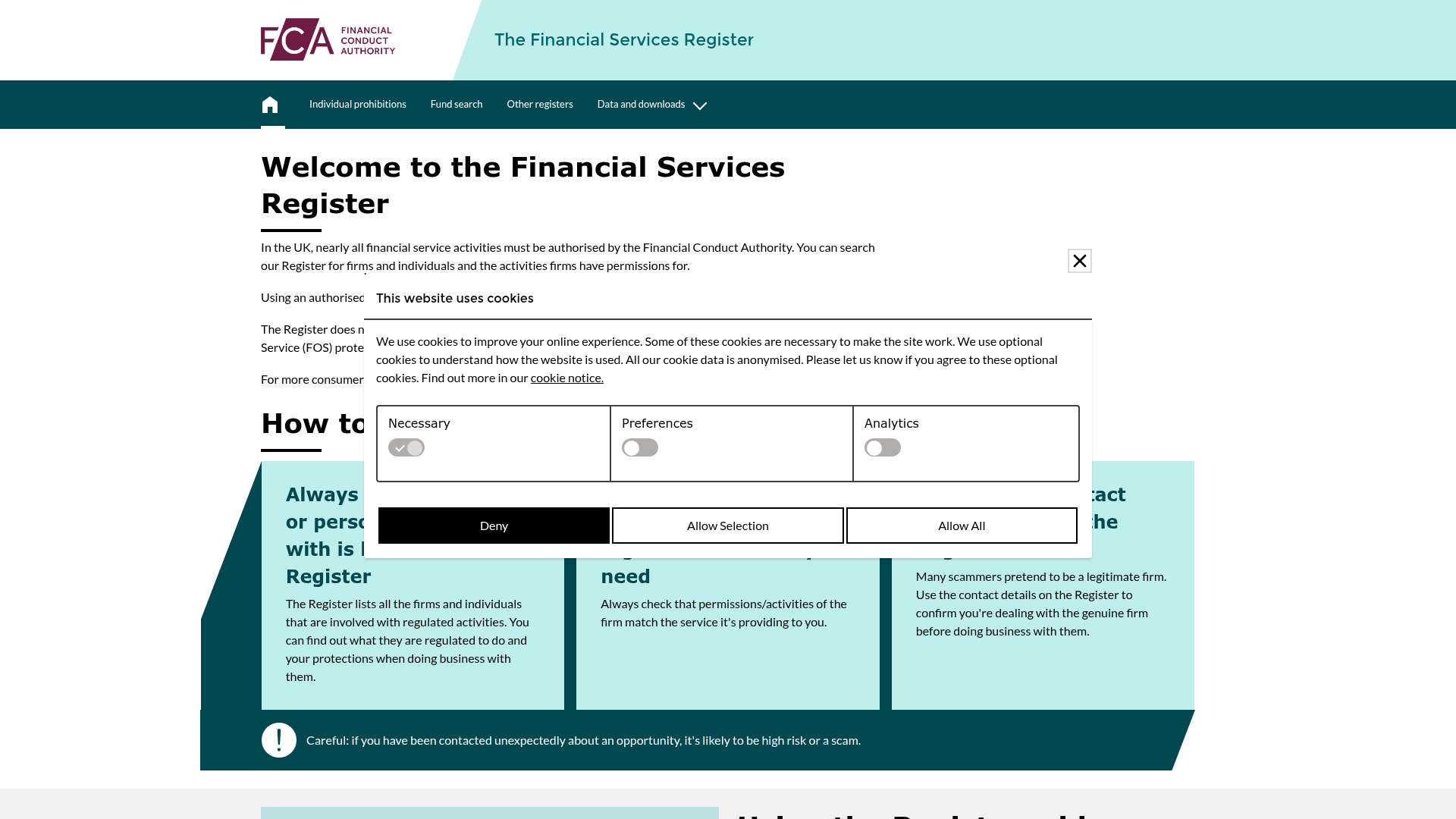
الصفحة التي نتحقق منها
هذه هي صفحة الهيئة نفسها، تم التقاطها كما وجدناها. افتحها وقم بإجراء البحث نفسه بنفسك — لا شيء في هذا السجل يحل محل المصدر.
سجلات أخرى مستخدمة في هذا النوع من الفحوصات. كل منها يفتح صفحة الجهة التنظيمية الخاصة بها.
مصادر أساسية
يمكن التحقق من كل ادعاء أعلاه بالرجوع إلى صفحة الهيئة نفسها. تفتح هذه الروابط على موقع الجهة التنظيمية، وليس موقعنا.
- Financial Conduct Authority — Financial Services Registerregister.fca.org.ukhttps://register.fca.org.uk/
- FCA — Warning list of unauthorised firmsfca.org.ukhttps://www.fca.org.uk/consumers/warning-list-unauthorised-firms
- ASIC — Professional registersasic.gov.auhttps://asic.gov.au/online-services/search-asics-registers/
- CFTC — Customer advisories on fraudcftc.govhttps://www.cftc.gov/LearnAndProtect/AdvisoriesAndArticles/index.htm
- Financial Services Compensation Scheme (FSCS)fscs.org.ukhttps://www.fscs.org.uk/what-we-cover/investments/
الأسئلة المتكررة
ما هو الفرق الجوهري بين تسجيل الشركة والترخيص المالي؟
تسجيل الشركة هو مجرد تأسيس كيان قانوني لأغراض إدارية مثل الضرائب والهوية. أما الترخيص المالي، فيمنح تصريحًا محددًا لممارسة الأنشطة المالية، ويفرض رقابة تنظيمية صارمة، ومتطلبات رأس مال، وقواعد لحماية المستثمرين.
هل يمكن أن تكون الشركة 'مسجلة' دون أن تكون 'مرخصة' لتقديم الخدمات المالية؟
نعم، بالتأكيد. يمكن أن تكون الشركة مسجلة قانونيًا ككيان تجاري في ولاية قضائية، مثل St. Vincent and the Grenadines، دون الحصول على أي ترخيص محدد لتقديم منتجات أو خدمات استثمارية مالية. هذا التسجيل لا يوفر حماية للمستثمرين أو رقابة تنظيمية على أنشطة التداول.
كيف يمكنني التحقق مما إذا كان الوسيط مرخصًا حقًا وليس مجرد مسجل؟
قم دائمًا بزيارة الموقع الرسمي للجهة التنظيمية المالية (على سبيل المثال، FCA, ASIC, CySEC) مباشرة. ابحث عن الاسم القانوني الدقيق للوسيط أو رقم ترخيصه في سجلهم العام. تأكد من أن الأنشطة المصرح بها المدرجة في السجل تتطابق مع الخدمات التي يقدمها الوسيط.
ما هي أوجه الحماية التي أخسرها عند التداول مع وسيط غير مرخص؟
تخسر فصل أموال العملاء، والوصول إلى مخططات تعويض المستثمرين (مثل FSCS أو ICF)، وآليات مستقلة لتسوية النزاعات، والرقابة التنظيمية على سلوك السوق. تكون أموالك معرضة لخطر خسارة أعلى بكثير بسبب إفلاس الشركة أو الممارسات الاحتيالية.
لماذا تعمل بعض الشركات دون ترخيص مالي؟
غالبًا ما تعمل الشركات غير المرخصة لتجنب التكاليف المرتفعة ومتطلبات الامتثال الصارمة للتنظيم. يتيح لهم ذلك تقديم ميزات مثل الرافعة المالية المرتفعة للغاية أو المكافآت المغرية التي لا تستطيع الشركات المرخصة تقديمها، ولكن هذا يأتي على حساب كامل لسلامة المستثمرين وإمكانية اللجوء إلى سبل الانتصاف.
إذا كان الوسيط يمتلك تراخيص متعددة، فأيها ينطبق علي؟
يحدد الكيان التنظيمي المحدد الذي يتم فتح حسابك بموجبه حمايتك. تأكد من أنك تتعامل مع الكيان المرخص في بلد إقامتك أو من قبل سلطة موثوقة وذات صلة بمنطقتك للوصول إلى الحماية المحلية ومخططات التعويض.
ما هي 'الشركة المستنسخة' وكيف يمكنني تجنبها؟
الشركة المستنسخة هي كيان احتيالي يحاكي اسم، موقع إلكتروني، أو تفاصيل ترخيص وسيط شرعي ومرخص لخداع المستثمرين. لتجنبها، تحقق دائمًا من تفاصيل الاتصال الموجودة في السجل الرسمي للجهة التنظيمية ومقارنتها بموقع الوسيط، ولا تستخدم أبدًا معلومات الاتصال التي يقدمها الكيان المشبوه وحده.