
نقاط رئيسية
- يُعد السجل الإلكتروني لهيئة FSCA الأداة الأساسية للتحقق من مزودي الخدمات المالية (FSPs) في جنوب إفريقيا.
- يشير رقم FSP إلى ترخيص رسمي، ولكنه يتطلب تحققًا دقيقًا مقابل الاسم الدقيق للكيان وفئات الخدمات.
- تعمل الشركات غير المرخصة دون حماية للمستهلك، مما يجعل الأموال عرضة للخطر الشديد وغالبًا ما تكون غير قابلة للاسترداد.
- يمكن أن يكشف التدقيق المتقاطع لبيانات FSCA مع قوائم التحذير الدولية عن مخططات معقدة، بما في ذلك الشركات المستنسخة.
- يُعد الإبلاغ عن الأنشطة المشبوهة إلى FSCA والسلطات المختصة الأخرى خطوة حماية حاسمة لك وللمستهلكين الآخرين.
- تحقق دائمًا مباشرة مع الجهة التنظيمية؛ لا تثق أبدًا في الوضع التنظيمي الذي تدعيه الشركة لنفسها أو في رقم تقدمه دون تأكيد مستقل.
خط الدفاع الأول ضد المشغلين غير المصرح لهم
تخيل أن تتلقى مكالمة غير متوقعة من شخص يدعي تمثيل شركة استثمار، ويعدك بعوائد مضمونة بنسبة 18% شهريًا. يبدو محترفًا، وموقعه الإلكتروني مصقول، بل ويقدم 'رقم ترخيص'. هذا السيناريو هو مقدمة متكررة للضائقة المالية للعديد من المستهلكين في جنوب إفريقيا. غالبًا ما يطغى إغراء العوائد المرتفعة على الحاجة الأساسية للتحقق من الكيان وراء الوعد.
تعمل هيئة سلوك القطاع المالي (FSCA) في جنوب إفريقيا كجهة تنظيمية أساسية مكلفة بالإشراف على المؤسسات والأسواق المالية، وضمان المعاملة العادلة للعملاء، وتعزيز الاستقرار المالي.
لأي خدمة استثمارية أو مالية تُقدم داخل جنوب إفريقيا، يجب أن تحمل الشركة التي تقدمها ترخيص مزود خدمات مالية (FSP) ساري المفعول صادرًا عن FSCA. هذا الترخيص ليس مجرد إجراء شكلي؛ بل يشير إلى أن الشركة قد استوفت متطلبات تنظيمية محددة، وتلتزم بمعايير حماية المستهلك، وتخضع لرقابة مستمرة. العمل بدون هذا الترخيص يعني أن الشركة تعمل خارج الإطار التنظيمي، ولا تقدم أي سبيل انتصاف أو حماية للمستهلكين في حال حدوث أي خطأ.
يُعد غياب الرقابة هذا مقلقًا بشكل خاص نظرًا لتزايد تعقيد ترويجات المنتجات المالية عبر الإنترنت ومن خلال الأساليب غير المرغوب فيها. يكمن التحدي بالنسبة للمستهلكين في التمييز بين الكيانات الحقيقية المنظمة وتلك التي تحاكي الشرعية فقط. تم تصميم السجل العام لهيئة FSCA خصيصًا لمعالجة فجوة التحقق هذه، حيث يقدم طريقة مباشرة وموثوقة للتحقق من الوضع التنظيمي للشركة. يجب أن يكون هذا المورد هو الخطوة الأولى التي يتخذها أي مستثمر محتمل قبل التعهد بالأموال أو مشاركة المعلومات الشخصية. بدون رقم FSP مؤكد وصالح ومرتبط بالاسم الدقيق للشركة، فإن أي تعامل يحمل مخاطر كبيرة وغير مخففة في كثير من الأحيان.
فهم رقم FSP: مفتاحك للوضع التنظيمي
رقم FSP هو معرف فريد تخصصه FSCA لمزودي الخدمات المالية المصرح لهم بالعمل في جنوب إفريقيا. يتكون عادةً من خمسة أرقام، مثل 'FSP 12345' أو ببساطة '12345'. هذا الرقم أساسي للامتثال وحماية المستهلك. عندما تعرض شركة ما رقم FSP، فإن ذلك يوحي بأنها تعترف بسلطة FSCA وتدعي العمل تحت إشرافها. ومع ذلك، فإن مجرد عرض هذا الرقم لا يكفي لإثبات الشرعية؛ يجب التحقق منه بشكل مستقل من خلال القنوات الرسمية.
يمتد أهمية رقم FSP إلى ما هو أبعد من التسجيل الأساسي. فهو يحدد المنتجات والخدمات المالية المحددة التي يُسمح للشركة بتقديمها. على سبيل المثال، قد تكون الشركة مرخصة لتقديم المشورة بشأن التأمين قصير الأجل ولكن ليس بشأن الاستثمارات في المشتقات المالية. هذا المستوى الدقيق من التفاصيل بالغ الأهمية لأن الشركة غير المصرح بها قد تدعي زوراً تقديم خدمات تتجاوز نطاق ترخيصها، حتى لو كانت تمتلك رقم FSP حقيقيًا لنشاط مختلف وأقل تعقيدًا.
يغطي تفويض FSCA مجموعة واسعة من الأنشطة المالية، بما في ذلك صناديق الاستثمار الجماعي، وشركات صرف العملات الأجنبية، ووسطاء الأوراق المالية، وخدمات الاستشارات المالية. تتطلب كل فئة من هذه الفئات تراخيص محددة. يعمل رقم FSP كملخص موجز للإذن التنظيمي للشركة. إذا كانت شركة تقدم تداول الفوركس، على سبيل المثال، تمتلك رقم FSP فقط للتأمين طويل الأجل، فإنها تعمل خارج نطاق ترخيصها لأنشطة الفوركس وبالتالي بدون رقابة تنظيمية مناسبة في هذا المجال المحدد. هذا تكتيك شائع بين الشركات التي تسعى للظهور كمنظمة دون أن تكون كذلك فعليًا لنموذج عملها الأساسي.
السجل الإلكتروني لهيئة FSCA: دليل خطوة بخطوة
الطريقة الأكثر موثوقية لتأكيد رقم FSP والتحقق من الوضع التنظيمي للشركة هي من خلال أداة 'البحث عن الكيانات المنظمة' الرسمية لهيئة FSCA. الوصول إلى هذا المورد سهل، ولكن الدقة في التنفيذ أمر حيوي لتجنب التفسيرات الخاطئة. ابدأ بزيارة الموقع الرسمي لهيئة FSCA: https://www.fsca.co.za/Regulated%20Entities/Pages/default.aspx. يؤدي هذا الرابط مباشرة إلى بوابة البحث، وهي المصدر الموثوق الوحيد لهذه المعلومات.
بمجرد دخولك الصفحة، ستجد عدة حقول للبحث. الطريقة الأكثر فعالية هي استخدام حقل 'رقم FSP' إذا كان لديك واحد. اكتب الرقم المكون من خمسة أرقام مباشرة في هذا المربع. بدلاً من ذلك، إذا كان لديك اسم الشركة فقط، استخدم حقل 'اسم مزود الخدمات المالية المصرح له'. يُنصح باستخدام الاسم القانوني الدقيق للكيان كما هو مقدم من الشركة، حيث أن الاختلافات في التهجئة أو الاختصارات يمكن أن تؤدي إلى 'عدم العثور على نتائج' حتى للشركات الشرعية. بعد إدخال مصطلح البحث الخاص بك، انقر فوق زر 'بحث'. سيعرض النظام بعد ذلك الإدخالات المطابقة.
عند استلام النتائج، افحص كل إدخال بعناية. ابحث عن اسم FSP الدقيق الذي يطابق الشركة التي تحقق فيها. انتبه جيدًا لعمود 'الحالة'؛ يجب أن يشير بوضوح إلى 'مصرح به'. تشير حالة 'منتهية الصلاحية' أو 'مسحوبة' أو 'معلقة طوعًا' إلى أن الشركة غير مسموح لها حاليًا بتقديم الخدمات المالية. غالبًا ما يؤدي النقر على اسم FSP إلى الكشف عن معلومات أكثر تفصيلاً، بما في ذلك الفئات المحددة للمنتجات والخدمات المالية التي يُسمح للشركة بتقديمها. هذه التفاصيل الدقيقة هي النقطة التي تقصر فيها العديد من الأدلة، ولكنها حيث يحدث التحقق الحاسم — مطابقة العروض المعلنة للشركة مع نطاق ترخيصها الفعلي.
أمثلة لنتائج البحث في FSCA وتفسيراتها
| مصطلح البحث | النتيجة المتوقعة (الحالة) | الإجراء للمستهلك |
|---|---|---|
| FSP 45678 (مطابق) | مرخص | التحقق من فئات المنتجات |
| شركة الوساطة XYZ (الاسم المطابق) | مرخص | التحقق من رقم مزود الخدمات المالية (FSP) وفئات المنتجات |
| شركة الوساطة XYZ (اسم جزئي) | عدة إدخالات 'مرخص' | مقارنة رقم مزود الخدمات المالية (FSP) والعنوان |
| رقم FSP 12345 (منتهي الصلاحية) | ملغى/مسحوب | لا تتعامل معها؛ الشركة غير منظمة |
| رقم FSP 98765 (غير موجود) | لا توجد نتائج | الشركة غير منظمة من قبل FSCA لهذا الرقم |
تفسير نتائج البحث وتحديد المؤشرات التحذيرية
إن البحث الناجح في سجل FSCA والذي يسفر عن حالة 'مرخص' يعد مؤشرًا إيجابيًا، لكنه ليس الخطوة الأخيرة. تتطلب التفاصيل الموجودة ضمن إدخال FSP مراجعة دقيقة. أولاً، تأكد من أن اسم FSP ورقم التسجيل والعنوان الفعلي يتطابقون تمامًا مع المعلومات المقدمة من الشركة التي تقوم بتقييمها. يمكن أن تشير التناقضات، حتى الطفيفة منها، إلى وجود 'شركة مستنسخة' – وهي كيان يستخدم تفاصيل عمل تجاري شرعي ومنظم بشكل غير قانوني لخداع المستثمرين. هذه الممارسة شائعة للأسف ومصممة لتجاوز الفحوصات الأولية. بالإضافة إلى التحقق من الهوية، دقق في قسم 'المنتجات/الخدمات المصرح بها'. هنا يمكنك التحقق مما إذا كانت الشركة مرخصة للنوع المحدد من النشاط الذي تروّج له. على سبيل المثال، إذا كانت شركة تروج بقوة لاستثمارات الفوركس أو العملات المشفرة ذات العائد المرتفع، ولكن ترخيصها من FSCA يغطي فقط 'التأمين طويل الأجل أ' أو 'مزايا التقاعد للأفراد'، فإنها تعمل خارج نطاقها التنظيمي للخدمات المعروضة. تعني هذه الفجوة أن عروض الاستثمار المحددة تلك غير منظمة، على الرغم من امتلاك الشركة لرقم FSP صالح لأنشطة أخرى. الآثار المترتبة على حماية المستهلك متطابقة مع التعامل مع كيان غير مرخص بالكامل لتلك الخدمة المحددة. جانب آخر بالغ الأهمية هو حقل 'الحالة'. بينما تعتبر حالة 'مرخص' مثالية، فإن الحالات الأخرى مثل 'ملغى'، 'مسحوب'، 'معلق'، أو 'معلق طوعًا' تعني أن الكيان غير مسموح له حاليًا بتقديم الخدمات المالية. التعامل مع مثل هذه الشركات يحمل نفس المخاطر، أو حتى أكبر، مثل التعامل مع كيان غير مسجل بالكامل، حيث قد يكون ترخيصها قد سُحب بسبب عدم الامتثال أو سوء السلوك. إذا ادعت شركة أنها منظمة من FSCA ولكن رقم FSP الخاص بها أو اسمها لا يظهر في السجل، فهذا يشير إلى أنها تعمل بدون ترخيص مناسب أو تحاول تضليلك.
الحقيقة الصعبة هي أنه بمجرد تحويل الأموال إلى مشغل غير مرخص، فإنها تُعتبر ضائعة فعليًا، دون وجود أي جهة رسمية يمكن اللجوء إليها لاستردادها.
Mei Tanaka
ما بعد FSCA: التحقق من الهيئات التنظيمية الدولية
بينما يعد سجل FSCA لا غنى عنه للعمليات في جنوب أفريقيا، فإن العديد من مزودي الخدمات المالية، وخاصة أولئك المشاركين في التداول الدولي مثل الفوركس أو عقود الفروقات (CFDs)، قد يدعون أيضًا أنهم منظمون من قبل سلطات عالمية أخرى. غالبًا ما تعمل شركات مثل Pepperstone و IC Markets و XM بتراخيص متعددة من هيئات مثل هيئة السلوك المالي في المملكة المتحدة (FCA)، أو ASIC الأسترالية، أو CySEC القبرصية. من الأهمية بمكان فهم أن ترخيص FSCA يغطي بشكل أساسي الأنشطة داخل جنوب أفريقيا أو الموجهة إلى المقيمين في جنوب أفريقيا. بالنسبة للشركات الدولية، يجب أن يحمل فرعها أو كيانها المحلي في جنوب أفريقيا ترخيص FSCA. إذا ادعت شركة أنها منظمة من قبل سلطة أجنبية، تحقق من ذلك بشكل مستقل باستخدام السجل العام الرسمي لتلك الهيئة التنظيمية. على سبيل المثال، إذا ذكرت شركة أنها منظمة من قبل FCA، فقم بزيارة سجل الخدمات المالية لـ FCA (https://register.fca.org.uk/) وابحث هناك. وينطبق الشيء نفسه على ASIC (https://asic.gov.au/online-services/search-asics-registers/)، و CySEC (https://www.cysec.gov.cy/en-GB/entities/investment-firms/cypriot/)، أو NFA/CFTC في الولايات المتحدة (https://www.nfa.futures.org/basicnet/ و https://www.cftc.gov/check). تحتفظ كل هيئة تنظيمية بقاعدة بياناتها الموثوقة الخاصة بها. تعد هذه المقارنة المرجعية مهمة بشكل خاص لأن الشركات غالبًا ما تسلط الضوء على تراخيصها الدولية الأكثر شهرة بينما تقلل من أهمية أو تحذف وضعها التنظيمي المحلي إذا كان أضعف أو غير موجود بالنسبة لولاية قضائية معينة. على سبيل المثال، قد تمتلك شركة ترخيص ASIC للعملاء الأستراليين، ولكن إذا كانت تستهدف بنشاط العملاء في جنوب أفريقيا دون ترخيص FSCA، فإن هؤلاء العملاء في جنوب أفريقيا يقعون خارج حماية FSCA. تظل القاعدة ثابتة: إذا كانت الشركة تستهدفك في ولايتك القضائية، فيجب أن تكون منظمة محليًا. تحقق دائمًا من قوائم التحذير المنشورة من قبل هذه الهيئات التنظيمية الدولية، مثل قائمة التحذير من الشركات غير المصرح بها التابعة لـ FCA (https://www.fca.org.uk/consumers/warning-list-unauthorised-firms) أو قائمة CFTC للشركات التي تعاني من نقص في التسجيل (RED) (https://www.cftc.gov/check)، حيث غالبًا ما تشير هذه القوائم إلى الكيانات التي تحاول خداع المستهلكين عالميًا.
هيئات تنظيمية مختارة وسجلاتها العامة
| الهيئة التنظيمية | الولاية القضائية | رابط السجل العام |
|---|---|---|
| FSCA | جنوب أفريقيا | https://www.fsca.co.za/Regulated%20Entities/Pages/default.aspx |
| FCA | المملكة المتحدة | https://register.fca.org.uk/ |
| ASIC | أستراليا | https://asic.gov.au/online-services/search-asics-registers/ |
| CySEC | قبرص | https://www.cysec.gov.cy/en-GB/entities/investment-firms/cypriot/ |
| CFTC/NFA | الولايات المتحدة | https://www.cftc.gov/check و https://www.nfa.futures.org/basicnet/ |
| MAS | سنغافورة | https://eservices.mas.gov.sg/fid |
العواقب الوخيمة للتعاملات غير المنظمة
إن التعامل مع مزود خدمة مالية غير منظم، أو مزود يعمل خارج نطاق ترخيص FSCA الخاص به، ينطوي على مخاطر عميقة وغالبًا ما تكون لا رجعة فيها. الخطر الأساسي هو الغياب التام لحماية المستهلك. فالكيانات المنظمة ملزمة قانونًا بالالتزام بقواعد سلوك صارمة، والحفاظ على رأس مال كافٍ، وفصل أموال العملاء عن الأموال التشغيلية، والمشاركة في آليات تسوية المنازعات. أما الشركات غير المنظمة فهي معفاة من كل هذه الضمانات. وهذا يعني أنه إذا تعثرت الشركة، أو أساءت إدارة الأموال، أو اختفت تمامًا، فلا توجد هيئة رسمية يمكن اللجوء إليها لاسترداد استثمارك. ثانيًا، غالبًا ما يرتبط نقص الرقابة التنظيمية بميل أكبر للأنشطة الاحتيالية. فالكيانات غير المرخصة لا تخضع للتدقيق فيما يتعلق بممارساتها التجارية، أو استقرارها المالي، أو عدالة عروض منتجاتها. هذه البيئة تجعل من السهل عليهم بشكل كبير استخدام تكتيكات خادعة، مثل الوعد بعوائد غير واقعية، أو التلاعب بمنصات التداول، أو فرض رسوم خفية. وتعد حالات إيداع الأموال في حسابات شخصية بدلاً من حسابات الشركات المنفصلة مؤشرات شائعة على عمليات إشكالية للغاية. ثالثًا، حتى لو لم تكن الشركة غير المنظمة احتيالية عمدًا، فإنها لا تزال تعمل دون متطلبات الاستقرار المالي الصارمة التي تفرضها الهيئات التنظيمية مثل FSCA. هذا النقص في كفاية رأس المال يعني أن الشركة نفسها قد تكون غير سليمة ماليًا، مما يزيد من مخاطر الإعسار وفقدان أموال العملاء. لا يوجد وصول إلى خطط التعويض. على سبيل المثال، في المملكة المتحدة، يمكن لـ Financial Services Compensation Scheme (FSCS) (https://www.fscs.org.uk/what-we-cover/investments/) توفير تعويض يصل إلى حدود معينة إذا فشلت شركة مرخصة. لا توجد شبكة أمان مماثلة للمستهلكين في جنوب أفريقيا الذين يتعاملون مع كيان غير منظم من قبل FSCA. الحقيقة الصعبة هي أنه بمجرد تحويل الأموال إلى مشغل غير مرخص، فإنها تكون قد ضاعت فعليًا.
ماذا تفعل إذا اشتبهت في شركة غير مرخصة
إذا كشفت جهود التحقق الخاصة بك أن شركة تدعي العمل في جنوب أفريقيا تفتقر إلى ترخيص FSCA المناسب، أو إذا اشتبهت في أنها شركة استنساخ، فإن اتخاذ إجراء فوري وحاسم أمر ضروري. خطوتك الأولى يجب أن تكون وقف جميع الاتصالات مع الشركة، والأهم من ذلك، الامتناع عن إرسال أي أموال إضافية. لا تشارك في جدالات أو محاولات لاسترداد الأموال مباشرة مع الشركة المشتبه بها، حيث أن هذا قد يعرضك لمزيد من التلاعب أو لمطالبات بـ 'رسوم استرداد' هي بحد ذاتها احتيالية.
الخطوة الحاسمة التالية هي الإبلاغ عن النتائج التي توصلت إليها إلى FSCA مباشرة. لدى FSCA عملية مخصصة لتلقي الشكاوى والمعلومات حول الكيانات غير المرخصة. إن تقديم أكبر قدر ممكن من التفاصيل—بما في ذلك اسم الشركة، وأي أرقام FSP قدموها، وعناوين URL للمواقع الإلكترونية، ومعلومات الاتصال، وتفاصيل العروض المالية أو الاتصالات التي تلقيتها—لا يقدر بثمن لتحقيقاتهم. بينما قد لا تتمكن FSCA من استرداد أموالك المحددة إذا تم إرسالها إلى كيان غير منظم، فإن تقريرك يساعد في حماية المستهلكين الآخرين ويساهم في الإجراءات التنظيمية ضد الشركة. هذا هو الجزء الذي تتجاهله معظم الأدلة: آلية الإبلاغ الاستباقي الفعلية.
بالإضافة إلى FSCA، فكر في الإبلاغ إلى السلطات الأخرى ذات الصلة، خاصة إذا كانت الشركة لها وجود دولي أو تستخدم تكتيكات عابرة للحدود. لتبليغ الاحتيال العام، تعد موارد مثل مركز شكاوى جرائم الإنترنت التابع لمكتب التحقيقات الفيدرالي (IC3) (https://www.ic3.gov/AnnualReport/Reports) أو بوابة الإبلاغ عن الاحتيال التابعة للجنة التجارة الفيدرالية (FTC) (https://reportfraud.ftc.gov/) للمخاوف المتعلقة بالولايات المتحدة حيوية. بالنسبة للمقيمين في المملكة المتحدة، تقوم Action Fraud (https://www.actionfraud.police.uk/) بنفس الغرض. تتبادل هذه الهيئات المعلومات الاستخباراتية دوليًا ويمكن أن تساهم في جهود أوسع للحد من الجرائم المالية. توثيق كل شيء – رسائل البريد الإلكتروني، سجلات المحادثات، سجلات المعاملات – سيكون ضروريًا لأي تقرير تقدمه.
طيف الرقابة التنظيمية وحماية العملاء
يختلف مستوى الحماية المقدمة للعملاء بشكل كبير اعتمادًا على الهيئة التنظيمية والولاية القضائية المحددة. لا يكفي أن تكون الشركة 'منظمة' ببساطة؛ فجودة ونطاق هذا التنظيم هما الأهم. على سبيل المثال، تفرض الهيئات التنظيمية من الدرجة الأولى مثل FCA (المملكة المتحدة)، وASIC (أستراليا)، وCFTC/NFA (الولايات المتحدة الأمريكية) متطلبات رأسمالية صارمة، وتلزم بفصل أموال العملاء، وغالبًا ما توفر الوصول إلى خطط التعويض لعملاء التجزئة في حالة إفلاس الوسيط. تهدف هذه الإجراءات إلى إنشاء شبكة أمان قوية. في المقابل، قد يكون لدى بعض الولايات القضائية رقابة أقل صرامة، مع متطلبات رأسمالية أقل، وعدد أقل من تفويضات الشفافية، أو عدم وجود صناديق تعويض للمستثمرين. الشركات التي تعمل بموجب هذه التراخيص الأقل تطلبًا قد تظل 'منظمة'، لكن الحماية العملية لعملائها تتضاءل بشكل كبير. هذا التمييز حاسم للمستهلكين، خاصة عند التعامل مع الوسطاء الدوليين الذين قد يحملون تراخيص من ولايات قضائية متعددة، مثل Exness أو AvaTrade. قد يستخدمون ترخيصًا من ولاية قضائية أقل صرامة للعملاء في المناطق التي لا تتطلب ترخيصًا محليًا قويًا أو يستهدفون صراحة العملاء من هذه المناطق. ضع في اعتبارك الآثار المترتبة على حدود الرافعة المالية. على سبيل المثال، حددت هيئة الأوراق المالية والأسواق الأوروبية (ESMA) الرافعة المالية لعملاء عقود الفروقات (CFD) بالتجزئة بحد أقصى 1:30 لأزواج العملات الرئيسية (https://www.esma.europa.eu/press-news/esma-news/esma-agrees-prohibit-binary-options-and-restrict-cfds-protect-retail). تفرض العديد من الهيئات التنظيمية الأخرى قيودًا مماثلة. قد تقدم الشركات المنظمة في ولايات قضائية بدون هذه القيود رافعة مالية أعلى بكثير، والتي، على الرغم من أنها قد تكون جذابة لتحقيق الأرباح، إلا أنها تزيد بشكل كبير من المخاطر للمستثمرين الأفراد. غالبًا ما يحدد المنظم الرئيسي للشركة مستوى حماية العميل الذي تتلقاه، مما يجعل النظر بعناية في أي ترخيص ينطبق على حسابك المحدد أمرًا ضروريًا.
التحقق من الوسيط: ماذا تعني التراخيص المتعددة حقًا
يعمل العديد من الوسطاء البارزين عالميًا، ويحملون تراخيص من هيئات تنظيمية مختلفة. على سبيل المثال، تحتفظ شركات مثل OANDA وFOREX.com بتصاريح عبر قارات متعددة. تحمل OANDA تراخيص من FCA (المملكة المتحدة)، CFTC/NFA (الولايات المتحدة الأمريكية)، ASIC (أستراليا)، IIROC (كندا)، وMAS (سنغافورة). وتخضع FOREX.com لتنظيم CFTC/NFA، FCA، ASIC، CIRO، وCIMA. تشير هذه التسجيلات المتعددة إلى انتشار أوسع والتزام بالعمل ضمن أطر تنظيمية متنوعة. ومع ذلك، من الشائع الاعتقاد الخاطئ بأن جميع عملاء هؤلاء الوسطاء يستفيدون تلقائيًا من جميع تراخيصهم.
من الناحية العملية، سيتم فتح حسابك عادةً لدى كيان محدد للوسيط، وسيخضع هذا الكيان لتنظيم السلطة ذات الصلة ببلد إقامتك أو المنطقة التي يختارون خدمتك منها. إذا كنت مقيمًا في جنوب إفريقيا، وقام وسيط مثل Exness، الذي يحمل ترخيص FSCA، بفتح حسابك تحت كيانه الجنوب أفريقي، فإنك تقع ضمن نطاق اختصاص FSCA. أما إذا قام وسيط لا يحمل ترخيص FSCA بتوجيهك إلى كيان خارجي (أوفشور)، حتى لو كان هذا الكيان منظمًا من قبل، على سبيل المثال، FSA في سيشل، فإن حمايتك بموجب القانون الجنوب أفريقي تكون محدودة للغاية.
لذلك، عند التحقق من وسيط لديه تراخيص متعددة، من الضروري التأكد من الكيان المحدد الذي يخدمك وما هو وضعه التنظيمي ذي الصلة بولايتك القضائية. قد يعلن الوسيط عن ترخيص FCA أو ASIC من الفئة الأولى بشكل بارز، ولكن إذا كان حسابك محتفظًا به لدى كيانه المنظم في ولاية قضائية أقل صرامة، فإن الحماية المرتبطة بتلك التراخيص من الفئة الأولى لا تنطبق عليك. اسأل دائمًا بوضوح عن الكيان الذي سيحتفظ بحسابك وتحقق من الترخيص المحدد لذلك الكيان لدى الجهة التنظيمية المختصة. من الناحية العملية، سيطلب منك قسم خدمة العملاء تأكيد مكان إقامتك مرتين قبل تحديد الكيان المناسب، ولكن يجب عليك دائمًا تأكيد الهيئة التنظيمية المرتبطة بحسابك الخاص.
حماية رأس مالك: عملية مستمرة
إن عملية التحقق من رقم FSP في سجل FSCA ليست حدثًا لمرة واحدة، بل هي مكون أساسي لعملية يقظة مستمرة. تتغير البيئة المالية، ويمكن أن تتغير الأوضاع التنظيمية. يمكن أن تُعلّق تراخيص الشركات أو تُلغى، أو قد توسع عروضها إلى مجالات غير مصرح لها بها. لذلك، تعد إعادة التحقق الدورية من أي مزود خدمة مالية تستخدمه إجراءً حكيمًا، خاصة قبل إجراء استثمارات إضافية كبيرة أو إذا لاحظت أي تغييرات غير عادية في اتصالاتهم أو تقديم خدماتهم. بالإضافة إلى التحقق النشط، فإن تطوير شك صحي تجاه العروض المالية غير المرغوب فيها، وخاصة تلك التي تعد بعوائد عالية بشكل غير عادي أو مضمونة، ربما يكون الدفاع الأقوى. لا يحمل أي استثمار مشروع عوائد عالية مضمونة بدون مخاطر متناسبة. إذا بدا العرض جيدًا جدًا لدرجة يصعب تصديقها، فهو كذلك دائمًا تقريبًا. اسأل دائمًا عن المصدر والشرعية والرقابة التنظيمية قبل الالتزام بأي رأس مال. في النهاية، يعتمد أمنك المالي على يقظتك. الأدوات التي توفرها الهيئات التنظيمية مثل FSCA قوية، ولكنها تتطلب تطبيقًا مستنيرًا ومتسقًا. إن استخدام سجل FSCA بشكل صحيح، وفهم الفروق الدقيقة في النطاق التنظيمي، والاستعداد للإبلاغ عن أي نشاط مشبوه، كلها خطوات أساسية في حماية ثروتك ضد المد المتزايد للمشغلين الماليين غير المصرح لهم. أعطِ الأولوية للتحقق المباشر عبر القنوات الرسمية لكل مزود خدمة مالية.
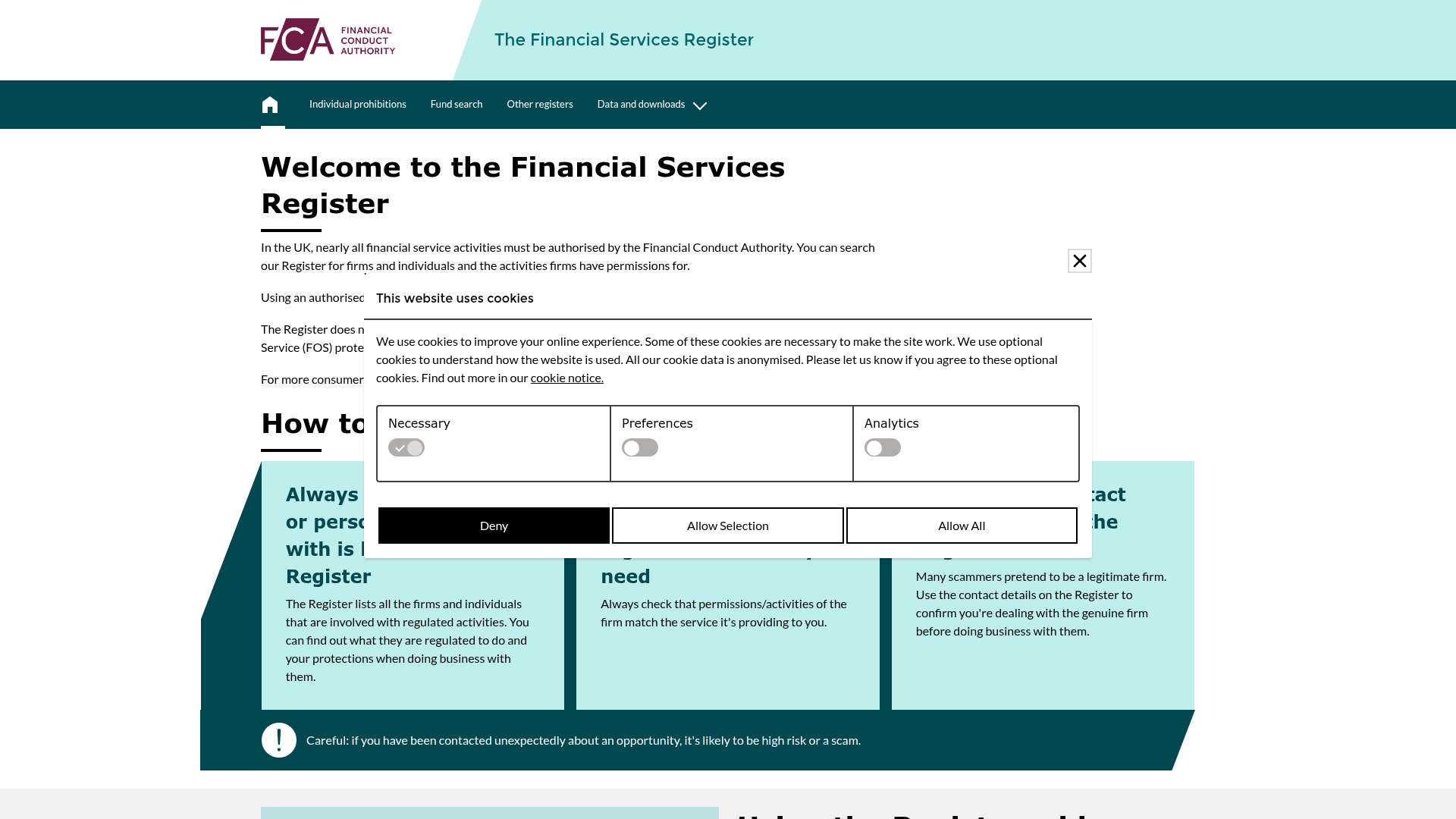
الصفحة التي نتحقق منها
هذه هي صفحة الهيئة نفسها، تم التقاطها كما وجدناها. افتحها وقم بإجراء البحث نفسه بنفسك — لا شيء في هذا السجل يحل محل المصدر.
سجلات أخرى مستخدمة في هذا النوع من الفحوصات. كل منها يفتح صفحة الجهة التنظيمية الخاصة بها.
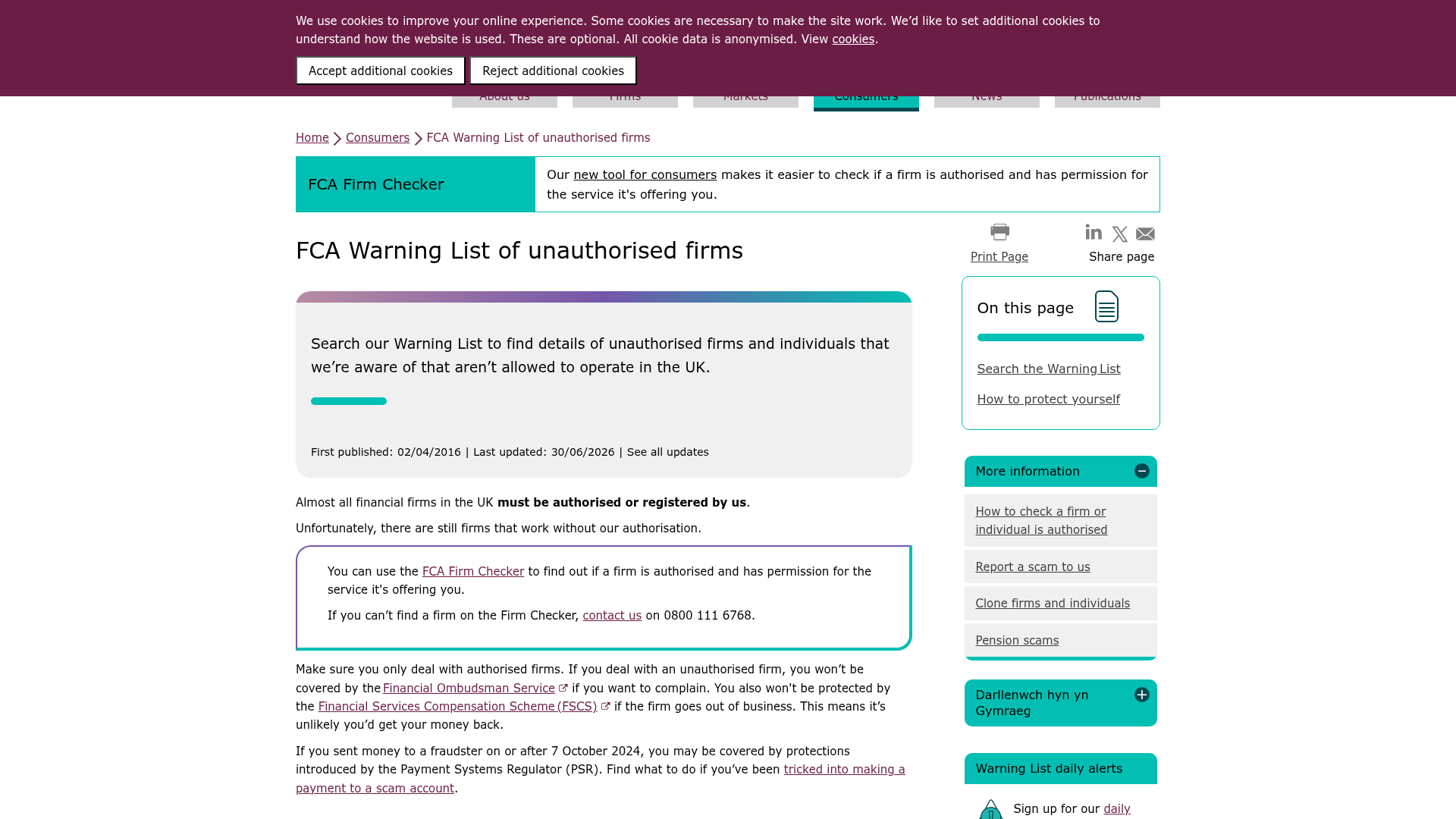
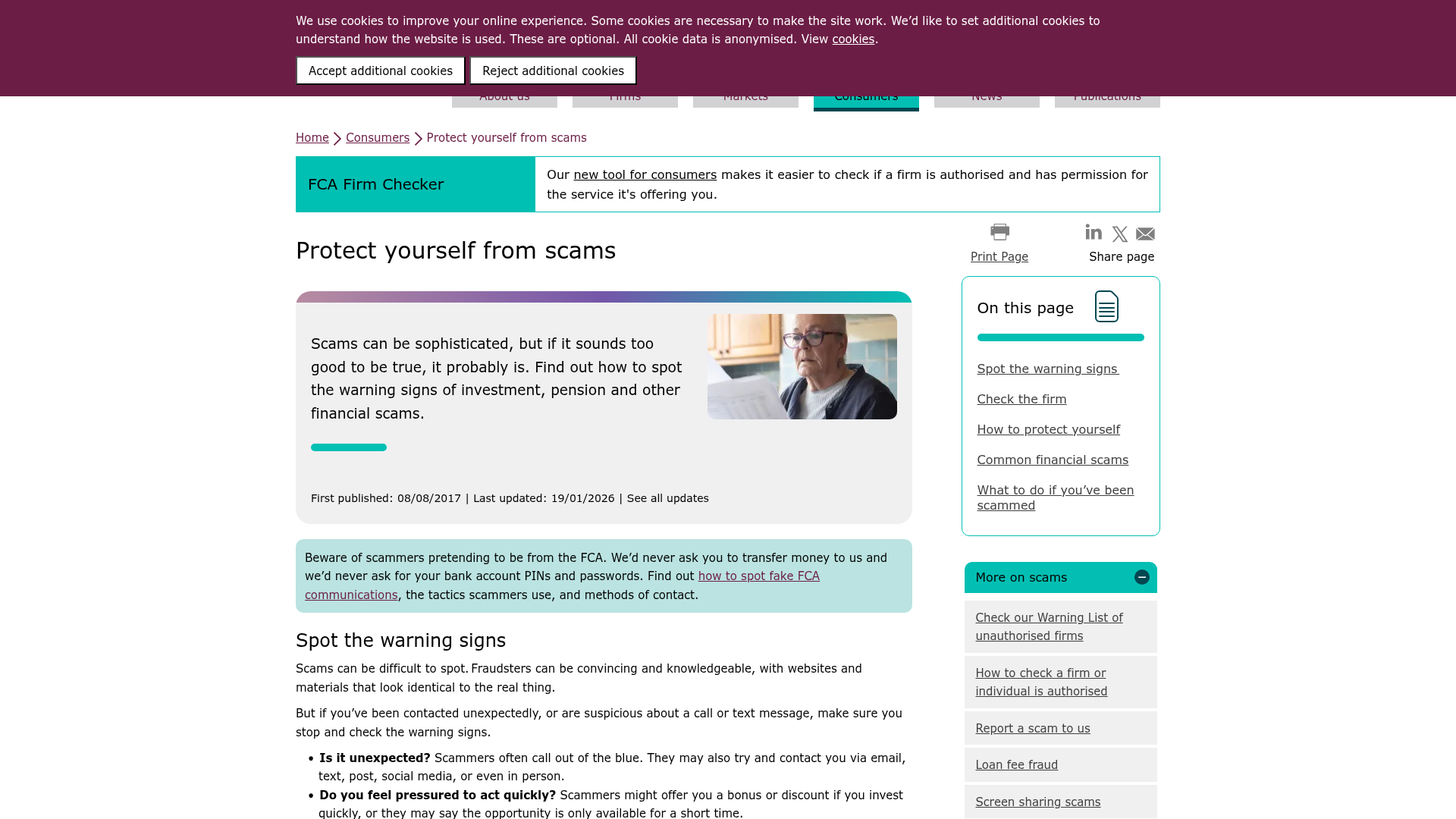
مصادر أساسية
يمكن التحقق من كل ادعاء أعلاه بالرجوع إلى صفحة الهيئة نفسها. تفتح هذه الروابط على موقع الجهة التنظيمية، وليس موقعنا.
- FSCA — Regulated entities searchfsca.co.zahttps://www.fsca.co.za/Regulated%20Entities/Pages/default.aspx
- FCA — Warning list of unauthorised firmsfca.org.ukhttps://www.fca.org.uk/consumers/warning-list-unauthorised-firms
- CFTC — Registration Deficient (RED) Listcftc.govhttps://www.cftc.gov/check
- FTC — Report fraudreportfraud.ftc.govhttps://reportfraud.ftc.gov/
- ESMA — Product intervention on CFDsesma.europa.euhttps://www.esma.europa.eu/press-news/esma-news/esma-agrees-prohibit-binary-options-and-restrict-cfds-protect-retail
- Financial Services Compensation Scheme (FSCS)fscs.org.ukhttps://www.fscs.org.uk/what-we-cover/investments/
الأسئلة المتكررة
ما هو رقم FSP ولماذا هو مهم؟
رقم FSP هو معرف فريد مكون من خمسة أرقام يصدر عن FSCA لمزودي الخدمات المالية المرخصين في جنوب إفريقيا. يؤكد أن الشركة منظمة رسميًا، وتخضع للرقابة، ومسموح لها قانونًا بتقديم خدمات مالية محددة، مما يوفر طبقة من حماية المستهلك.
كيف أبحث عن رقم FSP على موقع FSCA الإلكتروني؟
قم بزيارة صفحة FSCA الرسمية "البحث عن الكيانات المنظمة" (https://www.fsca.co.za/Regulated%20Entities/Pages/default.aspx). أدخل رقم FSP أو الاسم القانوني الدقيق للشركة في حقل البحث المخصص وانقر على "بحث". تأكد من أن الحالة هي "مرخص" (Authorised).
ماذا لو تم العثور على رقم FSP ولكن الحالة هي "منتهية الصلاحية" (Lapsed) أو "مسحوبة" (Withdrawn)؟
إذا كانت الحالة "منتهية الصلاحية" (Lapsed) أو "مسحوبة" (Withdrawn) أو "معلقة" (Suspended)، فإن الشركة لم تعد مرخصًا لها بتقديم خدمات مالية. التعامل مع مثل هذا الكيان يحمل نفس المخاطر العالية مثل التعامل مع شركة غير مرخصة بالكامل، ولا يقدم أي حماية تنظيمية.
هل يمكن لوسيط دولي منظم في مكان آخر أن يعمل في جنوب إفريقيا بدون ترخيص FSCA؟
إذا كان وسيط دولي يستهدف بنشاط المقيمين في جنوب إفريقيا لتقديم الخدمات المالية، فيجب أن يحمل ترخيص FSCA بشكل مثالي لتلك الأنشطة المحددة. الاعتماد فقط على ترخيص دولي للعمليات المحلية يترك العملاء الجنوب أفريقيين بدون حماية خاصة بـ FSCA.
ماذا أفعل إذا اشتبهت في أن شركة غير مرخصة أو أنها شركة احتيالية (Clone)؟
أوقف التواصل فورًا ولا ترسل أي أموال إضافية. أبلغ عن الشركة إلى FSCA بكل التفاصيل المتاحة. فكر في الإبلاغ إلى سلطات الاحتيال الوطنية أو الدولية الأخرى ذات الصلة إذا كان ذلك ممكنًا.
هل يضمن امتلاك رقم FSP سلامة استثماري؟
يشير رقم FSP إلى الرقابة التنظيمية والحماية ضد سوء السلوك أو التضليل، ولكنه لا يضمن عوائد الاستثمار أو يحمي من خسائر السوق. يؤكد أن الشركة تلتزم بمعايير السلوك وأن لديك حق الرجوع في حالة حدوث انتهاكات تنظيمية محددة.