Key points
- Verify basic issues like KYC and bonus terms before escalating.
- Meticulously document all communications and transaction details.
- Utilize your broker's formal internal complaints process.
- Escalate to relevant external regulators like the FCA or ASIC if unresolved.
- Prioritize choosing well-regulated brokers and understanding their policies.
Initial Calm Assessment
Your withdrawal request is pending, or worse, declined. This message can cause immediate concern for any trader. Before assuming the worst, it is important to approach the situation methodically and gather facts. Often, what appears to be a blocked withdrawal is a misunderstanding or a common procedural delay.
First, revisit your broker's terms and conditions, particularly the sections pertaining to deposits and withdrawals. Brokers like Pepperstone and OANDA, for example, clearly outline their withdrawal processes, including typical processing times and any associated fees. Confirm you have met any minimum withdrawal amounts or specific currency requirements. Have you initiated the withdrawal to the same payment method used for the deposit, as often required for anti-money laundering (AML) protocols? Also, check if you have any active bonus terms that might restrict withdrawals until certain trading volumes are met. For instance, XM is known for offering bonuses, and these often come with conditions that affect withdrawal eligibility.
Ensure all your "Know Your Customer" (KYC) documentation is current and fully verified. Brokers are legally obligated to verify client identities, and an expired ID or unverified address can halt any transaction. Check your email, including spam folders, for any communication from your broker requesting additional documents or clarifying a transaction. A delay often stems from an incomplete verification process. Addressing these initial checks calmly can often resolve the issue without further escalation.
Documenting Everything
Should your initial checks not resolve the issue, thorough documentation becomes your most valuable asset. Every interaction, every message, and every transaction related to your account and withdrawal request needs to be recorded. This includes dates and times of all withdrawal attempts, the amounts requested, the method of withdrawal, and any confirmation numbers received. Keep screenshots of your account balance, withdrawal request pages, and any error messages.
Maintain a clear log of all communications with your broker. This means saving emails, chat transcripts, and making notes of phone calls, including the date, time, the name of the representative you spoke with, and a summary of the conversation. Even seemingly minor details can prove useful later. This meticulous record-keeping is not just for formal complaints; it helps you track the issue's progression and ensures you can recall facts accurately. A well-organized record provides concrete evidence if you need to escalate the matter to external bodies.
Direct Communication with the Broker
Once you have checked the basics and gathered your initial documentation, the next step is to formally contact your broker. Do not rely solely on general support channels if the issue persists; seek out their dedicated support for account or withdrawal queries. State your issue clearly and concisely, providing all relevant details: your account number, the date and amount of the withdrawal, and any transaction IDs.
Request a specific reason for the delay or denial. Insist on a written response, even if your initial contact is by phone or live chat. A written record is far more dependable than a verbal assurance. Some brokers, such as OANDA and FOREX.com, highlight their customer support as a key feature, suggesting they should be responsive. Give the broker a reasonable timeframe to respond, typically 3-5 business days, before considering further action. If you receive a generic response, gently but firmly reiterate your request for a specific explanation.
Escalating Internally: The Broker's Complaints Procedure
If direct communication with standard support does not yield a satisfactory resolution or explanation, it is time to use the broker's formal internal complaints procedure. Reputable brokers are required to have a clear process for handling customer complaints. Look for a "Complaints" or "Dispute Resolution" section on their website, usually in the footer or FAQ.
Draft a formal complaint letter or email. This document should be factual, chronological, and refer to all your collected documentation. Clearly state:
- Your account details.
- A concise history of the issue.
- All previous attempts to resolve it (with dates).
- The specific amount of the blocked withdrawal.
- Your desired resolution (e.g., immediate processing of withdrawal).
Send this complaint via a method that provides proof of delivery, if possible. Brokers like AvaTrade and FxPro, operating under strict regulations such as the FCA or ASIC, are obliged to respond to formal complaints within defined timescales, often 15-30 days, and issue a "final response" letter. If they fail to meet these deadlines or if their final response is unsatisfactory, you then have grounds to escalate to external regulatory bodies.
External Resolution Options
When internal complaints fail, external avenues exist, depending on where your broker is regulated. This is where the initial research into your broker's regulatory status becomes vital.
- Regulatory Bodies: If your broker operates under a reputable regulator, you can file a complaint with that authority. For example:
- If your broker is regulated by the FCA (Financial Conduct Authority) in the UK (e.g., Pepperstone, OANDA, FxPro, eToro, Plus500, Exness), you can complain to the Financial Ombudsman Service (FOS) if the FCA-regulated entity fails to resolve your complaint within 8 weeks.
- If regulated by ASIC (Australian Securities and Investments Commission) in Australia (e.g., Pepperstone, IC Markets, XM, OANDA, FOREX.com, eToro, Plus500, AvaTrade), you would typically approach the Australian Financial Complaints Authority (AFCA).
- For brokers regulated by CySEC (Cyprus Securities and Exchange Commission) (e.g., Pepperstone, IC Markets, XM, eToro, Exness, Plus500), you can file a complaint with the Financial Ombudsman of the Republic of Cyprus.
- For brokers with CFTC/NFA (Commodity Futures Trading Commission / National Futures Association) regulation in the US (e.g., OANDA, FOREX.com), you would contact the NFA directly.
These bodies investigate complaints and can compel brokers to take action or pay compensation. Their decisions are often binding on the broker. Verifying a broker's regulatory status can be done by checking the regulator's public register using the broker's license number or company name. A broker like Exness, for example, lists its various regulatory licenses, including FCA and CySEC, which dictate the specific external body to approach based on your account's jurisdiction.
Chargeback via Bank/Card Provider: If you deposited funds using a debit or credit card, you might be able to initiate a chargeback with your bank or card provider (e.g., Visa, MasterCard). This process reverses a transaction, returning funds to your account. There are strict time limits for chargeback requests, often 120-180 days from the transaction date, so act quickly. This option is typically only viable if you can prove the service was not rendered or the funds were fraudulently obtained.
Online Dispute Resolution (ODR) Platforms: For complaints against brokers within the European Union, the European Commission provides an ODR platform. This platform facilitates out-of-court dispute resolution.
Always ensure you are complaining to the correct regulatory entity for the specific license under which your account was opened, as many international brokers hold multiple licenses.
Seeking Legal Counsel
If all other avenues have been exhausted and you believe you have a strong case, consulting a legal professional specializing in financial disputes or international law may be a necessary, albeit costly, step. Legal action is typically considered a last resort due to the associated expenses and complexities, particularly when dealing with brokers based in different jurisdictions.
A lawyer can assess the strength of your claim, advise on the best course of action, and represent you in negotiations or court. This step is usually reserved for significant amounts of money or cases where there is clear evidence of wrongdoing by the broker that existing regulatory bodies cannot or will not fully address. Before committing to legal action, carefully weigh the potential costs against the amount of money at stake and the likelihood of a successful outcome.
Preventive Measures for the Future
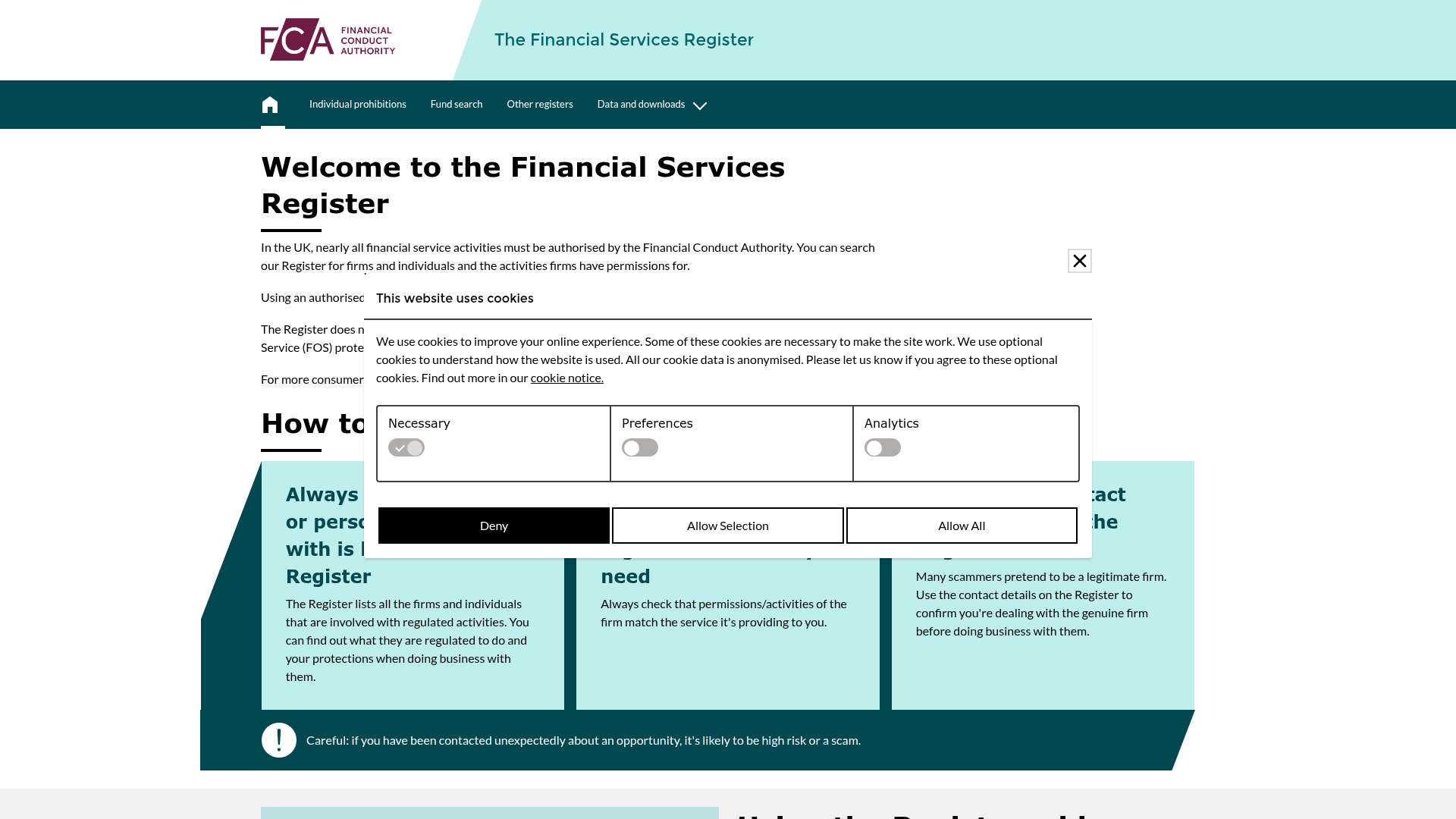
To minimize the risk of withdrawal issues, proactivity is key. Before opening any trading account, always verify the broker's regulatory status with the appropriate regulatory body. Do not rely solely on claims made on the broker's website. For example, if a broker claims to be regulated by the FCA, search for their name or license number on the FCA's Financial Services Register. Brokers like Pepperstone, regulated by multiple authorities including the FCA and ASIC, will have details publicly available.
Read the terms and conditions thoroughly, paying close attention to withdrawal policies, fees, and any bonus conditions. Understand the broker's KYC requirements and complete them fully and promptly. Only deposit funds you are comfortable potentially losing, and start with smaller amounts until you are fully confident in the broker's reliability and your ability to withdraw funds. Keep meticulous records of all transactions and communications from the outset. Choosing a well-established, transparent broker with a long history of compliance, such as OANDA (founded 1996) or FOREX.com (founded 2001), can significantly reduce potential issues.
By taking these careful, measured steps, you equip yourself to handle withdrawal issues effectively and protect your interests in the trading environment.
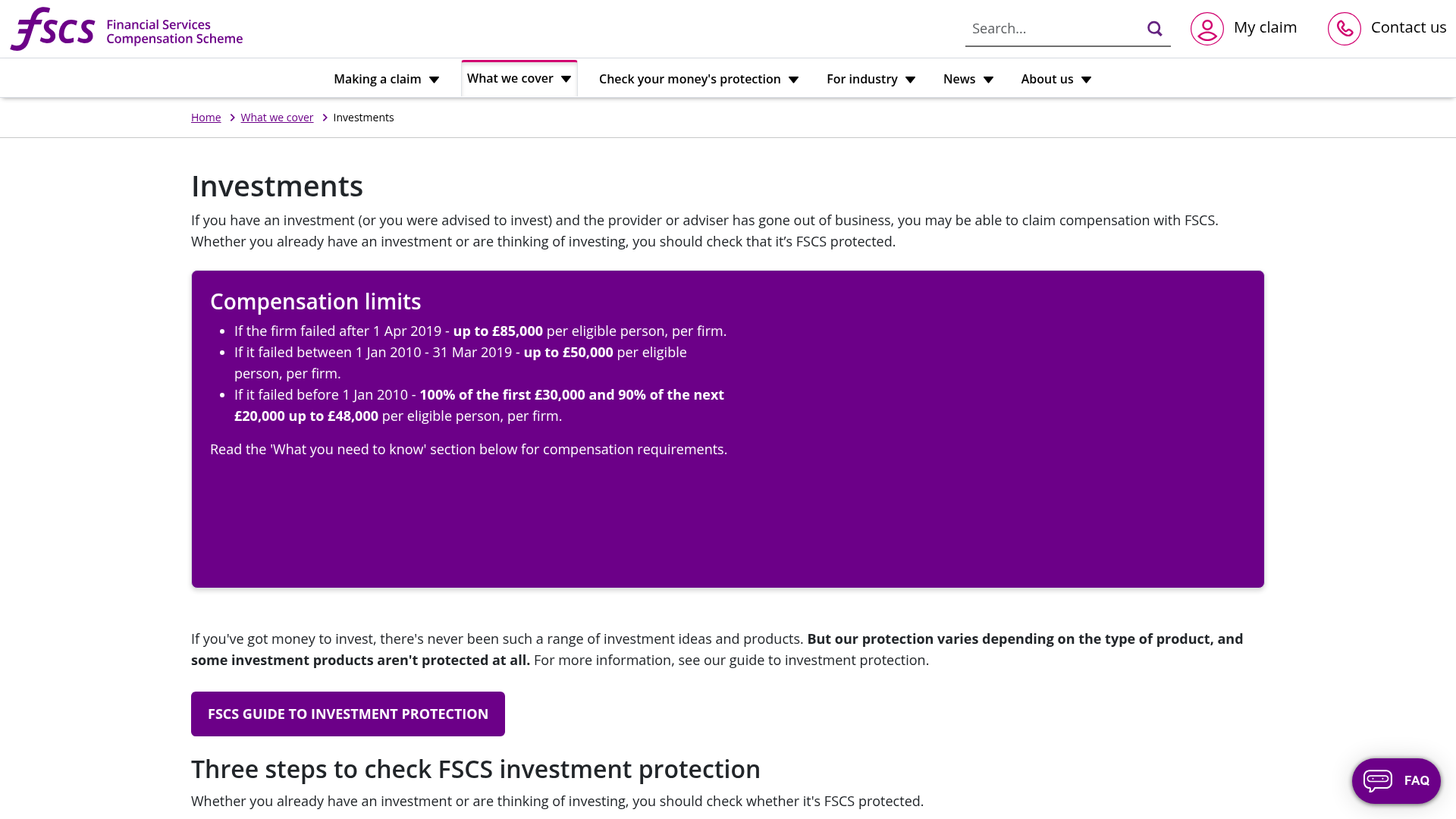
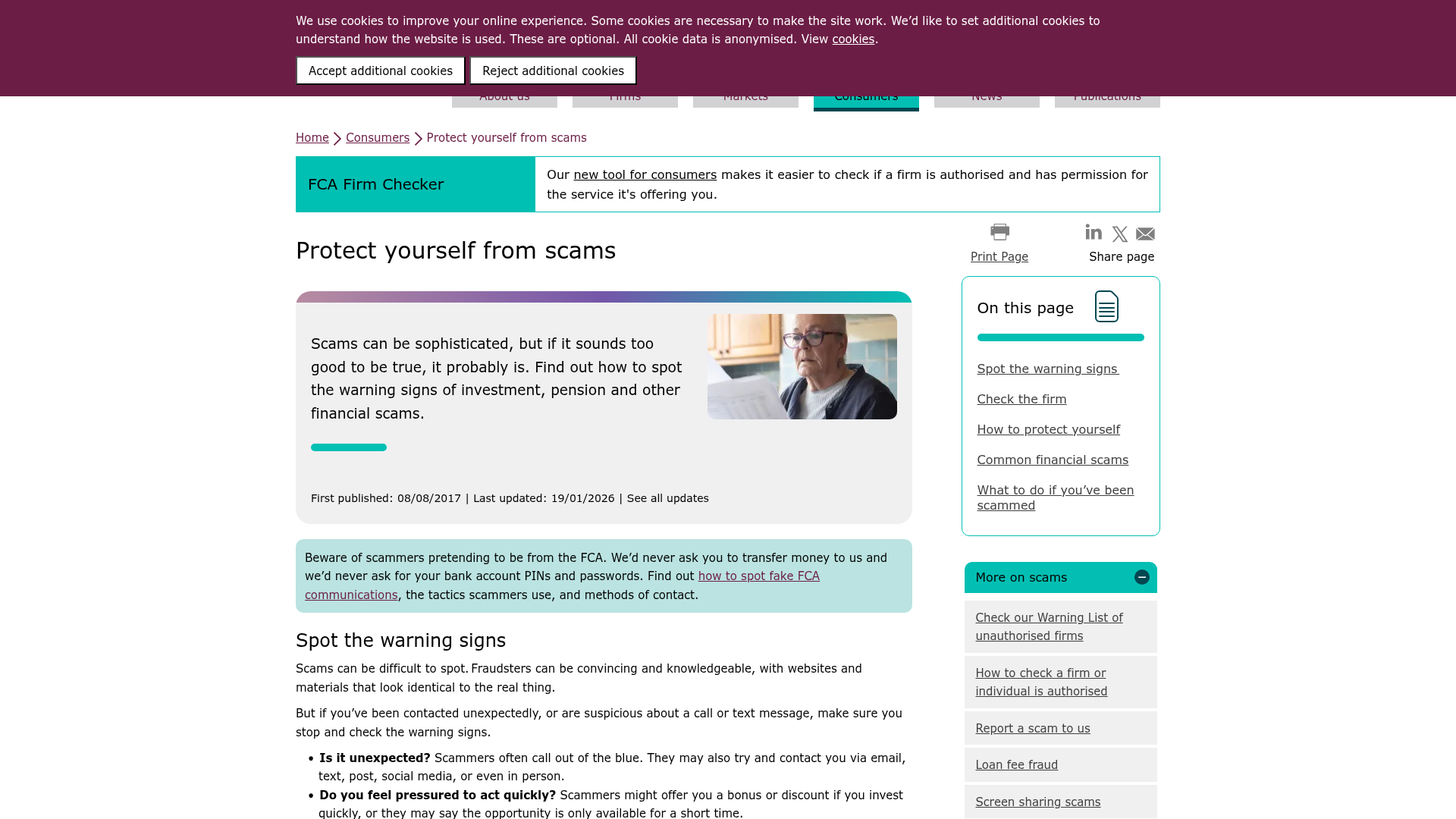
The page we check
This is the authority's own page, captured as we found it. Open it and run the same search yourself — nothing on this register replaces the source.
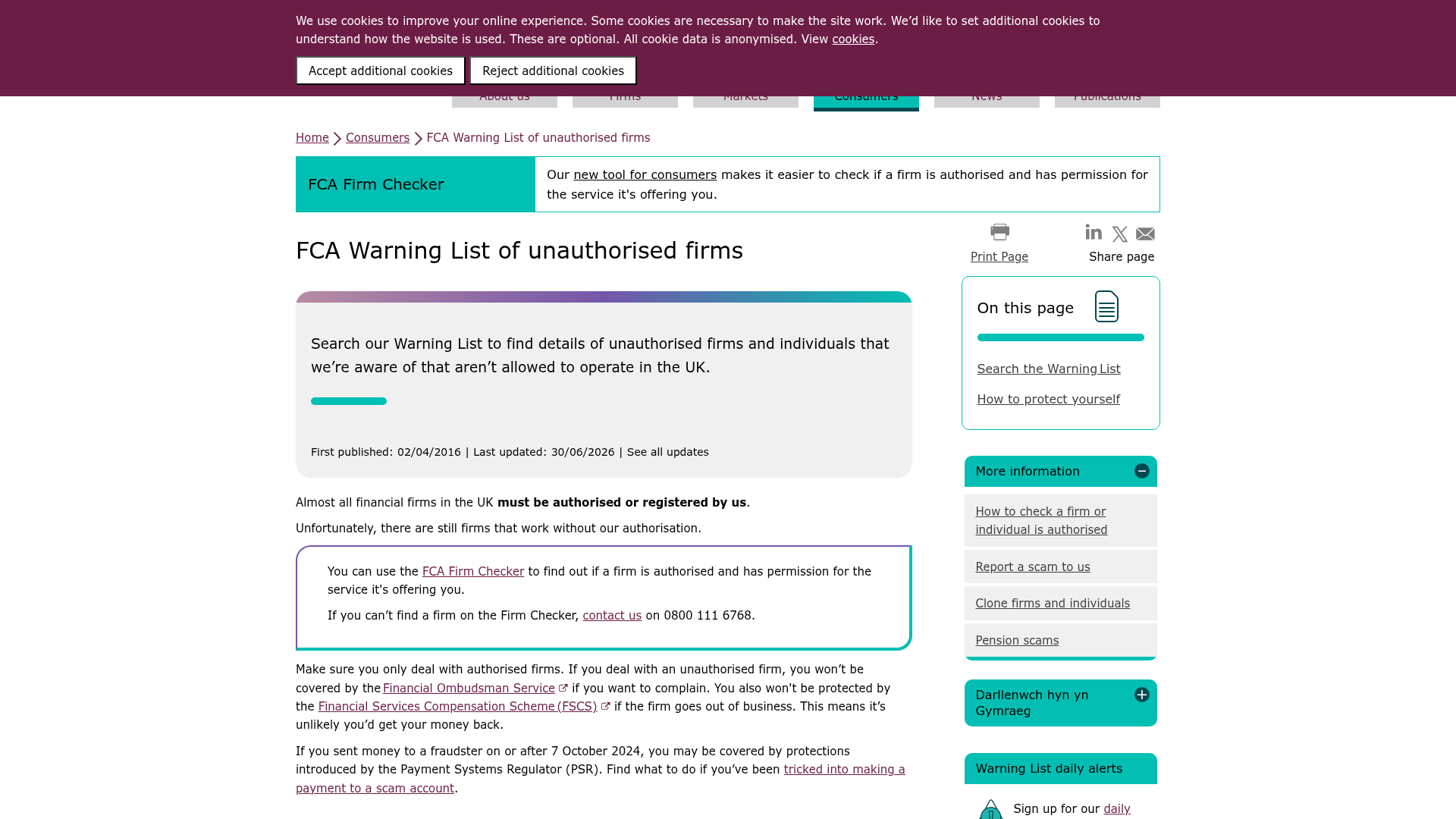
Other registers used in checks of this kind. Each opens the authority's own page.
Frequently asked
How long should I wait before escalating a withdrawal issue?
First, allow the broker's stated processing time. If it exceeds this, contact support. If a formal complaint is lodged, wait for their final response, typically 15-30 days, before external escalation.
Can I get my money back if my broker appears unlicensed?
It is significantly harder. Unlicensed brokers operate outside regulatory frameworks, making formal complaints to financial authorities ineffective. Chargebacks might be an option if you paid by card, but recovery is often challenging.
What proof do I need for a chargeback?
You will need to show bank statements, withdrawal requests, communication with the broker, and evidence that the funds were not received or the service was not rendered as agreed. Time limits apply, usually 120-180 days.
How do I verify a broker's regulation?
Go directly to the official website of the stated regulator (e.g., FCA, ASIC, CySEC) and use their public register to search for the broker's name or license number. Do not rely solely on the broker's website claims.