How statuses are assigned
Every record on this register follows the same six-step procedure, and every step is one you can repeat yourself using free public sources.
The procedure
Locate every licence the firm claims
We take the licence numbers a firm publishes and look for each one on the issuing authority's own register. We never accept a licence claim printed only on the firm's own website.
Match the legal entity to the client agreement
A group can hold a Tier-1 licence and still onboard most clients to an offshore entity. We record which entity holds which licence, because that is what determines your protection.
Search the public warning and alert lists
We search the firm and its known aliases against the warning lists, alert lists and registration-deficient lists of the authorities in our directory.
Require a primary document before flagging
A Danger status requires a published warning notice from a named regulator. A Warning status requires an entry on a public alert or registration list. We retrieve and archive the document URL before the status is assigned.
Write the finding as a fact, not an accusation
The record states that there is a published warning from a named authority, on a given date, with a link. It does not brand the firm fraudulent, because that is a conclusion only a court can reach.
Re-check on a rolling cycle
Open records are re-checked every 90 days, and any record where the regulator has updated its notice is re-dated. A status that has not been re-checked shows its last-checked date on every row.
The registers we check
These are the primary sources behind step one and step three, captured from each authority's own site. Each caption links to the live page, so you can repeat any check on this register yourself.
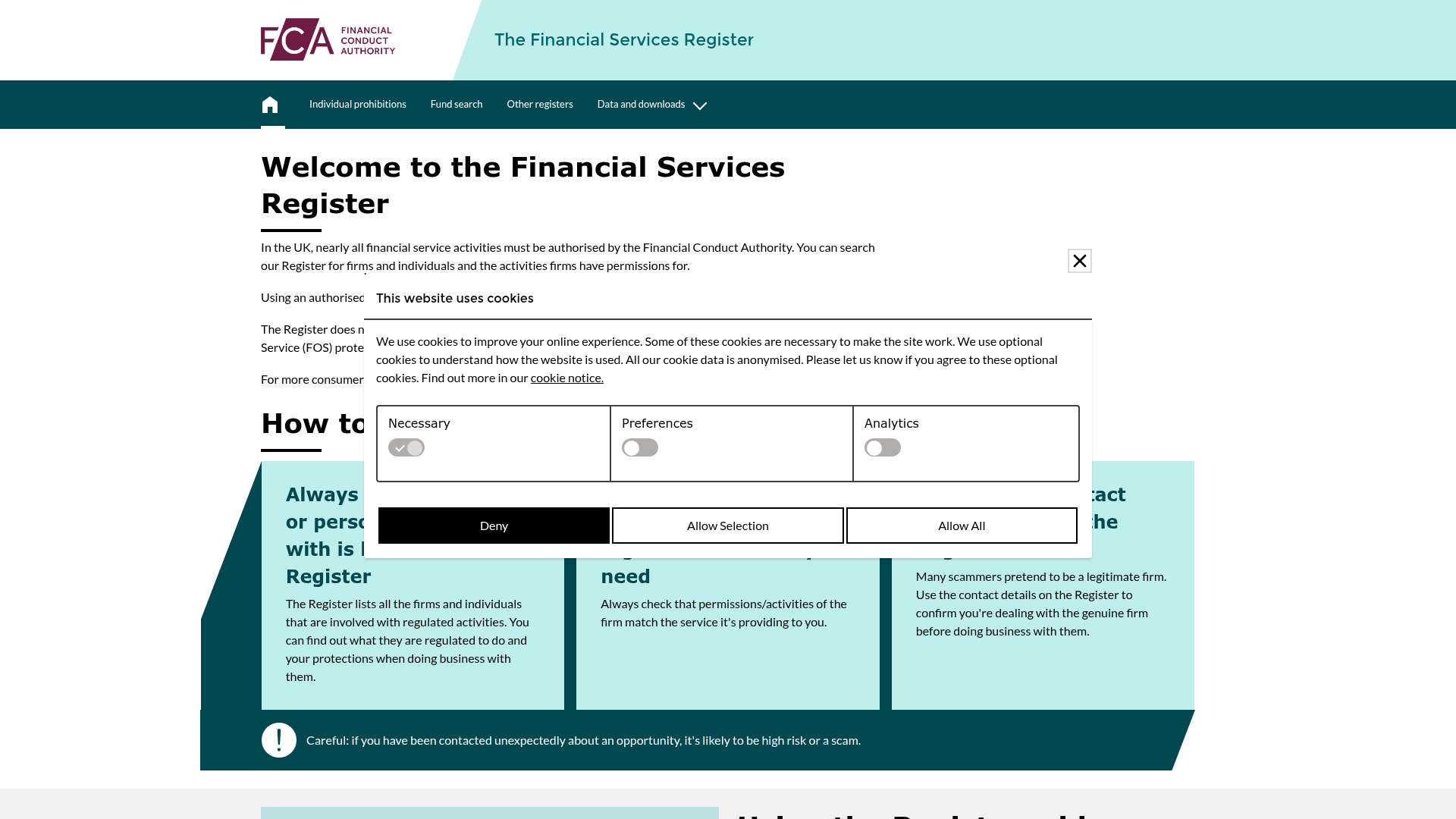
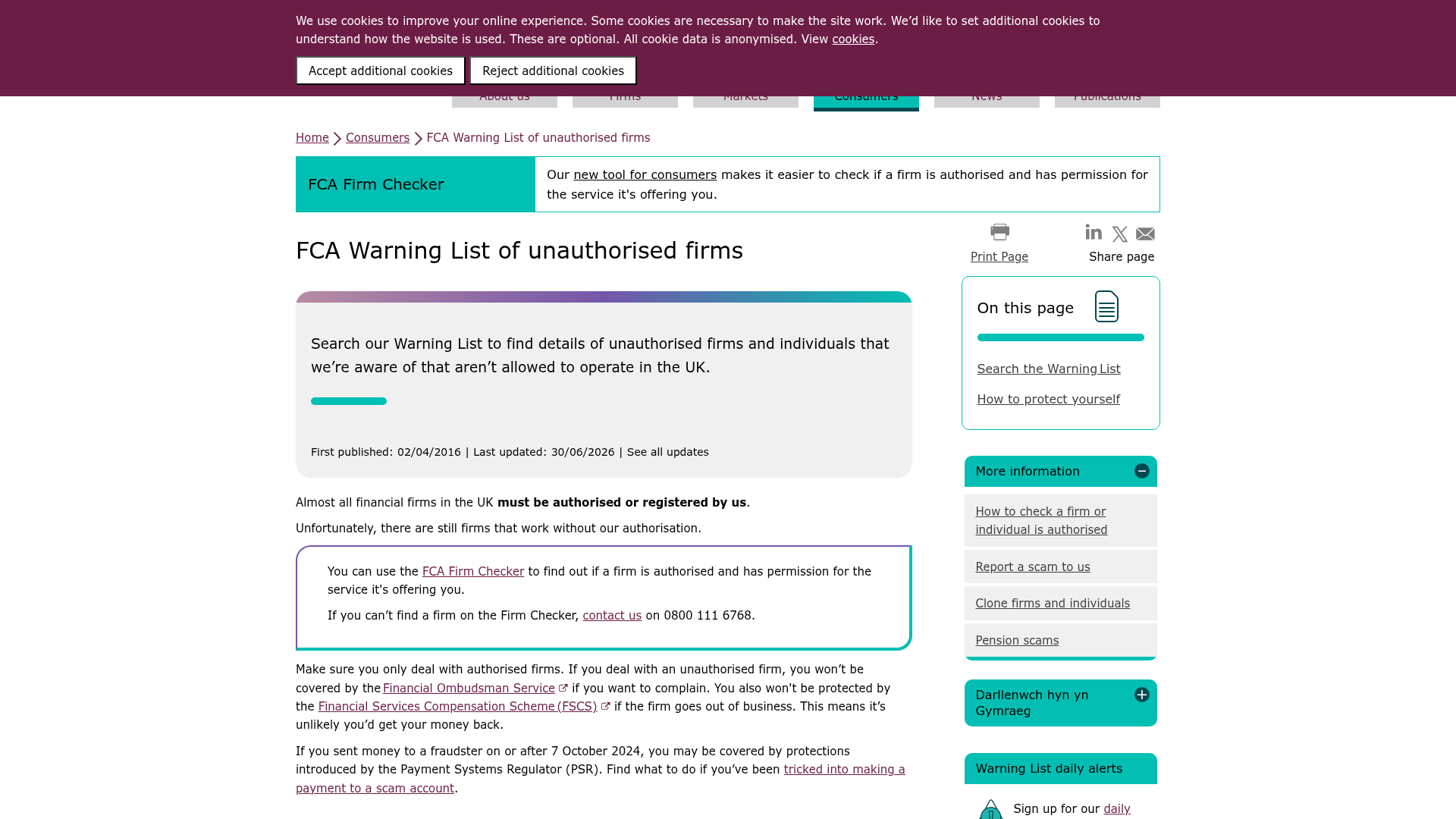
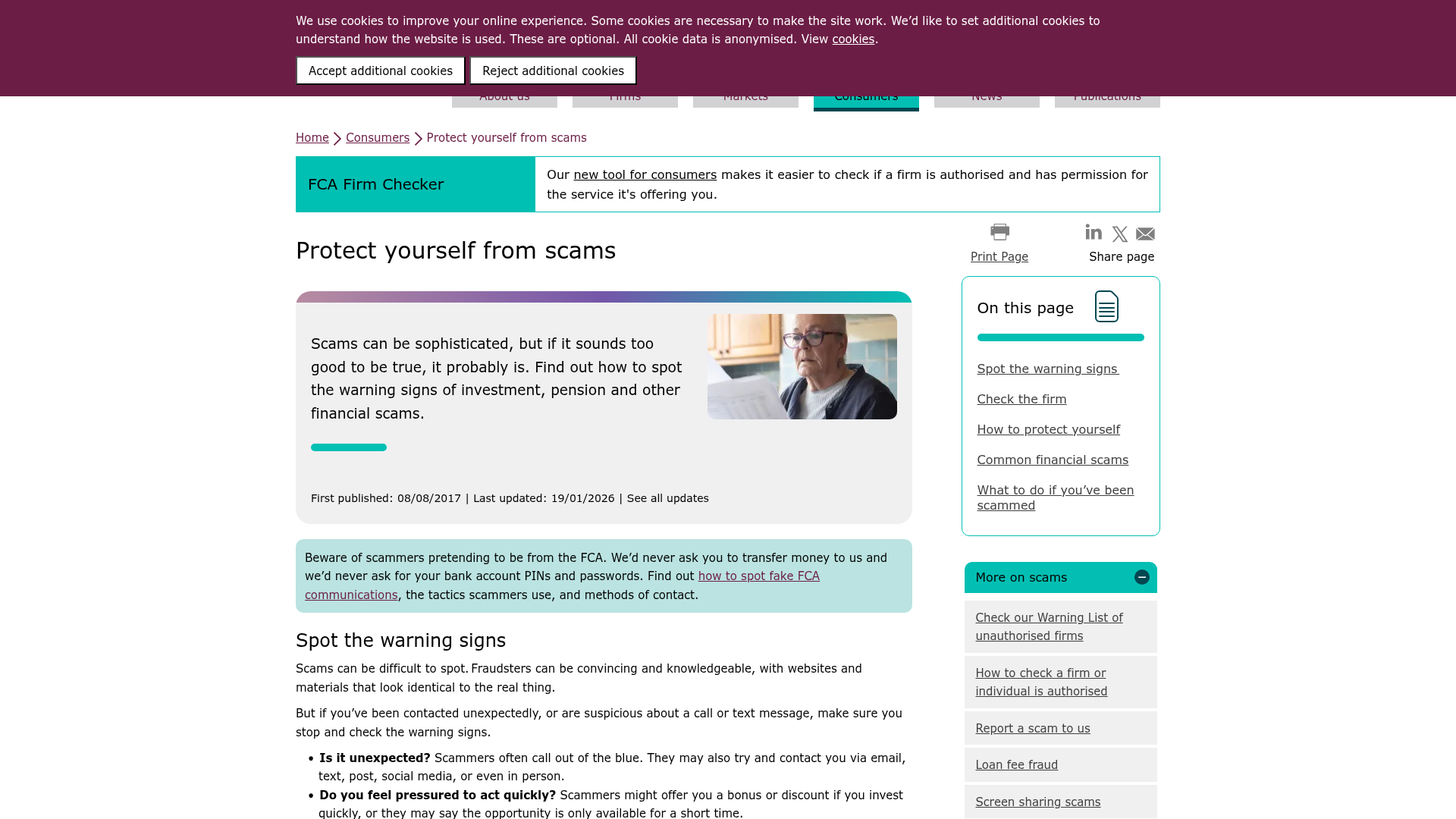
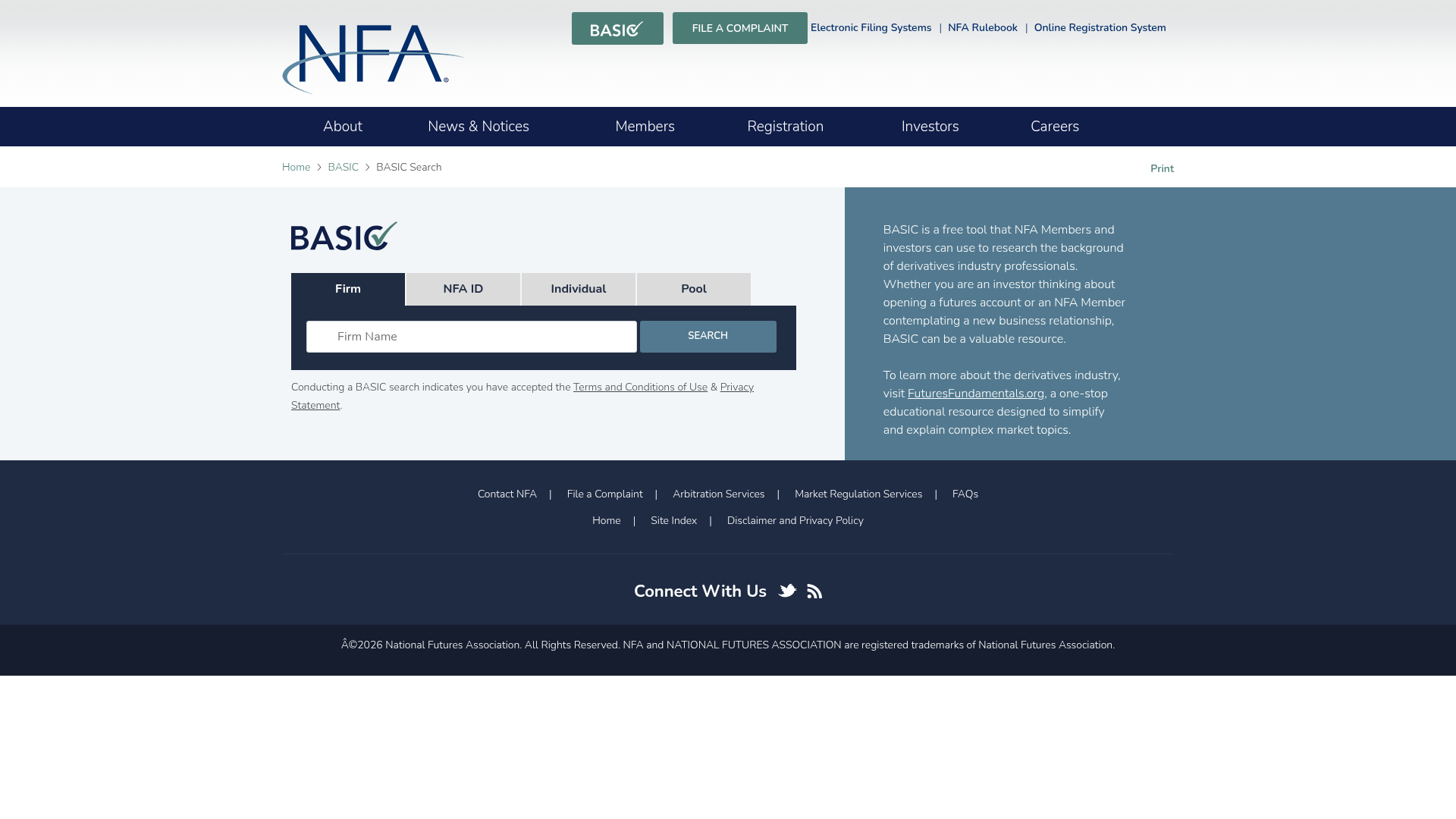
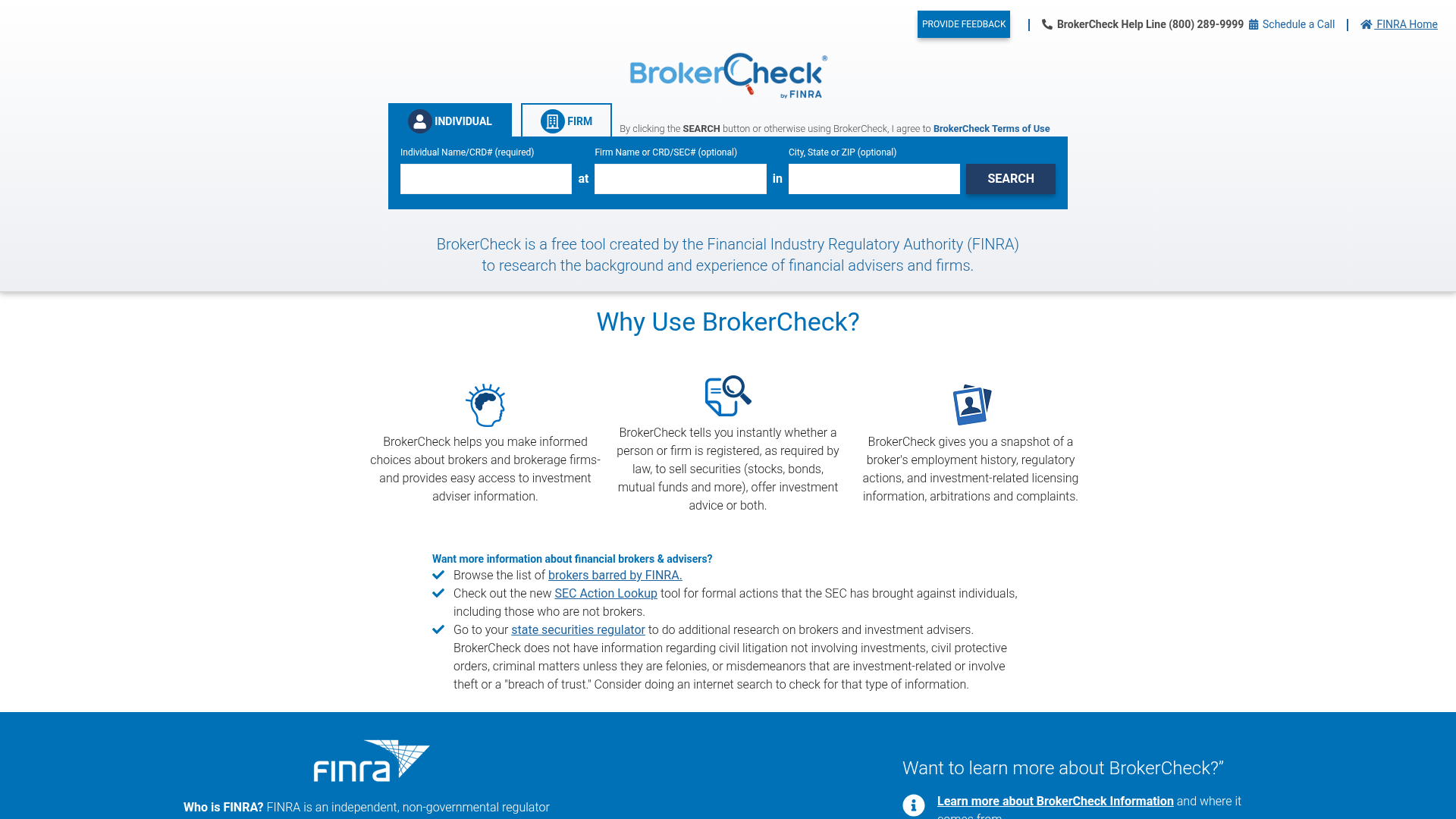
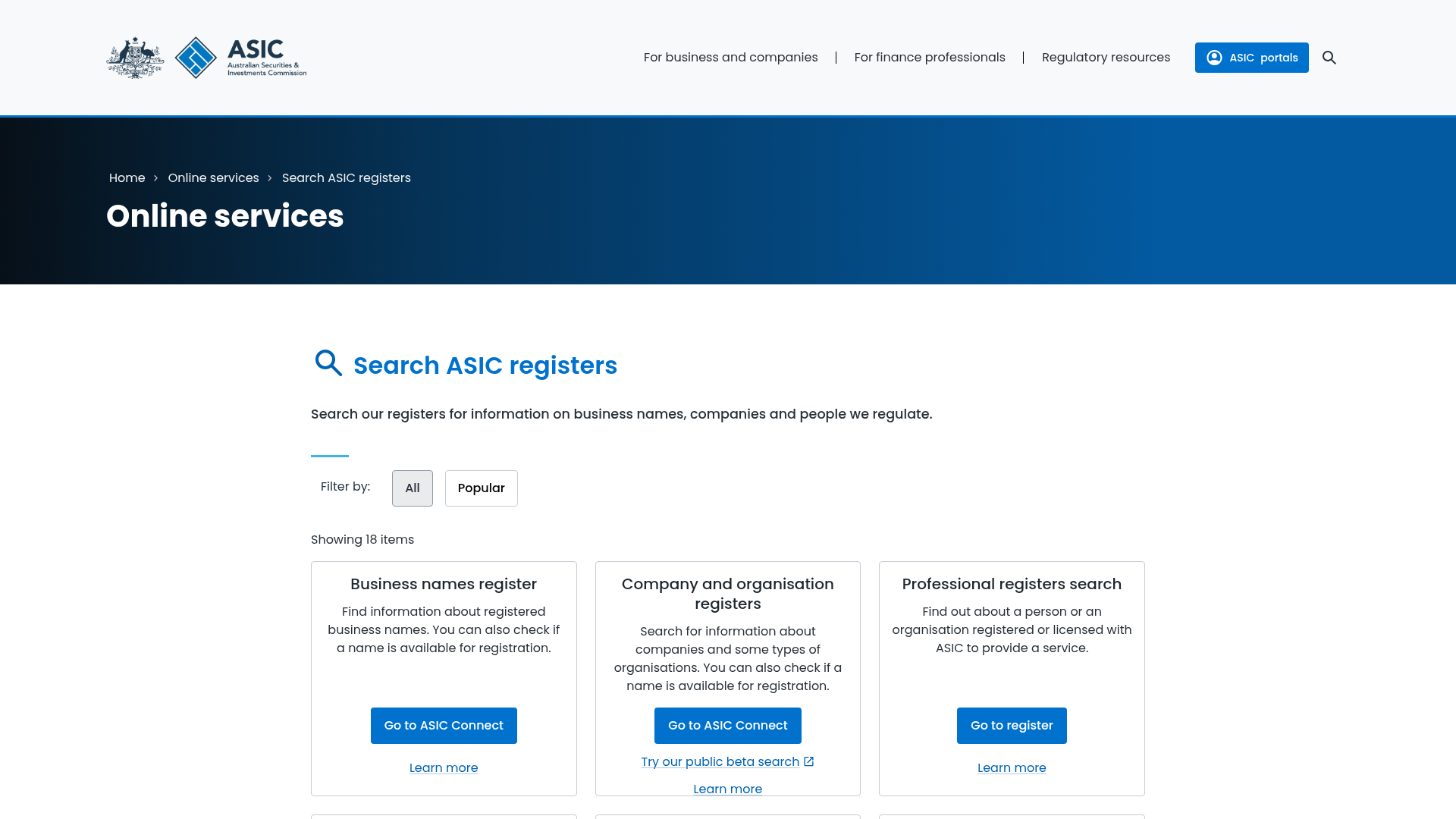
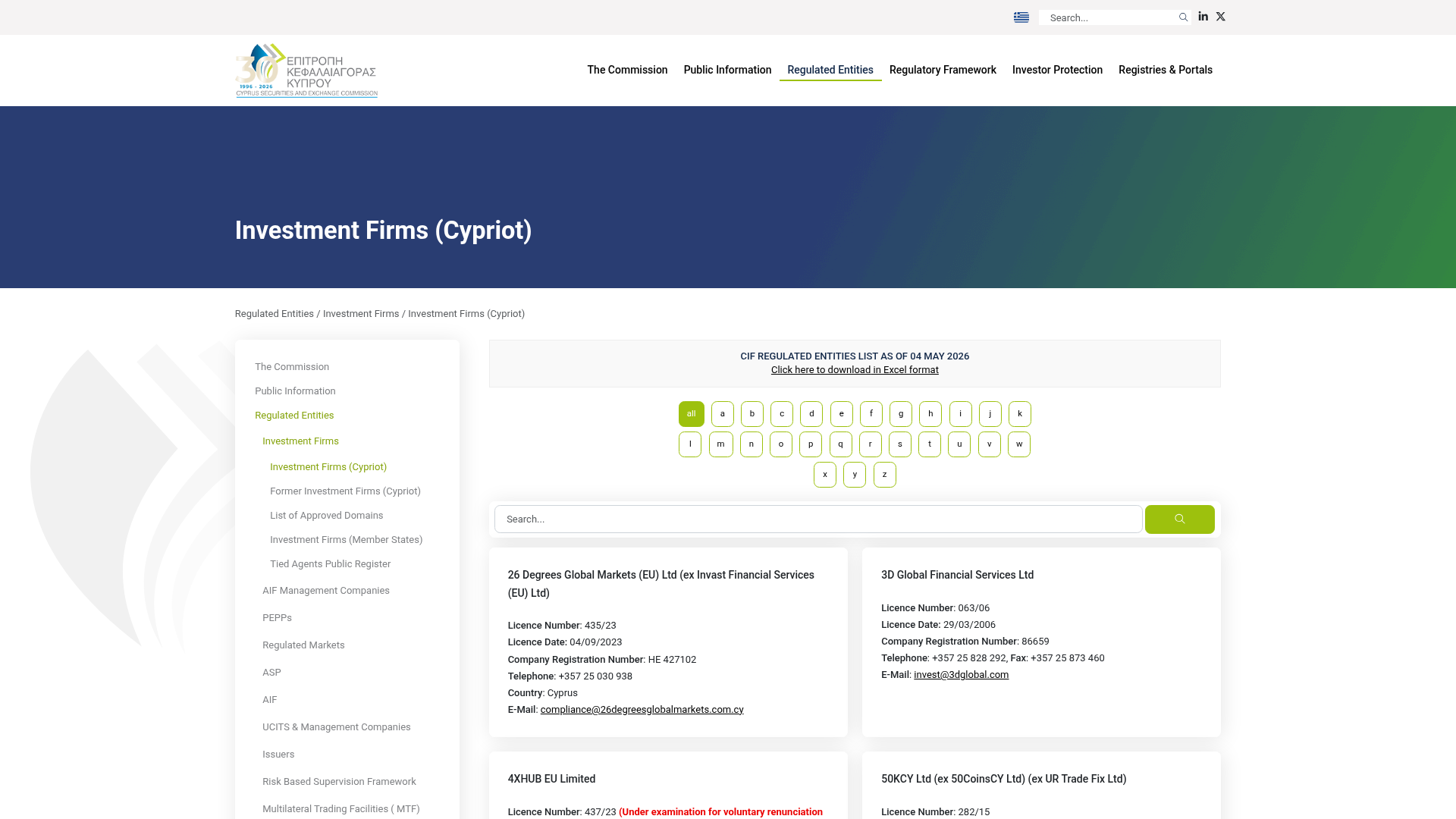
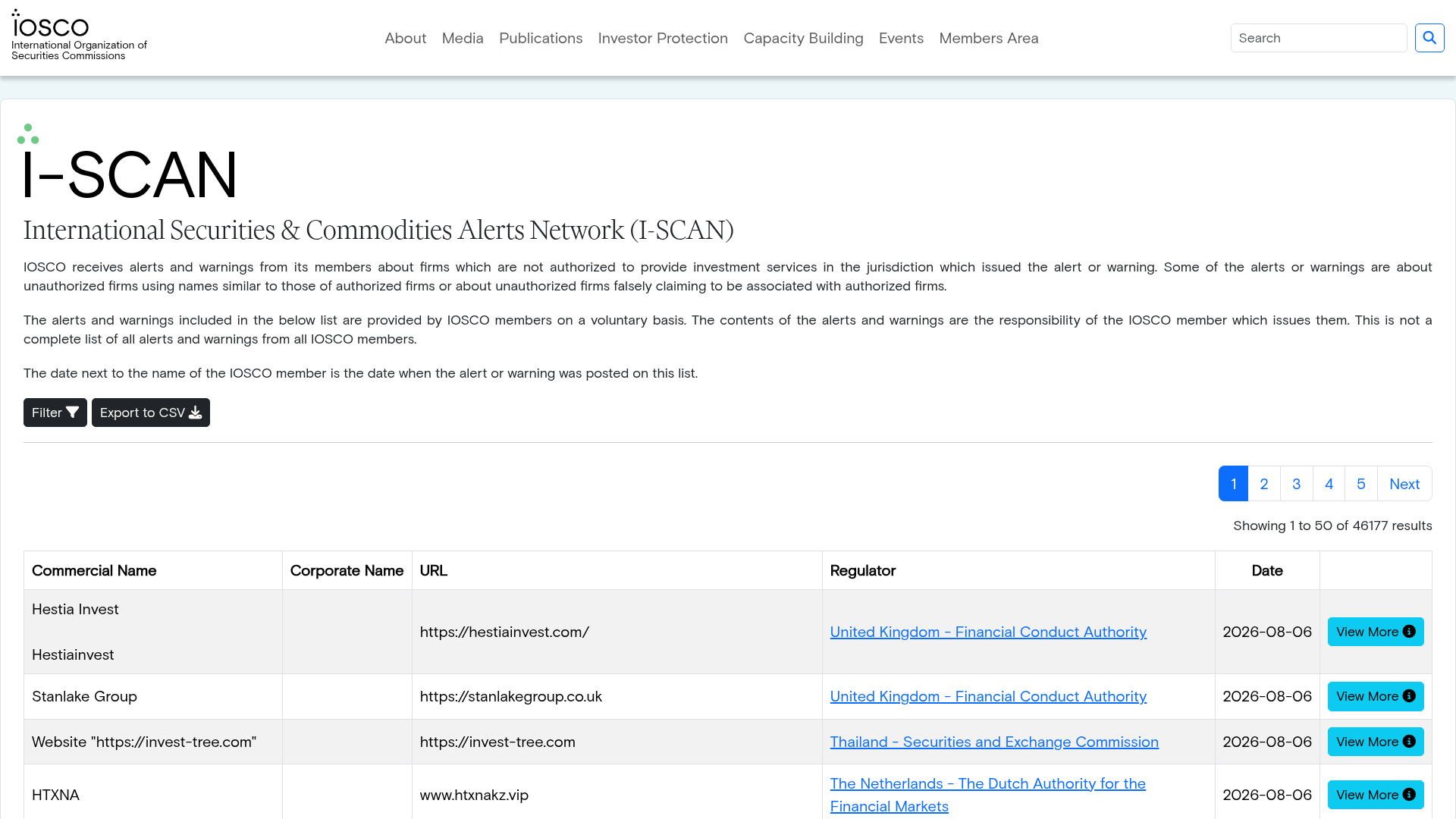
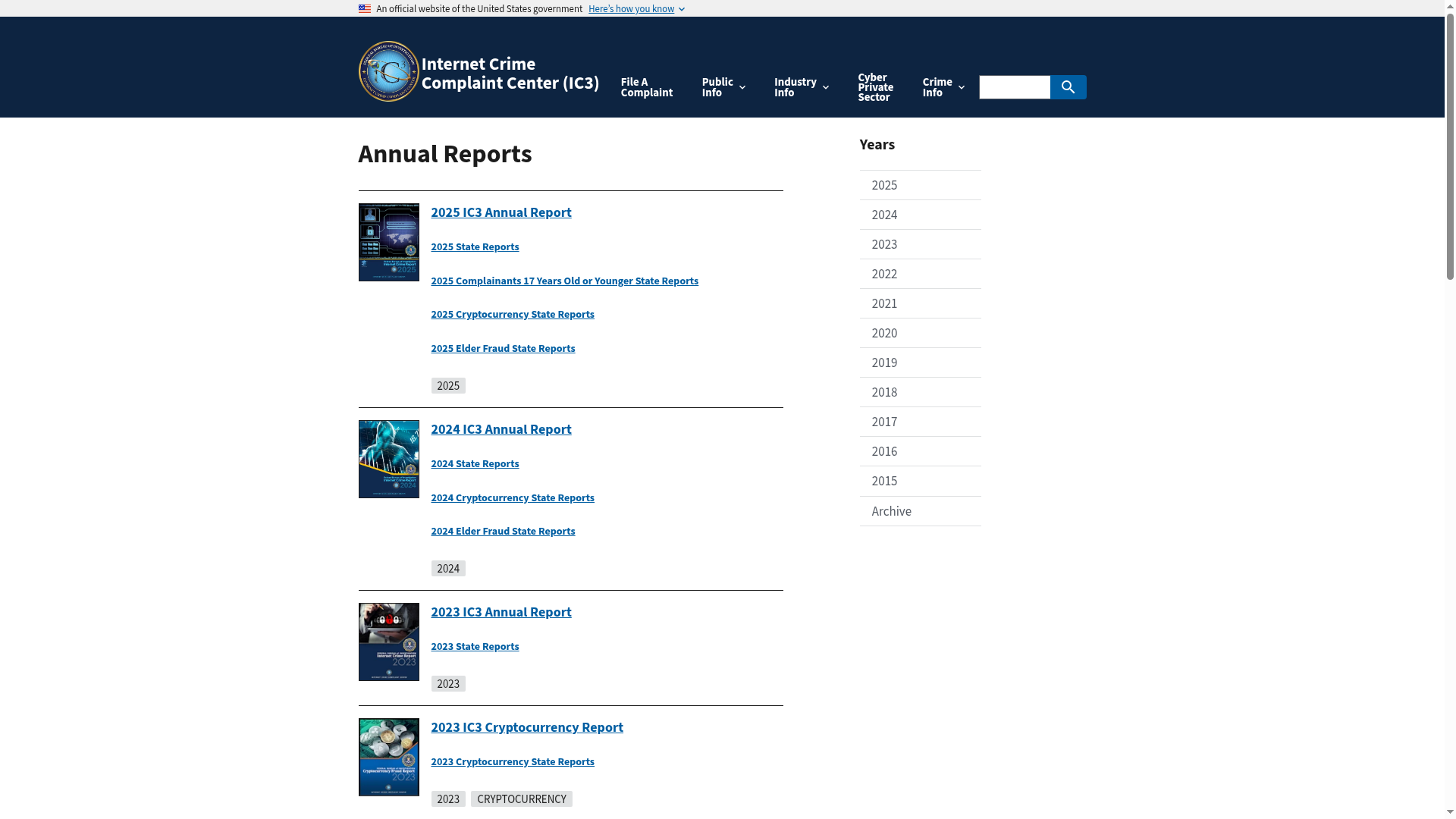
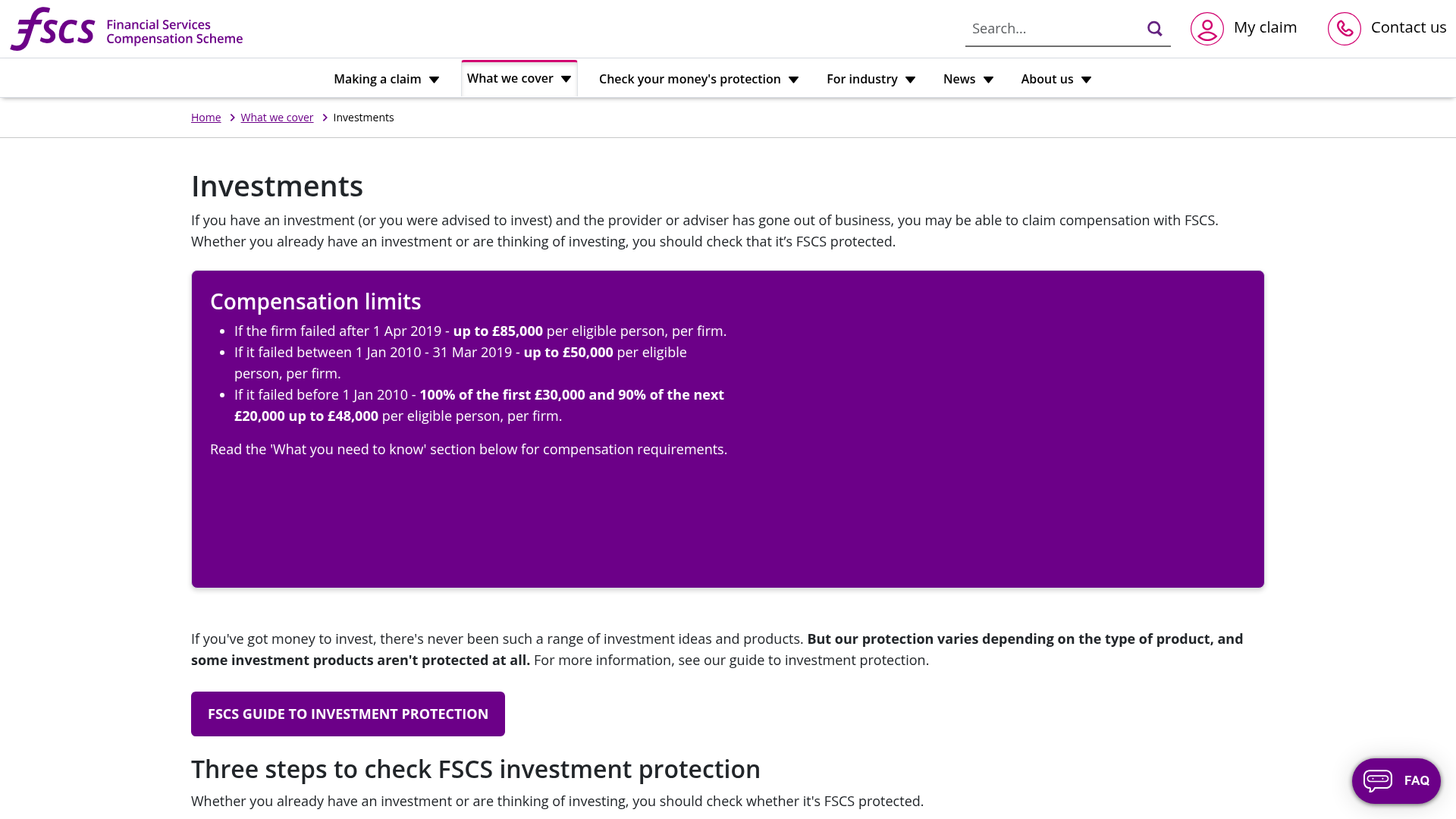
Screenshots are illustrative of each register's search interface at the time of capture. The authority's live page is always the authoritative version — a firm's standing can change between our check and yours.
Evidence required per status
What has to exist before a given level can be assigned.
| Status | Evidence required | Definition as published |
|---|---|---|
| Danger | A published regulator warning notice naming the firm, retrieved and linked. | A named regulator has published a warning notice about this firm telling consumers it is not authorised and to avoid dealing with it. We link to the regulator's own notice in every case. |
| Warning | An entry on a public regulator alert or registration-deficient list, retrieved and linked. | A regulator has published a list naming this entity — typically because it appears to be acting in a capacity that requires registration and is not registered. Being listed is not itself a finding of wrongdoing by a court, but it is a public signal from the regulator. |
| Caution | A verifiable licence, plus a documented structural caveat (offshore entity, leverage above Tier-1 caps, scope mismatch). | The firm is licensed somewhere we can verify, but part of the business sits under weaker supervision — an offshore entity, leverage far above Tier-1 retail caps, or a register entry that does not cover everything the firm advertises. |
| Verified | Two or more Tier-1 licences located on the issuing registers, and no published warning found at the check date. | We located the firm on at least two Tier-1 regulators' own public registers and found no published warning against it at the date of our last check. |
Language rules
- We state that there is a published warning from a named authority. We never declare a firm fraudulent ourselves.
- Every flagged claim carries the source URL, the publisher and the retrieval date.
- User reports are labelled verified or unverified and never move a status on their own.
- Where a regulator says a listing is not a finding of wrongdoing, we repeat that on the record.
What would get a record removed
- The regulator withdraws or resolves the notice we cite.
- The firm produces a licence reference that we can confirm on the issuing register and that covers the activity in question.
- We find that a record confused two similarly named entities. This is the most common correction we make.