
Key points
- Broker marketing materials may display a regulated entity, but the actual client agreement often links to an unregulated or loosely regulated offshore company.
- Contracting with an offshore entity significantly reduces consumer protection, compensation scheme access, and regulatory oversight compared to onshore agreements.
- High leverage limits offered by offshore entities expose retail traders to amplified risk, often exceeding caps set by major regulators like FCA or ASIC.
- Verifying the specific legal entity named in your client agreement and cross-referencing it with official regulatory registers is a critical due diligence step.
- Dispute resolution for offshore contracts is complex, potentially involving foreign courts or arbitration under less favorable terms for the client.
- The 'same brand, different entity' strategy allows brokers to operate globally while segmenting clients into jurisdictions with varying regulatory demands.
The Two Faces of a Broker: Marketing Versus Contract
Consider a trader in the UK who sees an advertisement for XM, a broker whose tagline invites them to 'Trade with confidence at XM.' The ad prominently displays an FCA registration number, suggesting a regulated presence. This trader opens an account, believing they are protected by the Financial Conduct Authority (FCA), a reputable UK regulator. However, the client agreement, buried in the fine print, shows the contracting party is an entity registered in Belize or Seychelles, not the UK-regulated one. This scenario—where a broker presents a regulated 'onshore' face for marketing but directs clients to contract with an 'offshore' entity—is a common practice with significant implications for consumer protection.
Initial marketing often relies on the brand recognition and perceived safety of a well-known regulatory license. Brokers like Pepperstone (listing FCA, ASIC, and CySEC) or OANDA (with FCA, CFTC/NFA, and ASIC) frequently operate multiple legal entities under the same brand. One entity might hold a license from a tier-one jurisdiction, allowing it to market within strict regulatory boundaries. However, another entity within the same corporate group, often based in a jurisdiction like Seychelles, Mauritius, or Belize, may be the actual counterparty for many international clients. This creates a disconnect between regulatory assurances on the front-facing website and the legal reality of the client's investment relationship.
This division isn't always nefarious; it can be a strategic decision for brokers to serve a broader international client base that might not have access to services from highly regulated jurisdictions, or where local regulations are less stringent. It does, however, place the onus squarely on the client to perform diligent checks beyond the initial impression. The crucial distinction lies in the entity with which you, the individual trader, establish a direct legal relationship. This is the entity that holds your funds, executes your trades, and is responsible for any disputes. Understanding this difference is the first step towards safeguarding your capital.
Why Brokers Adopt Dual-Entity Structures
The motivation for brokers to use onshore marketing with offshore contracting is multifaceted, primarily driven by regulatory arbitrage and competitive advantage. Highly regulated jurisdictions, such as the UK (FCA), Australia (ASIC), and the EU (ESMA/CySEC), impose stringent rules on how brokers operate. These include limitations on leverage for retail clients, mandatory client money segregation, participation in compensation schemes, and strict reporting requirements. While these measures provide strong protection, they also increase operational costs and reduce potential trading volumes for brokers, particularly from high-risk, high-reward retail clients.
Offshore jurisdictions, by contrast, often feature more permissive regulatory frameworks. They may allow for significantly higher leverage—sometimes up to 1:500 or even higher—which can attract retail traders seeking to maximize their exposure with minimal capital. These jurisdictions also typically have lower capital requirements for brokers and less burdensome compliance obligations. This allows offshore entities to offer a more 'flexible' trading environment. From a broker's perspective, this can translate into higher client acquisition and potentially greater revenue, especially from less experienced traders who may not fully grasp the amplified risks involved.
The cost of acquiring and maintaining multiple tier-one licenses is substantial. By maintaining one or two highly regulated entities for marketing and reputation, and several offshore entities for client onboarding, a brokerage group can reduce its overall regulatory burden while still presenting a credible image. This strategy also provides a mechanism for brokers to serve clients from regions where they might not hold a specific local license, or where local regulations are ambiguous, extending their market reach globally without uniform compliance across all operational territories. This is the part most guides skip: the internal corporate structure is designed to compartmentalize risk and regulatory exposure, often at the client's expense.
The Practical Impact on Your Protections and Pockets
The primary consequence of contracting with an offshore entity, despite onshore marketing, is a significant reduction in legal and financial protection for the client. When you sign an agreement with an entity regulated by a tier-one body like the FCA, you gain access to mechanisms such as the Financial Services Compensation Scheme (FSCS) in the UK, which protects eligible claimants up to £85,000 if a firm fails. Similar schemes exist in other regulated jurisdictions. Offshore entities, however, rarely participate in such compensation programs, meaning that in the event of broker insolvency or malpractice, your funds may be unrecoverable.
Regulatory oversight is another critical difference. A client of an FCA-regulated entity can report issues directly to the FCA, which has investigative powers and can impose penalties or force compensation. For an offshore entity, the local regulator, if one exists, might have limited resources, less stringent enforcement, or even be perceived as less independent. The absence of strict client money segregation rules in some offshore jurisdictions also means your funds may not be held separately from the broker's operational capital, exposing them to greater risk in case of financial distress.
Perhaps the most tangible impact for many retail traders is leverage. Regulated entities in regions like the EU and UK, following ESMA guidelines, cap retail forex leverage at 1:30. In contrast, offshore entities often provide leverage ratios of 1:200, 1:400, or even 1:500. While high leverage can amplify profits from small market movements, it equally amplifies losses, making it easier for traders to deplete their accounts rapidly. This difference in leverage, often highlighted as a 'benefit' by offshore entities, is in fact a regulatory protection designed to prevent excessive risk-taking by retail investors.
Unmasking Your True Broker: Steps to Verify
Identifying the actual legal entity you are contracting with requires a careful, step-by-step approach. Do not rely solely on the brand name or the most prominent regulatory badge displayed on a broker's homepage. The first step is to locate the 'Terms and Conditions,' 'Client Agreement,' or 'Legal Documents' section of the broker's website. This document will explicitly name the legal entity that is party to the contract with you.
Once you have the legal entity's full name, the next critical step is to cross-reference this name with the official registers of the regulators the broker claims to be licensed by. For example, if the broker advertises an FCA license, visit the Financial Services Register (register.fca.org.uk) and search for the exact legal name of the entity from your client agreement, not just the brand name. The entry will show its authorized activities, registered address, and whether it is permitted to hold client money. If your client agreement names an entity not found on the FCA register, or one that is registered but with a different legal name or jurisdiction, you are likely dealing with an offshore counterpart.
Repeat this process for any other regulators the broker highlights. For Australian regulation, use the ASIC Professional Registers (asic.gov.au/online-services/search-asics-registers/). For US regulation in futures and forex, check the NFA BASIC database (nfa.futures.org/basicnet/) and the CFTC's Registration Deficient (RED) List (cftc.gov/check). Be wary if a broker lists a regulator but the specific entity you are contracting with is not explicitly listed or has a different registration status on that regulator's official portal. It's also important to verify the domain name on the register matches the domain you are using. Phishing sites often mimic legitimate brokers.
The regulatory assurances displayed on a broker's front-facing website can be miles apart from the legal reality of the client's investment relationship, determined by the true contracting entity.
Alan Reeve
Comparing Regulatory Scrutiny and Client Safeguards
The level of scrutiny and the safeguards available to clients vary dramatically depending on the regulatory body overseeing the contracting entity. Regulators like the FCA, ASIC, and CySEC (under ESMA directives) impose strict operational guidelines. These include requirements for financial stability, internal controls, staff competence, and transparent pricing. They also mandate clear disclosure of risks, particularly concerning complex products like Contracts for Difference (CFDs).
In contrast, some offshore regulators may have less rigorous requirements, focusing more on simple registration than ongoing supervision of conduct. This can lead to situations where clients of offshore entities face less transparency in pricing, potentially wider spreads or re-quotes, and a general lack of recourse if they suspect unfair trading practices. The table below illustrates some key differences in client protection based on the regulatory jurisdiction.
This disparity shows the critical importance of the contracting entity's regulator. A broker like AvaTrade, which lists the Central Bank of Ireland, ASIC, and FSCA, likely offers different protections depending on which of its legal entities a client is onboarded through. A European client contracting with their Irish-regulated entity would receive strong protections under EU law, including specific leverage limits. An international client, however, might be directed to their British Virgin Islands-registered entity, where such protections would not apply. In practice, the desk will ask twice to confirm your residency to ensure you are directed to the correct—or most suitable for the broker—legal entity.
Comparison of Key Retail Client Protections by Regulatory Jurisdiction
| Regulatory Jurisdiction | Retail CFD Leverage Cap (Forex) | Client Money Segregation | Compensation Scheme Access | Dispute Resolution Body |
|---|---|---|---|---|
| FCA (UK) | 1:30 | Mandatory | FSCS (up to £85k) | Financial Ombudsman Service |
| ASIC (Australia) | 1:30 | Mandatory | No direct compensation scheme | Australian Financial Complaints Authority (AFCA) |
| CySEC (Cyprus/EU) | 1:30 | Mandatory | ICF (up to €20k) | Financial Ombudsman of the Republic of Cyprus |
| FSA (Seychelles) | Varies (often 1:500+) | Often not mandatory | Generally none | Local courts (complex) |
| IFSC (Belize) | Varies (often 1:500+) | Often not mandatory | Generally none | Local courts (complex) |
International Dispute Resolution
Should a dispute arise with your broker, the identity of your contracting entity dictates the applicable legal framework and the avenues for redress. For clients of regulated onshore entities, established and accessible mechanisms exist. For instance, a client of an FCA-regulated firm can escalate a complaint to the Financial Ombudsman Service (FOS) if unsatisfied with the firm's internal resolution. The FOS provides an independent and free service, with decisions being binding on the firm. Similarly, ASIC-regulated firms fall under the Australian Financial Complaints Authority (AFCA).
However, for clients who have contracted with an offshore entity, the path to resolution is significantly more challenging. These entities typically specify in their client agreements that disputes will be handled under the laws of their registered jurisdiction, or through arbitration in a neutral location. This means a UK resident, for example, might find themselves needing to pursue legal action in a court in Seychelles or Belize, a process that can be prohibitively expensive, time-consuming, and complex due to differences in legal systems, language barriers, and geographical distance. The cost of legal counsel in such a foreign jurisdiction can quickly outweigh the disputed amount, effectively denying the client meaningful recourse. This is precisely why it is often worse to deal with an offshore entity; the legal and practical barriers to seeking justice are far higher.
While some offshore regulators may have their own complaint procedures, their capacity for enforcement and their commitment to investor protection often do not match that of tier-one regulators. International bodies like Interpol and the FBI IC3 can assist in cases of clear fraud, but their involvement typically requires a high threshold of evidence and does not substitute for civil dispute resolution. The burden of proof, and the associated costs, almost always falls on the client in such circumstances.
Understanding Compensation Schemes: Safety Nets and Their Absence
One of the most critical safeguards offered by well-regulated jurisdictions is access to a compensation scheme, designed to protect clients' funds in the event of a brokerage firm's insolvency. The Financial Services Compensation Scheme (FSCS) in the UK stands as a prime example, covering eligible investment claims up to £85,000. In the EU, the Investor Compensation Fund (ICF) provides protection for eligible claims up to €20,000 per investor. These schemes are funded by contributions from regulated firms, ensuring a collective safety net for the public.
When you contract with an offshore entity, these safety nets generally vanish. These jurisdictions typically do not operate investor compensation schemes with the same level of funding or legal backing. While some may have nascent or limited schemes, their coverage amounts are often significantly lower, and their eligibility criteria can be restrictive. This means that if an offshore broker goes out of business, runs into financial trouble, or mismanages client funds, there is often no government-backed mechanism to recover your capital. Your investment is exposed directly to the broker's financial health, without an additional layer of protection.
The absence of compensation schemes highlights a fundamental difference in regulatory philosophy. Tier-one regulators prioritize investor protection as a public good, even at the cost of higher operational burdens for firms. Offshore jurisdictions, while sometimes aiming to foster financial services, often do so with a lighter touch, which translates into fewer protections for the individual investor. This stark difference should be a primary consideration for any trader evaluating a broker, irrespective of where that broker markets their services.
Selected Brokers and Their Varied Regulatory Footprint and Potential Compensation Coverage
| Broker Name | Primary HQ | Selected Regulators | Key Marketing Tagline | Compensation Scheme (if applicable to some entities) |
|---|---|---|---|---|
| Pepperstone | Melbourne, Australia | FCA, ASIC, CySEC | Australia's leading online forex and CFD broker. | FSCS (UK), ICF (EU) via relevant entities |
| IC Markets | Sydney, Australia | ASIC, CySEC, FSA (Seychelles) | Trade currencies, stocks, CFDs...safely and securely. | ICF (EU) via relevant entities |
| XM | Limassol, Cyprus | CySEC, ASIC, IFSC, DFSA | Trade with confidence at XM. | ICF (EU) via relevant entities |
| OANDA | New York, USA | FCA, CFTC/NFA, ASIC, IIROC, MAS | Voted Most Popular and Best Forex Broker. | FSCS (UK), SIPC (USA equities), CIF (Canada) via relevant entities |
| FOREX.com | New Jersey, USA (StoneX) | CFTC/NFA, FCA, ASIC, CIRO, CIMA | Start trading with the #1 forex broker in the US*. | FSCS (UK), SIPC (USA equities), CIF (Canada) via relevant entities |
| FxPro | London, UK | FCA, CySEC, FSCA, SCB | Start forex trading online with the world's #1 forex broker. | FSCS (UK), ICF (EU) via relevant entities |
| eToro | Tel Aviv, Israel | FCA, CySEC, ASIC, FinCEN | What millions know, now you know too. | FSCS (UK), ICF (EU) via relevant entities |
| AvaTrade | Dublin, Ireland | Central Bank of Ireland, ASIC, FSCA | The Best Online Forex Trading Experience! | ICF (EU) via relevant entities |
The Global Brand Illusion: One Name, Many Legalities
Many prominent brokerage brands cultivate a global presence, appearing as a single, unified entity to the casual observer. Their websites often present a consistent brand identity, logo, and marketing message across different regional domains. However, beneath this unified facade lies a complex structure of distinct legal entities, each operating under the jurisdiction of a different regulator. For instance, Plus500, a well-known brand, might be represented by Plus500UK Ltd, regulated by the FCA, for its UK clients. Simultaneously, clients from other regions could be directed to Plus500CY Ltd, regulated by CySEC, or Plus500AU Pty Ltd, regulated by ASIC, or even Plus500SEY Ltd, regulated by the FSA in Seychelles.
This 'global brand, multiple entities' model is not inherently problematic if transparency is maintained and clients are clearly informed about which specific entity they are dealing with. The issue arises when marketing heavily emphasizes the most reputable regulatory licenses, while the actual contracting entity for a significant portion of international clients operates under a much weaker or less familiar regulatory regime. This can create a false sense of security, where a client assumes they are protected by the UK's FCA simply because they saw the FCA logo on the broker's international homepage.
It is imperative to understand that regulatory protections advertised by one entity within a brand group do not automatically extend to another. Your rights and the safety of your funds are determined exclusively by the specific legal entity named in your client agreement and its governing regulator. Therefore, discerning traders must look beyond the brand's consolidated image and examine the specifics of their individual contract to ascertain the true regulatory oversight of their trading account.
The Warning Signs and What to Do Next
Several indicators should prompt a deeper investigation into your broker's true legal and regulatory status. High leverage offers exceeding 1:30 for retail clients (particularly those in regions typically covered by ESMA, FCA, or ASIC rules) are a strong signal that you are likely dealing with an offshore entity. Similarly, if the broker's website presents a generic 'global' set of terms and conditions without clearly segmenting them by specific legal entity and jurisdiction, this warrants scrutiny. A persistent push from account managers to deposit more funds, especially when coupled with promises of unrealistic returns, is another red flag, often associated with less scrupulous offshore operations.
If you discover that you have inadvertently contracted with an offshore entity and feel your interests are not adequately protected, or if you suspect improper conduct, document everything. Keep records of all communications, trading statements, and the client agreement. Your first step should be to raise a formal complaint directly with the broker's internal complaints department. If their response is unsatisfactory or absent, consider seeking advice from a legal professional specializing in international financial law.
For residents of regulated jurisdictions, reporting suspicious activity to your local financial regulator, even if you are not directly regulated by them, can be helpful. Regulators like the FCA and ASIC maintain 'warning lists' of unauthorised firms or firms misrepresenting their regulatory status. Contributing to these lists can help other consumers. While recovering funds from an offshore entity can be difficult, taking proactive steps to report and document issues is critical for both your own potential recourse and for contributing to broader consumer protection efforts. Never assume that the most prominent regulator mentioned on a website is the one overseeing your personal account; verify the contract, every time.
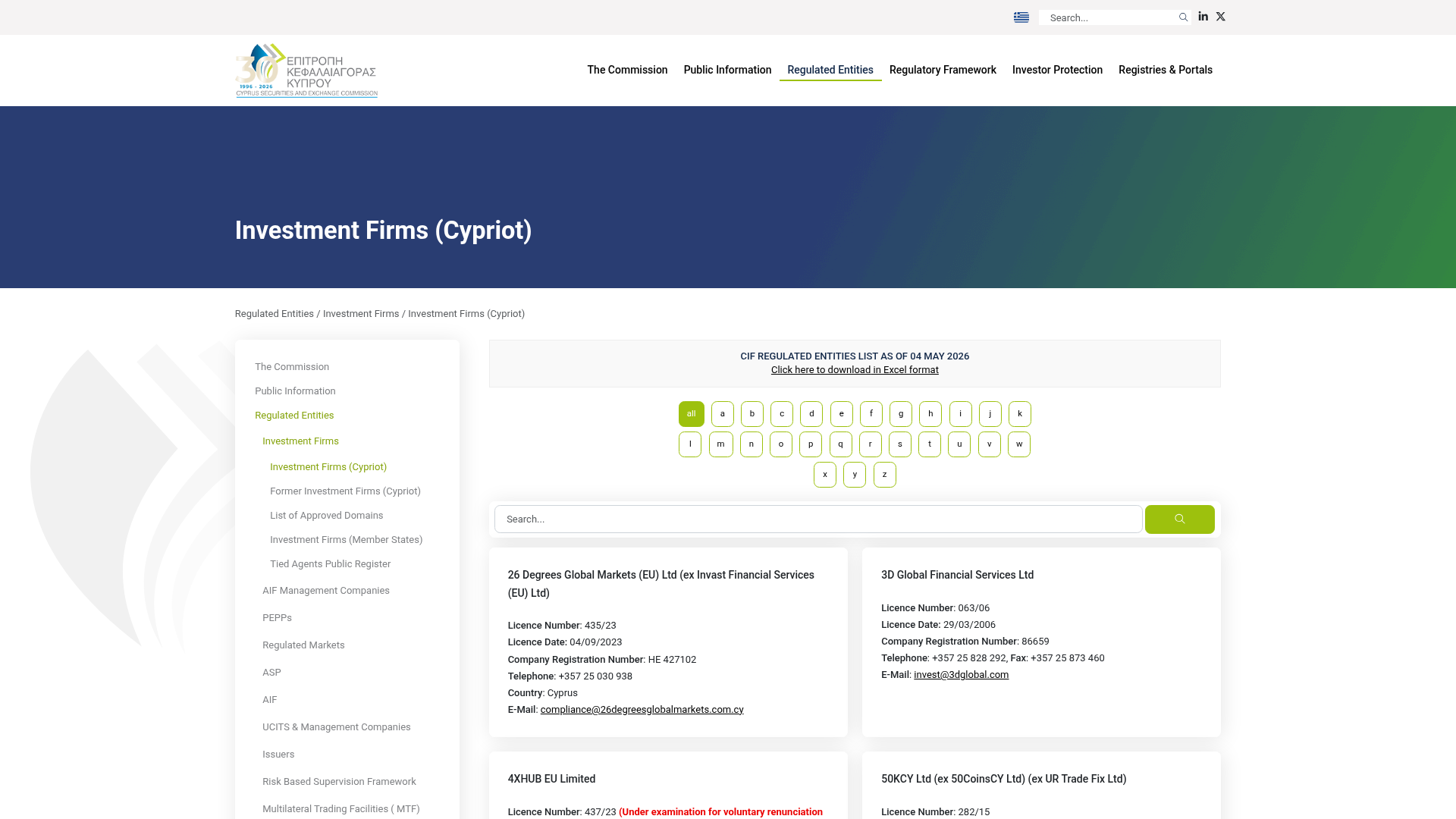
The page we check
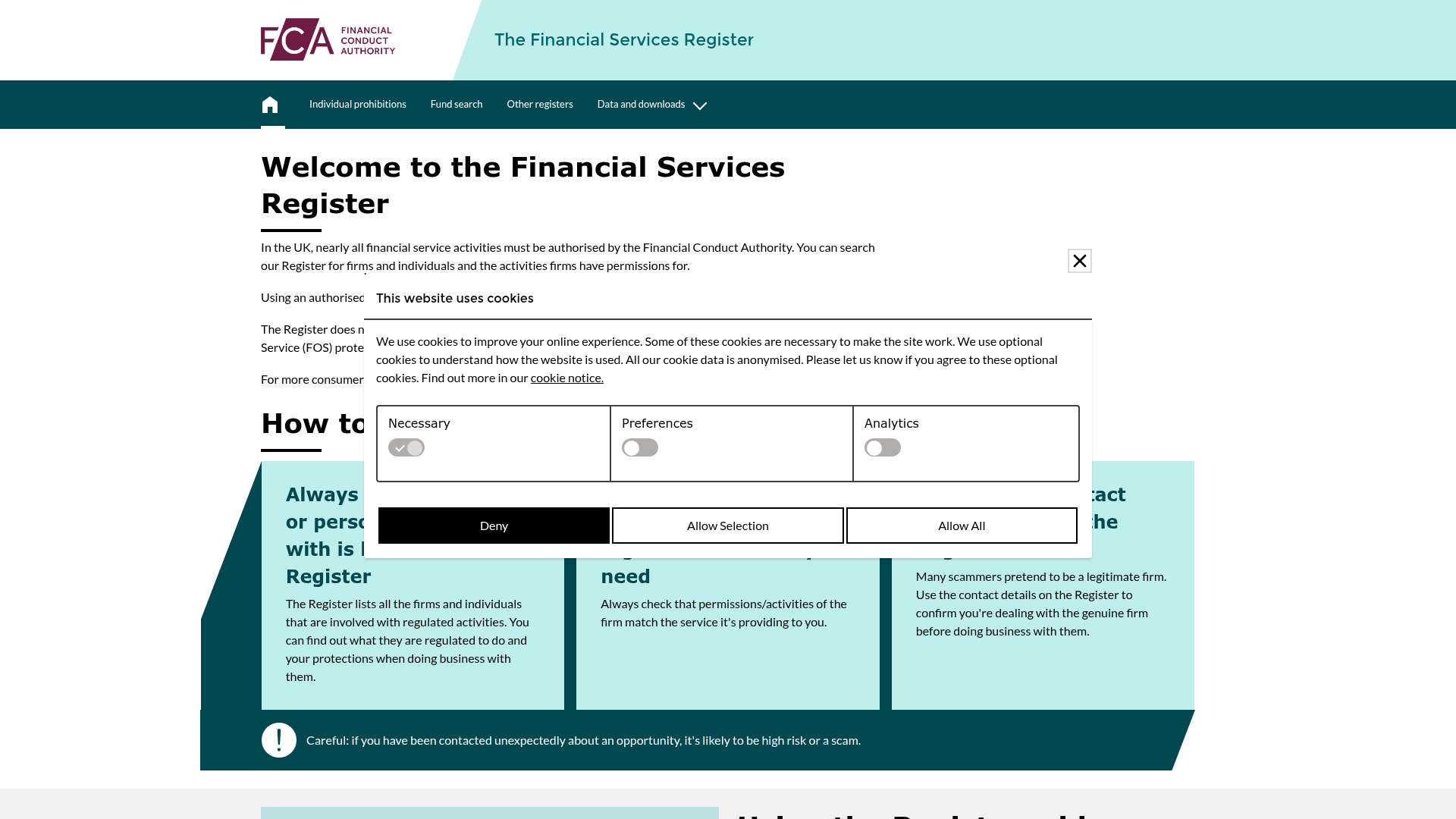
This is the authority's own page, captured as we found it. Open it and run the same search yourself — nothing on this register replaces the source.
Other registers used in checks of this kind. Each opens the authority's own page.
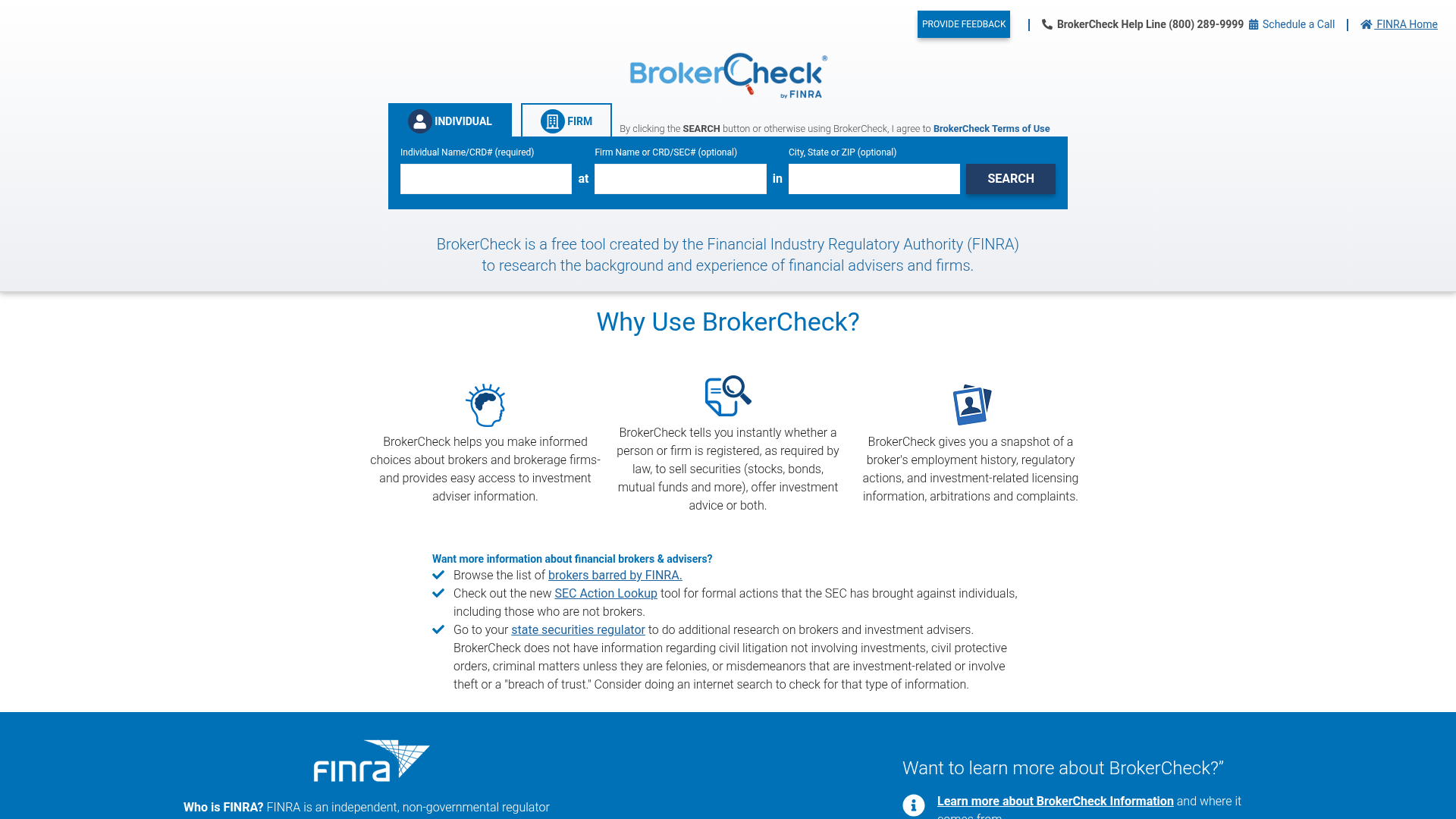
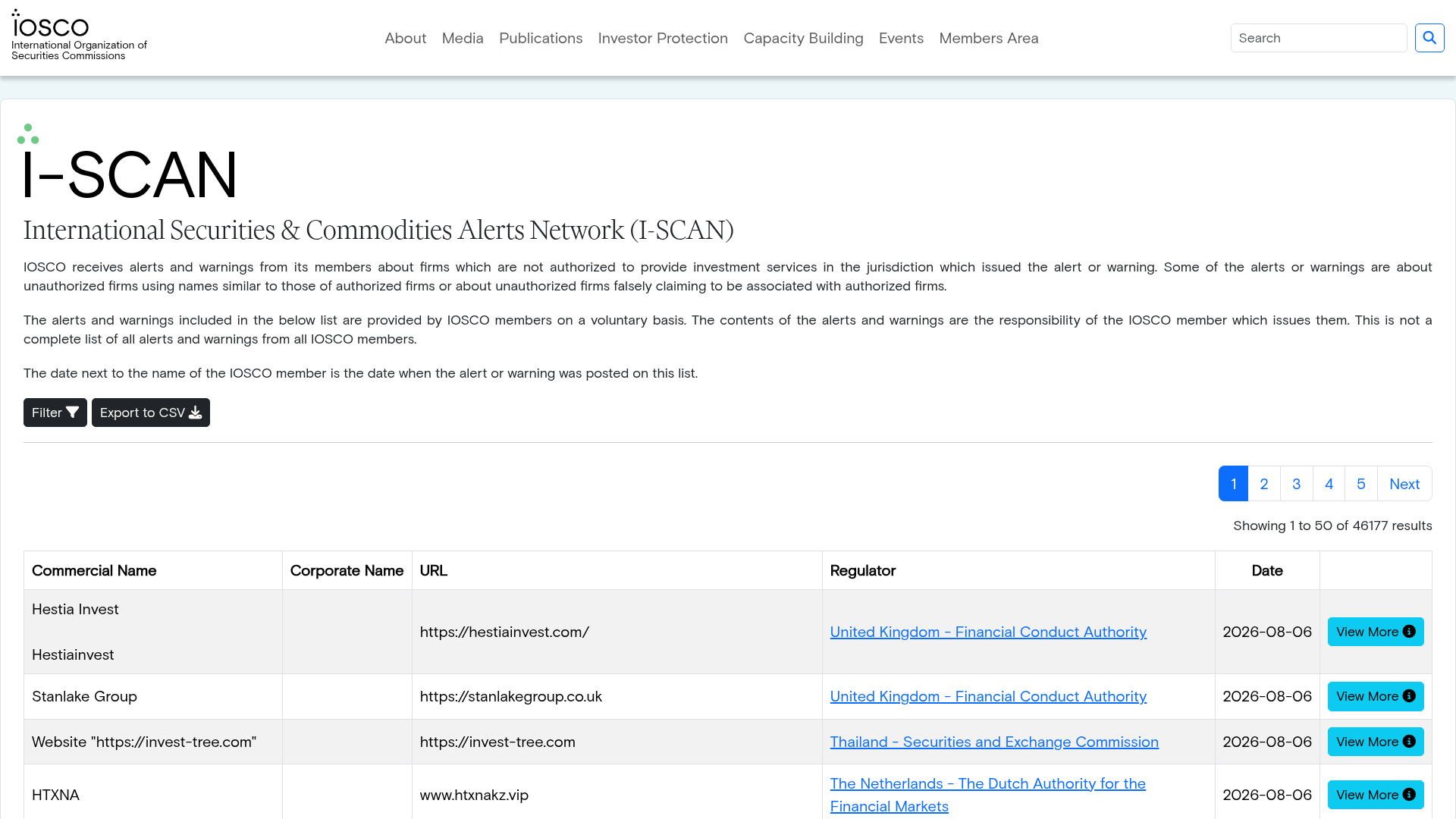
Primary sources
Every claim above can be checked against the authority's own page. These open on the regulator's site, not ours.
- Financial Conduct Authority — Financial Services Registerregister.fca.org.ukhttps://register.fca.org.uk/
- ASIC — Professional registersasic.gov.auhttps://asic.gov.au/online-services/search-asics-registers/
- CFTC — Registration Deficient (RED) Listcftc.govhttps://www.cftc.gov/check
- ESMA — Product intervention on CFDsesma.europa.euhttps://www.esma.europa.eu/press-news/esma-news/esma-agrees-prohibit-binary-options-and-restrict-cfds-protect-retail
- Financial Services Compensation Scheme (FSCS)fscs.org.ukhttps://www.fscs.org.uk/what-we-cover/investments/
- Action Fraud (UK) — reportingactionfraud.police.ukhttps://www.actionfraud.police.uk/
Frequently asked
What is the difference between an 'onshore' and 'offshore' broker entity?
An 'onshore' entity is regulated in a major, well-established financial jurisdiction like the UK (FCA) or Australia (ASIC), offering strong client protections. An 'offshore' entity is typically regulated in a jurisdiction with less stringent oversight, potentially offering higher leverage but fewer safeguards.
How can I tell which entity I am contracting with?
Always refer to the 'Client Agreement,' 'Terms and Conditions,' or 'Legal Documents' section on the broker's website. This document will explicitly name the legal entity that is the counterparty to your contract.
Does a broker's FCA or ASIC logo on its website mean I am protected by those regulators?
Not necessarily. A broker might have multiple entities, with only one being FCA or ASIC regulated. You are only protected by the regulator overseeing the *specific legal entity* named in your client agreement. Always verify this entity on the regulator's official register.
What are the risks of trading with an offshore entity?
Key risks include limited or no access to compensation schemes, weaker regulatory oversight, higher leverage leading to greater potential losses, and significantly more difficult and expensive dispute resolution processes in foreign legal systems.
What should I do if I suspect my broker is misrepresenting its regulatory status?
Document all evidence, including communications and contract details. Lodge a formal complaint with the broker. If unresolved, report your concerns to your local financial regulator or a relevant fraud reporting agency like Action Fraud in the UK or the FBI IC3 in the US.
Can I trust a broker that offers 1:500 leverage?
High leverage (e.g., 1:500) for retail clients is typically only offered by offshore, less regulated entities. While it can amplify gains, it dramatically increases the risk of rapid and substantial losses. Major regulators limit retail CFD leverage to 1:30 precisely to mitigate this risk.