
Key points
- Formal class actions are distinct from individual complaints and even group complaints to regulators, carrying specific legal requirements and costs.
- Jurisdiction significantly impacts the ability to pursue group claims, with different mechanisms in the US, UK, Australia, and the EU.
- Thorough evidence from each affected individual is critical for establishing a pattern of firm misconduct necessary for collective action.
- Litigation funding often involves a substantial portion of any settlement, leading to a realistic expectation of partial, not full, recovery for individual claimants.
- Due diligence on a broker's regulatory status and terms of service before trading remains the strongest preventative measure against needing collective action.
The Weight of Shared Grievance
Imagine a scenario where a group of retail traders, all clients of the same online broker, suddenly discover their stop losses were consistently triggered at suspiciously identical price points, just before a market rebound. Or perhaps, a firm abruptly changes its withdrawal policy, affecting hundreds of clients simultaneously. This shared experience, often brought to light through online forums and communities, marks the critical moment where individual grievances can coalesce into a potential group claim. While an isolated complaint might be dismissed by a firm as an anomaly or user error, a pattern of identical or highly similar issues affecting many individuals suggests a systemic problem that warrants a different, collective approach. The inherent complexity of online financial products, particularly Contracts for Difference (CFDs) and forex trading, means that a single technical malfunction, a subtle algorithmic bias, or an opaque shift in policy can have widespread and damaging financial effects across a broad client base. When individuals identify this common thread, the path to redress shifts from a solitary pursuit to a united effort, potentially carrying more weight with firms and regulators alike.
Defining Collective Recourse Options
It is essential to distinguish between various forms of collective grievance mechanisms. An individual complaint typically follows a firm's internal resolution process, escalating to an ombudsman or regulator if satisfaction is not achieved. A group complaint, while not a formal class action, involves multiple individuals lodging separate but similar complaints with a regulator, collectively drawing attention to a wider problem. For instance, if several clients of Pepperstone (regulated by the FCA, ASIC, and CySEC) separately report issues with unexecuted limit orders under specific market conditions, these individual reports, when viewed together by a regulator, can trigger a broader investigation into the firm's system or practices. This informal collective approach can be effective in prompting regulatory action without the full legal overhead. Class actions, however, are a specific legal mechanism, predominantly found in jurisdictions like the United States and Australia, where one or more individuals (the 'lead plaintiffs') sue on behalf of a larger group of people who have suffered similar harm. The precise legal framework for such actions varies significantly by country, affecting everything from eligibility to the distribution of any settlement. This is the part most guides skip: often, regulators prefer to handle group grievances informally first, encouraging firms to address systemic issues without immediate formal legal proceedings, which can sometimes yield quicker, albeit less public, resolutions.
Working with Regulatory Channels as a Group
Before considering formal litigation, a collective approach to relevant regulatory bodies can be a powerful first step. If multiple clients of a firm like IC Markets (regulated by ASIC and CySEC) or XM (regulated by CySEC, ASIC, IFSC, and DFSA) report the same systemic issue—for instance, a consistent problem with trade execution during volatile periods, or unjustified account suspensions affecting a particular demographic of traders—these collective reports can prompt a regulator to investigate. Regulators such as the Financial Conduct Authority (FCA) in the UK, the Australian Securities and Investments Commission (ASIC), or the Cyprus Securities and Exchange Commission (CySEC) maintain registers of regulated entities and possess powers to fine firms, impose operational restrictions, or demand redress for consumers. For example, the FCA's Financial Services Register allows consumers to check a firm's authorisation status and any past disciplinary actions. While a regulator's primary objective is often market integrity and compliance with regulations, rather than direct individual compensation, their intervention can lead to a firm-wide remediation program benefiting affected clients. The process typically involves submitting detailed, individual evidence from each claimant, often compiled and presented with the assistance of a consumer advocacy group or legal counsel, to demonstrate the scope and impact of the issue.
Examples of financial regulatory bodies and their powers to address systemic issues affecting groups of consumers.
| Regulator | Jurisdiction | Primary Mandate | Group Action Support Level |
|---|---|---|---|
| Financial Conduct Authority (FCA) | United Kingdom | Market Integrity, Consumer Protection | Investigates firm-wide issues; can compel redress; limited direct class action support. |
| Australian Securities and Investments Commission (ASIC) | Australia | Market Integrity, Investor Protection | Investigates, enforces, can supervise remediation programs; supports class actions indirectly by providing evidence. |
| Cyprus Securities and Exchange Commission (CySEC) | Cyprus | Market Integrity, Investor Protection | Supervises firms, handles complaints; may issue directives for collective issues; no direct class action mechanism. |
| Commodity Futures Trading Commission (CFTC)/NFA | United States | Market Integrity, Customer Protection | Enforces regulations, can fine firms, mandate restitution; class actions are primarily civil court proceedings. |
The Legal Pathway: Class Action Mechanics
A formal class action, particularly prevalent in jurisdictions like the United States, represents a significant legal undertaking. It begins when one or more individuals, known as 'lead plaintiffs,' file a lawsuit on behalf of a larger group of people, referred to as the 'class,' who have all suffered similar harm from the same defendant. For a class action to proceed, the court must 'certify' the class, which means it must agree that there are common questions of law or fact among the class members that outweigh any individual differences. For example, if clients of OANDA (regulated by the CFTC/NFA in the US) collectively allege systemic misrepresentation in their trading platform's reported spreads, or widespread technical glitches leading to significant losses at critical trading times, this shared grievance could form the basis for class certification. The legal costs associated with such actions are substantial, encompassing attorney fees, expert witness testimony, and administrative expenses. These costs are often financed by specialist litigation funders who, in exchange for their investment, typically take a percentage of any eventual settlement or court award. This arrangement, while enabling access to justice for otherwise unaffordable legal battles, can significantly reduce the final recovery amount for individual class members. In practice, securing a reputable law firm and obtaining funding for a class action against a well-resourced financial institution requires compelling evidence and a clear, unified legal theory. Many initial inquiries never progress past the preliminary assessment phase because the evidential bar for class certification is high and the prospect of a lengthy, costly legal battle can deter even strong cases.
Securing a reputable law firm and funding for a class action against a well-resourced financial institution requires compelling evidence and a clear legal theory.
Mei Tanaka
Evidence Collection and The Burden of Proof
For any collective claim to have merit, strong, verifiable evidence is not just advisable, it is non-negotiable. This evidence must demonstrate not only individual financial loss but also a pattern of misconduct or negligence attributable to the firm that affected a defined group in a similar manner. Claimants should meticulously gather all pertinent documentation: detailed trading statements showing specific transactions, communication records with the broker (emails, chat logs, phone call summaries), screenshots of platform anomalies, and copies of contractual agreements, including the terms and conditions in effect at the time of the alleged issue. Each individual's contribution to this collective evidence pool significantly strengthens the overall case. For instance, if multiple clients of Exness (regulated by the FCA, CySEC, and FSCA) report identical, unexplained platform freezes during major news releases, collating these timestamped reports from various users provides a powerful, difficult-to-dispute narrative of a systemic failure. The burden of proof rests firmly on the claimants to establish that the financial losses were a direct consequence of the firm's actions or omissions, rather than ordinary market fluctuations or individual trading decisions. This requires a level of detail and consistency that can only be achieved through rigorous documentation and collaboration among affected parties. Without this foundation built on rigorous documentation and collaboration, even the most widespread grievances are likely to falter under scrutiny from legal teams or regulatory investigators.
International Variations in Collective Claims
The ability to bring a group claim, and the specific mechanisms available, differs markedly across international jurisdictions. In the United Kingdom, for example, 'Group Litigation Orders' (GLOs) allow multiple claimants with similar issues to manage their cases collectively under a single procedural framework. GLOs are distinct from US-style class actions in that they typically require claimants to 'opt-in' to be part of the group, meaning individuals must actively join the litigation. Australia, where firms like Pepperstone and IC Markets are headquartered, also has class action mechanisms, often following the US model more closely with 'opt-out' provisions for defined groups, where individuals are automatically included unless they choose to remove themselves. The European Union has taken steps to strengthen collective redress for consumers through directives aimed at encouraging member states to implement national collective redress mechanisms, though the specific implementation and effectiveness vary across these countries. For instance, Germany and the Netherlands have developed their own forms of collective action that allow consumer organizations to bring claims on behalf of groups. Understanding where the financial firm is regulated and its primary domicile is crucial when considering collective action. A firm like FxPro, with its London headquarters and FCA regulation, operates under one set of rules, while its CySEC-regulated entity in Cyprus would fall under a different, albeit harmonized, European framework. This complex patchwork of legal systems makes cross-border collective claims particularly challenging, often necessitating legal counsel familiar with multiple jurisdictions.
A comparison of collective action frameworks in major financial jurisdictions relevant to broker-client disputes.
| Jurisdiction | Mechanism Type | Opt-in/Opt-out | Primary Funding Source | Common Outcomes |
|---|---|---|---|---|
| United States | Class Action Lawsuit | Opt-out (typically) | Contingency fees, Litigation funders | Monetary damages, Injunctive relief |
| United Kingdom | Group Litigation Order (GLO) | Opt-in | Conditional Fee Agreements, Litigation funders | Monetary damages, Declaratory judgments |
| Australia | Representative Proceedings (Class Action) | Opt-out (typically) | Contingency fees, Litigation funders | Monetary damages, Systemic changes |
| European Union (Directive) | Collective Redress Actions | Opt-in (generally) | Member state specific; non-profit entities | Injunctions, Redress (compensation, repair) |
The Cost-Benefit Calculus of Collective Action
Pursuing any form of group claim, especially formal litigation, is not an inexpensive undertaking. Legal fees for skilled attorneys, the cost of expert witnesses to analyze complex trading data or financial systems, and various court and administrative fees can accumulate rapidly into substantial sums. For individual claimants, the primary appeal of collective action is the sharing of these considerable costs and the associated financial risk. However, this also means sharing the potential reward. Settlements, while often reported with impressive headline figures, are not distributed in full to the claimants. A significant portion must first cover legal costs, which can include contingency fees for the lawyers (often 25-40% of the gross settlement) and fees for litigation funders, if applicable. After all these deductions, the remaining amount is then distributed among potentially thousands of claimants. This often means that the individual recovery might be a fraction of the initial alleged loss, or even negligible for those with smaller claims. For instance, a settlement of $10 million might result in individual payouts of a few hundred dollars after all costs are subtracted, especially if the class comprises tens of thousands of members. This difficult financial reality requires a sober and realistic assessment of potential outcomes against the likely financial and time investment from each participant.
Preventing the Need for Collective Action
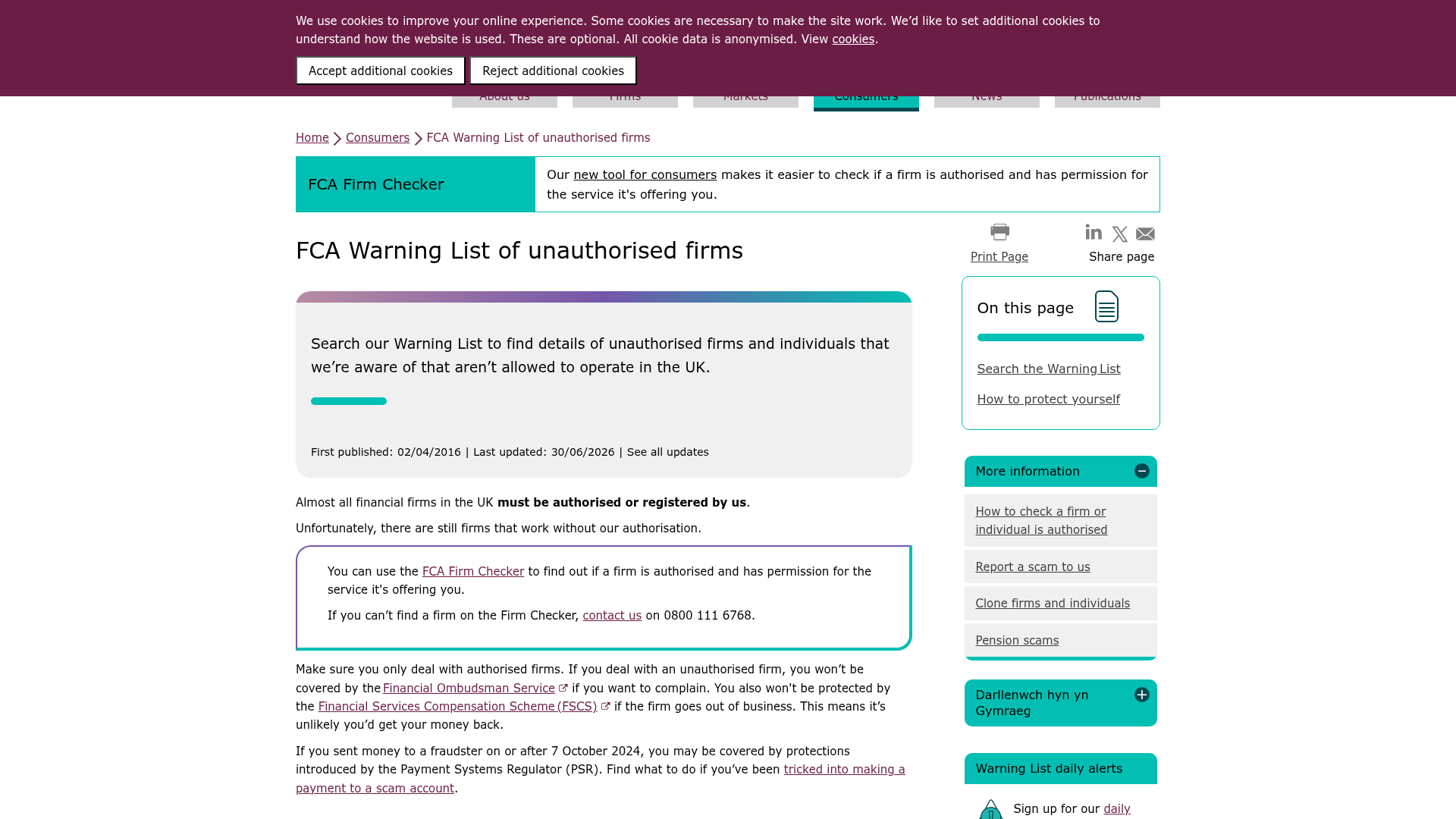
The most effective strategy for any trader remains rigorous due diligence conducted before opening an account with a financial firm. This proactive approach can significantly reduce the likelihood of encountering issues that might later necessitate collective action. Always verify a broker's regulatory status using official, independent registers like the FCA Financial Services Register, ASIC Professional Registers, or the NFA BASIC database for US-regulated entities. A firm's own website might present information selectively; direct verification through these official channels is the only reliable method. Check for any public warnings or disciplinary actions against firms on resources such as the CFTC's Registration Deficient (RED) List or the FCA's Warning List of unauthorised firms. It is also crucial to read and thoroughly understand the terms and conditions, paying particular attention to clauses regarding withdrawals, fees, leverage limits (e.g., capped at 1:30 for retail clients under ESMA intervention), and the firm's dispute resolution procedures. Even well-regulated firms like FOREX.com (regulated by CFTC/NFA, FCA, ASIC) or AvaTrade (regulated by the Central Bank of Ireland, ASIC, FSCA) can be subject to consumer complaints, making diligent and ongoing research a continuous task. Choosing a broker with multiple, reputable regulatory licenses can offer additional layers of protection, though it does not eliminate all risks. Ultimately, an informed decision reduces the need for the challenging path of collective redress.
Addressing Multi-Jurisdictional Disputes
Online brokerage firms frequently operate across numerous national boundaries, obtaining licenses from various regulatory bodies to serve a global client base. While this expansive reach offers access to diverse markets, it can introduce significant complexity when retail traders face grievances that might warrant collective action. Determining the correct regulatory authority to address a complaint, particularly when the firm is licensed in multiple jurisdictions and the client resides in another, requires careful consideration.The principle often applied is that the regulator responsible for the specific entity with which a client holds their account is the primary avenue for recourse. For instance, a client residing in Germany trading with Pepperstone's UK-regulated entity (Pepperstone Limited, regulated by the FCA) would typically direct their complaint to the UK's Financial Conduct Authority, even if Pepperstone also holds an ASIC license in Australia or a CySEC license in Cyprus. However, the operational reality can be less straightforward. Some firms might direct clients to a different entity based on their country of residence, or the terms and conditions might specify a particular governing law and jurisdiction for disputes.This fragmented regulatory environment means that consumer protection standards and available dispute resolution mechanisms can vary substantially. What constitutes a breach in one jurisdiction might not in another, or the remedies available could differ. For example, the maximum compensation limits or the scope of ombudsman services in the European Union (e.g., via CySEC-regulated entities) might contrast with those in Australia (via ASIC-regulated entities and AFCA). Clients considering a collective approach must identify the specific regulatory framework under which their accounts are held and understand the powers and limitations of that particular body. This diligence is essential before any group submission, as an incorrectly directed complaint can lead to significant delays and frustration.Consider the diverse regulatory oversight for established brokers, which illustrates this complexity.
Example Regulatory Oversight for Selected Brokers
| Broker | Primary HQ | Key Regulators Listed |
|---|---|---|
| OANDA | New York, USA | CFTC/NFA (US), FCA (UK), ASIC (Aus), IIROC (Canada), MAS (Singapore) |
| Pepperstone | Melbourne, Australia | FCA (UK), ASIC (Aus), CySEC (Cyprus), DFSA (UAE), BaFin (Germany), CMA (Kenya), SCB (Bahamas) |
| IC Markets | Sydney, Australia | ASIC (Aus), CySEC (Cyprus), FSA (Seychelles) |
| XM | Limassol, Cyprus | CySEC (Cyprus), ASIC (Aus), IFSC (Belize), DFSA (UAE) |
Alternative Dispute Resolution for Group Grievances
Beyond formal litigation or direct regulatory complaints, alternative dispute resolution (ADR) mechanisms offer another avenue for groups of aggrieved clients seeking redress. These services, often provided by independent ombudsman schemes or industry-specific arbitration bodies, aim to resolve disputes without the need for court proceedings, typically offering a more simplified, less formal, and less costly process. While traditionally geared towards individual complaints, some ADR services can aggregate and address similar grievances from multiple clients, serving a collective purpose even if not structured as a full class action.In jurisdictions such as the United Kingdom, the Financial Ombudsman Service (FOS) is allowed to investigate complaints against financial service providers regulated by the Financial Conduct Authority (FCA). While the FOS primarily deals with individual cases, it is capable of identifying systemic issues from patterns of complaints. When multiple clients submit similar grievances against the same firm, the FOS can coordinate its investigations, potentially leading to a single determination that affects many. Awards issued by the FOS are binding on the firm up to a certain monetary limit, currently £350,000 for complaints about acts or omissions by firms after 1 April 2019, and lower limits for older complaints. This administrative pathway offers a distinct advantage over court action for groups with individual claims that may not be large enough to justify the expense of litigation.Similarly, in Australia, the Australian Financial Complaints Authority (AFCA) acts as an independent external dispute resolution scheme. AFCA is mandated to handle complaints from consumers and small businesses about financial products and services. Like the FOS, AFCA can recognize trends and systemic problems from multiple, related complaints. If a group of traders, for instance, experienced identical issues with a specific broker, presenting these complaints to AFCA would allow for a coordinated assessment. AFCA's determinations are generally binding on member firms up to specific monetary thresholds (e.g., $1.1 million for individual consumers, with different limits for small businesses), providing a concrete avenue for compensation without the protracted discovery and trial phases of a court case.These ADR schemes typically involve a structured process: initial review, conciliation attempts, and if no agreement is reached, an investigation leading to a final determination. The timeframe for resolution is usually significantly shorter than court proceedings, often within a few months, though complex collective issues can extend this. Accessing these services generally requires that the client has first attempted to resolve the issue directly with the financial firm through its internal complaints process. While ADR bodies do not typically conduct broad discovery as a court would, their ability to compel information from regulated firms makes them effective for investigating specific, definable breaches. For groups of clients whose individual claims are modest but whose collective impact is substantial, these mechanisms represent a pragmatic and effective alternative to the arduous path of class action litigation.
A Future with Stronger Consumer Protections
While collective action against financial firms remains a challenging and often protracted path, the global trend indicates a slow but steady strengthening of consumer protection mechanisms. International bodies like IOSCO (International Organization of Securities Commissions) actively work to share investor alerts and best practices among regulators worldwide, contributing to a more informed and vigilant global financial environment. Regulators are increasingly aware of the need to address systemic issues that affect many clients, moving beyond individual complaint resolution to broader oversight and enforcement. The development of new directives in regions like the European Union for collective redress signals a recognition of the power imbalances between large financial institutions and individual consumers, aiming to provide more structured avenues for groups to seek justice. For retail traders, this changing environment means that while individual vigilance and careful due diligence remain the foundational lines of defense, the avenues for seeking redress, even collectively, are becoming more structured and, in some cases, more accessible over time. The goal is to gradually shift the balance, making it less profitable for firms to engage in practices that harm broad segments of their client base, thereby fostering a more equitable and trustworthy financial market for everyone.
The page we check
This is the authority's own page, captured as we found it. Open it and run the same search yourself — nothing on this register replaces the source.
Other registers used in checks of this kind. Each opens the authority's own page.

Primary sources
Every claim above can be checked against the authority's own page. These open on the regulator's site, not ours.
- FCA — Warning list of unauthorised firmsfca.org.ukhttps://www.fca.org.uk/consumers/warning-list-unauthorised-firms
- ASIC — Professional registersasic.gov.auhttps://asic.gov.au/online-services/search-asics-registers/
- CFTC — Registration Deficient (RED) Listcftc.govhttps://www.cftc.gov/check
- CySEC — Regulated entities registercysec.gov.cyhttps://www.cysec.gov.cy/en-GB/entities/investment-firms/cypriot/
- ESMA — Product intervention on CFDsesma.europa.euhttps://www.esma.europa.eu/press-news/esma-news/esma-agrees-prohibit-binary-options-and-restrict-cfds-protect-retail
Frequently asked
What is the primary difference between a group complaint to a regulator and a formal class action?
A group complaint to a regulator involves multiple individuals reporting similar issues, prompting regulatory investigation and potential firm-wide remediation. A formal class action is a lawsuit filed in court on behalf of a group, seeking legal damages or injunctive relief, subject to court certification and specific legal procedures.
How long does a typical class action lawsuit take to resolve?
Class action lawsuits can be lengthy. From initial filing to final resolution, they commonly take several years, often between three to five years, and sometimes even longer, due to complex legal processes, discovery, negotiations, and court schedules.
Can I join a class action if I'm not in the same country as the broker or the lawsuit?
Eligibility to join a class action depends on the specific lawsuit's defined class and jurisdictional rules. If your broker is regulated in a jurisdiction where the class action is filed, or if you meet the class definition, you might be eligible, but international participation can add layers of complexity.
Will I recover all my losses if a class action against a broker is successful?
It is unlikely you will recover all losses. Successful class actions typically result in settlements that cover legal fees, litigation funder costs, and administrative expenses first. The remaining amount is then distributed among class members, often resulting in partial recovery, especially for smaller individual claims.
Where can I check if a financial firm is properly licensed?
You should check official regulatory registers directly. For example, use the FCA Financial Services Register for UK firms, ASIC Professional Registers for Australian firms, the CFTC's Registration Deficient (RED) List for US firms, or CySEC's Regulated entities register for Cypriot firms. Do not rely solely on information provided by the firm itself.
What kind of evidence is most important for a group claim?
Crucial evidence includes detailed trading statements, screenshots of platform issues with timestamps, all communication records with the broker (emails, chat logs), and copies of your client agreement and terms and conditions. The more consistent and numerous the similar instances across claimants, the stronger the case.