نقاط رئيسية
- تحقق دائمًا من الوضع التنظيمي للشركة مباشرة على الموقع الرسمي للهيئة التنظيمية، ولا تعتمد أبدًا على المستندات التي تقدمها الشركة نفسها.
- دقق في شهادات الترخيص المزعومة بحثًا عن أي تناقضات في التنسيق أو القواعد اللغوية أو الشعارات، وقارن جميع التفاصيل بالسجلات الرسمية.
- افهم النطاق المحدد لترخيص الشركة، بما في ذلك الخدمات التي يمكنها تقديمها ونطاقها الجغرافي المرخص.
- استشر قوائم التحذير التنظيمية مثل قائمة FCA أو CFTC الحمراء لتحديد الشركات التي تستهدف المستهلكين بنشاط دون ترخيص.
- افحص معلومات الاتصال للتأكد من احترافيتها وتحقق منها مقابل السجلات الرسمية؛ عناوين البريد الإلكتروني العامة مؤشر قوي على عدم الموثوقية.
- كن شديد الحذر من أي شركة تعد بعوائد 'مضمونة' أو 'خالية من المخاطر'، فهذه سمات شائعة للمخططات الاحتيالية.
وهم السلطة: لماذا تظهر المستندات المزورة؟
في عدد مقلق من الحالات، يُعرض على الأفراد الذين يسعون للتعامل مع منصات التداول المالي مستندات بصيغة PDF تبدو وكأنها تؤكد الوضع التنظيمي لشركة ما. هذه المستندات، التي غالبًا ما تُشارك عبر البريد الإلكتروني أو تطبيقات المراسلة مثل WhatsApp، تحمل في كثير من الأحيان الشعارات الرسمية للهيئات المالية المرموقة وتدرج ما يبدو أنها أرقام تسجيل صالحة. الهدف هو غرس شعور زائف بالأمان والشرعية، مما يخلق عقبة فورية أمام التحقق المستقل.
تُعد هذه التزويرات المتطورة حجر الزاوية للعديد من العمليات غير المنظمة. وهي مصممة لمحاكاة شهادات الترخيص الأصلية عن كثب لدرجة أن نظرة عابرة قد توحي بالامتثال التام. غالبًا ما يبلغ الضحايا عن توجيههم إلى مواقع ويب تبدو مشروعة وتحاكي مواقع الوسطاء الأصليين، مما يزيد من ترسيخ الوهم. يعمل هذا العرض الأولي لمستند مزور كمرساة نفسية، مما يجعل من الصعب على الأفراد التشكيك في مصداقية الشركة لاحقًا.
هذه الممارسة الخادعة ليست جديدة، لكن انتشارها مستمر في الارتفاع مع تزايد إمكانية الوصول إلى التداول عبر الإنترنت. إن سهولة مشاركة الملفات الرقمية تجعل من السهل على الكيانات غير المشروعة توزيع هذه الأدلة المزيفة على الترخيص. إنها خطوة محسوبة لتجاوز الخطوة الحاسمة للعناية الواجبة المستقلة، معتمدة على ثقة المستهلك في الأوراق التي تبدو رسمية. إن الخطوة الأولى، وغالبًا الأكثر أهمية، لحماية نفسك هي فهم أن أي مستند تقدمه لك شركة مالية، مهما كان مقنعًا، لا يمكن أن يكون الأساس الوحيد للثقة.
التحقق المباشر: الخطوة الأولى المطلقة
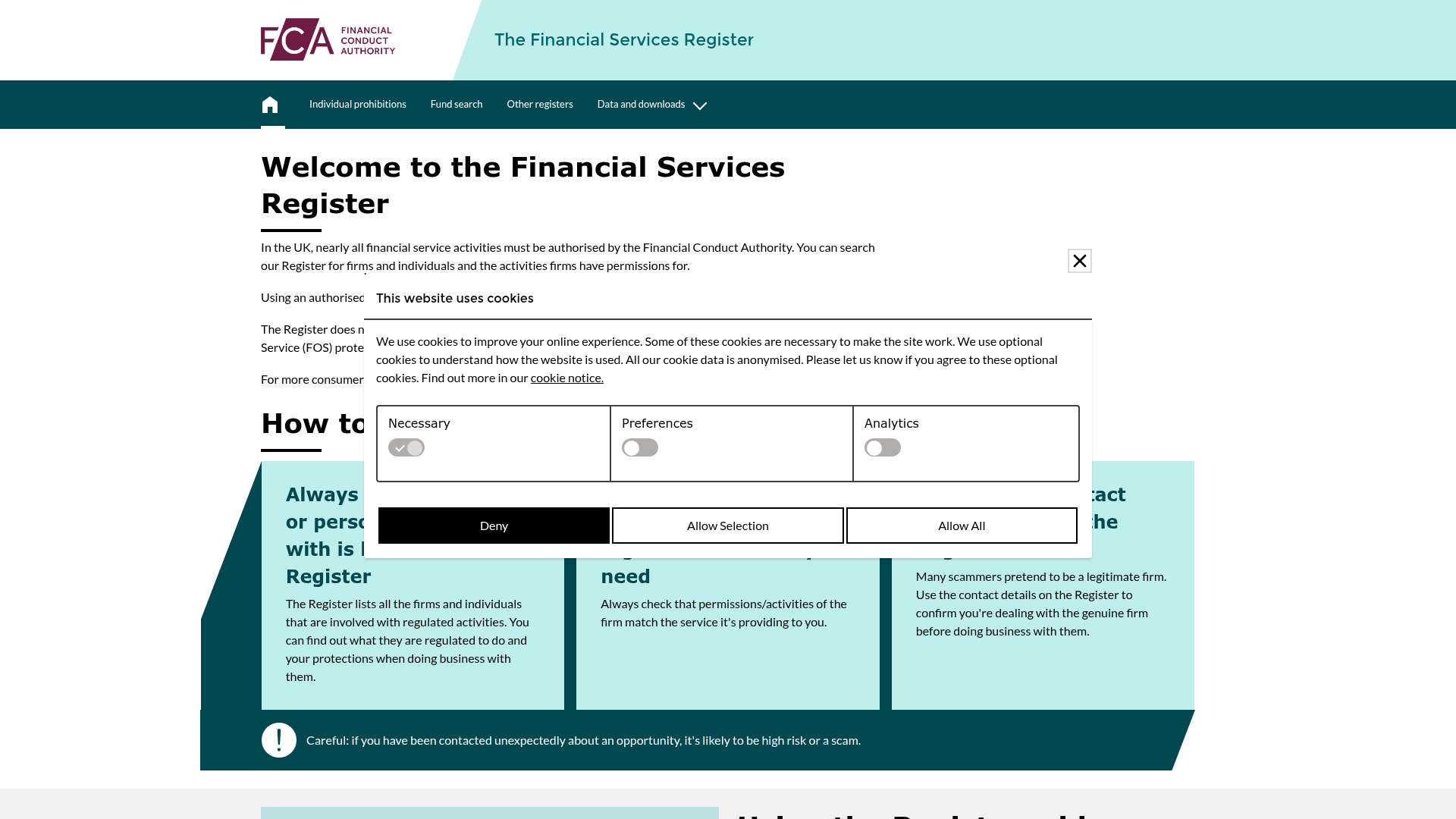
لا تعتمد أبدًا على مستند تقدمه جهة تدعي أنها مرخصة. الطريقة الوحيدة الموثوقة هي الوصول بشكل مستقل إلى السجل الرسمي للهيئة التنظيمية المذكورة والبحث عن الشركة بنفسك. هذا هو الجزء الذي تتجاهله معظم الأدلة، ولكنه أساسي. ملف PDF هو مجرد ملف رقمي؛ ولا يقدم أي دليل جوهري على الأصالة دون تحقق خارجي. سيوصلك بحث بسيط على الويب عن 'FCA Register' أو 'ASIC Professional registers' مباشرة إلى المصدر الموثوق، متجاوزًا أي روابط خادعة قد تقدمها شركة غير منظمة.
لنأخذ على سبيل المثال Pepperstone، وهي شركة خاضعة لتنظيم FCA و ASIC و CySEC. إذا أرسل لك ممثل ملف PDF يدعي تنظيم FCA، فانتقل فورًا إلى سجل الخدمات المالية الخاص بـ FCA. في السجل، ابحث عن 'Pepperstone' وتحقق من التفاصيل. يضمن هذا البحث المستقل وصولك إلى أحدث المعلومات وأكثرها دقة مباشرة من المصدر، بدلاً من مستند قد يكون معدلاً.
ينطبق هذا المبدأ عبر جميع الولايات القضائية. سواء كانت الشركة تستشهد بتنظيم من CFTC/NFA في الولايات المتحدة، أو CySEC في قبرص، أو MAS في سنغافورة، تظل العملية متطابقة: انتقل مباشرة إلى الموقع الرسمي للهيئة التنظيمية واستخدم أدوات البحث الخاصة بهم. تعامل مع أي تردد أو محاولة من الشركة لتوجيهك إلى بوابة 'تحقق' بديلة كعلامة تحذير خطيرة. إن تفاعلك المباشر مع السجل الرسمي هو أقوى دفاع ضد المستندات المزورة.
سجلات الهيئات التنظيمية الرئيسية للتحقق المباشر من الشركات
| الهيئة التنظيمية | اسم السجل | رابط البحث | مثال لوسيط مدرج |
|---|---|---|---|
| FCA (المملكة المتحدة) | سجل الخدمات المالية | https://register.fca.org.uk/ | Pepperstone, FxPro |
| ASIC (أستراليا) | السجلات المهنية | https://asic.gov.au/online-services/search-asics-registers/ | IC Markets, OANDA |
| CySEC (قبرص) | سجل الكيانات الخاضعة للتنظيم | https://www.cysec.gov.cy/en-GB/entities/investment-firms/cypriot/ | XM, Exness |
| CFTC/NFA (الولايات المتحدة الأمريكية) | NFA BASIC | https://www.nfa.futures.org/basicnet/ | OANDA, FOREX.com |
تشريح الوثيقة: المؤشرات البصرية وعدم تطابق البيانات
بمجرد تحديد موقع السجل الرسمي، تتضمن الخطوة التالية مقارنة دقيقة. دقق في شهادة الترخيص المزعومة بحثًا عن أي مخالفات قد تكشف عن طبيعتها الحقيقية. تشمل علامات التزوير الشائعة الخطوط غير المتناسقة، والشعارات غير المتطابقة، والأخطاء النحوية والإملائية، أو الصور غير الواضحة التي توحي بأن الأصل قد تم مسحه ضوئيًا ونسخه ثم تعديله. هذه العيوب، وإن كانت دقيقة أحيانًا، يمكن أن تكون مؤشرات واضحة على التزوير. عادة ما تكون الوثائق التنظيمية المشروعة نظيفة، ومنسقة باحترافية، وخالية من هذه الأخطاء الأساسية.
الأهم من ذلك، قارن كل تفصيل نصي: يجب أن تتطابق أرقام التسجيل وأسماء الشركات والعناوين الفعلية المدرجة في الشهادة تمامًا مع المعلومات الموجودة على الموقع الرسمي للجهة التنظيمية. حتى اختلاف حرف واحد في رقم الترخيص، أو اختلاف طفيف في عنوان الشركة المسجل، أو اسم شركة معدّل، يمكن أن يشير إلى وثيقة مزورة. على سبيل المثال، قد يكون كيان يعمل تحت اسم معدّل قليلاً، مثل 'Pepperstone Global Markets' بدلاً من 'Pepperstone Limited'، محاولة متعمدة لتقليد شركة مشروعة مع البقاء خارج الرقابة التنظيمية. يهدف هذا التكتيك إلى إرباك واستغلال سمعة العلامات التجارية الراسخة.
تبذل الشركات المشروعة قصارى جهدها لضمان أن وثائقها الرسمية لا تشوبها شائبة. أي انحراف عن هذا المعيار، مهما بدا طفيفًا، يستدعي شكوكًا عميقة. إن عملية مقارنة الوثيقة سطرًا بسطر مع السجل الرسمي ليست مجرد إجراء شكلي؛ بل هي ممارسة جنائية حاسمة يمكن أن تكشف الممارسات الخادعة قبل التزام أي أموال.
فهم نطاق السلطة: الاختصاص القضائي والخدمات
الترخيص التنظيمي ليس موافقة شاملة لجميع الأنشطة المالية في جميع أنحاء العالم. إنه محدد للغاية. يحدد الترخيص الأنواع الدقيقة للخدمات التي يُسمح للشركة بتقديمها (مثل 'التعامل في الاستثمارات كوكيل رئيسي'، 'ترتيب الصفقات في الاستثمارات') وغالبًا المنتجات المالية المحددة التي يمكنها تقديمها (مثل عقود الفروقات (CFDs)، الفوركس، الأسهم، العقود الآجلة). الأهم من ذلك، أنه يحدد الاختصاص القضائي الجغرافي الذي يمكن للشركة أن تعمل فيه ولمن يمكنها تسويق خدماتها. على سبيل المثال، الكيان الخاضع لتنظيم CySEC (هيئة الأوراق المالية والبورصات القبرصية)، مثل XM أو Exness، مصرح له بخدمة العملاء داخل المنطقة الاقتصادية الأوروبية بموجب ترخيص CySEC الخاص به، مع الالتزام بحدود الرافعة المالية المحددة من قبل ESMA، والتي غالبًا ما تكون محددة بـ 1:30 للعملاء الأفراد.
إذا حاولت شركة استقطاب عميل مقيم في أستراليا، على سبيل المثال، بينما لا تحمل سوى ترخيص CySEC، فإنها تعمل خارج نطاق ذلك الترخيص التنظيمي المحدد لذلك العميل. في مثل هذا السيناريو، لن يحصل العميل الأسترالي على أي حماية تنظيمية من CySEC، حيث أن الشركة غير مرخصة لتقديم الخدمات لهم في بلدهم الأم. هذا التقييد الجغرافي هو مكون حيوي للحماية التنظيمية غالبًا ما يتم تجاهله. الشركات المشروعة مثل OANDA، التي تحمل تراخيص من FCA وCFTC/NFA وASIC وIIROC وMAS، عادة ما توجه العملاء إلى الكيان المناسب داخل مجموعتها الشركاتية والمرخص لمنطقة إقامتهم.
فهم النطاق التنظيمي أمر بالغ الأهمية هنا. قد تحمل شركة ترخيصًا مشروعًا في ولاية قضائية واحدة، مثل سيشيل (FSA)، ولكن هذا الترخيص لا يمنحها السلطة لتقديم الخدمات لعملاء التجزئة في، على سبيل المثال، المملكة المتحدة أو الولايات المتحدة الأمريكية، حيث تنطبق أنظمة تنظيمية مختلفة وأكثر صرامة. تحقق دائمًا من أن الترخيص الممنوح يغطي أنت كعميل، في بلد إقامتك، للمنتجات التي تنوي تداولها. من الناحية العملية، غالبًا ما يتجاوز قسم المبيعات في الشركة التي تعمل خارج نطاق ترخيصها هذه القيود الجغرافية عن طريق توجيه العملاء إلى كيان خارجي غير منظم ضمن نفس المجموعة الشركاتية، أحيانًا دون الكشف الكامل عن الآثار المترتبة على حماية المستثمر.
ملف PDF هو مجرد ملف رقمي؛ ولا يقدم أي دليل جوهري على الأصالة دون تحقق خارجي، مما يترك المستثمر عرضة تمامًا للخداع.
Mei Tanaka
الاطلاع على قوائم التحذير والتنبيهات العامة
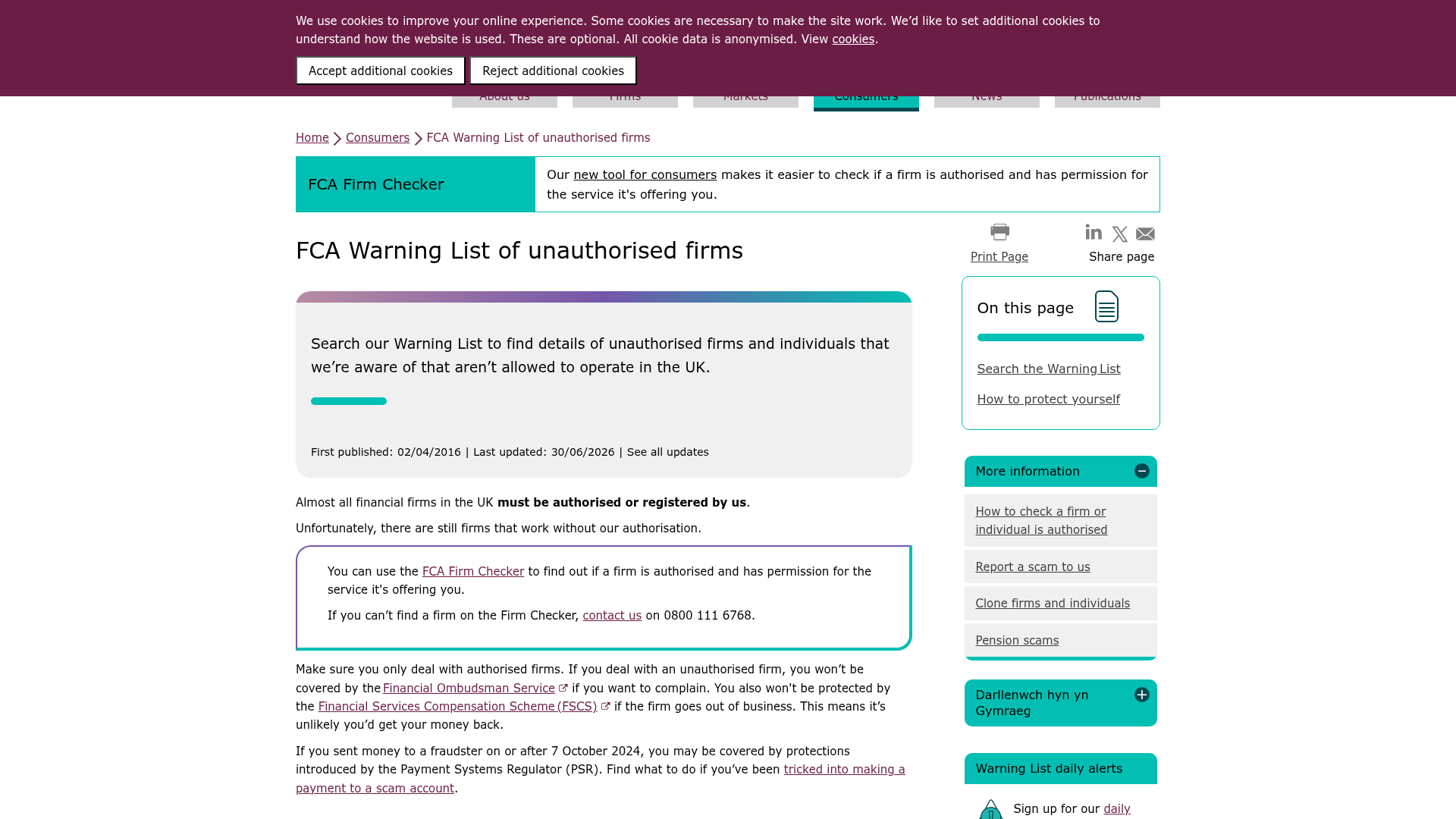
بالإضافة إلى التحقق النشط من الشركة في السجلات الرسمية، يجب على العملاء المحتملين الاطلاع على قوائم التحذير والتنبيهات للمستثمرين المتاحة للجمهور والتي تحتفظ بها الهيئات التنظيمية المالية عالميًا. تعمل هذه القوائم كأنظمة إنذار مبكر حاسمة، حيث تحدد الكيانات المشتبه في تقديمها لخدمات مالية دون ترخيص مناسب، أو الانخراط في أنشطة احتيالية. تحتفظ هيئة السلوك المالي (FCA) في المملكة المتحدة بـ 'قائمة تحذير للشركات غير المصرح بها' تفصل الشركات والأفراد المعروفين بأنهم يعملون بشكل غير قانوني أو ينتحلون صفة كيانات مشروعة. يتم تحديث هذه القائمة بانتظام، وغالبًا ما تتضمن تفاصيل محددة للعمليات الاحتيالية، مثل عناوين المواقع الإلكترونية ومعلومات الاتصال.
في الولايات المتحدة، تنشر لجنة تداول السلع الآجلة (CFTC) 'القائمة الحمراء' (قائمة الكيانات ذات التسجيل الناقص) التي تحدد الكيانات الأجنبية التي يبدو أنها تطلب بشكل غير قانوني من العملاء الأمريكيين تداول الفوركس أو الخيارات الثنائية دون أن تكون مسجلة لدى CFTC. تستضيف المنظمة الدولية لهيئات الأوراق المالية (IOSCO) أيضًا 'بوابة تنبيهات المستثمرين' التي تجمع التحذيرات من العديد من الهيئات التنظيمية في جميع أنحاء العالم، مما يوفر منظورًا أوسع للعمليات غير المشروعة المعروفة. هذه القوائم ديناميكية ويتم تحديثها بشكل متكرر مع تحديد مخططات احتيالية جديدة والإبلاغ عنها.
يوفر التحقق من هذه الموارد طبقة دفاع إضافية واستباقية. قد لا تظهر شركة في سجل 'معتمد' رسمي لولايتك القضائية، ولكن وجودها في قائمة تحذير من جهة تنظيمية رئيسية أخرى هو إشارة قاطعة للانسحاب. يكشف ذلك عن الشركات التي قد تستهدف المستهلكين بنشاط بعروض غير مشروعة، وغالبًا ما تستخدم وثائق مزورة كجزء من خداعها الأوسع. أعطِ الأولوية لهذا التحقق جنبًا إلى جنب مع بحثك في السجل؛ فغياب الشركة عن سجل رسمي شيء، لكن وجودها في قائمة تحذير هو اتهام أخطر بكثير.
قوائم التحذير الرئيسية للشركات المالية غير المصرح بها
| الجهة التنظيمية/الهيئة | اسم قائمة التحذير | URL |
|---|---|---|
| FCA (المملكة المتحدة) | قائمة التحذير من الشركات غير المصرح لها | https://www.fca.org.uk/consumers/warning-list-unauthorised-firms |
| CFTC (الولايات المتحدة الأمريكية) | قائمة الكيانات ذات التسجيل الناقص (RED) | https://www.cftc.gov/check |
| IOSCO (عالمي) | بوابة تنبيهات المستثمرين | https://www.iosco.org/investor_protection/?subsection=investor_alerts_portal |
التدقيق في معلومات الاتصال والتفاصيل التشغيلية
تستدعي تفاصيل الاتصال المقدمة على شهادة ترخيص مزعومة أو موقع إلكتروني لشركة تدقيقاً دقيقاً ومستقلاً. هل تتوافق العناوين الفعلية المدرجة مع منطقة أعمال مشروعة، أم أنها عقارات سكنية عامة، أو صناديق بريد، أو مكاتب افتراضية لا توفر وجوداً مادياً حقيقياً؟ هل يتصل رقم الهاتف باستقبال يبدو احترافياً، أم أنه لا يتم الرد عليه باستمرار، أو يتم توجيهه إلى رقم هاتف محمول عام، أو حتى مفصول؟ تحتفظ معظم الشركات المالية الشرعية، مثل OANDA أو FOREX.com، بعناوين شركات شفافة وقابلة للتحقق في المراكز المالية الرئيسية وقنوات اتصال احترافية ومؤسسية. وعادةً ما تتميز مواقعها الإلكترونية بأقسام 'اتصل بنا' محددة بوضوح مع مسارات اتصال احترافية متعددة.
من العلامات الشائعة للعمليات غير المنظمة أو الاحتيالية الاعتماد على خدمات البريد الإلكتروني المجانية مثل Gmail أو Yahoo أو Outlook، بدلاً من عناوين البريد الإلكتروني الخاصة بالشركات المرتبطة بنطاقها. وبالمثل، فإن عدم وجود خط هاتف مباشر وقابل للتحقق، أو توفير رقم هاتف محمول فقط، يجب أن يثير مخاوف فورية. تحقق دائماً من تفاصيل الاتصال هذه مقابل إدخال الجهة التنظيمية الرسمية للشركة. يمكن أن تشير التناقضات هنا إلى محاولة متعمدة لإخفاء الموقع أو الهوية الحقيقية للشركة، وهو تكتيك يستخدمه غالباً أولئك المنخرطون في ممارسات خادعة. إذا لم تتطابق معلومات الاتصال على المستند أو الموقع الإلكتروني بدقة مع التفاصيل الموجودة في السجل التنظيمي الرسمي، فاعتبر ذلك تحذيراً كبيراً. فالشركات الموثوقة ليس لديها ما تخفيه فيما يتعلق بقاعدة عملياتها أو كيفية وصول العملاء إليها.
علامات حمراء سلوكية: وعود بعوائد مستحيلة
بينما يركز هذا المقال على التحقق من المستندات، فإن السياق الأوسع الذي يتم فيه تقديم مستند مزور لا يقل أهمية. غالباً ما تستخدم الكيانات غير المرخصة تكتيكات مبيعات عالية الضغط، مقترنة بوعود بعوائد 'مضمونة' أو 'خالية من المخاطر' تتحدى جميع حقائق السوق. كن حذراً من أي عرض يوحي بأنه يمكنك تحقيق عوائد بنسبة 10% يومياً، أو مضاعفة رأس مالك في غضون أسبوع، أو تحقيق أرباح متسقة وكبيرة دون أي drawdowns. هذه الادعاءات هي عادة مقدمات للاحتيال، حيث تعمل شهادة الترخيص المزورة على إضفاء مصداقية زائفة على اقتراح لا يصدق بخلاف ذلك. إن الوعد بالثراء السريع والسهل هو طعم كلاسيكي يستخدمه المحتالون.
يعمل الوسطاء الشرعيون، مثل AvaTrade أو FxPro، بموجب إرشادات إعلانية صارمة تفرضها هيئاتهم التنظيمية. تحظر هذه الإرشادات صراحة البيانات المضللة وتتطلب إفصاحات واضحة عن المخاطر. ستتضمن اتصالاتهم دائماً إخلاء مسؤولية واضحاً حول المخاطر الكبيرة التي ينطوي عليها تداول المنتجات ذات الرافعة المالية مثل عقود الفروقات (CFDs) والفوركس (Forex)، مثل: 'عقود الفروقات (CFDs) هي أدوات معقدة وتأتي مع مخاطر عالية لخسارة الأموال بسرعة بسبب الرافعة المالية. 75% من حسابات مستثمري التجزئة تخسر أموالها عند تداول عقود الفروقات (CFDs)'. إن عدم وجود مثل هذه التحذيرات، أو التقليل من شأنها، هو مؤشر قوي على أنك لا تتعامل مع كيان منظم بشكل صحيح.
يجب أن تثير أي شركة تحثك على إيداع الأموال بسرعة، أو تحذرك من 'فرص محدودة الوقت'، أو تحاول تجاوز حذرك الطبيعي، أعمق شكوكك. تحمل فرص الاستثمار الحقيقية مخاطر، وسيتأكد أي مستشار شرعي من فهمك الكامل لتلك المخاطر. إن جاذبية المال السهل هي أداة قوية للخداع، وغالباً ما يكون الترخيص المزور مجرد جزء واحد من لغز تلاعبي أكبر مصمم لاستخراج أموالك.
ما بعد الاحتيال: الإبلاغ والانتصاف للضحايا
إذا اكتشفت أنك تعاملت مع كيان يقدم ترخيصاً مزوراً أو يعمل دون ترخيص مناسب، فإن اتخاذ إجراء فوري وحاسم أمر ضروري. لا تتأخر في الإبلاغ عن الحادث إلى السلطات المختصة. في الولايات المتحدة، يمكنك تقديم بلاغ إلى مركز شكاوى الجرائم عبر الإنترنت التابع لمكتب التحقيقات الفيدرالي (FBI's Internet Crime Complaint Center - IC3) أو لجنة التجارة الفيدرالية (Federal Trade Commission - FTC). يجب على المقيمين في المملكة المتحدة الاتصال بـ Action Fraud. يمكن أن يساعد تقديم معلومات مفصلة، بما في ذلك أي مستندات مزورة، ولقطات شاشة لسجلات الاتصال، وسجلات المعاملات، وكشوف الحسابات المصرفية، هذه الوكالات بشكل كبير في تحقيقاتها. كلما زاد عدد الأدلة التي يمكنك تقديمها، زادت فرصة تتبع هذه العمليات وتعطيلها المحتمل.
في حين أن استرداد الأموال المفقودة من الكيانات غير المنظمة غالباً ما يكون صعباً، فإن الإبلاغ يساعد السلطات على تتبع هذه العمليات، وتحديد الأنماط، وربما منع الآخرين من الوقوع ضحية. من المهم أيضاً إخطار البنك الذي تتعامل معه أو مزود الدفع فوراً إذا قمت بتحويل أموال. قد يتمكنون من المساعدة في تتبع المعاملات أو بدء عمليات استرداد الأموال (chargebacks)، على الرغم من أن النجاح غير مضمون، خاصة إذا تم نقل الأموال بالفعل إلى الخارج. قد تبدو عملية الإبلاغ شاقة، لكنها خطوة حاسمة لكل من انتصافك المحتمل والمساهمة في مكافحة الجريمة المالية على نطاق أوسع.
يعد فهم قنوات الإبلاغ أمراً بالغ الأهمية مثل عملية التحقق الأولية. حتى لو بدا الاسترداد المالي المباشر غير مرجح، فإن تقريرك يساهم في جمع المعلومات الاستخبارية التي يمكن أن تؤدي إلى إجراءات إنفاذ مستقبلية. هذا الجهد الجماعي حيوي في تفكيك الشبكات الاحتيالية المعقدة.
تشريح الحماية التنظيمية الحقيقية
إن فهم ما يوفره الترخيص الحقيقي يمكن أن يسلط الضوء على الفجوات العميقة التي يخلقها الترخيص المزور. تخضع الشركات المنظمة لشبكة معقدة من المتطلبات المصممة لحماية المستثمرين. وتشمل هذه المتطلبات الصارمة لكفاية رأس المال، مما يضمن احتفاظ الشركة بأموال كافية لتغطية التزاماتها. والأهم من ذلك، أن الكيانات المنظمة ملزمة بفصل أموال العملاء عن أموالها التشغيلية، عادةً في حسابات ائتمانية منفصلة. هذا يعني أنه إذا واجهت شركة منظمة، مثل AvaTrade أو Plus500، صعوبات مالية أو دخلت في تصفية، فإن أموال العملاء تكون محمية ولا يمكن استخدامها لدفع دائني الشركة.
تقدم العديد من الولايات القضائية أيضاً خطط تعويض المستثمرين. على سبيل المثال، قد يكون عملاء الشركات الخاضعة لتنظيم FCA (مثل Plus500 أو FxPro) مؤهلين للحصول على تعويض يصل إلى 85,000 جنيه إسترليني عبر مخطط تعويض الخدمات المالية (FSCS) إذا فشلت الشركة. وبالمثل، تشارك الشركات الخاضعة لتنظيم CySEC في صندوق تعويض المستثمرين (ICF)، الذي يوفر حماية تصل إلى 20,000 يورو. هذه شبكات الأمان ببساطة غير موجودة عند التعامل مع كيان غير منظم، بغض النظر عن أي مستند PDF مثير للإعجاب قد يعرضونه. المستند المزور يخلق مجرد وهم بالأمان، تاركاً المستثمر معرضاً بالكامل للخسارة المالية.
يمتد الإشراف إلى ما هو أبعد من الضمانات المالية ليشمل السلوك الأخلاقي والشفافية وكيفية التعامل مع شكاوى العملاء. تفرض الجهات التنظيمية معاملة عادلة للعملاء، وإفصاحاً واضحاً عن الرسوم والمخاطر، وإجراءات شكاوى داخلية قوية مع إمكانية الوصول إلى خدمات أمين المظالم المستقلة إذا لم يتم حل المشكلات. لا يقدم المستند المزور أياً من هذه الحمايات الجوهرية؛ إنه وعد أجوف بالأمان، وعندما ينهار، يترك المستثمر دون سبيل للانتصاف، ويعرضه للوطأة الكاملة للاستغلال المالي المحتمل. القيمة الجوهرية للترخيص الحقيقي لا تكمن فقط في قطعة الورق، بل في نظام حماية المستثمر الذي يمثله.
التحليل الرقمي الجنائي: ما وراء مستند PDF
يمتد نطاق التحقق إلى ما هو أبعد من مستند PDF الثابت ليشمل البصمة الرقمية الأوسع للشركة المزعومة. افحص موقع الكيان الإلكتروني بعناية. هل يتميز بتصميم احترافي، ومحتوى عالي الجودة، وروابط وظيفية، أم يبدو أنه تم إنشاؤه على عجل مع روابط معطلة، وصور مخزنة عامة، ونصوص رديئة الصياغة؟ تستثمر الشركات الشرعية، مثل XM أو eToro، موارد كبيرة في وجودها عبر الإنترنت، مما يضمن تجربة مصقولة وسهلة الاستخدام وآمنة. يمكن أن يكون الموقع الإلكتروني الذي يعرض العديد من الأخطاء أو يبدو غير مكتمل مؤشراً قوياً على عملية غير مشروعة.
أداة أخرى قيمة هي التحقق من تفاصيل تسجيل نطاق الموقع الإلكتروني باستخدام عمليات البحث العامة عن 'WHOIS'. غالباً ما تكون للمواقع الاحتيالية تواريخ تسجيل حديثة جداً، غالباً بضعة أسابيع أو أشهر فقط، أو تستخدم خدمات حماية الخصوصية لإخفاء مالكيها الحقيقيين وموقع التسجيل. غالباً ما يكون للشركات الشرعية، مثل Pepperstone، وجود طويل الأمد عبر الإنترنت، مع تسجيلات نطاق تعود لسنوات، ومعلومات شركة شفافة متاحة بسهولة. يجب أن يثير النطاق المسجل حديثاً، خاصة إذا اقترن بعلامات تحذير أخرى، تساؤلات جدية حول طول عمر الشركة ونواياها.
انتبه جيداً لأمان الموقع الإلكتروني نفسه. ستستخدم المؤسسة المالية الشرعية دائماً تشفير HTTPS لموقعها بالكامل، ويشار إلى ذلك برمز قفل في شريط عنوان المتصفح الخاص بك. يحمي هذا التشفير بياناتك أثناء انتقالها بين جهاز الكمبيوتر والموقع الإلكتروني. يشير عدم وجود HTTPS، أو وجوده فقط في صفحات تسجيل الدخول، إلى نقص الاهتمام بالأمان وهو أمر غير مقبول لمزود خدمة مالية. بينما هذه ليست فحوصات مباشرة لمستند PDF، إلا أنها توفر أدلة سياقية حاسمة يمكن أن تؤكد أو تتناقض مع الادعاءات الواردة في مستند مزور، مما يرسم صورة أكمل لسلامة عمليات الشركة الحقيقية.
تنمية اليقظة: درعك الأخير
إن تطوير عادة اليقظة القصوى قبل الالتزام بأي أموال في منصة تداول عبر الإنترنت هو أقوى حماية يمكن للفرد امتلاكها. لا يشمل ذلك فقط تنفيذ الفحوصات السبعة المفصلة هنا، بل يشمل أيضاً تعزيز شك صحي تجاه فرص الاستثمار غير المرغوب فيها، خاصة تلك التي تعد بعوائد كبيرة بحد أدنى من الجهد أو المخاطر. تذكر أن غياب شركة عن سجل رسمي، أو وجودها الصريح في قائمة تحذير جهة تنظيمية، هو أكثر أهمية وحسماً من أي شهادة لامعة قد تنتجها أو أي عرض مبيعات مقنع قد تسمعه. لا يمكن لأي مستند PDF، مهما كان جيد الإنتاج، أن يحل محل التحقق المستقل والمباشر.
يقظتك هي خط الدفاع الأول والأخير ضد الخداع المالي. يتطور المحتالون باستمرار في أساليبهم، مما يجعل من الضروري أن يظل المستهلكون مطلعين وحذرين. تقع مسؤولية التحقق على عاتق المستثمر. قم دائماً بإعطاء الأولوية للتحقق المستقل على الثقة الموضوعة في المستندات المقدمة أو الروايات المقنعة. باتخاذ هذه الخطوات المنهجية، يمكنك التمييز بين مزودي الخدمات المالية الشرعيين والمنظمين والعمليات المعقدة المصممة للاحتيال. استثمر وقتك في التحقق قبل أن تستثمر رأس مالك.
الصفحة التي نتحقق منها
هذه هي صفحة الهيئة نفسها، تم التقاطها كما وجدناها. افتحها وقم بإجراء البحث نفسه بنفسك — لا شيء في هذا السجل يحل محل المصدر.
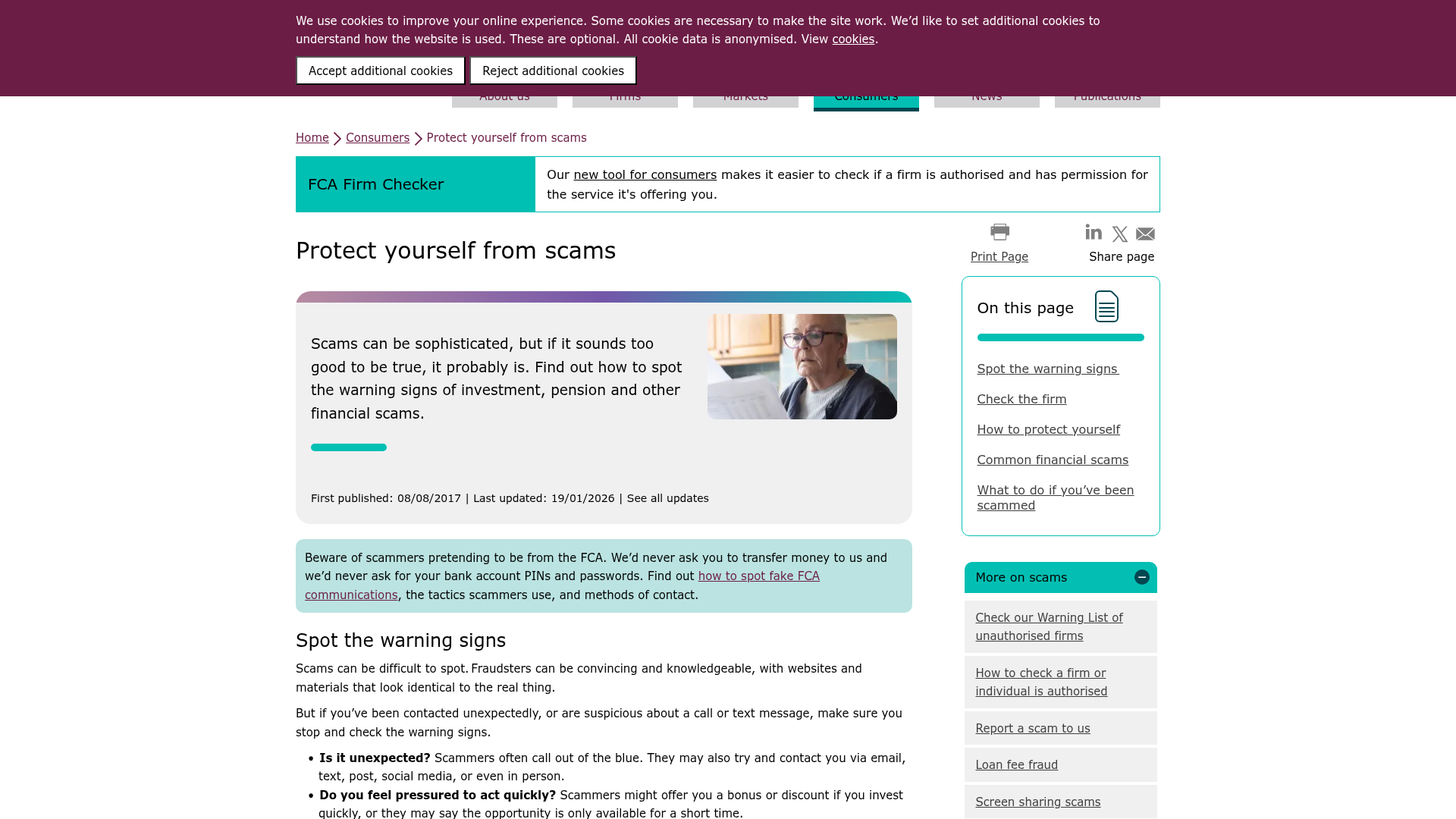
سجلات أخرى مستخدمة في هذا النوع من الفحوصات. كل منها يفتح صفحة الجهة التنظيمية الخاصة بها.
مصادر أساسية
يمكن التحقق من كل ادعاء أعلاه بالرجوع إلى صفحة الهيئة نفسها. تفتح هذه الروابط على موقع الجهة التنظيمية، وليس موقعنا.
- FCA — Financial Services Registerregister.fca.org.ukhttps://register.fca.org.uk/
- ASIC — Professional registersasic.gov.auhttps://asic.gov.au/online-services/search-asics-registers/
- CySEC — Regulated entities registercysec.gov.cyhttps://www.cysec.gov.cy/en-GB/entities/investment-firms/cypriot/
- FCA — Warning list of unauthorised firmsfca.org.ukhttps://www.fca.org.uk/consumers/warning-list-unauthorised-firms
- CFTC — Registration Deficient (RED) Listcftc.govhttps://www.cftc.gov/check
- Financial Services Compensation Scheme (FSCS)fscs.org.ukhttps://www.fscs.org.uk/what-we-cover/investments/
الأسئلة المتكررة
هل يمكن أن يكون الوسيط مرخصًا بشكل قانوني في بلد واحد وليس في بلد آخر؟
نعم، الرقابة التنظيمية تخضع للاختصاص القضائي. قد يحمل الوسيط ترخيصًا في قبرص (CySEC) لخدمة العملاء في الاتحاد الأوروبي، ولكنه يحتاج إلى ترخيص منفصل (مثل ASIC) لخدمة العملاء بشكل قانوني في أستراليا. تحقق دائمًا مما إذا كانت الشركة مرخصة لبلد إقامتك المحدد وللخدمات التي تنوي استخدامها.
ماذا أفعل إذا بدا موقع الهيئة التنظيمية معطلاً أو غير قابل للوصول؟
إذا كان الموقع الرسمي لهيئة تنظيمية غير متاح مؤقتًا، انتظر وحاول مرة أخرى لاحقًا. تجنب استخدام أي روابط 'تحقق' بديلة تقدمها الشركة، فقد تكون احتيالية. إذا استمرت المشكلة، حاول الاتصال بالهيئة التنظيمية مباشرة عبر معلومات الاتصال الرسمية والموثوقة التي حصلت عليها بشكل مستقل.
هل الترخيص الخارجي (الأوفشور) شرعي، أم يجب علي تجنب الشركات التي تحمله؟
يمكن أن تكون التراخيص الخارجية (مثل تلك الصادرة من سيشل أو فانواتو) شرعية للعمل في تلك المناطق المحددة، لكنها عمومًا توفر حماية أقل بكثير للمستثمرين ورقابة تنظيمية أضعف مقارنة بالتراخيص الصادرة عن المراكز المالية الكبرى مثل المملكة المتحدة، الاتحاد الأوروبي، أو أستراليا. سيكون لديك حق محدود جدًا في الرجوع القانوني في حالة وجود نزاع أو إخفاق للشركة.
كم يستغرق التحقق من ترخيص الوسيط في السجل الرسمي عادةً؟
تستغرق عملية التحقق من ترخيص الوسيط في السجل الرسمي عادة بضع دقائق فقط. تحتوي معظم مواقع الهيئات التنظيمية على وظائف بحث سهلة الاستخدام تسترجع المعلومات بسرعة بناءً على اسم الشركة أو رقم الترخيص. هذا الاستثمار القصير للوقت حاسم لسلامتك المالية.
ما الفرق بين الترخيص والتسجيل لشركة مالية؟
يمنح الترخيص الشركة إذنًا صريحًا من هيئة تنظيمية لمزاولة أنشطة مالية محددة. أما التسجيل، فقد يكون شرطًا مسبقًا للحصول على ترخيص أو متطلبًا لإدراجها من قبل سلطة ما. على سبيل المثال، في الولايات المتحدة، يجب أن يكون وسطاء الفوركس مسجلين لدى CFTC وأن يكونوا أعضاء في NFA لخدمة العملاء الأمريكيين. كلاهما مهم، لكن 'الترخيص' يعني عمومًا نطاقًا أوسع من الرقابة التنظيمية وحماية المستثمرين.
هل يجب أن أثق بوسيط يقدم عوائد 'مضمونة' أو تداول 'خالٍ من المخاطر'؟
بالتأكيد لا. أي شركة تعد بعوائد 'مضمونة' أو 'خالية من المخاطر'، أو أرباح عالية جدًا ومستمرة، هي على الأرجح عملية احتيال. جميع عمليات التداول المالي المشروعة تنطوي على مخاطر، والوسطاء المرخصون ملزمون قانونًا بالكشف عن هذه المخاطر بشكل بارز. هذه الوعود تمثل علامة حمراء كبيرة على وجود نشاط احتيالي.