
Key points
- Visa and Mastercard generally offer a 120-day window for transaction disputes, but the starting point for this clock varies significantly for investment payments.
- The 'effective service date,' not the transaction date, often dictates the true beginning of the dispute window, especially for non-delivery of promised investment services.
- Extended dispute windows of up to 540 days exist for specific, provable cases where the cardholder could not have known about an issue earlier, but these are difficult to claim.
- A chargeback is a multi-stage process, not an automatic refund. It requires strong evidence and persistence, and can take months to resolve.
- The regulatory status of the investment firm and thorough documentation are crucial for a successful dispute.
- Chargebacks are distinct from regulatory compensation schemes, which apply only to authorized firms.
The Fading Horizon of Recovery: Time is the First Enemy
Imagine you have committed funds to what appeared to be a promising investment platform, only to discover weeks or months later that the returns promised were illusory, or worse, the platform itself is a deceptive front. The immediate question for many individuals becomes: can I get my money back? Your first and most critical consideration, even before examining the details of the alleged fraud, is the clock. Payment networks like Visa and Mastercard operate under strict rules, including non-negotiable time limits for disputing transactions. These limits, often misunderstood, represent the primary barrier to recovering funds. Most consumers assume that if a payment is made by card, it can simply be reversed if something goes wrong. While card payments do offer a layer of protection that direct bank transfers often lack, this protection is not infinite. The ability to dispute a transaction, known as a chargeback, is governed by a complex set of reason codes and timelines set by the card networks. Understanding these specific timeframes, and how they apply to the unique circumstances of an investment payment, is not merely helpful; it is essential. Missing a deadline, even by a single day, can irrevocably close off the most viable path to recovery. The nuanced interpretation of when the 'clock starts ticking' for investment services is a frequent point of contention between cardholders and their issuing banks, making swift and informed action crucial.
Visa's 120-Day Clock: Standard Timelines and Exceptions
Under Visa's Core Rules and Visa Operating Regulations, the standard window for a cardholder to initiate a dispute for most reason codes is generally 120 calendar days. This period typically begins from the transaction processing date. For example, if you make a deposit to a broker like OANDA, which has been a leading broker for over 25 years and is regulated by authorities such as the FCA, CFTC/NFA, ASIC, IIROC, and MAS, and later discover an unauthorised transaction, the 120 days would typically run from the date that specific transaction cleared. However, for transactions where the goods or services were expected at a later date, or where the issue was not immediately apparent, this 120-day clock can be measured from the 'expected date of service' or the 'discovery date' of the issue. For investment payments, this distinction is critical. If funds were deposited for a trading service that never materialised, or if a promised withdrawal from a platform failed, the 120 days might start from the date of that non-delivery or discovery, rather than the initial deposit date. Common reason codes that might trigger this extended interpretation include 'Services Not Provided/Goods Not Received' (Visa Reason Code 13.1) or 'Misrepresentation' (Visa Reason Code 73). Successfully arguing for a later start date requires strong evidence that the service failure or misrepresentation could not have been reasonably identified at the time of the original transaction. Issuing banks often interpret these rules conservatively, placing the onus on the cardholder to prove the later 'discovery date' with clear, verifiable documentation. It is not enough to simply state you 'didn't know'.
Mastercard's 120-Day Rule: A Parallel, Yet Distinct Path
Mastercard’s Chargeback Guide outlines dispute windows that often parallel Visa’s, generally allowing 120 calendar days from the transaction processing date. This similarity provides a consistent framework for many common disputes, such as outright fraud or duplicate billing. However, like Visa, Mastercard also provides for nuanced interpretations, especially when the cardholder disputes the delivery or quality of a promised service, a common scenario in investment disputes. For situations involving non-receipt of promised services or services that were not as described, Mastercard's timeline might extend from the 'date the cardholder could reasonably have expected to receive the goods or services.' This clause is particularly relevant for investment funds where the 'service'—be it access to a trading platform, management of funds, or processing of withdrawals—is ongoing or has a future delivery date. For example, if you deposited funds with a broker like Exness, regulated by the FCA, CySEC, and FSCA, and later found your account was inaccessible, the clock might start from the date you first attempted and failed to access your funds or initiate a withdrawal. Mastercard reason codes pertinent to investment disputes include 'Non-Receipt of Goods or Services' (4855) and 'Fraudulent Transaction' (4837). While the underlying 120-day principle is shared, the practical application often hinges on the specific nature of the investment service and the moment its failure became unequivocally clear. Both networks provide a safety net, but require the cardholder to actively engage with their bank, presenting a clear and compelling narrative supported by evidence.
Standard Dispute Windows for Visa and Mastercard
| Aspect | Visa | Mastercard |
|---|---|---|
| Standard Timeframe | 120 calendar days | 120 calendar days |
| Start Date (Standard) | Transaction processing date | Transaction processing date |
| Start Date (Service Not Provided) | Expected date of service / Discovery date of issue | Date cardholder expected service / Discovery date of issue |
| Example Reason Codes | 13.1 (Services Not Provided), 73 (Misrepresentation) | 4855 (Non-Receipt of Goods), 4837 (Fraudulent Transaction) |
| Maximum Extended Window | Up to 540 days (specific cases) | Up to 540 days (specific cases) |
The 'Effective' Service Date: When the Clock Really Starts Ticking
For investment payments, the 'effective service date' is rarely the day your money leaves your bank account. Instead, it refers to the moment the promised investment service was genuinely expected to commence, or crucially, when its failure became undeniable. This distinction matters because many individuals mistakenly believe the dispute window begins the moment they click 'send' on a payment. For a legitimate broker like FOREX.com, regulated by CFTC/NFA, FCA, ASIC, CIRO, and CIMA, funds are typically processed, and trading access is provided relatively quickly, establishing a clear service date. However, consider a scenario where an individual deposits funds with a platform that promises unrealistic returns, presents a seemingly functional but ultimately fake trading interface, and then consistently blocks all attempts at withdrawal. In such a case, the 'effective service date'—or more accurately, the 'date of non-delivery' or 'date of discovery of fraud'—is not the initial deposit date. It is the point at which the promised service (e.g., successful trading, access to real funds, or processing of a withdrawal) definitively failed or was revealed as deceptive. This could be after the first failed withdrawal attempt, or when the platform abruptly becomes unresponsive, or when official checks confirm the firm is operating without proper authorisation. It requires careful documentation to convince an issuing bank that the initial transaction date was not the relevant starting point for the dispute window. Your claim must clearly delineate why the actual problem, or your awareness of it, could only have emerged at a later point. Without this clarity, banks will often revert to the initial transaction date, potentially leaving your claim out of time.
The nuanced interpretation of when the 'clock starts ticking' for investment services is a frequent point of contention, making swift and informed action essential.
Alan Reeve
Extended Windows: The Hidden Lifelines for Persistent Issues
While the 120-day rule is the general standard, both Visa and Mastercard include specific provisions for extending the dispute window in certain, well-defined circumstances. These 'extended windows' are not automatic and are typically reserved for cases where the cardholder genuinely could not have known about the issue within the initial 120 days. For instance, scenarios involving continuous non-delivery of a service, or the discovery of systemic fraud long after the initial transaction, may qualify.
Visa, for example, has reason codes that can allow disputes up to 540 calendar days from the original transaction date for certain merchant failures, such as 'Credit Not Processed' (Visa Reason Code 13.2) or 'Non-Receipt of Goods or Services' (13.1) under specific conditions where the delivery date was significantly in the future. Mastercard offers similar flexibility for certain types of 'Services Not Rendered' (4855) where the service was meant to be ongoing or delivered much later.
This is the part most guides skip: how to argue for an extended window. Successfully leveraging these extended periods requires compelling evidence that the issue was latent and undiscoverable within the standard timeframe. It is not simply about realizing you made a poor investment decision after a year; it is about proving the failure of the promised service or the discovery of misrepresentation occurred much later. In practice, your issuing bank may require multiple attempts and detailed explanations to accept a claim under these extended rules, necessitating persistence and a highly documented case.
The Chargeback Process: A Multi-Stage Battle
Initiating a chargeback is not a simple, single-step event; it is a multi-stage process that can be complex and protracted, requiring patience and a methodical approach. Once you, the cardholder, notify your issuing bank of a dispute, your bank reviews the claim and, if deemed valid, initiates the chargeback by sending it to the acquiring bank (the bank that processes payments for the merchant). The acquiring bank then forwards the chargeback to the merchant. The merchant then has a limited time, typically between 30 and 45 days depending on the card network and reason code, to respond and provide evidence that the transaction was legitimate and the service was rendered as described. This response is called 'representment.' If the merchant provides sufficient evidence, the chargeback may be reversed. If the issuer still believes the cardholder's claim is valid, the dispute may escalate to arbitration with the card network, a process that can take additional weeks or even months. Each stage has its own set of rules and deadlines, often adding significant time to the overall resolution process. It is a battle of evidence and adherence to strict procedural timelines. It is important to remember that a chargeback is not a guaranteed recovery. Its success hinges on the validity of your claim, the strength of your evidence, and the merchant's ability to refute it. If the merchant account is closed or has insufficient funds, recovery through this mechanism becomes significantly harder. This makes diligent pre-investment research a far more effective strategy than relying solely on post-transaction recovery efforts.
Typical Chargeback Process Steps and Durations
| Step | Description | Typical Duration |
|---|---|---|
| 1. Cardholder Initiates | Customer reports dispute to their issuing bank. | Day 0 |
| 2. Issuer Review & Chargeback | Bank reviews claim, issues provisional credit, sends chargeback. | 1-10 business days |
| 3. Acquirer Notification | Acquiring bank receives chargeback, notifies merchant. | 1-10 business days |
| 4. Merchant Representment | Merchant provides evidence to refute chargeback. | 30-45 calendar days |
| 5. Issuer Review Merchant Response | Issuing bank reviews merchant's evidence. | 1-10 business days |
| 6. Arbitration (if applicable) | If dispute persists, escalated to card network for final decision. | Weeks to months |
Brokerage Entities and Payment Processors: Who is Accountable?
The success of a chargeback claim for an investment payment can significantly depend on the legal entity behind the brokerage and the payment processor involved. If you deposit funds with a highly regulated firm such as Pepperstone, headquartered in Melbourne, Australia, and regulated by the FCA, ASIC, CySEC, DFSA, BaFin, CMA, and SCB, there is a clear, identifiable legal entity and a strong regulatory framework. Such a firm is likely to have legitimate banking relationships, and disputes would follow established protocols. However, many problematic investment platforms operate through offshore or loosely regulated entities, often obscuring their true location and legal structure. If funds were sent to an entity that appears on the FCA's Warning List of Unauthorised Firms or the CFTC's Registration Deficient (RED) List, the chargeback process faces a merchant who may have no legitimate banking ties or incentive to respond. These entities often use payment processors that are less scrupulous or harder to trace, adding layers of complexity to any recovery attempt. The merchant might simply disregard the chargeback, or the funds may have already been moved beyond reach. This distinction is crucial: a chargeback targets the merchant who received the funds. If that 'merchant' is an ephemeral, fraudulent entity with no real assets or legal presence, the payment networks themselves have limited recourse. This is why verifying the regulatory status of any investment firm before making a deposit is an indispensable step.
Documentation and Diligence: Building Your Case
The cornerstone of any successful chargeback claim is well-organised documentation. Your bank, as the issuer, acts on your behalf, but it requires concrete evidence to justify a reversal to the card network and to counter any representment from the merchant. Without this, your claim is significantly weakened. This is not merely about providing bank statements; it is about creating a detailed narrative supported by verifiable facts. Key documents you will need include: all transaction records, particularly bank or credit card statements clearly showing the payments made to the investment platform. Crucially, all correspondence with the investment platform—emails, chat logs, screenshots of online conversations, and records of phone calls—should be preserved. These communications often contain promises, account statements, and evidence of withdrawal requests that were denied or ignored. Screenshots of the platform's website, including their terms and conditions, 'About Us' pages, and any regulatory claims, can also serve as vital evidence. Any findings from regulatory checks, such as a firm appearing on the FCA's Warning List of Unauthorised Firms or a search of ASIC's Professional registers showing no registration for the entity, will bolster your case. A well-organised dossier of evidence is not merely helpful; it is often the deciding factor in whether your bank pursues the dispute effectively or dismisses it as unsubstantiated.
Beyond Chargebacks: Alternative Avenues and Limitations
Should a chargeback prove unsuccessful, either due to expiry of the dispute window, insufficient evidence, or the insolvency of the merchant, individuals are left with fewer, often less effective, avenues for recovery. These alternative paths are typically resource-intensive and offer no guarantee of fund recovery, primarily focusing on justice or preventing further harm to others rather than direct restitution for the individual.
Reporting the incident to relevant authorities is a critical step, even if direct recovery is unlikely. In the UK, this would involve Action Fraud, while in the US, the FTC's Report Fraud service or the FBI's Internet Crime Complaint Center (IC3) are appropriate channels. These bodies investigate financial crime and can take enforcement action, but they rarely facilitate the return of funds to individual victims. Similarly, international bodies like Interpol track financial crime, but their role is investigative, not compensatory.
Civil litigation against an offshore, possibly non-existent, entity is prohibitively expensive, complex, and often futile. Serving legal papers to a company with no verifiable address or assets in your jurisdiction presents insurmountable challenges. The most effective protection remains diligent pre-investment research and immediate action upon detecting irregularities. Always verify a firm's regulatory status through official registers such as the Financial Conduct Authority’s Financial Services Register, ASIC’s Professional registers, or CySEC’s Regulated entities register before committing any funds. This preventative step far outweighs the complexities, costs, and emotional toll of attempting recovery after the fact.
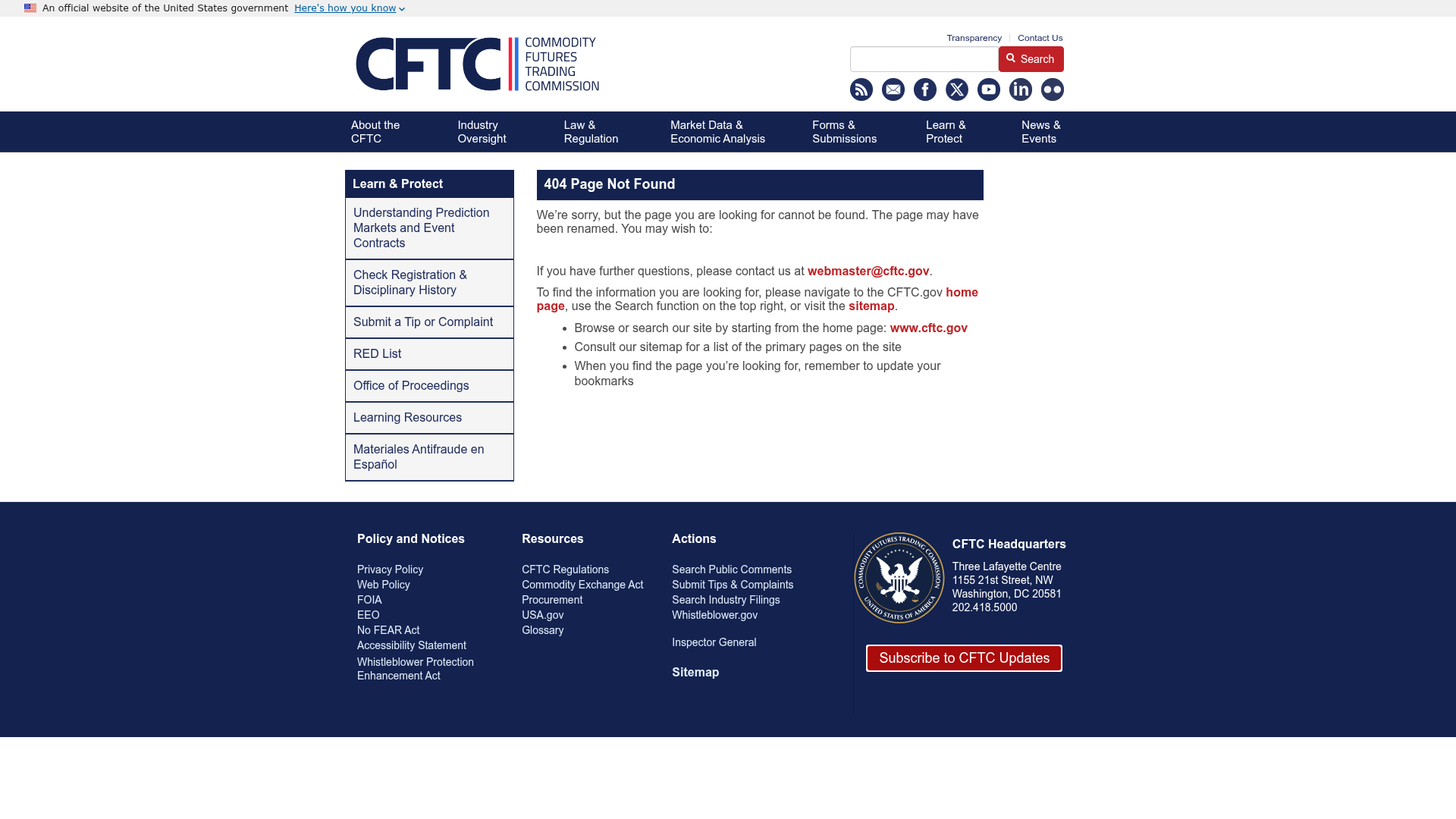
The page we check
This is the authority's own page, captured as we found it. Open it and run the same search yourself — nothing on this register replaces the source.
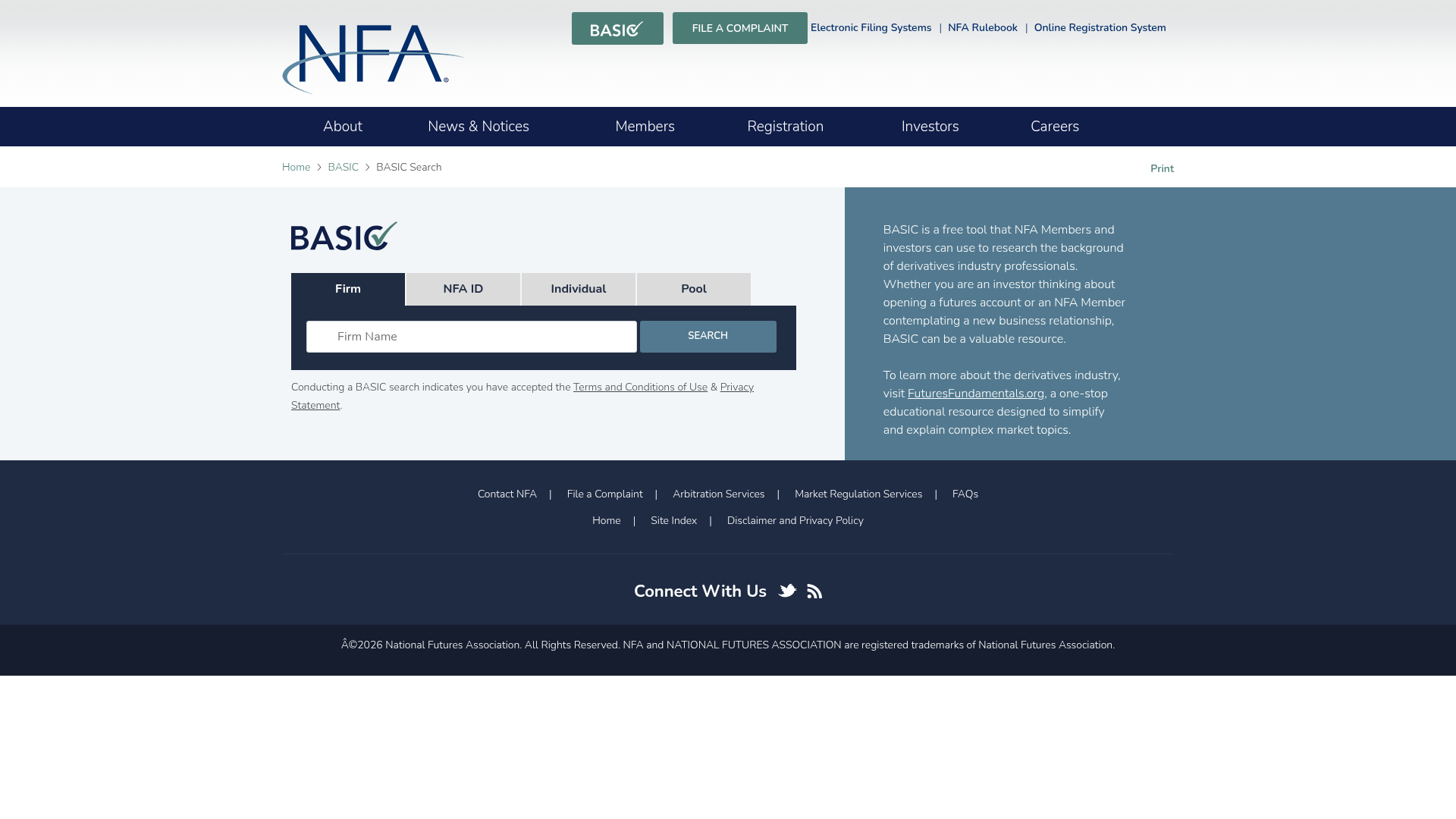
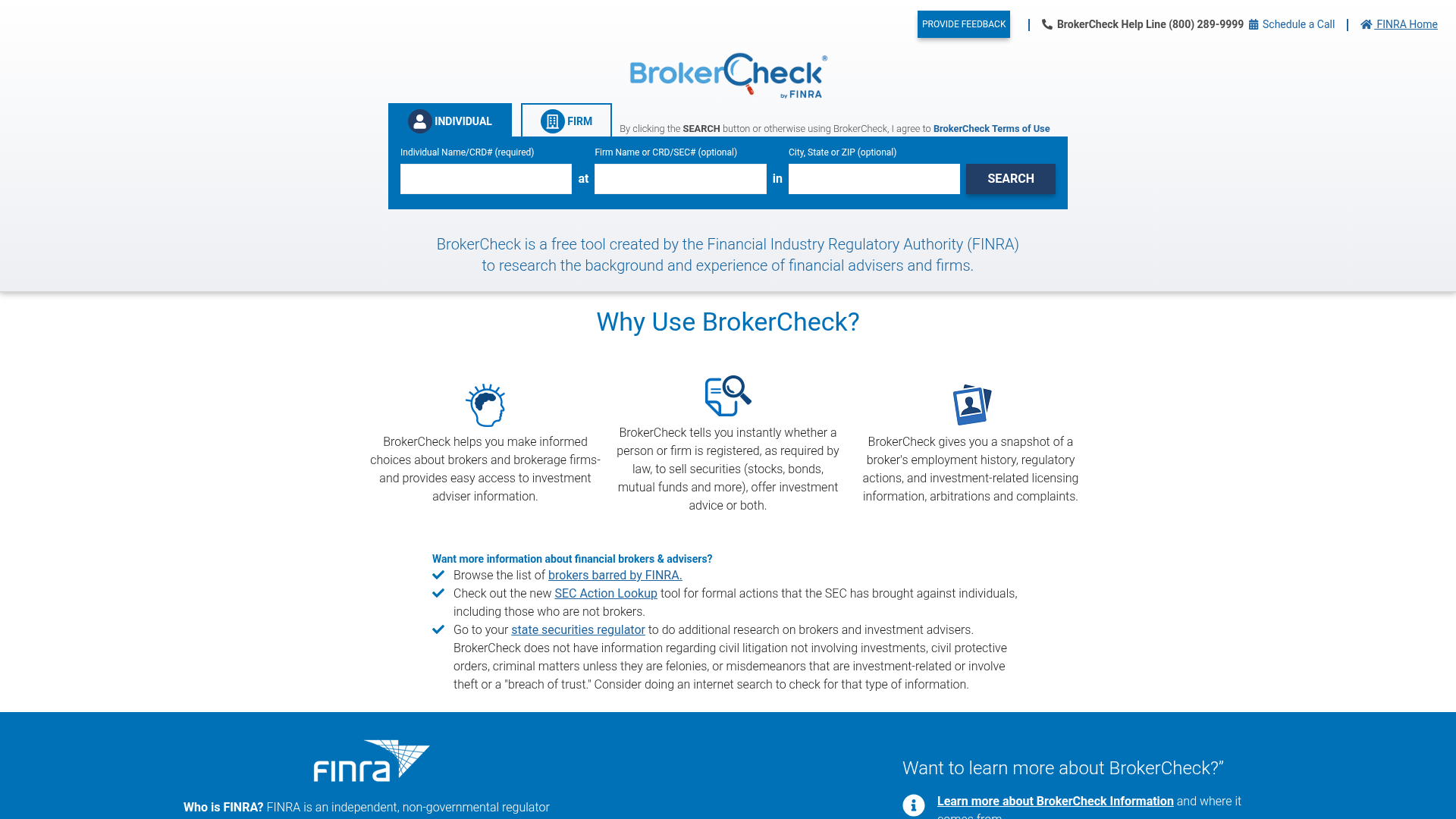
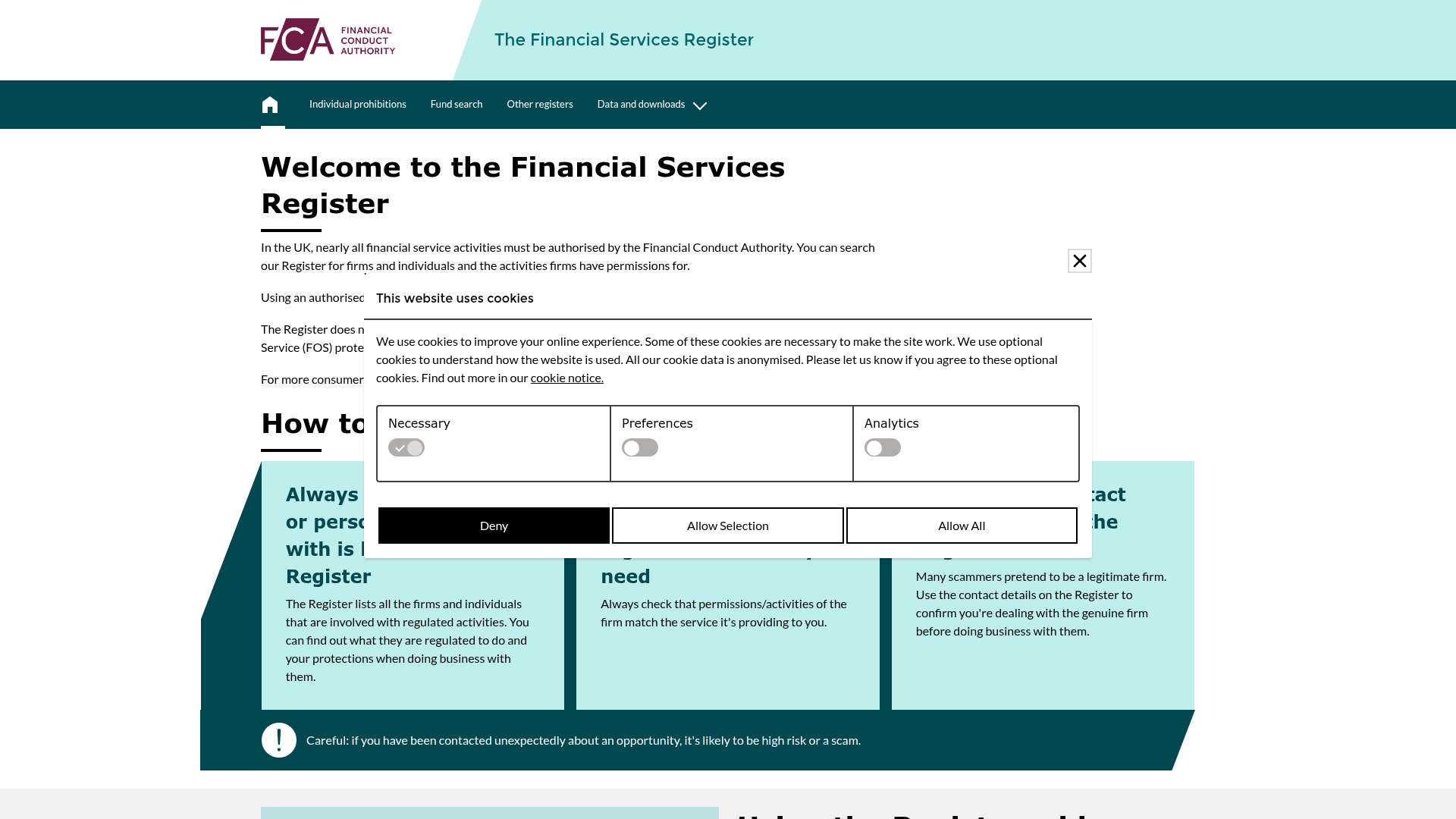
Other registers used in checks of this kind. Each opens the authority's own page.
Primary sources
Every claim above can be checked against the authority's own page. These open on the regulator's site, not ours.
- FCA ScamSmartfca.org.ukhttps://www.fca.org.uk/scamsmart
- Financial Services Compensation Scheme (FSCS)fscs.org.ukhttps://www.fscs.org.uk/what-we-cover/investments/
- FCA — Warning list of unauthorised firmsfca.org.ukhttps://www.fca.org.uk/consumers/warning-list-unauthorised-firms
- CFTC — Customer advisories on fraudcftc.govhttps://www.cftc.gov/LearnAndProtect/AdvisoriesAndArticles/index.htm
- ASIC — Professional registersasic.gov.auhttps://asic.gov.au/online-services/search-asics-registers/
Frequently asked
How long do I have to dispute an investment transaction with Visa?
Visa generally allows 120 calendar days to dispute a transaction. For investment payments, this period can start from the transaction date or, crucially, from the 'expected date of service' or 'discovery date' of the issue, if properly documented.
What is the standard chargeback window for Mastercard for investment payments?
Mastercard also typically provides 120 calendar days for disputes. Similar to Visa, for services not rendered or misrepresentation in investments, this period may start from when the cardholder reasonably expected the service or discovered the problem.
Can I get my money back if I traded on an unlicensed platform via chargeback?
Initiating a chargeback against an unlicensed platform is possible, but its success depends on the specific reason for the dispute and the merchant's response. If the platform is truly fraudulent and its merchant account is closed, recovery is significantly harder.
What kind of evidence do I need to support an investment chargeback claim?
You should gather all transaction records, detailed communications with the firm, screenshots of their website and terms, and any evidence of failed withdrawals or regulatory warnings. Thorough documentation is crucial.
Is a chargeback the same as receiving compensation from a regulatory body?
No, a chargeback is a reversal of a card transaction through the payment network rules. Compensation schemes (like the UK's FSCS) are provided by financial regulators to clients of *authorised* firms if the firm fails, and are entirely separate from the chargeback process.
What happens if my bank denies my chargeback claim for an investment?
If your bank denies the initial claim, you can try to provide additional evidence and appeal their decision. If all internal appeals fail, you may be able to escalate to an independent ombudsman service, but success is not guaranteed.
Are there any extended chargeback windows for investment fraud?
Yes, both Visa and Mastercard have provisions for extended dispute windows, sometimes up to 540 days from the original transaction date, for specific cases like ongoing non-delivery of service or discovery of latent fraud. These require exceptionally strong evidence and are not standard.