
Key points
- Always independently verify a broker's license directly on the Securities Commission of the Bahamas (SCB) official website, never through links provided by the firm.
- An SCB license confirms regulatory oversight within the Bahamas but may not extend to all international operations or guarantee investor compensation comparable to other major jurisdictions.
- Unsolicited contact from a firm claiming Bahamas regulation should prompt heightened scrutiny and a thorough, independent verification process.
- Beyond just a license, assess the firm's operational transparency, client fund segregation practices, and the available mechanisms for investor recourse.
- Investor protections and regulatory standards vary significantly across global jurisdictions; understanding these differences is vital for informed decision-making.
- If you encounter an unlicensed or deceptive firm, promptly report your suspicions to the SCB and relevant international fraud reporting bodies.
The Unexpected Invitation: How Brokers Introduce Themselves
Imagine receiving an unsolicited email, perhaps from a generic Gmail address, or a cold call from an unknown number. The voice on the other end, or the text in the email, promises impressive returns, often tied to forex trading, cryptocurrencies, or CFDs. The firm claims an address in Nassau, Bahamas, and states it is 'fully regulated.' This initial contact, often persuasive and insistent, marks the beginning of a critical decision point for any potential investor. Firms like these often employ sophisticated tactics, presenting themselves as legitimate and trustworthy, even when they are anything but. The ease of setting up an online presence means that a professional-looking website or a slick marketing campaign can mask a complete absence of genuine regulatory oversight. This is where many less diligent investors stumble, taking initial claims at face value without performing essential checks.
The claim of being 'fully regulated' is frequently used to instill a false sense of security. It sounds reassuring, but the substance behind it can range from a legitimate license in a reputable jurisdiction to a mere registration in a less stringent one, or, most alarmingly, no legitimate license at all. The very first step, before considering any financial commitment, must involve an independent verification of this claim. If the firm asserts regulation by the Securities Commission of the Bahamas (SCB), your immediate task is to consult the SCB's official public register. Skipping this foundational check is equivalent to stepping into a dark room without bothering to find the light switch.
Understanding the Securities Commission of the Bahamas (SCB)
The Securities Commission of the Bahamas (SCB) serves as the primary regulator for the financial services industry within the Commonwealth of The Bahamas, excluding banking and insurance, which fall under other authorities. Established under the Securities Industry Act, 2011, its mandate is broad: to oversee the investment funds industry, regulate the capital markets, protect investors, and promote the integrity and development of the Bahamian financial sector. For any entity offering investment services, advising on securities, or operating as a broker-dealer from within the Bahamas, holding a valid license issued by the SCB is a mandatory legal requirement.
The SCB's role involves licensing, supervision, and enforcement. It assesses applications for new licenses, monitors the ongoing compliance of licensed entities with its rules and regulations, and investigates breaches. When violations occur, the SCB has the power to impose sanctions, issue directives, and, in severe cases, revoke licenses. However, the scope of its enforcement power is confined to firms and individuals operating within its jurisdiction. This means that if an entity is merely claiming a Bahamas presence without being physically or legally established there, the SCB's ability to act against it diminishes significantly. Therefore, knowing that a firm is genuinely licensed by the SCB, and not just making a false declaration, is foundational to any potential engagement.
The SCB Registrant List: A Step-by-Step Guide
Accessing the official SCB registrant list is the single most critical step in verifying a Bahamas-based broker. To do this, you must navigate directly to the official website of the Securities Commission of the Bahamas. Avoid using search engine results that might lead to impostor sites, and under no circumstances should you click a link provided by the broker claiming to lead to their registration details. Always type the official URL into your browser manually to ensure you are on the legitimate site.
Once on the SCB's website, locate their 'Registrant' or 'Licensed Entities' section. This is typically found under a 'Supervision' or 'Industry' menu. Within this section, you will usually find a searchable database or a downloadable list of all regulated entities. Your goal is to find the exact legal name of the firm that contacted you. It is essential to look for the precise legal entity name, not a trading name or a brand name, as these can differ. Check for the firm's license number, the date of issue, and, critically, the specific activities it is authorized to undertake. An entity might be licensed to manage investment funds but not to act as a broker-dealer, which would make its offering of direct trading services unauthorized. Double-check that the listed address matches any address the firm has provided. In practice, the desk will ask twice for precise details to avoid errors here, as slight discrepancies can hide a lack of legitimate licensing. If the firm is not listed, or if the details do not match precisely, consider it an immediate and severe warning.
Essential Steps for Verifying a Broker on the SCB Register
| Verification Step | Action Required | Key Detail to Check |
|---|---|---|
| Access Official Website | Type 'scb.gov.bs' into browser | Ensure URL is legitimate; avoid external links |
| Locate Register | Search for 'Registrant List' or 'Licensed Entities' | Typically under 'Supervision' or 'Industry' sections |
| Search Firm's Name | Enter the exact legal entity name | Match legal name, not trading name, precisely |
| Verify License Details | Cross-reference license number, issue date, authorized activities | Confirm services offered are permitted by the license |
| Confirm Address | Check registered address against provided contact details | Discrepancies can indicate a problem |
The Boundaries of Regulatory Scope: What an SCB License Means
A valid license from the Securities Commission of the Bahamas provides a framework for local oversight. It signifies that the firm has met the SCB's initial requirements for capital adequacy, operational integrity, and management competence within the Bahamian jurisdiction. This includes requirements for anti-money laundering (AML) and counter-terrorist financing (CTF) procedures, as well as adherence to fair trading practices and client asset protection principles as defined by Bahamian law.
However, it is vital to understand the geographical and functional limits of this regulation. An SCB license primarily covers operations within or from the Bahamas. If a firm is offering services to clients in, say, Germany or Australia, its SCB license alone may not cover those activities in those respective countries. Many international brokers, such as Pepperstone or IC Markets, hold multiple licenses from different regulators (e.g., ASIC in Australia, CySEC in Cyprus, or FCA in the UK) to legally serve clients in various regions. A firm that heavily markets to clients in Europe or North America, yet holds only an SCB license, might be operating in regulatory grey areas in those other regions, potentially leaving clients without local legal recourse. The protection you receive as an investor is often tied to the specific entity you contract with and where that entity is regulated for your jurisdiction.
Your diligence is the most potent defense against financial fraud; trust your instincts and conduct thorough research into any investment opportunity before committing funds.
Mei Tanaka
Beyond the Registry: Additional Due Diligence
Finding a firm listed on the SCB register is a necessary first step, but it is rarely sufficient. A license confirms a basic level of compliance, but it does not tell the whole story of a firm's integrity or stability. Astute investors must look deeper. Investigate the firm's operational history. How long has it been in business? Look for consistent, verifiable information across various reputable sources. Search for news articles, independent reviews, and any public complaints. Be wary of a firm with a very short operational history that is aggressively marketing itself, or one with a history of frequent name changes, which can be a tactic to evade past negative associations.
Consider the firm's transparency regarding its trading conditions, fees, and withdrawal policies. Are these clearly stated and easily accessible? Opaque terms, especially concerning withdrawals, are a significant red flag. Try to find information about the firm's client fund segregation practices; reputable brokers hold client funds in separate bank accounts from their operational capital, typically with major banking institutions, to protect against insolvency. A firm that cannot clearly articulate how and where client funds are held raises serious questions. This is the part most guides skip, focusing only on the license, but the operational details are where vulnerabilities often emerge.
The Substantial Risks of Unlicensed Engagement
Engaging with an unlicensed broker, or one whose license does not cover the services they offer to you, carries substantial and often irreversible risks. The most immediate risk is the complete absence of regulatory oversight. This means there is no official body to appeal to if disputes arise, if funds go missing, or if trading conditions are manipulated. Without a regulator, there are no established rules of conduct, no requirements for capital adequacy, and no mandated client fund protection schemes.
Investor compensation schemes, which exist in many regulated jurisdictions (such as the Financial Services Compensation Scheme (FSCS) in the UK for firms regulated by the FCA), are typically absent when dealing with unlicensed entities. This means if the firm becomes insolvent or disappears, your funds are very likely irrecoverable. The firm might also engage in practices that are explicitly forbidden in regulated environments, such as excessive leverage, unfair pricing, or refusal to process withdrawals. Such firms might also simply vanish overnight, taking all client deposits with them. There is no legal framework to pursue redress, making your investment essentially a gamble against an untrustworthy counterparty.
Comparative Regulatory Protections Across Different Jurisdictions
| Regulatory Body | Typical Leverage Cap for Retail CFDs | Client Fund Segregation Required | Investor Compensation Scheme |
|---|---|---|---|
| SCB (Bahamas) | Determined by firm's internal policy, often high | Yes, generally required | Limited or no specific scheme |
| FCA (UK) | 1:30 (for major forex pairs) | Yes, mandatory | Yes, up to £85,000 via FSCS |
| ASIC (Australia) | 1:30 (for major forex pairs) | Yes, mandatory | No direct compensation scheme, but strong client money rules |
| CySEC (Cyprus) | 1:30 (for major forex pairs) | Yes, mandatory | Yes, up to €20,000 via ICF |
| CFTC/NFA (USA) | 1:50 (for major forex pairs) | Yes, mandatory | No specific scheme, but robust bankruptcy rules |
| DFSA (Dubai) | 1:30-1:50 (depending on asset) | Yes, mandatory | No specific compensation scheme |
The Lure of Jurisdiction Shopping
Some firms deliberately choose jurisdictions with less stringent regulatory requirements, a practice often termed 'jurisdiction shopping' or 'regulatory arbitrage.' This is not always indicative of malfeasance; some legitimate firms might seek out new markets with developing regulatory frameworks. However, it can also be a calculated move to avoid the stronger protections and higher compliance costs associated with top-tier regulators. For instance, while firms like OANDA and FOREX.com operate under strict oversight from bodies like the CFTC/NFA in the USA and the FCA in the UK, other firms might choose to primarily establish themselves in regions where capital requirements are lower, reporting obligations are less burdensome, and the scope for intervention by the regulator is narrower.
This creates a situation where investors need to be exceptionally discerning. A broker might claim to be 'regulated,' but the quality and strength of that regulation vary immensely. A license from a well-established, highly capitalized regulator typically offers a significantly higher degree of investor protection than one from a less developed or less resourced authority. When a firm claims a Bahamian license, evaluate it not in isolation, but in the context of global regulatory standards. If a firm is targeting clients globally but holds only a license from a jurisdiction known for more permissive regulations, it represents a less secure option compared to a firm with licenses in multiple, highly-regarded jurisdictions.
Recognizing the Red Flags of Unlicensed Operations
Beyond simply checking the register, several warning signs often accompany interactions with unlicensed or deceptive firms. High-pressure sales tactics are a classic indicator: demands for immediate deposits, warnings of 'limited time offers,' or aggressive follow-up calls should trigger immediate suspicion. Legitimate, regulated firms do not need to coerce clients; they rely on their reputation and services. Guarantees of high, fixed returns, especially in volatile markets like forex or cryptocurrencies, are another clear red flag. All legitimate trading involves risk, and no honest broker can guarantee profits. If a firm promises returns that sound too good to be true, they almost certainly are.
Opaque or confusing terms and conditions, particularly regarding fees, commissions, and withdrawal processes, also warrant caution. A reputable broker will have clear, easily understandable documentation. Unsolicited contact, whether by phone, email, or social media, should always be met with skepticism. Most reputable brokers do not engage in cold calling. Finally, be wary of firms that insist on payment methods that are difficult to trace, such as cryptocurrency transfers to individual wallets or wire transfers to personal bank accounts. Regulated brokers typically use secure, company-owned bank accounts for deposits.
Recourse and Reporting: What to Do When Things Go Wrong
If you suspect you have engaged with an unlicensed broker, or if you are experiencing issues with a firm claiming SCB regulation, acting quickly is essential. First, document everything: save all emails, chat logs, call recordings (if possible), transaction records, and screenshots of the firm's website. This evidence will be crucial for any reporting or investigative efforts. Your immediate step should be to report the firm to the Securities Commission of the Bahamas if they claim to be regulated by them. The SCB has a complaints and enforcement division that investigates allegations of misconduct by its licensees or unauthorized operations claiming to be within its remit.
Beyond the SCB, consider reporting to international fraud prevention bodies. The IOSCO Investor Alerts Portal provides a consolidated list of investor warnings from various regulators globally, and you can often submit information there. In the United States, reports can be made to the FTC or the FBI's Internet Crime Complaint Center (IC3). In the UK, Action Fraud serves a similar purpose. While recovering lost funds from an unlicensed entity is often challenging, reporting helps authorities gather intelligence, issue warnings, and potentially prevent others from falling victim. Do not fall for 'recovery scams' where a new party promises to retrieve your lost funds for an upfront fee; these are often a second layer of fraud targeting victims.
Building a Personal Safeguard Protocol
The financial services sector, while offering opportunities, also presents considerable risks, particularly for those who do not exercise adequate caution. Establishing a personal safeguard protocol is essential for protecting your capital. This protocol should begin with the unwavering commitment to verifying any financial firm's regulatory status, irrespective of their claims or the allure of their offers. Always prioritize firms that are demonstrably regulated in well-established jurisdictions with strong investor protection frameworks. If a firm is registered in the Bahamas, confirm that registration with the SCB and evaluate the level of protection that license affords.
Beyond regulatory checks, diversify your investments across multiple regulated entities and asset classes to mitigate single-point failure risks. Regularly review statements and transaction histories for any unauthorized activity. Be skeptical of high-yield promises and conduct thorough research into any investment opportunity. Your diligence is the most potent defense against financial fraud. Trust your instincts; if something feels wrong, step back and investigate further. Protecting your financial well-being in a complex global market requires persistent vigilance and a proactive approach to due diligence. No single regulator, including the SCB, can protect you if you knowingly engage with an entity operating outside legitimate boundaries.
The page we check
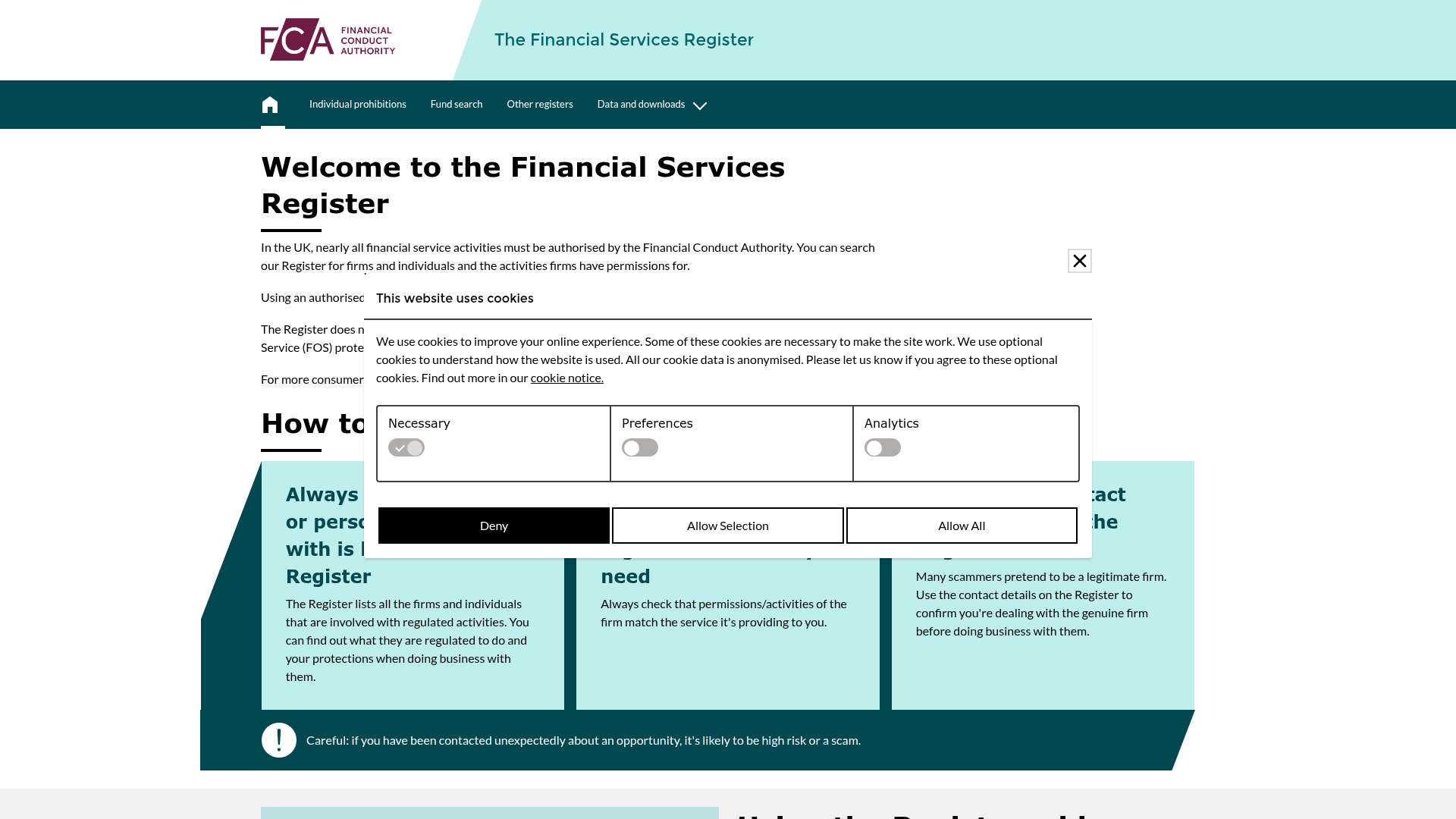
This is the authority's own page, captured as we found it. Open it and run the same search yourself — nothing on this register replaces the source.
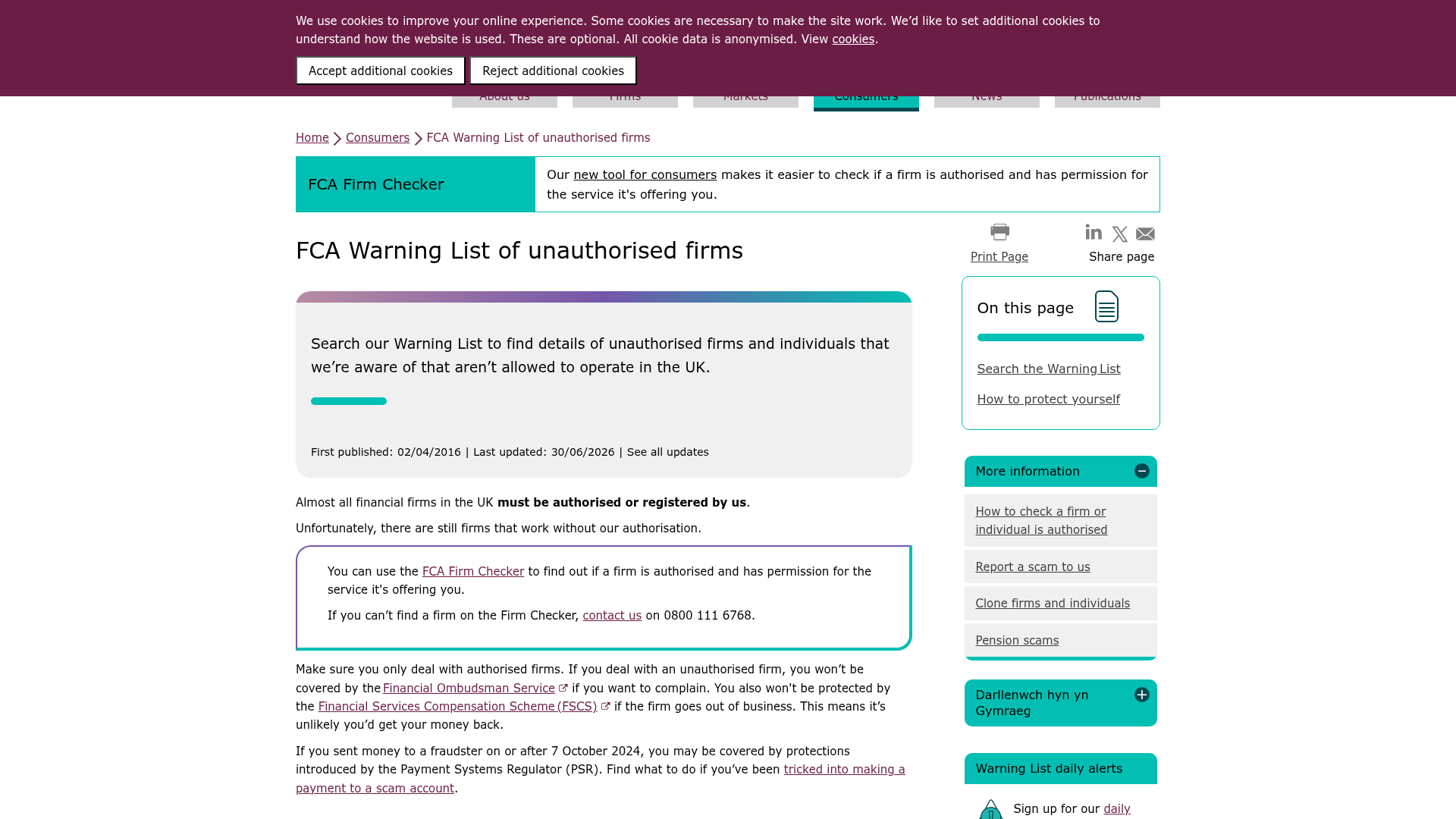
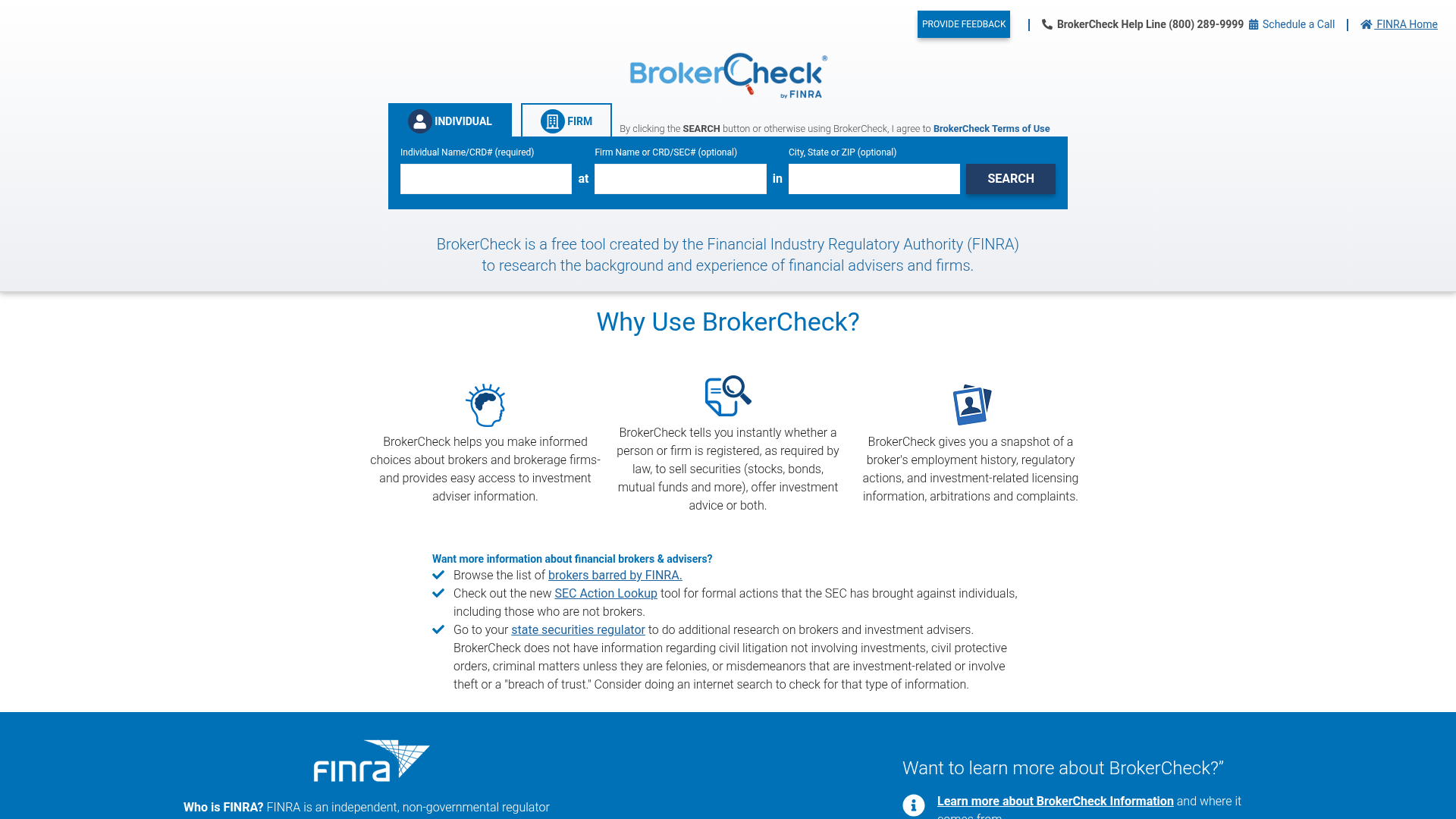
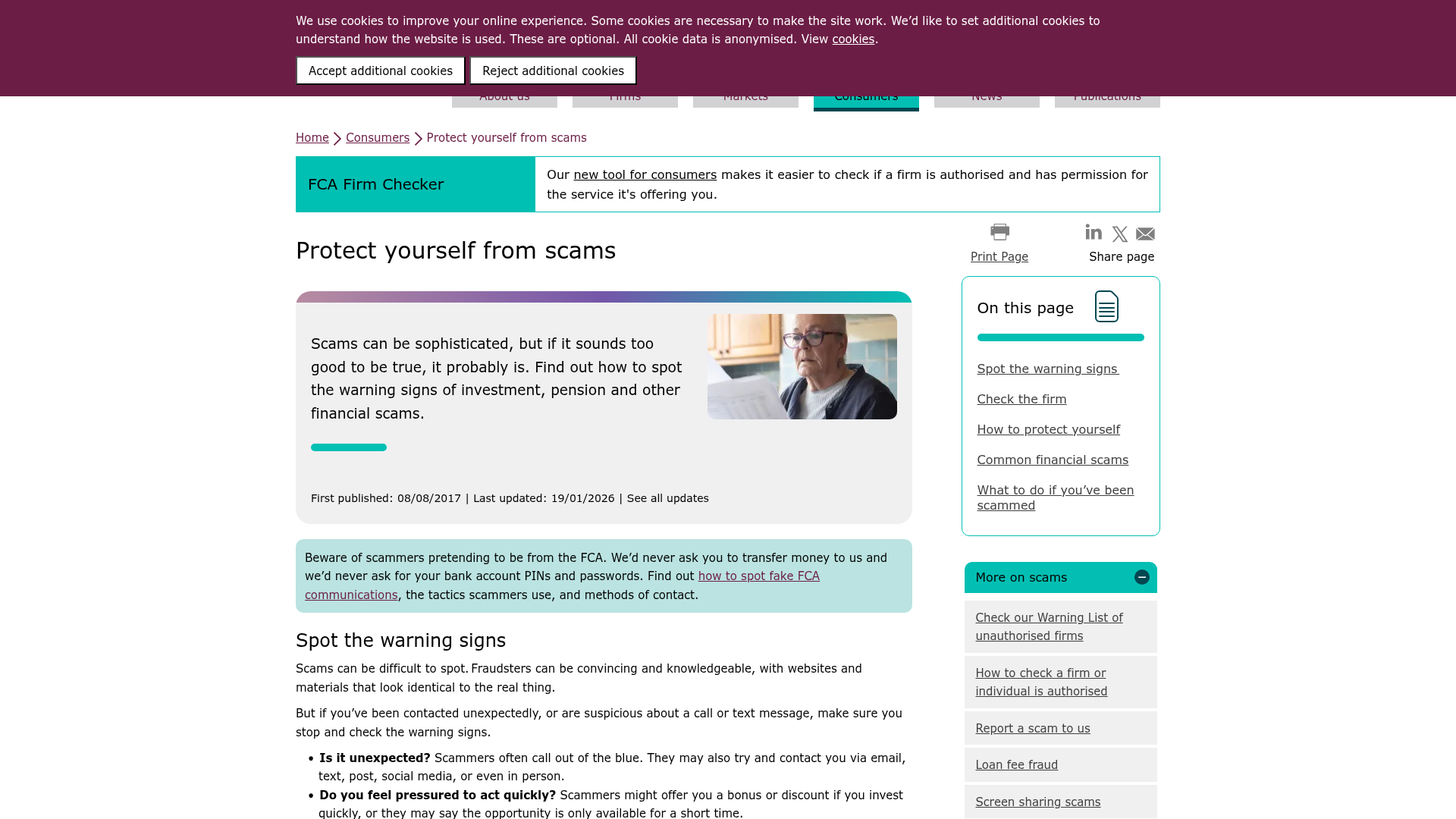
Other registers used in checks of this kind. Each opens the authority's own page.
Primary sources
Every claim above can be checked against the authority's own page. These open on the regulator's site, not ours.
- IOSCO — Investor alerts portaliosco.orghttps://www.iosco.org/investor_protection/?subsection=investor_alerts_portal
- FCA ScamSmartfca.org.ukhttps://www.fca.org.uk/scamsmart
- CFTC — Customer advisories on fraudcftc.govhttps://www.cftc.gov/LearnAndProtect/AdvisoriesAndArticles/index.htm
- FINRA BrokerCheckbrokercheck.finra.orghttps://brokercheck.finra.org/
- ASIC — Professional registersasic.gov.auhttps://asic.gov.au/online-services/search-asics-registers/
Frequently asked
How can I be sure the SCB website I'm checking is legitimate?
Always type the official URL, 'scb.gov.bs', directly into your browser's address bar. Do not click on links provided by third parties or through search engine ads, as these can lead to sophisticated fake websites designed to impersonate official regulators.
What if a broker claims to be regulated by the SCB but isn't on the list?
If a broker claiming SCB regulation is not found on their official registrant list, or if the details do not match precisely, consider this a major warning sign. It suggests the firm is operating without proper authorization and carries significant risk. Do not proceed with any investment.
Does an SCB license protect me if I'm based outside the Bahamas?
An SCB license primarily ensures that the firm meets Bahamian regulatory standards for its operations within or from the Bahamas. If you are based in another country, the specific protections available to you will depend on whether the firm also holds a license in your local jurisdiction and if your contract is with that locally regulated entity. Always verify local licensing.
What are common 'red flags' of a potentially fraudulent broker?
Common red flags include unsolicited contact, guarantees of high returns, high-pressure sales tactics, requests for immediate deposits, opaque terms and conditions, and insistence on unconventional payment methods like cryptocurrency transfers to personal wallets. Always approach such situations with extreme caution.
If I've invested with an unlicensed broker and lost money, what should I do?
Document all communications and transactions. Report the firm to the Securities Commission of the Bahamas if they claimed Bahamian regulation. Also, consider reporting to international fraud bodies like the FBI's IC3 or your national financial crime unit. Be wary of 'recovery scams' that promise to retrieve funds for an upfront fee.
Are all brokers regulated in offshore jurisdictions untrustworthy?
Not necessarily. Some legitimate firms choose to incorporate in offshore jurisdictions for various business reasons. However, the level of investor protection and regulatory oversight can vary significantly compared to major financial hubs. It is crucial to conduct enhanced due diligence and understand the specific regulatory framework and recourse mechanisms available in that jurisdiction.