
Key points
- A Marshall Islands company registration confers legal entity status, not a financial services license or regulatory oversight.
- Brokers registered solely in the Marshall Islands often operate outside effective financial regulation, offering no investor compensation schemes.
- Verifying a broker requires checking official regulator registers like those of the FCA, ASIC, or CySEC for a valid license number, not just a company registration.
- Unregulated brokers present heightened risks including non-segregated client funds, arbitrary trading conditions, and significant difficulty in recovering losses.
- Due diligence extends beyond a website claim; cross-referencing with regulator warning lists and understanding operational models protects your capital.
The Appearance of a Business: Marshall Islands Registrations
A common sight for individuals researching online brokerage firms is a mention of registration within the Republic of the Marshall Islands. On its face, the presence of an official-sounding jurisdiction might suggest a degree of legitimacy. A quick search on a company's 'About Us' page often reveals a small print declaration: 'Registered in the Republic of the Marshall Islands.' This claim, while factually correct for many entities, requires careful examination to understand its true implication for investor protection. Unlike jurisdictions with established financial oversight bodies, a Marshall Islands company registration is primarily an administrative act. It grants a legal identity, allowing the entity to operate as a company, but it does not, by itself, grant authority to conduct regulated financial activities like offering forex or CFD trading services to retail clients in major economies. The ease and speed of incorporating a business in the Marshall Islands, often completed within a few days and with minimal capital requirements, make it an attractive option for entities seeking a legal domicile without the associated obligations of stringent financial regulation. This distinction between a basic company registration and a full financial services license is frequently blurred, intentionally or otherwise, by firms targeting retail investors globally. Potential clients, seeking reassurance, might mistake this simple registration for a sign of a regulated, trustworthy operation.
What a Marshall Islands Registration Entails
Incorporating a business in the Marshall Islands is a straightforward process, managed by the Marshall Islands Registry. This registry focuses on basic corporate governance, such as company names, registered agents, and articles of incorporation. The requirements are minimal, designed to attract international business for maritime and corporate purposes. There is no requirement for a physical office or substantial operational presence within the Marshall Islands itself for most corporate registrations. This contrasts sharply with the requirements of financial regulators in jurisdictions like the UK, Australia, or Cyprus, where firms must demonstrate significant capital, maintain local management, adhere to strict client money rules, and submit to regular audits.
For example, a broker like Pepperstone, headquartered in Melbourne, Australia, holds licenses from the FCA in the UK, ASIC in Australia, CySEC in Cyprus, and several other authorities. Each of these licenses requires specific capital reserves, client fund segregation, dispute resolution mechanisms, and regular reporting. In contrast, an entity registered only in the Marshall Islands is not subject to any comparable financial supervision by the Marshall Islands authorities. Its registration simply states that a legal entity exists there. It does not dictate how client funds are held, how trades are executed, or what recourse a client has if disputes arise. The absence of a dedicated financial services regulator in the Marshall Islands means that any entity solely registered there operates without the standard investor protections that a regulated broker must provide.
Company Registration vs. Financial Service Licensing: A Critical Gap
The conceptual gap between forming a company and acquiring a license to conduct financial services is significant, and it is a point where many unsuspecting investors encounter trouble. A company registration simply brings a legal person into existence. It's akin to registering a name for a new shop. A financial services license, however, is permission granted by a regulatory authority to perform specific financial activities, such as taking deposits, executing trades, or providing investment advice. This license comes with a heavy burden of compliance, designed to protect the public.
Consider the operational differences. A regulated broker like OANDA, with its headquarters in New York, USA, and licenses from the FCA, CFTC/NFA, ASIC, IIROC, and MAS, must adhere to strict rules on client money segregation, ensuring client funds are kept separate from the company's operating capital. If OANDA were to face insolvency, client funds would be protected, often by a compensation scheme. For instance, in the UK, the Financial Services Compensation Scheme (FSCS) protects eligible clients up to £85,000. An entity registered only in the Marshall Islands offers no such guarantees. Client funds are typically commingled, and there is no equivalent compensation scheme to recover losses if the firm collapses or disappears with client money. This is the part most guides skip, often focusing only on listing regulatory bodies without explaining the practical ramifications of their absence.
This fundamental difference means that while a Marshall Islands entity might legally exist, its permission to offer financial products to you depends entirely on the laws of your jurisdiction, or the jurisdiction where its operational license is issued, not on the Marshall Islands itself.
Key Differences: Company Registration vs. Financial Services Licensing
| Feature | Company Registration (Marshall Islands) | Financial Service Licensing (e.g., FCA, ASIC) |
|---|---|---|
| Purpose | Legal entity creation | Permission to conduct financial activities |
| Oversight Body | Corporate registry (e.g., RMI Registry) | Dedicated financial regulator |
| Requirements | Minimal, administrative | Capital, local presence, compliance, audits |
| Client Fund Protection | None | Segregated accounts, compensation schemes |
| Dispute Resolution | Limited to corporate law | Regulator-mandated processes |
| Operational Transparency | Low | High, regular reporting to regulator |
The Warning Embedded in Sole Marshall Islands Registrations
When a broker prominently displays only a Marshall Islands registration and lacks verifiable licenses from recognized financial authorities, this should be considered a significant warning sign. Such firms operate in a regulatory vacuum. They are not beholden to rules designed to ensure fair pricing, transparent execution, or the responsible handling of client assets. Without oversight, there is no independent body to investigate complaints, enforce good practices, or compel restitution. The absence of these protections leaves investors vulnerable to a range of unfair practices.
For example, regulated brokers are typically required to publish their execution policies and offer transparent pricing. XM, for instance, a broker with headquarters in Cyprus, holds licenses from CySEC, ASIC, IFSC, and DFSA. These regulators mandate specific disclosures and operational standards. An unregulated Marshall Islands entity, however, can theoretically manipulate prices, widen spreads without notice, or deny withdrawal requests with little to no legal repercussion that a retail investor can practically pursue. The difficulty and cost of pursuing legal action against a company located solely in a remote offshore jurisdiction are prohibitive for most individual investors, effectively leaving them without recourse.
A Marshall Islands company registration establishes a legal entity, but it offers no financial oversight, no client fund protection, and no investor compensation scheme.
Alan Reeve
Scrutinizing Regulatory Claims and Jurisdictional Ambiguity
A broker's website might feature a long list of jurisdictions, some legitimate, some less so. It is essential to differentiate between jurisdictions where a broker holds a full financial services license to operate and those where it merely has corporate registration. A common tactic is to display a genuine license in one jurisdiction, typically for a smaller subsidiary, while the primary entity serving most international clients is registered offshore without equivalent oversight. For instance, FOREX.com, a US-headquartered broker, is regulated by the CFTC/NFA in the USA, the FCA in the UK, ASIC in Australia, CIRO in Canada, and CIMA in the Cayman Islands. These regulators all provide significant oversight and maintain public registers.
To verify a claim, always visit the official website of the regulator cited, not just rely on links provided by the broker. Search for the broker's specific entity name and license number on the regulator's database. For example, to check the FCA, use their Financial Services Register. For ASIC, use their Professional registers. For CySEC, consult their Regulated entities register. If a broker claims an Australian Financial Services (AFS) license from ASIC, you should find it clearly listed on ASIC's website with the corresponding entity name and license number. If the broker serves clients from an entity only registered in the Marshall Islands, it will not appear on these registers as a licensed financial services provider, even if a sister company is licensed elsewhere. This distinction is vital for understanding your protections.
The Operational Risks of Trading with Unregulated Entities
Beyond the lack of official recourse, trading with an entity that holds only a Marshall Islands registration introduces substantial operational risks. These firms are not subject to the same requirements for internal controls, risk management, or technological infrastructure that regulated brokers must maintain. This can manifest in several ways that directly affect an investor's trading experience and capital.
Firstly, execution quality can be questionable. Regulated brokers often provide clear information about their order execution model – whether they are a market maker, STP (Straight Through Processing), or ECN (Electronic Communication Network). They are audited on these claims. An unregulated firm might operate as a market maker with direct conflicts of interest, potentially trading against clients and manipulating prices. In practice, the desk will ask twice to confirm a large trade if they are a market maker to gauge your conviction, a sign of potential conflict. Secondly, funding and withdrawals become problematic. While depositing funds is usually simple, withdrawals can be arbitrarily delayed, met with unexpected fees, or outright denied. There is no regulatory body to intervene on your behalf.
Consider the example of AvaTrade, founded in Dublin, Ireland, and regulated by the Central Bank of Ireland, ASIC, FSCA, FSA (Japan), and ADGM. Each of these regulators enforces standards for trade execution and withdrawal processing. An unregulated Marshall Islands broker lacks such external pressure, leaving clients reliant solely on the broker's discretion. The risk of sudden account closure or funds vanishing without explanation is materially higher, as there is no independent authority to oversee these critical operational aspects.
The True Cost: Financial Exposure and Limited Recourse
The financial cost of engaging with an unregulated broker can be substantial, extending far beyond trading losses. When funds are deposited with an entity solely registered in the Marshall Islands, they are effectively outside the protective umbrella of established financial laws. If the broker becomes insolvent, or simply ceases operations, recovering deposited capital becomes exceedingly difficult, if not impossible. There is no equivalent of the Financial Services Compensation Scheme (FSCS) to protect investments. Unlike firms regulated by, for example, CySEC (as is the case for Exness and Plus500 for their EU operations), where client funds are typically insured up to €20,000 under the Investor Compensation Fund, no such safety net exists for clients of a Marshall Islands-only entity.
The absence of transparent accounting and oversight means that even proving the existence of your funds, let alone their loss, can be a major hurdle. The legal costs associated with pursuing a remote offshore entity through international courts are prohibitive for most retail investors. This means that any capital deposited is entirely at the discretion of the broker. The difference in investor protection is stark, making the choice of a regulated broker a decision that directly affects the security of one's capital.
Investor Protection Comparison: Regulated vs. Unregulated Brokers
| Aspect of Protection | Regulated Broker (e.g., FCA, ASIC) | Unregulated Broker (Marshall Islands only) |
|---|---|---|
| Client Fund Segregation | Mandatory and audited | Often commingled with company funds |
| Investor Compensation Scheme | Yes, up to a defined limit (e.g., £85k FCA, €20k CySEC) | None |
| Dispute Resolution Mechanism | Independent ombudsman or regulator service | Internal, often biased, or non-existent |
| Capital Requirements | Strict, ongoing minimums | Minimal or none |
| Risk of Fund Loss (Non-Trading) | Low, due to safeguards | High, due to lack of safeguards and oversight |
Steps for Verifying a Broker's Legitimacy
Protecting your capital requires proactive due diligence. Do not rely solely on a broker's self-declarations. Follow these concrete steps to verify legitimacy:
- Identify the operating entity: Look for the specific company name and registration number stated by the broker as the entity serving your region. This may differ from a group's main brand name.
- Locate the claimed regulator(s): Note down the names of all financial regulators the broker claims to be licensed by, alongside any license numbers.
- Visit official regulator websites: Navigate directly to the official website of each claimed regulator. Examples include the Financial Conduct Authority (FCA) in the UK, the Australian Securities and Investments Commission (ASIC), or the Cyprus Securities and Exchange Commission (CySEC).
- Search the regulator's register: Use the search function on the regulator's website to find the broker's specific operating entity by name or license number. Confirm that the license is active, covers the specific financial activities offered (e.g., forex or CFD trading), and applies to the entity serving your geographic region.
- Check warning lists: Consult regulator warning lists, such as the FCA's Warning list of unauthorised firms or the CFTC's Registration Deficient (RED) List. These lists explicitly name firms operating without proper authorization or engaging in suspicious activities.
- Cross-reference with international alerts: Use resources like the IOSCO Investor Alerts Portal, which aggregates warnings from multiple global regulators.
- Review physical presence and contact details: Legitimate regulated brokers typically have verifiable physical addresses and professional contact channels. Lack of clear contact information or reliance solely on generic email addresses is a concern.
Only proceed with a broker once you have independently verified their regulatory status with the relevant financial authority for the specific entity that will hold your funds.
International Cooperation and the Challenge of Offshore Entities
Financial regulation is a complex, jurisdiction-specific matter. However, international bodies like the International Organization of Securities Commissions (IOSCO) work towards harmonizing standards and facilitating information exchange among regulators. The IOSCO Investor Alerts Portal is a direct outcome of these efforts, allowing investors to check for warnings issued by various global authorities against unlicensed firms or scams. Despite these efforts, the existence of jurisdictions like the Marshall Islands, which offer easy corporate registration without financial oversight, continues to pose a challenge.
Regulators frequently issue warnings about firms operating from such locations, advising consumers that their funds are not protected. While the FBI, FTC, and Interpol investigate financial crime, recovering funds lost to offshore, unregulated entities remains extremely difficult due to the lack of clear jurisdiction and enforcement mechanisms. The onus largely falls on the individual investor to exercise caution and thoroughly vet any financial service provider before committing capital.
Securing Your Investments Through Informed Choice
The prevalence of Marshall Islands registrations among online brokers highlights a critical aspect of financial safety: the responsibility of the investor to conduct thorough due diligence. It is not sufficient to see a company name and a registration number; the nature of that registration and the authority behind it determines your level of protection. Prioritize brokers that are transparent about their regulatory status and hold verifiable licenses from well-known, respected financial authorities for the services they provide to your region. Do not be swayed by promises of unusually high returns or aggressive sales tactics, which are common hallmarks of firms operating without proper oversight.
Begin with small amounts if you are new to a platform, or better yet, utilize a demo account to test functionality without risking real money. Ensure you understand the broker's operational model, including how they handle withdrawals and client support. By understanding the distinction between a simple company registration and a full financial services license, and by actively verifying a broker's credentials, you can significantly reduce your exposure to unregulated risks and make more secure investment decisions.
The page we check
This is the authority's own page, captured as we found it. Open it and run the same search yourself — nothing on this register replaces the source.
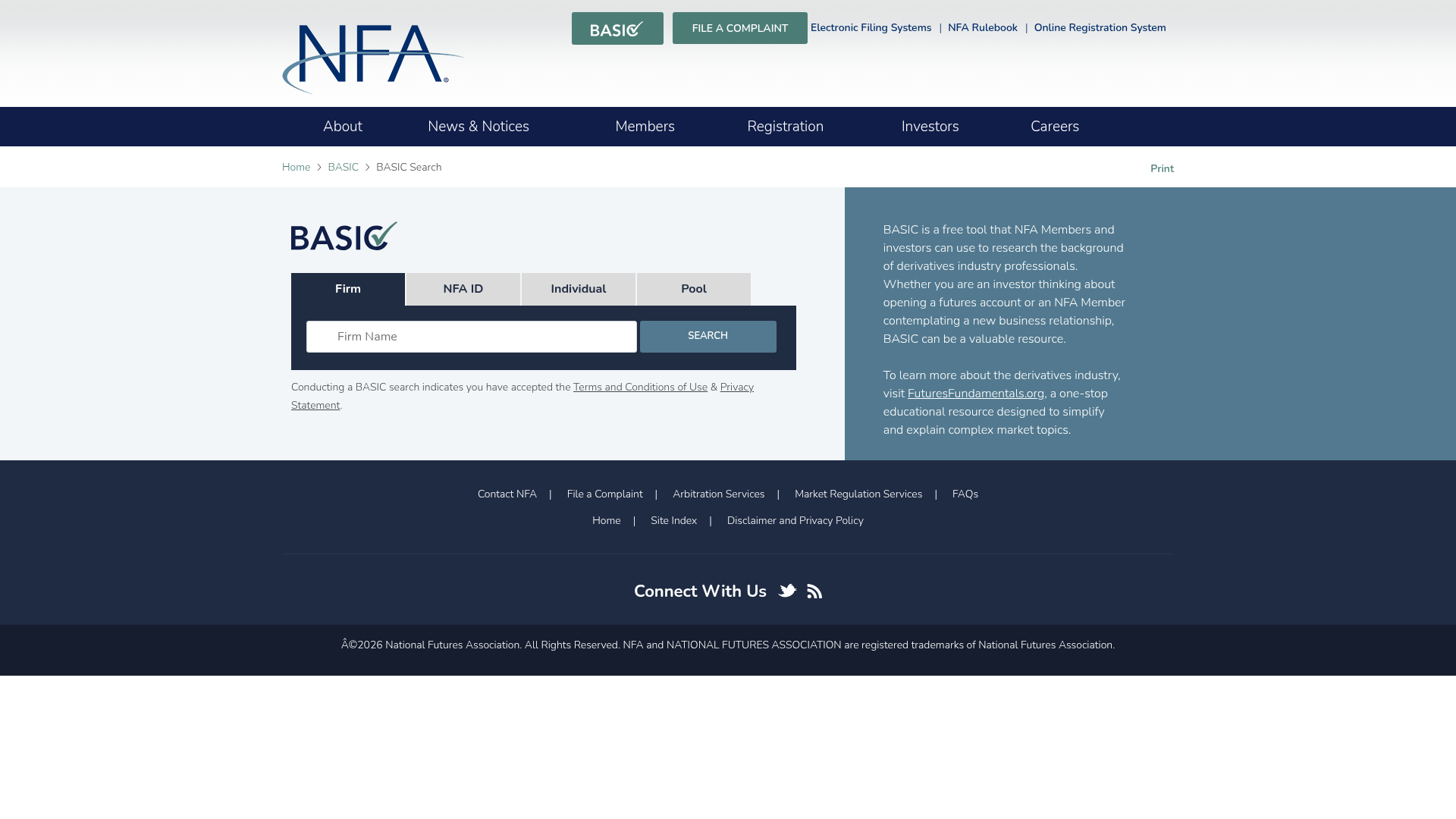
Other registers used in checks of this kind. Each opens the authority's own page.
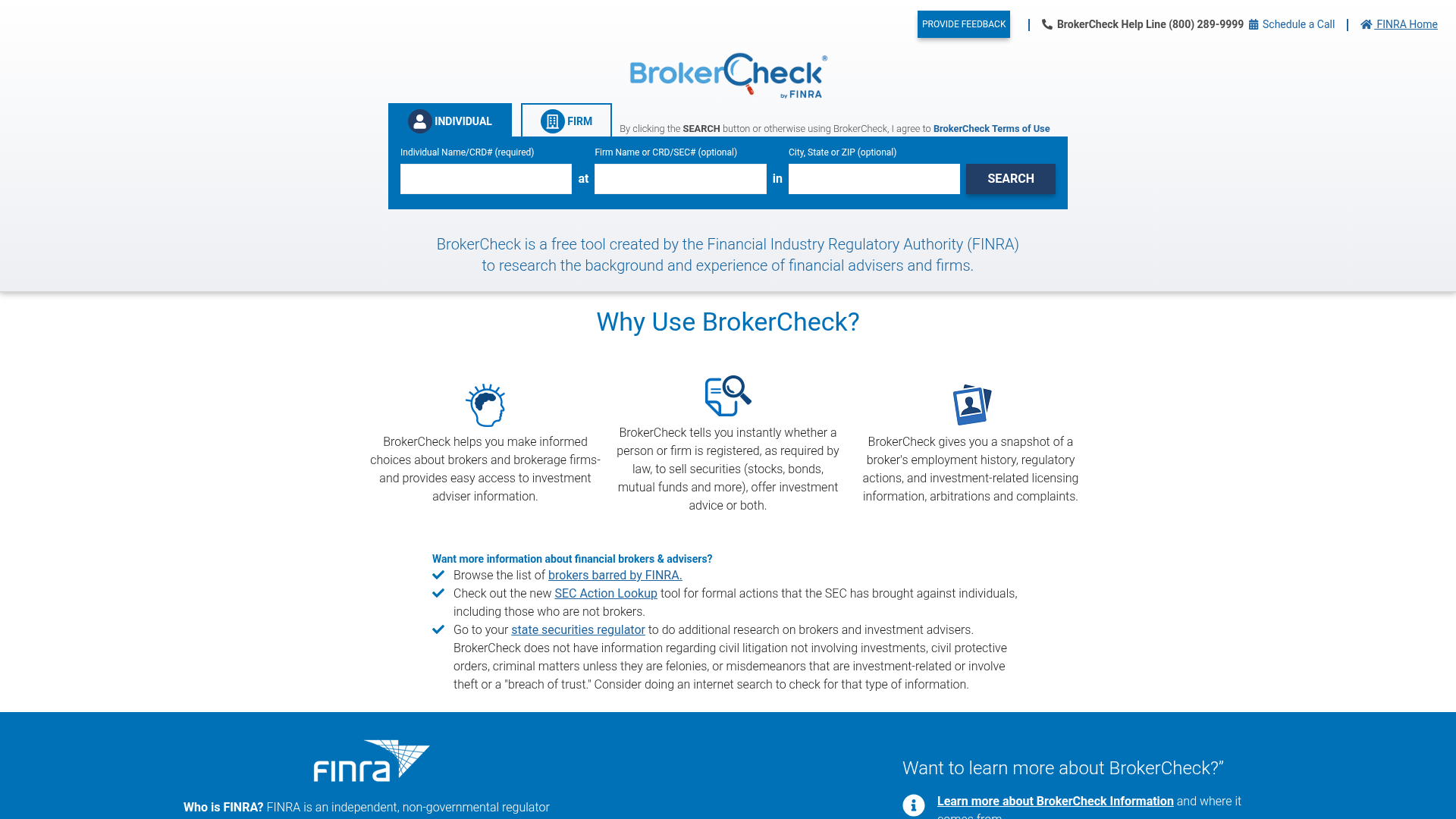
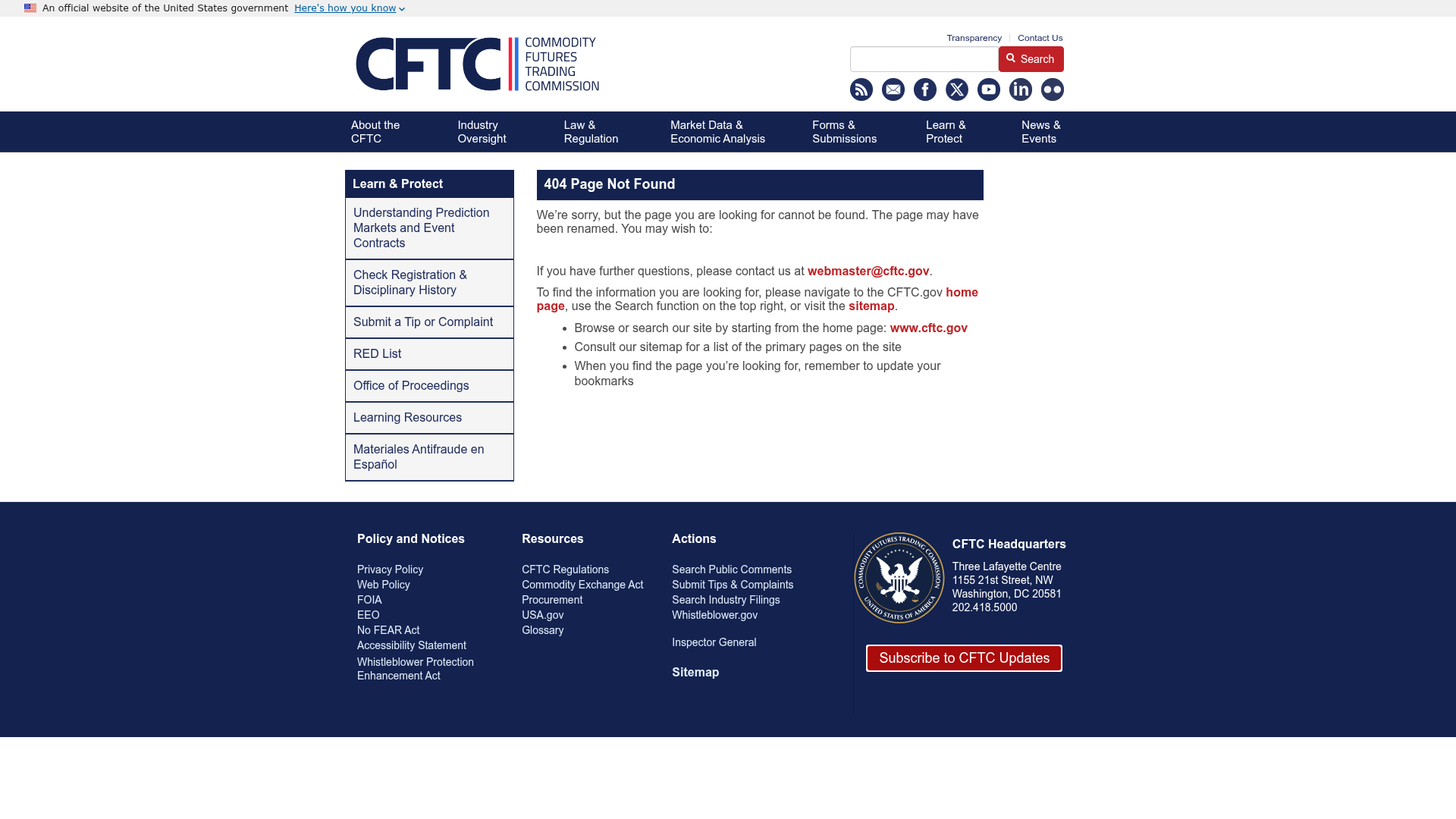
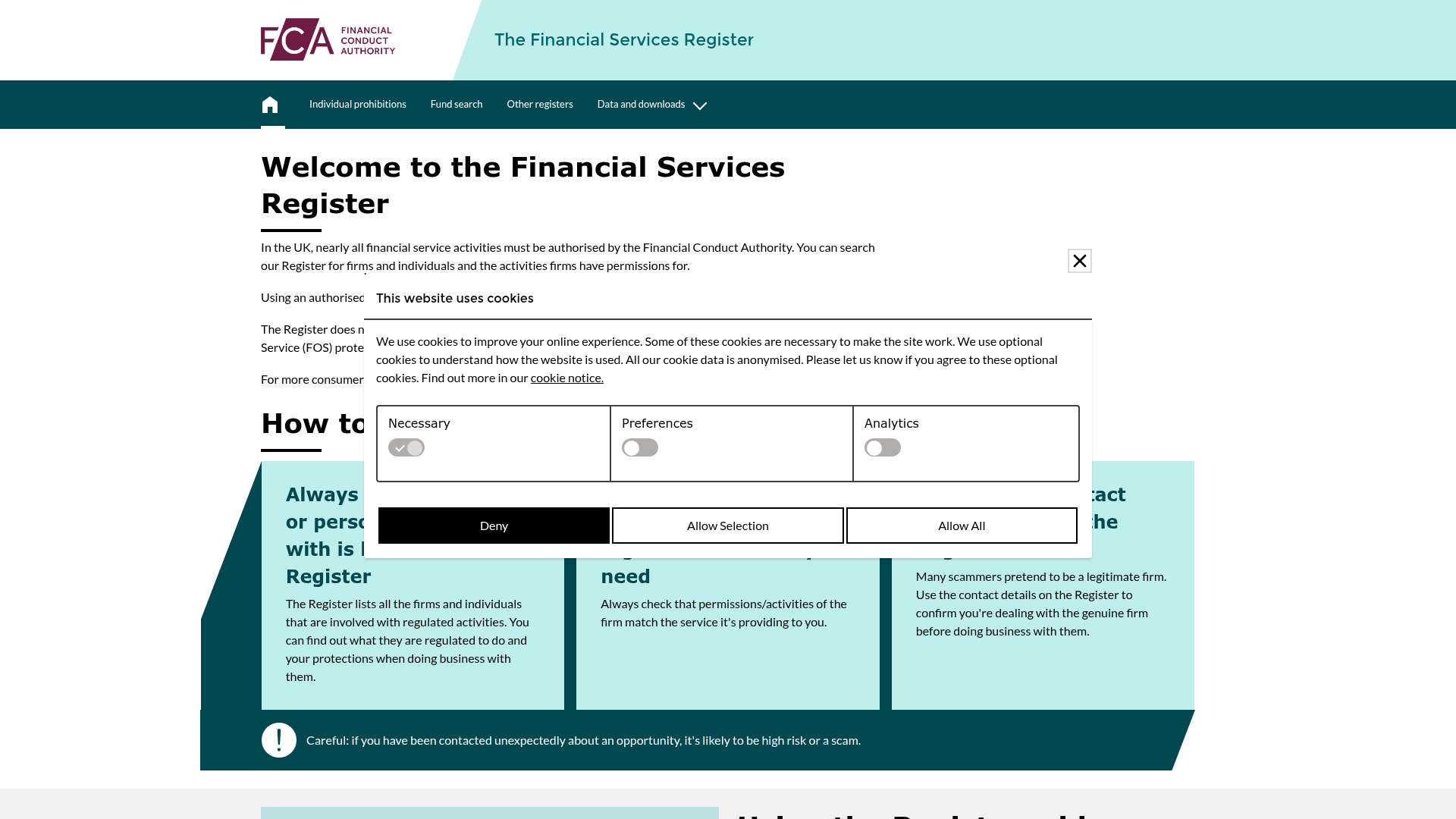
Primary sources
Every claim above can be checked against the authority's own page. These open on the regulator's site, not ours.
- Financial Conduct Authority — Financial Services Registerregister.fca.org.ukhttps://register.fca.org.uk/
- ASIC — Professional registersasic.gov.auhttps://asic.gov.au/online-services/search-asics-registers/
- CySEC — Regulated entities registercysec.gov.cyhttps://www.cysec.gov.cy/en-GB/entities/investment-firms/cypriot/
- FCA — Warning list of unauthorised firmsfca.org.ukhttps://www.fca.org.uk/consumers/warning-list-unauthorised-firms
- CFTC — Registration Deficient (RED) Listcftc.govhttps://www.cftc.gov/check
- IOSCO — Investor alerts portaliosco.orghttps://www.iosco.org/investor_protection/?subsection=investor_alerts_portal
Frequently asked
What is the difference between a company registration and a financial services license?
A company registration simply creates a legal entity, like registering a business name. A financial services license, issued by a dedicated regulator, grants permission to conduct specific financial activities (e.g., trading forex, offering CFDs) and comes with strict rules for investor protection, capital, and conduct.
Why do some brokers register in the Marshall Islands?
Brokers choose jurisdictions like the Marshall Islands due to ease of incorporation, low setup costs, and minimal or non-existent financial regulatory oversight. This allows them to operate globally without adhering to the stricter compliance and capital requirements of regulated jurisdictions.
How can I verify if a broker is truly regulated?
You must visit the *official website* of the regulator the broker claims to be licensed by (e.g., FCA, ASIC, CySEC). Use their public search register to confirm the broker's specific entity name and license number are active and cover the services offered. Do not rely on links provided by the broker.
Are my funds protected with a Marshall Islands-registered broker?
Generally, no. Brokers registered solely in the Marshall Islands do not operate under client fund segregation rules or investor compensation schemes. If the firm becomes insolvent or disappears, your funds are at significant risk with little to no recourse.
What should I do if a broker solely registered in the Marshall Islands is soliciting my business?
Proceed with extreme caution. This is a significant warning sign. Prioritize brokers with verifiable licenses from established financial regulators. If you suspect fraudulent activity, report it to your local financial authority and law enforcement.
Can a broker be regulated in one country but serve me from a Marshall Islands entity?
Yes, this is a common practice. A broker group might have a regulated entity for clients in strict jurisdictions (e.g., UK, EU, Australia) and a separate, unregulated Marshall Islands entity for clients in other regions. Always verify the specific entity serving you and its direct regulatory status.