
Key points
- The Canadian Investment Regulatory Organization (CIRO) is the primary body for verifying investment dealer and advisor registrations.
- Provincial securities commissions also maintain registers, which are vital for thorough due diligence on Canadian financial entities.
- Always check both registration status and disciplinary history, as a registered firm can still have regulatory actions against it.
- Understanding the different types of dealer registrations (e.g., Investment Dealer, Exempt Market Dealer) is essential for aligning with service needs.
- Investor protection funds like CIPF offer limited coverage; verify a firm's eligibility and understand its limitations before investing.
- Report any suspected unlicensed activity or misconduct directly to CIRO or the relevant provincial regulator to protect other investors.
The Initial Inquiry: A Matter of Trust and Transparency
Imagine receiving a prospectus for a new investment opportunity, or perhaps an email from an advisor promising substantial returns. Your first thought might be the potential for growth. Your second, however, should always be: 'Is this entity legitimate?' In Canada, this critical question leads directly to the Canadian Investment Regulatory Organization (CIRO) and the various provincial securities commissions. These bodies are not merely bureaucratic entities; they are the gatekeepers of integrity in the financial sector, designed to provide the public with the tools to verify who is, and who is not, authorized to offer investment services.
Unlike some jurisdictions where a single authority governs all financial activities, Canada employs a dual system. CIRO, formed from the merger of the Investment Industry Regulatory Organization of Canada (IIROC) and the Mutual Fund Dealers Association of Canada (MFDA) in 2023, oversees investment dealers and their advisors. Concurrently, each province and territory has its own securities commission, such as the Ontario Securities Commission (OSC) or the Autorité des marchés financiers (AMF) in Quebec, which regulate other market participants like portfolio managers and exempt market dealers. Understanding how to navigate both layers is not merely good practice; it is a fundamental requirement for anyone seeking to protect their financial interests.
This guide will walk you through the precise steps to use these registers, illuminate what to look for, and explain how to interpret the information you find. We'll move beyond simply confirming a name, delving into disciplinary records, registration conditions, and the scope of investor protection funds. The goal is to equip you with the knowledge to make informed decisions, transforming initial skepticism into confident verification, or, where necessary, prudent avoidance.
CIRO's Public AdvisorReport: Your First Stop for Dealer Verification
The Canadian Investment Regulatory Organization (CIRO) maintains a publicly accessible database, often referred to as the 'AdvisorReport,' which is the authoritative source for information on investment dealers and their registered representatives. To begin your check, navigate to CIRO's official website. You'll typically find a prominent link for 'Check Registration' or 'Public Resources.' Once there, you will be prompted to enter the name of the firm or individual you wish to investigate. This direct access represents a significant resource for investors.
When you initiate a search, the system will present a profile. This profile should clearly indicate the firm's registration status. Key details to scrutinize include the registration category (e.g., Investment Dealer, Mutual Fund Dealer), the date of registration, and any conditions or restrictions placed on the firm or individual. A registered individual, for instance, might have conditions prohibiting them from handling client funds directly, or from engaging in specific types of trades. These details are not incidental; they speak directly to the scope and limitations of the services they are permitted to provide.
It is not enough to simply see that a firm or individual is 'registered.' You must examine the specifics of that registration. An individual might be registered as a 'Dealing Representative – Mutual Funds' but not as a 'Portfolio Manager.' Offering portfolio management services without the correct registration is a serious breach of regulatory requirements and should immediately raise a significant concern. This is the part most guides skip: the nuance within the registration itself. Taking the time to understand the precise wording of a registration can prevent misunderstandings regarding the services a dealer or advisor is legally able to offer you.
Provincial Securities Registers for Checks
While CIRO is crucial for investment dealers and mutual fund dealers, it does not cover all financial registrants in Canada. Many firms and individuals operate under the direct oversight of provincial and territorial securities commissions. These include entities like portfolio managers, exempt market dealers, and scholarship plan dealers. To complete your full due diligence, you must consult the registers maintained by these provincial bodies. The Canadian Securities Administrators (CSA) website acts as a central portal, often linking directly to each provincial register, though direct navigation to individual commission sites is also effective.
For example, if an advisor is primarily based in Ontario, you would visit the Ontario Securities Commission (OSC) website and utilize their 'Registrant Search' tool. Similarly, for Quebec-based entities, the Autorité des marchés financiers (AMF) offers its 'Register of firms and individuals authorized to practise.' Each provincial register functions similarly to CIRO's, allowing searches by name, firm, or registration number. The information provided typically includes registration categories, effective dates, and any terms or conditions applied to the registration.
Combining information from both CIRO and the relevant provincial register is essential. A firm might be registered with CIRO but also have distinct provincial registrations for other lines of business. An entity, however, might only hold a provincial registration, indicating they are not an investment dealer subject to CIRO oversight. A firm that claims to offer a wide range of investment services but only appears on a provincial register as an 'Exempt Market Dealer' is misrepresenting its capabilities, which warrants investigation. The absence of an expected registration on any official register is a clear indication that the entity is likely operating without authorization in Canada, posing substantial risk to investors.
Deciphering Dealer Types and Their Regulatory Scope
The Canadian financial sector categorizes investment firms into distinct types, each with a specific regulatory framework and permissible activities. Understanding these distinctions is fundamental to verifying that a firm is authorized to provide the services it claims. The most common types include Investment Dealers, Mutual Fund Dealers, Portfolio Managers, and Exempt Market Dealers. Each type aligns with different regulatory bodies and standards, influencing investor protection and the scope of permissible activities.
Investment Dealers, regulated by CIRO, can trade a broad range of securities, including stocks, bonds, and derivatives, often operating as part of larger brokerage firms. Mutual Fund Dealers, also under CIRO, are restricted to selling mutual funds. Portfolio Managers, regulated by provincial commissions, manage investment portfolios for clients on a discretionary basis. Exempt Market Dealers facilitate investments in securities that are exempt from prospectus requirements, typically for sophisticated investors or in private placements. Misalignment between a firm's claimed services and its official registration category is a significant warning sign.
For instance, if a firm advertises extensive stock trading capabilities and global market access but is only registered as an 'Exempt Market Dealer,' it indicates a regulatory mismatch. Such a firm is not permitted to execute standard public market trades on behalf of retail clients. Identifying these discrepancies requires careful attention to detail on the regulatory registers. It is not enough to confirm a name; the specific nature of their registration is the critical detail. In practice, if you ask a firm for clarity on their registration, a legitimate firm will provide it readily, often linking directly to its public profile.
Your financial security is directly linked to the careful steps you take to ensure those managing your money are authorized, compliant, and accountable.
Mei Tanaka
Understanding Registration Categories in Canada
Different financial services providers in Canada operate under distinct registration categories, each dictating the scope of their activities and the regulatory body overseeing them. A firm's registration category is a precise legal definition of what they are authorized to do. This specificity helps protect investors by ensuring firms operate within defined boundaries. The table below outlines some common categories, their primary regulatory oversight, and the typical services they are permitted to offer.
For example, an 'Investment Dealer' can offer full-service brokerage, including advice and execution for a wide array of securities. In contrast, an 'Exempt Market Dealer' can only deal in securities that are exempt from prospectus requirements, typically private placements or offerings to accredited investors. A firm registered solely as an 'Exempt Market Dealer' but marketing publicly traded shares to retail investors would be acting outside its authorized scope. Always cross-reference the services being offered against the explicit registration categories listed on CIRO or provincial registers.
This granular detail in registration is a protective measure. If an entity presents itself as a full-service broker but its registration only permits mutual fund sales, it's a clear indication that they are either operating beyond their authority or misrepresenting their services. This is precisely why a careful investor examines the specific wording on the registers, rather than accepting broad claims at face value. Any discrepancy, however small, warrants further inquiry directly with the regulator or, more prudently, choosing an alternative, clearly compliant provider.
Common Investment Dealer Registration Categories in Canada
| Registration Category | Primary Regulator | Typical Services Offered |
|---|---|---|
| Investment Dealer | CIRO | Stocks, bonds, derivatives, full-service brokerage, advice |
| Mutual Fund Dealer | CIRO | Mutual funds, segregated funds, GICs (sometimes) |
| Portfolio Manager | Provincial Securities Commission | Discretionary investment management, financial planning |
| Exempt Market Dealer | Provincial Securities Commission | Private placements, exempt securities, limited advice |
| Scholarship Plan Dealer | Provincial Securities Commission | Registered Education Savings Plans (RESPs) focused on scholarships |
Disciplinary Records: Beyond Simple Registration Status
Confirming registration is only the first step. Equally important, and often overlooked, is the examination of a dealer's or advisor's disciplinary history. Both CIRO's AdvisorReport and provincial registers include sections detailing any regulatory actions, complaints, or enforcement proceedings. These records provide a transparent account of past conduct, offering insights into a firm's adherence to regulatory standards and ethical practices. Ignoring this section is akin to checking a car's registration without inspecting its accident history.
Disciplinary actions can range from minor cautions and fines for administrative lapses to severe penalties like suspensions, permanent bans, or revocations of registration for serious misconduct, such as fraud or misappropriation of funds. Each disciplinary entry will typically outline the nature of the violation, the date of the ruling, and the sanctions imposed. Pay close attention to patterns of repeated violations, even if seemingly minor, as these can indicate systemic issues within a firm or a persistent disregard for compliance by an individual.
While a past infraction doesn't automatically disqualify a firm or advisor, it necessitates a deeper understanding. For example, a minor administrative fine from several years ago might be less concerning than a recent suspension for improper client communication. Your assessment should consider the severity, recency, and nature of any disciplinary action. If you encounter disciplinary records that concern you, it is prudent to seek clarification directly from the regulator or to consider firms with an unblemished record.
Investor Protection in Canada: Understanding CIPF and Provincial Funds
Even with meticulous due diligence, unforeseen circumstances can arise, such as a firm becoming insolvent. In Canada, investors with CIRO-regulated investment dealers are protected by the Canadian Investor Protection Fund (CIPF). CIPF provides coverage for clients' cash and securities held by a CIPF member firm, up to a specified limit, in the event of the firm's bankruptcy. This protection is a critical safety net, but it is not limitless and has specific conditions.
CIPF coverage is triggered only by the insolvency of a member firm and covers a maximum of C$1 million for general accounts (e.g., cash, equities, mutual funds) and C$1 million for separate accounts (e.g., RRSPs, TFSAs). It's important to understand that CIPF does not protect against investment losses due to market fluctuations, poor investment advice, or fraud perpetrated by an individual who is not an employee of an insolvent CIPF member firm. Its purpose is to restore assets that were held by a bankrupt firm.
Alongside CIPF, some provincial jurisdictions also offer investor protection funds for specific types of registrants not covered by CIRO and CIPF. For example, some mutual fund dealers in certain provinces might be covered by a separate provincial fund if they are not CIRO members. Always confirm if the firm you are dealing with is a CIPF member (if they are a CIRO-regulated investment dealer) or covered by an equivalent provincial fund. This information should be readily available on the firm's website or directly from the respective regulatory body.
Understanding these layers of protection, and their limitations, is a vital component of informed investing. It shifts the focus from simply verifying legitimacy to understanding the recourse available if a firm fails, which is a different, but equally significant, concern for long-term financial security.
Key Investor Protection Funds in Canada
| Protection Fund | Regulator Oversight | Coverage Type | Maximum Coverage (per client, per account category) |
|---|---|---|---|
| Canadian Investor Protection Fund (CIPF) | CIRO-regulated Investment Dealers | Securities and cash from firm insolvency | C$1,000,000 |
| Autorité des marchés financiers (AMF) | Certain Quebec-regulated firms (e.g., some mutual fund dealers) | Securities and cash from firm insolvency | Varies by product/firm, consult AMF for specifics |
Putting It Together: A Step-by-Step Verification Process
When faced with a new investment opportunity or advisor, follow a methodical, two-pronged verification approach. First, determine the primary type of service being offered. If it involves trading stocks, bonds, or derivatives, your first check should be with CIRO. If it's focused on discretionary portfolio management or private placements, begin with the relevant provincial securities commission. Many firms will have registrations with both, so be prepared to check both.
Step 1: Identify the Entity and Service. Obtain the full legal name of the firm and the full name of the individual advisor. Understand precisely what type of financial product or service they are promoting. This will guide where you start your search.
Step 2: Search CIRO's AdvisorReport. Go to CIRO's official website and use their public register. Search for both the firm and the individual. Verify their registration status, category, effective dates, and any conditions or restrictions. Pay close attention to any disciplinary actions.
Step 3: Consult Provincial Securities Registers. If the firm or individual operates in a specific province, or offers services beyond CIRO's purview (e.g., portfolio management), visit the website of that provincial securities commission (e.g., OSC, AMF). Utilize their registrant search tools and repeat the verification of status, category, and disciplinary records.
Step 4: Cross-Reference Information. Compare the information found on all registers with the claims made by the firm or individual. Are their stated services consistent with their registration categories? Are there any discrepancies in names, addresses, or contact details? Discrepancies here are critical. In practice, if something seems off, it's worth a double-check directly with the regulator or simply moving on to a provider whose records are transparent and consistent.
Step 5: Check Investor Protection Status. Confirm if the firm is a member of CIPF (for CIRO-regulated firms) or any relevant provincial investor protection scheme. Understand the scope and limits of this protection. This systematic approach, combining regulatory checks with a critical eye for inconsistencies, significantly reduces your exposure to unauthorized or misrepresented services.
Beyond the Registers: What They Don't Tell You
While regulatory registers are indispensable tools for verifying legitimacy, they are not a substitute for full due diligence. These public records confirm legal authorization and reveal disciplinary history, but they do not provide an endorsement of a firm's financial health, the quality of its investment advice, or the suitability of its products for your individual needs. A registered firm can still offer poor-performing investments or provide unsuitable advice, leading to financial losses that fall outside the scope of regulatory protection schemes like CIPF.
The registers typically reflect formal regulatory actions. They do not necessarily show every customer complaint or dispute. A firm might have a history of complaints that did not escalate to a formal disciplinary action, or perhaps settled privately. Information about such matters is rarely public. Therefore, it is prudent to complement your regulatory checks with independent research, including reviewing reputable financial news sources, customer reviews (with a critical eye for authenticity), and, if possible, seeking professional financial advice from an independent advisor.
Finally, registers primarily cover entities operating within Canada. If an entity claims to be based offshore and offers services to Canadian residents without appropriate Canadian registration, it is operating illegally, regardless of its registration status in its home country. Canadian regulators have limited recourse against genuinely foreign, unregistered entities. This distinction is vital: Canadian registration for Canadian clients is the standard, and claims of 'international regulation' without corresponding Canadian authorization are often a tactic used by entities operating without proper oversight.
Reporting Concerns and Unlicensed Operations
If your verification process reveals an entity operating without the necessary Canadian registration, or if you encounter suspicious behaviour from a registered firm, it is vital to report your concerns to the appropriate authorities. Reporting helps protect other investors from potential harm and supports the integrity of the financial markets. Simply ignoring an unlicensed entity allows them to continue their operations unchecked. Your report contributes to the regulator's ability to take enforcement action.
For investment dealers and their advisors, concerns should be directed to CIRO. Their website typically provides a 'Contact Us' section with specific instructions for submitting complaints or tips about unlicensed activity. For other types of registrants, or if you are unsure, contact the provincial securities commission where the entity operates or where you reside. The Canadian Securities Administrators (CSA) website also offers resources and links for reporting suspected misconduct or unregistered firms across Canada. Provide as much detail as possible, including names, contact information, website addresses, and a clear description of the activities or concerns.
Even if you are uncertain whether a particular activity constitutes a violation, regulators prefer to investigate rather than have potential misconduct go unreported. These reports are often confidential, protecting your identity while enabling the authorities to act. Your vigilance in reporting helps to maintain a safer investment environment for everyone. Do not hesitate; a timely report can prevent others from incurring significant losses.
Your Continuous Vigilance in Canadian Investing
The process of verifying an investment dealer or advisor in Canada is not a one-time event; it is an ongoing practice of informed vigilance. Financial markets are dynamic, and regulatory statuses can change. Before making significant investment decisions or entrusting new funds, it is prudent to re-verify the credentials of your chosen financial partner. Regularly checking CIRO's AdvisorReport and relevant provincial registers should be as routine as reviewing your investment statements.
Never feel pressured to make quick investment decisions, especially if an entity discourages you from performing due diligence. Legitimate firms and advisors welcome scrutiny and are transparent about their regulatory status. Your financial security is directly linked to the careful steps you take to ensure those managing your money are authorized, compliant, and accountable. Use your knowledge of Canada's regulatory tools, and approach every investment proposition with a critical, informed perspective.
The page we check
This is the authority's own page, captured as we found it. Open it and run the same search yourself — nothing on this register replaces the source.
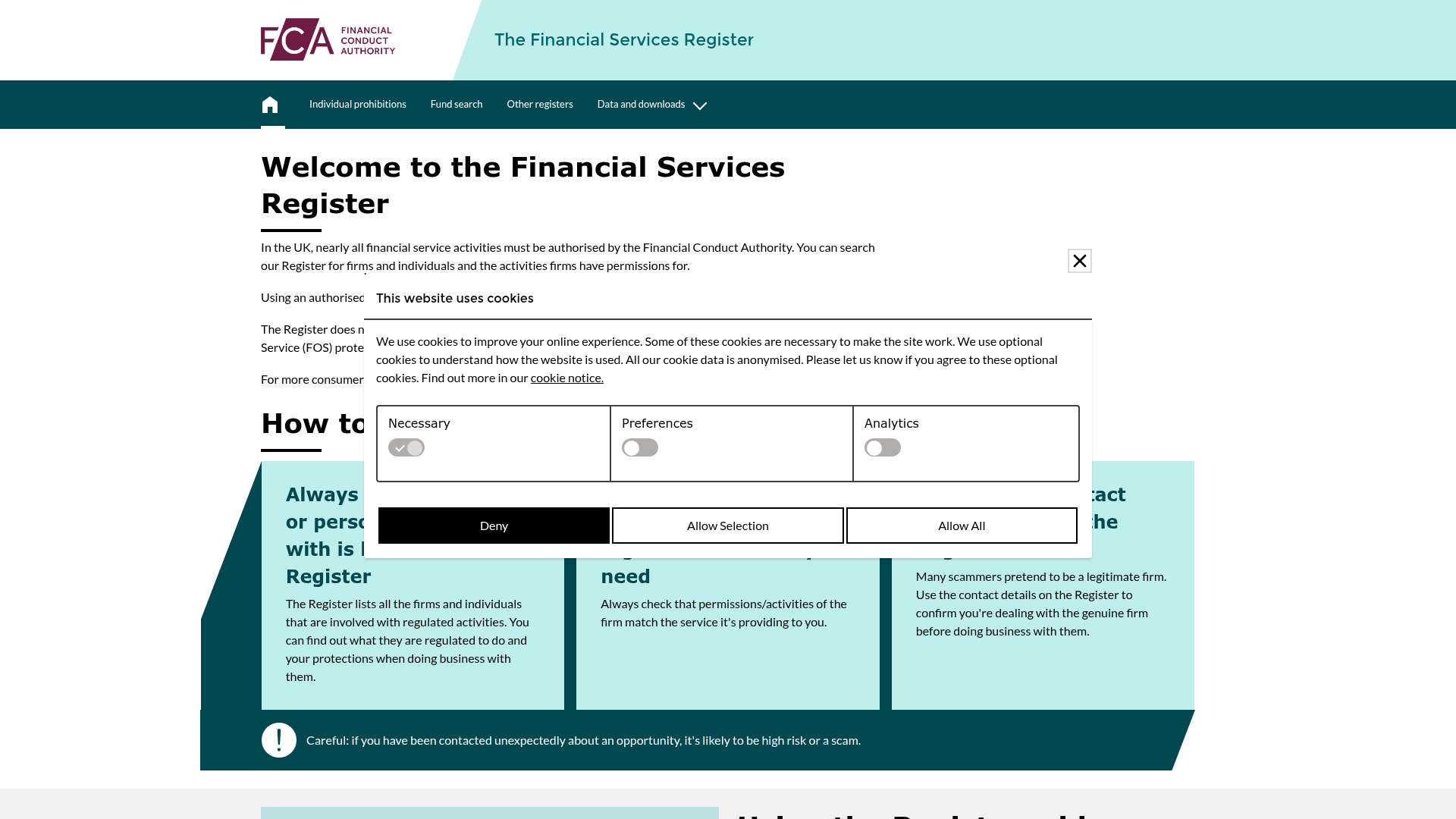
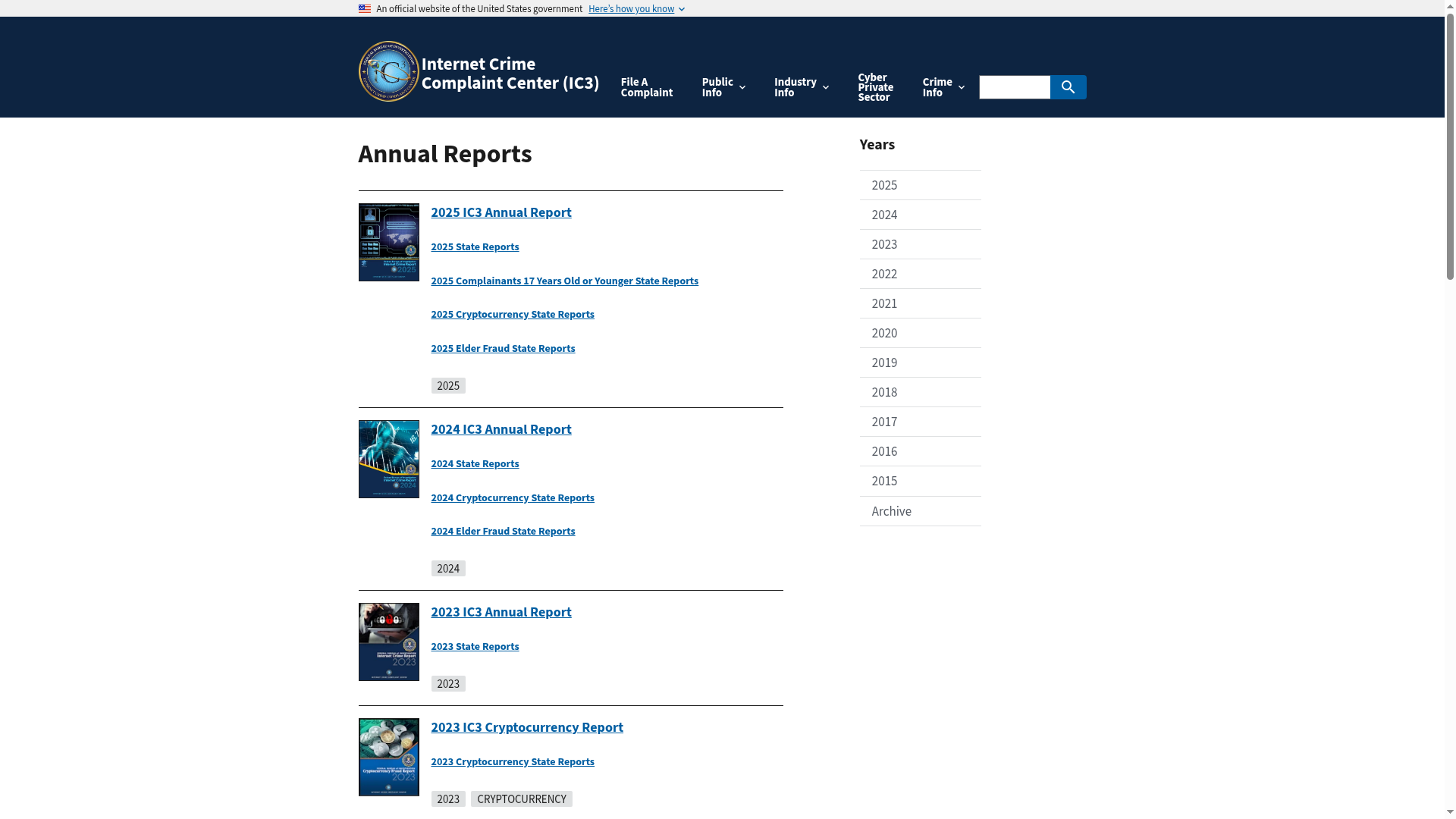
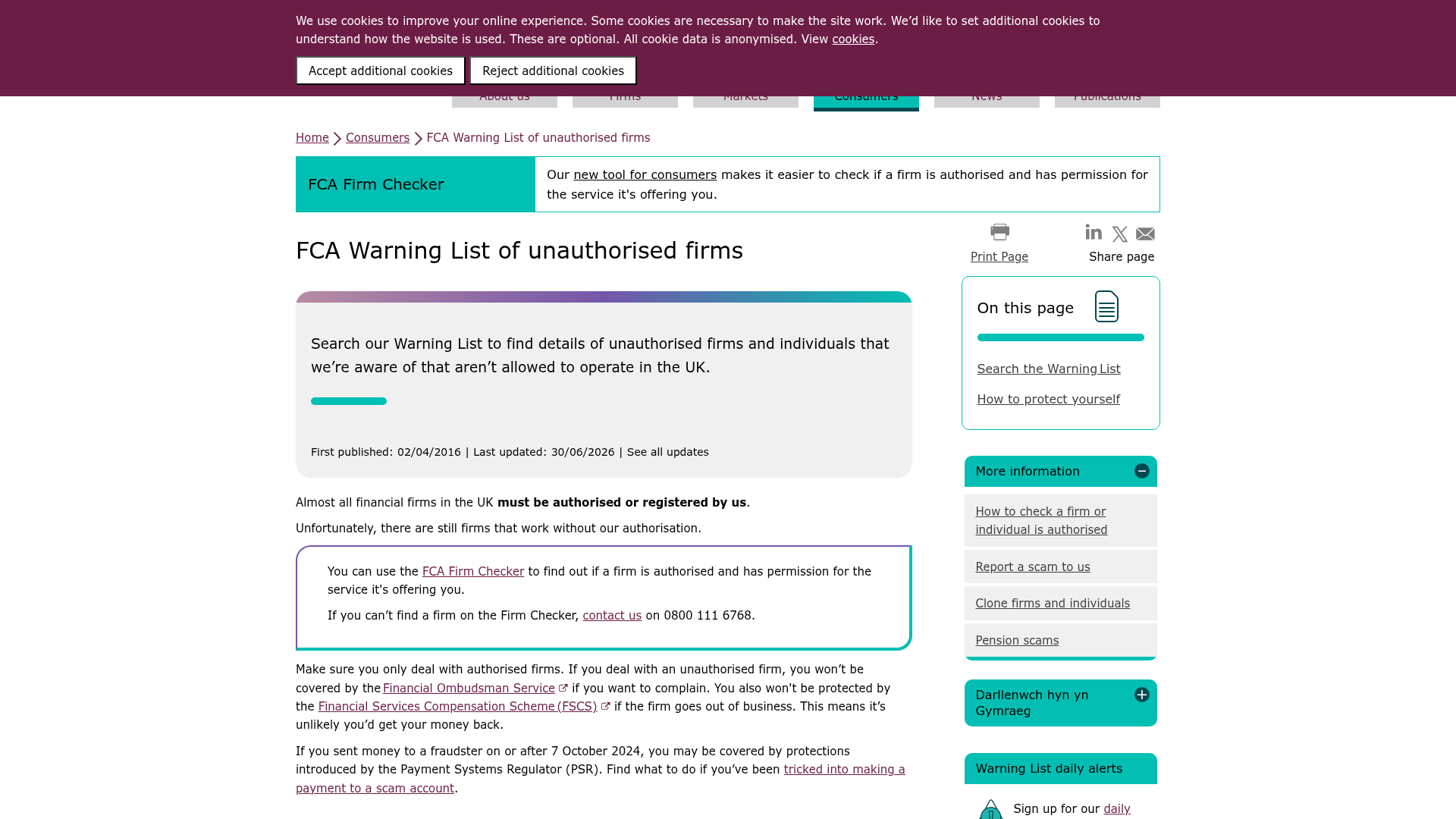
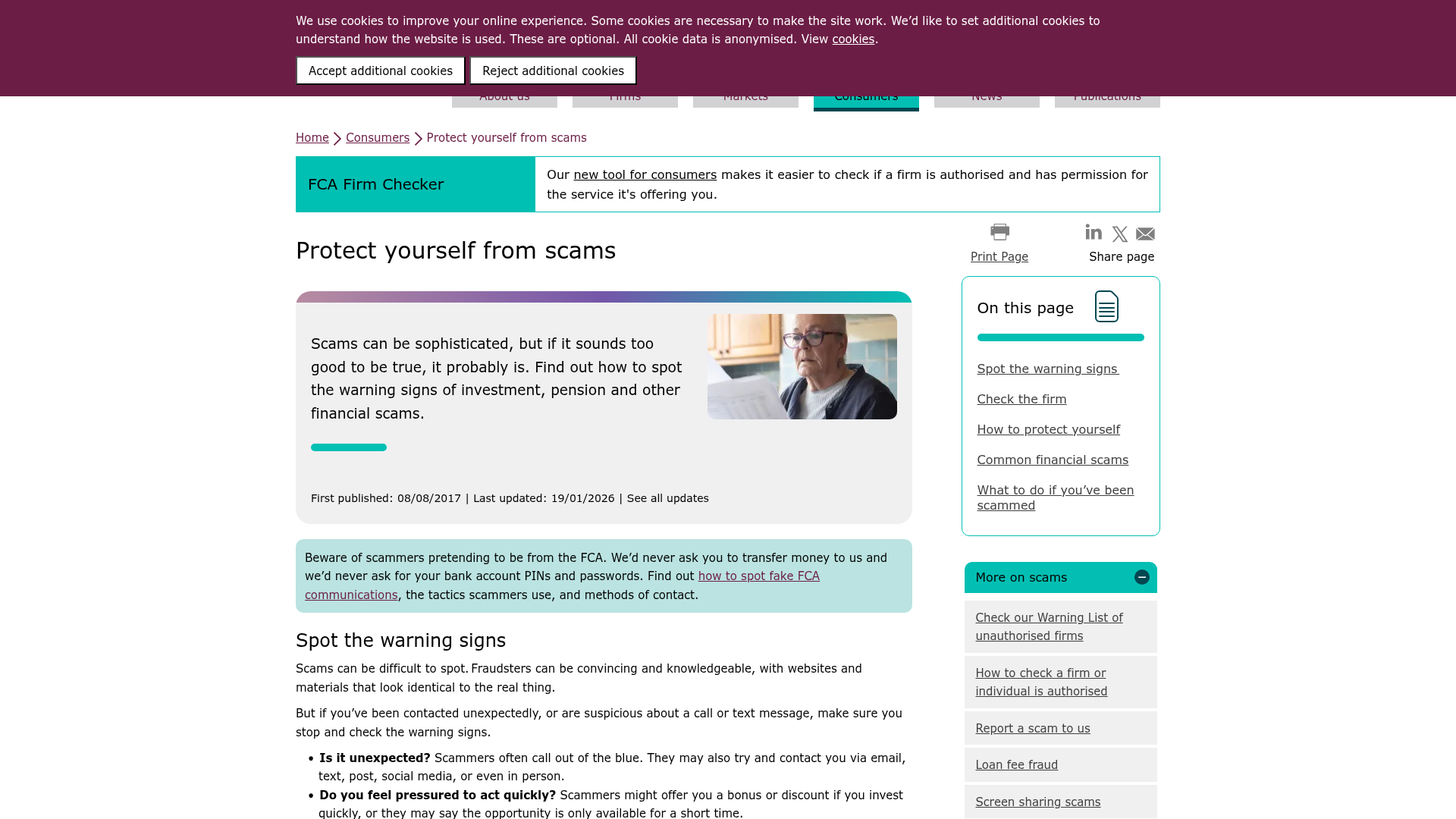
Other registers used in checks of this kind. Each opens the authority's own page.
Primary sources
Every claim above can be checked against the authority's own page. These open on the regulator's site, not ours.
- CFTC — Customer advisories on fraudcftc.govhttps://www.cftc.gov/LearnAndProtect/AdvisoriesAndArticles/index.htm
- IOSCO — Investor alerts portaliosco.orghttps://www.iosco.org/investor_protection/?subsection=investor_alerts_portal
- FCA ScamSmartfca.org.ukhttps://www.fca.org.uk/scamsmart
- NFA BASIC — background affiliation statusnfa.futures.orghttps://www.nfa.futures.org/basicnet/
- FINRA BrokerCheckbrokercheck.finra.orghttps://brokercheck.finra.org/
Frequently asked
What is CIRO and how does it differ from provincial securities commissions?
CIRO (Canadian Investment Regulatory Organization) is a self-regulatory organization overseeing investment dealers and mutual fund dealers and their advisors. Provincial securities commissions, like the OSC or AMF, are government bodies that regulate other market participants such as portfolio managers, exempt market dealers, and the broader capital markets within their respective provinces.
Can I trust a firm that claims to be regulated offshore but not in Canada?
If a firm offers investment services to Canadian residents, it must be properly registered with CIRO or the relevant provincial securities commission in Canada. Claims of offshore regulation without corresponding Canadian authorization mean the firm is operating illegally in Canada, and you would have little to no recourse through Canadian authorities if issues arise.
What should I do if a firm or advisor is not listed on any Canadian register?
If you cannot find a firm or advisor on CIRO's AdvisorReport or the relevant provincial securities registers, it is a strong indication that they are operating without authorization in Canada. You should immediately cease all communication with them and report your findings to CIRO or the appropriate provincial securities commission.
Does CIPF protect me from losing money if my investments perform poorly?
No, the Canadian Investor Protection Fund (CIPF) protects investors only in the event of an investment dealer's insolvency. It does not cover losses due to market fluctuations, poor investment advice, or fraud if the firm itself is not bankrupt. Its purpose is to restore client assets held by a failed firm.
How often should I check an advisor's or firm's registration?
It is prudent to check an advisor's or firm's registration periodically, especially before making new investments or if there are any significant changes in your financial relationship. Regulatory statuses can change, and new disciplinary actions might be recorded, making regular verification a wise practice.
What is an 'Exempt Market Dealer' and how does it differ from an 'Investment Dealer'?
An 'Exempt Market Dealer' (EMD) is registered to deal in securities that are exempt from prospectus requirements, typically private placements or offerings to accredited investors. An 'Investment Dealer,' regulated by CIRO, can trade a much broader range of publicly offered securities like stocks and bonds, and offer full-service brokerage.