
Key points
- Fund recovery services demanding upfront payments without guaranteed results frequently operate on an advance-fee model, which rarely leads to actual fund retrieval.
- Legitimate legal and financial professionals typically charge for services rendered or work on a contingency basis, not for speculative 'taxes' or 'administrative fees'.
- Verifying a service's regulatory status on official government registers is a critical step; absence or presence on warning lists indicates high risk.
- Individuals who have lost funds should report directly to law enforcement and financial regulators, as these are the authoritative channels for redress.
- Secondary victimization occurs when individuals, desperate after an initial loss, are exploited again by fraudulent recovery schemes, compounding their financial and emotional distress.
- Genuine fund recovery avenues involve transparent legal processes, regulatory reporting, or bank chargebacks, none of which demand payment for an uncertain outcome.
The Lure of the Promised Retrieval
A common email or social media advertisement presents itself to individuals who have lost capital in online trading or investment schemes. The message frequently claims access to 'specialist investigators' or 'legal networks' with a near-certain success rate in recovering funds. These claims are often made with an urgency, suggesting a limited window for action. This is particularly appealing to those experiencing significant financial distress, as the initial loss can leave individuals vulnerable to further exploitation. The psychological impact of losing money often clouds judgment, making the prospect of retrieval, however unlikely, a powerful draw. This is the part most guides skip: the target individual is often not in a rational state; they are actively seeking a solution, frequently after being dismissed by official channels or believing those channels are too slow.
The Anatomy of an 'Investigation' Offer
These services typically initiate contact or respond to inquiries by presenting a detailed, albeit often vague, 'investigation' process. They might request copies of transaction records, communication logs with the original alleged perpetrator, and personal identification documents. The stated purpose is to 'build a case' and 'trace the funds.' Some might even provide an initial, complimentary 'assessment' that inevitably concludes with a high probability of successful recovery, provided the victim proceeds with their paid service. The initial interactions are often persuasive, delivered by individuals who sound knowledgeable and empathetic, mirroring the tactics of the original illicit scheme. They might reference complex legal frameworks or international banking procedures to lend an air of legitimacy to their operations, even if these references are superficial or misapplied.
The Advance Fee: A Critical Juncture
The defining characteristic of the advance-fee recovery model is the request for payment before any funds are recovered. This payment is typically framed as a fee for 'investigative costs,' 'legal retainers,' 'administrative charges,' 'court filing fees,' or 'taxes' required to release the recovered capital. These fees can range from a few hundred to many thousands of dollars, often proportional to the amount the victim allegedly lost, or what the recovery service claims they can retrieve. The service might insist that these costs are non-refundable, regardless of the outcome, stating they are necessary to initiate the complex recovery process. A common tactic is to present these fees as a small percentage of the total recovered amount, making it seem like a reasonable investment for a large return. However, this is distinct from a legitimate legal firm, which might charge an initial consultation fee or work on a contingency basis, where payment is dependent on a successful outcome, or a transparent hourly rate.
Typical Payment Structures for Fund Recovery Services
| Feature | Advance-Fee Model | Legitimate Legal/Recovery (Rare) |
|---|---|---|
| Initial Payment | Required upfront, non-refundable 'fees' | Consultation fee, or contingency/hourly |
| Payment Justification | 'Investigation costs', 'taxes', 'bank fees' | Service rendered, court costs, success fee |
| Success Guarantee | Often implied or explicitly stated as high | No guarantees, outcome depends on case merit |
| Refund Policy | None for initial fees | Clear terms for unused retainers or unsuccessful contingency |
The Illusory Progress Report
Once the advance fee is paid, the victim often receives periodic 'progress reports.' These reports rarely contain concrete verifiable actions or actual movement of funds. Instead, they might describe complex legal maneuvers in foreign jurisdictions, ongoing negotiations with banks or 'culprits,' or administrative hurdles that delay the final recovery. The language used is often technical and designed to obscure the lack of real progress. These updates serve to maintain the victim's engagement and hope, preparing them for the next demand for funds. In practice, these 'progress reports' are often intentionally vague, designed to keep the victim engaged and delay the inevitable realization that no recovery is forthcoming. The emotional investment makes it hard to disengage, even when details are scarce. The service might claim to be 'at the final stage' and require another 'urgent' payment for a final release of funds, such as a 'transfer tax' or 'currency conversion fee.' This cycle can repeat, draining the victim of additional capital long after the initial loss.
Verifying Legitimacy: Checking the Registers
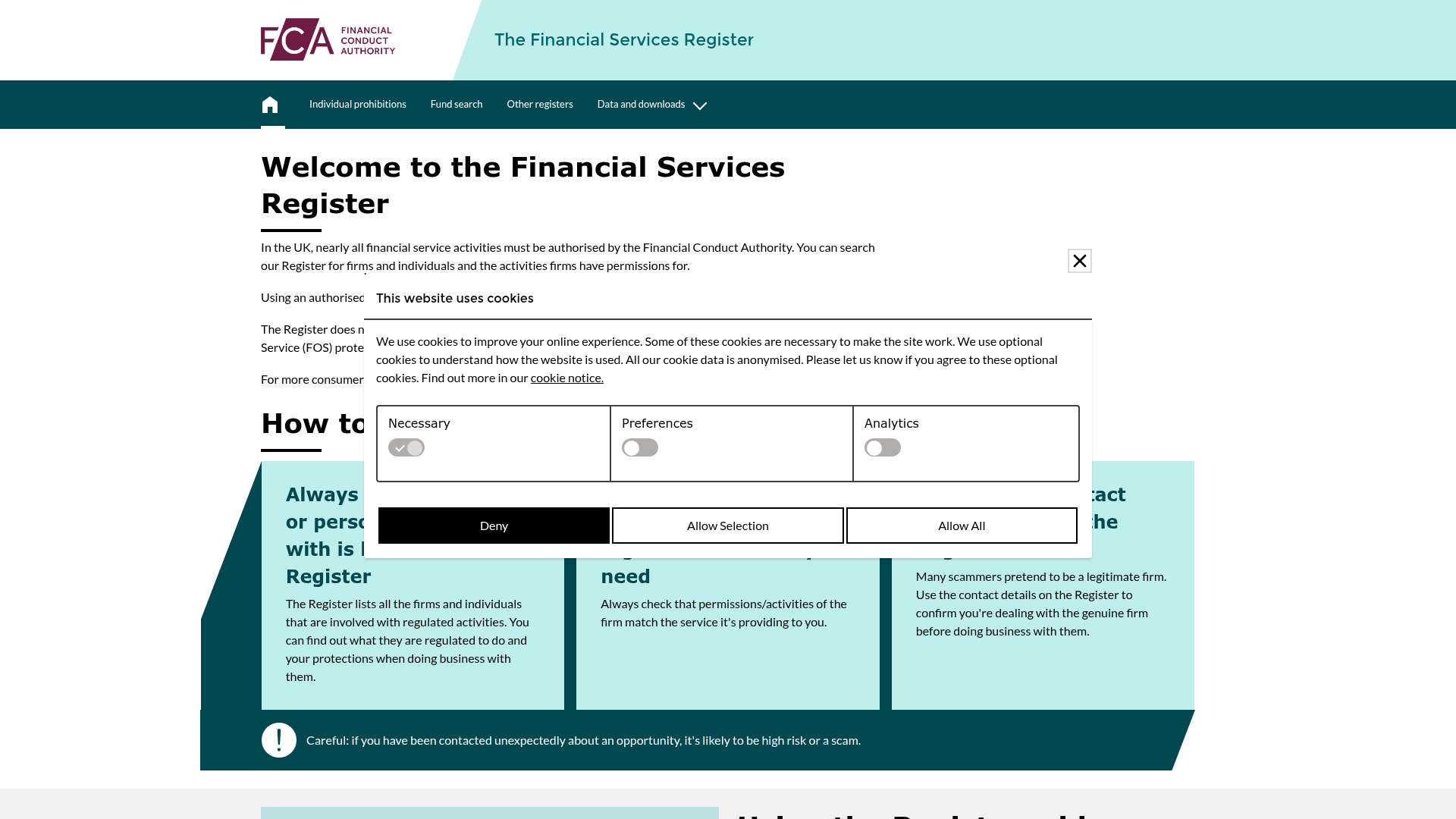
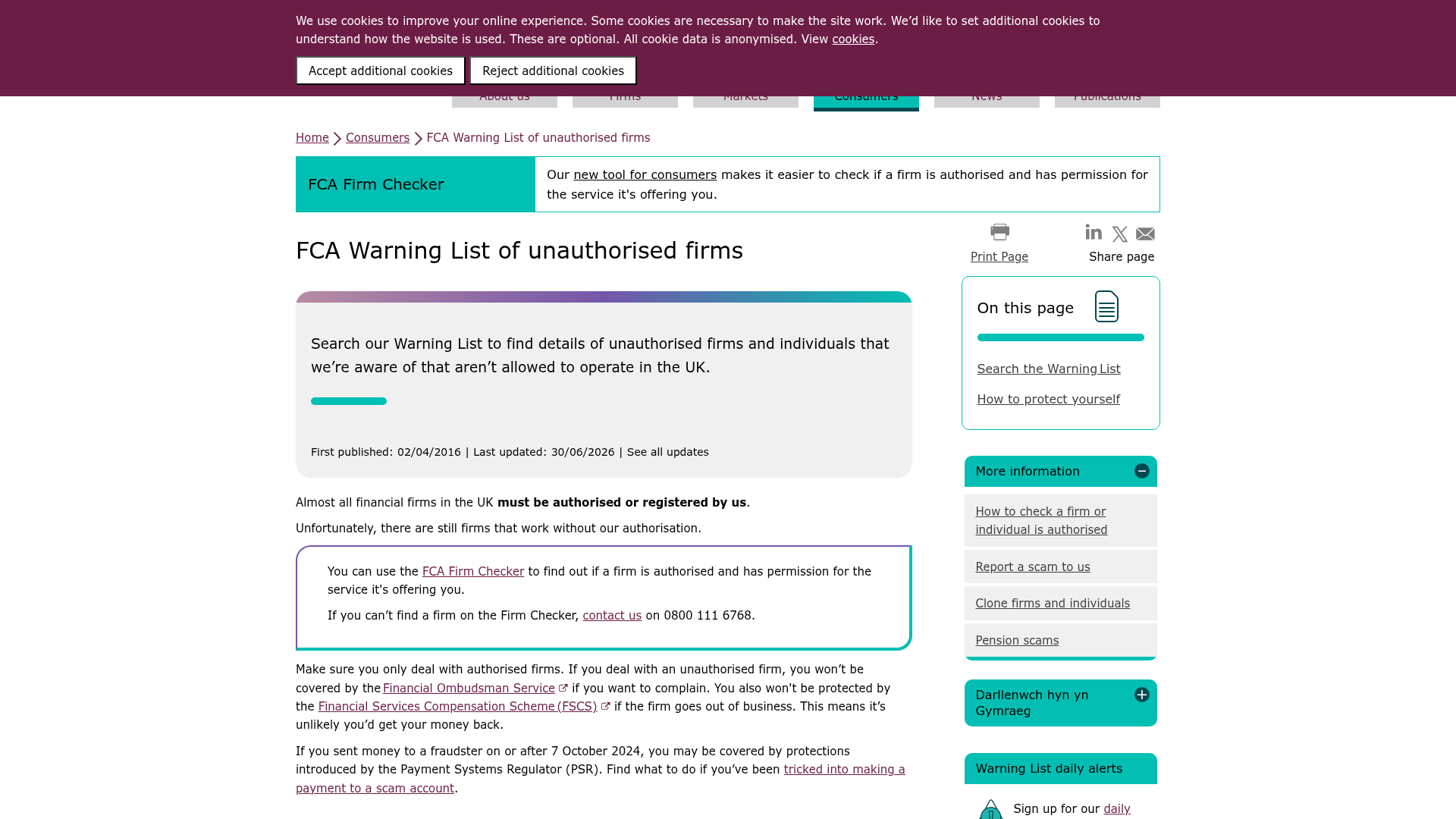
A critical step for anyone considering a fund recovery service or any financial service is to verify its regulatory standing. Legitimate financial entities, including those involved in legal processes or financial investigations, are typically registered with relevant government or industry bodies. For example, in the United Kingdom, the Financial Conduct Authority (FCA) maintains a Financial Services Register where consumers can check if a firm or individual is authorised. Similarly, the Australian Securities and Investments Commission (ASIC) provides professional registers. In the United States, the Commodity Futures Trading Commission (CFTC) offers a Registration Deficient (RED) List for unregistered entities. Unauthorised firms frequently appear on warning lists published by regulators. For instance, the FCA maintains a Warning List of unauthorised firms, and the CFTC publishes advisories on fraud. If a recovery service cannot be found on these official registers, or appears on a warning list, it is a significant indicator of potential risk.
Key Regulatory Registers for Financial Firms
| Jurisdiction | Regulatory Body | Search Link |
|---|---|---|
| United Kingdom | Financial Conduct Authority (FCA) | https://register.fca.org.uk/ |
| Australia | Australian Securities and Investments Commission (ASIC) | https://asic.gov.au/online-services/search-asics-registers/ |
| United States (Futures/Commodities) | Commodity Futures Trading Commission (CFTC) | https://www.cftc.gov/check |
| United States (Securities) | FINRA | https://brokercheck.finra.org/ |
| Cyprus | Cyprus Securities and Exchange Commission (CySEC) | https://www.cysec.gov.cy/en-GB/entities/investment-firms/cypriot/ |
A demand for upfront payment for fund recovery, especially when success is guaranteed, almost universally signals a secondary exploitation of the victim.
Alan Reeve
The Regulator's View: Warnings and Advisories
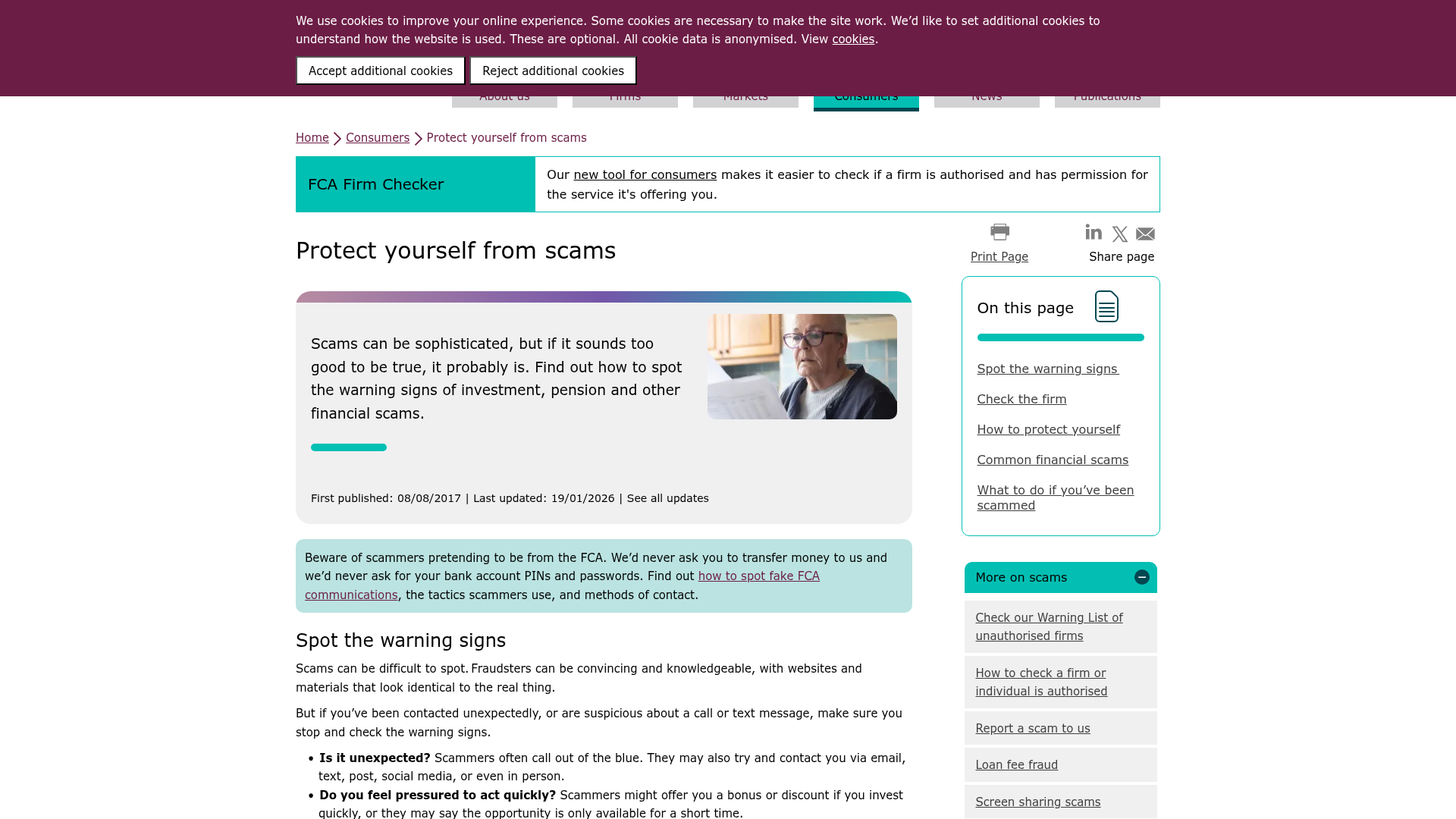
Financial regulators across the globe consistently issue warnings about fund recovery services operating with advance-fee models. These warnings often describe the exact tactics employed: unsolicited contact, promises of guaranteed returns, and demands for upfront payments for various 'fees.' The message from authorities is consistent: legitimate avenues for fund recovery do not typically demand significant upfront payments with no guarantee of success. For instance, the FCA's ScamSmart initiative provides direct advice on how to spot scams, including those related to recovery fraud. The CFTC also publishes customer advisories specifically detailing how to avoid fraudulent schemes. These official warnings are publicly accessible and serve as a crucial resource for consumers. It is important to understand that law enforcement agencies and legitimate legal professionals operate on principles of verifiable progress and transparent billing, not speculative upfront charges for an uncertain outcome.
True Avenues for Recourse
When individuals lose funds to investment schemes, the legitimate avenues for recourse generally fall into several categories: 1. Reporting to Law Enforcement: This involves contacting national crime agencies such as the FBI's Internet Crime Complaint Center (IC3) in the US, Action Fraud in the UK, or Interpol for international cases. These bodies investigate criminal activity and may work to freeze assets or prosecute perpetrators. 2. Reporting to Financial Regulators: The relevant financial regulator (e.g., FCA, ASIC, CFTC) should be notified. While regulators primarily supervise authorised firms, they can issue warnings about unauthorised entities and share intelligence with law enforcement. They also provide information on investor protection schemes, such as the Financial Services Compensation Scheme (FSCS) in the UK for losses from authorised firms. 3. Seeking Independent Legal Counsel: A victim might consult a licensed attorney specializing in financial fraud or asset recovery. These lawyers will assess the case based on its legal merits and advise on realistic prospects for civil litigation or other legal actions. They will typically charge for their time or work on a contingency fee, where their payment is a percentage of any recovered funds. This is a significant distinction from advance-fee services; genuine legal representation provides transparent fee structures and does not guarantee outcomes. 4. Bank or Payment Processor Chargebacks: Depending on the payment method and timeframe, victims might be able to initiate a chargeback through their bank or credit card company. This is usually time-sensitive and requires specific conditions to be met.
The Cost of Hope: Secondary Victimisation
The advance-fee recovery scam preys on a victim's desperation and hope. After experiencing an initial loss, individuals often become more susceptible to offers that promise a solution, even if those offers bear striking similarities to the original fraud. This phenomenon, known as secondary victimisation, results in further financial losses and significant emotional distress. The recovery service often uses psychological tactics: creating a sense of urgency, fostering trust through initial 'free' consultations, and then gradually escalating demands for payments. The false hope they provide can prevent victims from pursuing genuine avenues for recovery, as they remain invested in the false promise. This cycle is particularly damaging because it compounds the financial and emotional toll, making it harder for victims to rebuild their financial stability and trust.
Identifying Legitimate Financial Service Providers
To understand what constitutes a dubious fund recovery service, it is helpful to examine what a legitimate, regulated financial service provider looks like. Consider brokers such as OANDA, founded in 1996 and headquartered in New York, USA, regulated by multiple bodies including the FCA, CFTC/NFA, and ASIC. Or FxPro, established in 2006 in London, UK, under the oversight of the FCA, CySEC, FSCA, and SCB. These firms explicitly state their regulatory affiliations and provide licence numbers, which can be cross-referenced on the respective regulator's public registers. Their business models involve transparent fees, spreads, or commissions for defined financial activities, not speculative 'recovery' fees. They do not solicit payments to 'investigate' past losses for third parties. The presence of clear regulatory information and a transparent service model is a hallmark of integrity. The absence of such details from a fund recovery service should trigger immediate concern.
The Legal and Practical Hurdles of Cross-Jurisdictional Recovery
The pursuit of lost funds, particularly from entities operating across international borders, introduces a complex array of legal and practical challenges. Victims often find that the initial investment scheme was structured to exploit discrepancies in international law and enforcement, dispersing assets and individuals across multiple jurisdictions. Legitimate avenues for recovery seldom offer quick resolutions because they must work through these very complexities. For instance, initiating civil litigation against an entity located in a different country typically involves retaining legal counsel in that specific jurisdiction, understanding local procedural rules, and often translating documents. The cost for such an undertaking can be substantial, frequently running into tens of thousands of dollars for even preliminary investigative work and court filings, with no guarantee of success.
International cooperation mechanisms exist, such as Mutual Legal Assistance Treaties (MLATs), which allow governments to share information and evidence in criminal matters. Agencies like Interpol facilitate cross-border police cooperation. However, these mechanisms are primarily designed for state-to-state collaboration on criminal investigations, not for individual victims to directly recover funds. A victim reporting a case to their local law enforcement might initiate such a process, but its pace is dictated by national priorities, resource allocation, and the willingness of foreign authorities to cooperate. These are not services that can be expedited by paying an upfront fee.
The financial intelligence units (FIUs) in various countries share information to combat money laundering and terrorist financing. While this helps authorities trace illicit financial flows, it is a tool for systemic financial crime prevention and prosecution, not a direct recovery mechanism for individual complaints. Fund recovery services that demand advance fees often misrepresent their access to these official channels, implying they can 'fast-track' investigations or 'unfreeze' assets through special relationships. The reality is that official bodies, including regulators and law enforcement, do not charge individuals for their investigative services. Any entity claiming such powers in exchange for payment should be viewed with extreme skepticism. The intricate legal patchwork across nations means that any truly effective recovery effort requires patience, verifiable legal expertise, and a realistic appraisal of both cost and probability, rather than the instant gratification promised by advance-fee operators.
Discerning Regulation: A Guide to Broker Oversight
Understanding how financial service providers are regulated is essential for differentiating legitimate operations from those that merely masquerade as such. When a financial entity operates legitimately, it is authorized and supervised by a governmental or quasi-governmental body within specific jurisdictions. This oversight means the entity must adhere to strict capital requirements, client money segregation rules, internal dispute resolution procedures, and transparency obligations. These protections are in place to safeguard client interests and maintain market integrity. The absence of such verifiable regulation for a "fund recovery service" is a definitive indicator of potential risk.
Consider the regulatory status of established online brokers. For example, a firm like Pepperstone, founded in 2010 with its headquarters in Melbourne, Australia, is regulated by multiple authorities, including the Australian Securities and Investments Commission (ASIC), the UK's Financial Conduct Authority (FCA), and the Cyprus Securities and Exchange Commission (CySEC), among others. This multi-jurisdictional regulation means clients benefit from protections based on where they reside and where the broker's licenses are held. If a recovery service purports to assist with funds lost through a broker, the first step should always be to confirm the broker's regulatory status directly with the stated regulator, and then to understand the legitimate complaint and dispute resolution channels available through those regulators.
The table below illustrates a selection of well-known online brokers, their headquarters, and some of their primary regulators. This information is typically public record and verifiable through the respective regulator's online registers. When evaluating any financial service, including one that claims to recover funds, checking for this level of transparent, verifiable regulation is a non-negotiable safeguard. Unauthorized entities will either claim no regulation, make vague claims about being "globally regulated" without specific authority names, or falsely cite regulators where they hold no license. The due diligence required to confirm regulatory status is a crucial step in protecting oneself from further financial detriment.
Primary Regulators for Selected Reputable Online Brokers
| Broker Name | Headquarters | Key Regulators |
|---|---|---|
| Pepperstone | Melbourne, Australia | FCA, ASIC, CySEC, DFSA, BaFin, CMA, SCB |
| IC Markets | Sydney, Australia | ASIC, CySEC, FSA (Seychelles) |
| XM | Limassol, Cyprus | CySEC, ASIC, IFSC, DFSA |
| OANDA | New York, USA | FCA, CFTC/NFA, ASIC, IIROC, MAS |
| FOREX.com | New Jersey, USA (StoneX) | CFTC/NFA, FCA, ASIC, CIRO, CIMA |
| FxPro | London, UK | FCA, CySEC, FSCA, SCB |
| eToro | Tel Aviv, Israel | FCA, CySEC, ASIC, FinCEN |
| Exness | Limassol, Cyprus | FCA, CySEC, FSCA, FSA (Seychelles), CBCS |
| AvaTrade | Dublin, Ireland | Central Bank of Ireland, ASIC, FSCA, FSA (Japan), ADGM |
| Plus500 | Haifa, Israel | FCA, CySEC, ASIC, FMA, FSCA |
Protecting Yourself: A Proactive Stance
The most effective defense against advance-fee recovery services is a proactive and critical approach. First, never respond to unsolicited contact offering fund recovery. Second, be deeply skeptical of any service that guarantees recovery or demands upfront payments for costs like 'taxes,' 'administrative fees,' or 'legal retainers' before any funds are returned. Third, always conduct independent verification using official government and regulatory websites. If a service claims to be affiliated with a specific regulator or law enforcement agency, verify that claim directly with the agency, not through links provided by the service itself. Finally, if you have lost money, report the incident immediately to your local law enforcement and financial regulatory bodies. They are the authoritative channels for addressing financial fraud. Do not let desperation override critical assessment; if a recovery offer seems too good to be true, it almost certainly is. Protect your financial integrity by exercising caution and relying on verified information.
The page we check
This is the authority's own page, captured as we found it. Open it and run the same search yourself — nothing on this register replaces the source.
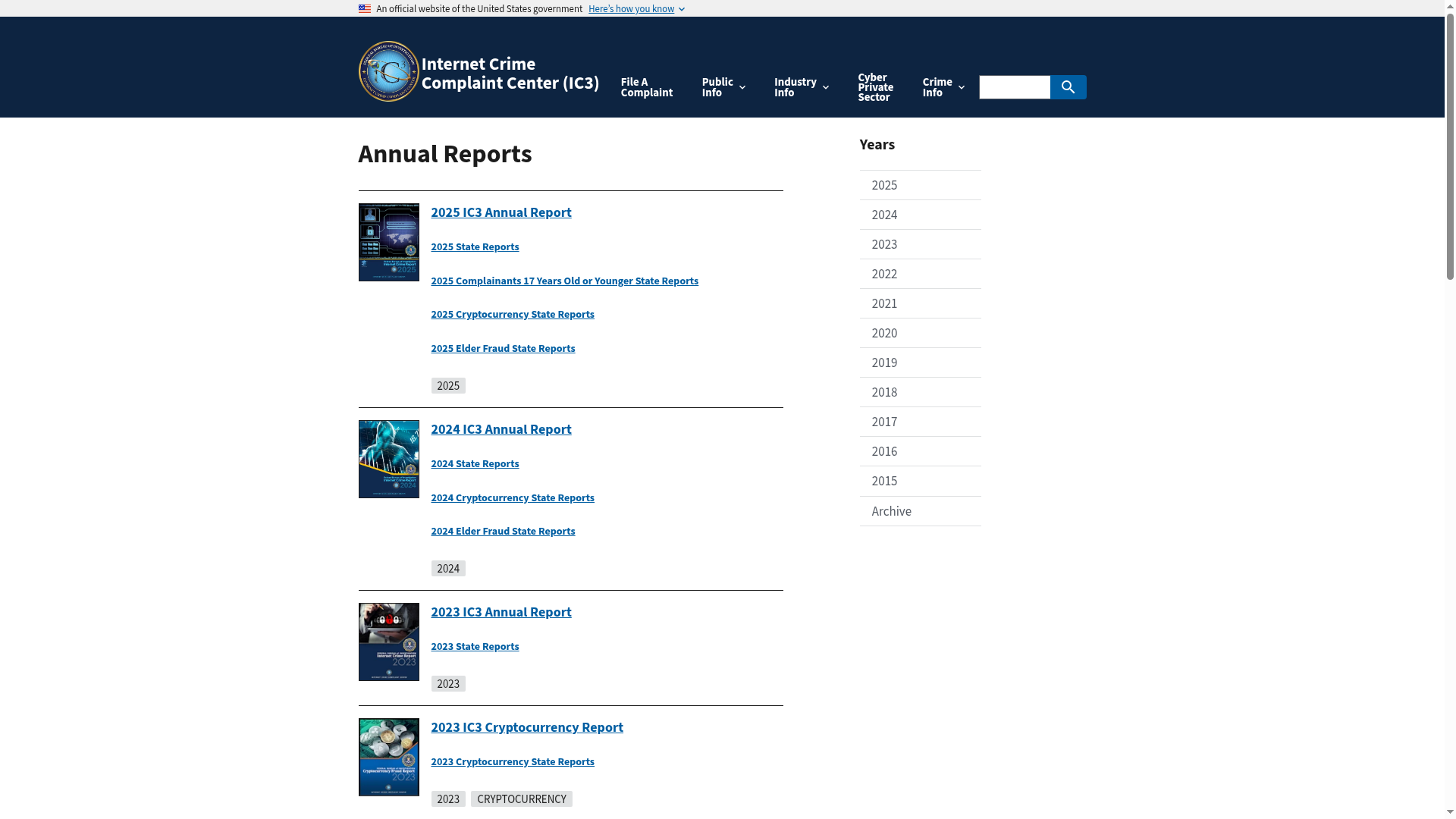
Other registers used in checks of this kind. Each opens the authority's own page.
Primary sources
Every claim above can be checked against the authority's own page. These open on the regulator's site, not ours.
- FBI IC3 — Internet Crime Reportic3.govhttps://www.ic3.gov/AnnualReport/Reports
- Action Fraud (UK) — reportingactionfraud.police.ukhttps://www.actionfraud.police.uk/
- FCA ScamSmartfca.org.ukhttps://www.fca.org.uk/scamsmart
- Financial Conduct Authority — Financial Services Registerregister.fca.org.ukhttps://register.fca.org.uk/
- FCA — Warning list of unauthorised firmsfca.org.ukhttps://www.fca.org.uk/consumers/warning-list-unauthorised-firms
- CFTC — Customer advisories on fraudcftc.govhttps://www.cftc.gov/LearnAndProtect/AdvisoriesAndArticles/index.htm
- ASIC — Professional registersasic.gov.auhttps://asic.gov.au/online-services/search-asics-registers/
Frequently asked
Is it ever legitimate for a legal service to charge upfront for fund recovery?
Legitimate legal firms may charge an initial consultation fee or a retainer for their professional services, but these are for legal work performed, not speculative 'taxes' or 'release fees' for funds not yet recovered. Their fee structures are transparent and tied to their legal services.
How quickly should I report a loss to authorities?
Report financial losses to relevant authorities like the FBI IC3 or Action Fraud immediately. Delays can make it harder to trace funds or gather evidence, reducing the chances of any form of recovery.
Can my bank help if I paid a fraudulent recovery service?
If you paid a fraudulent recovery service via credit card or certain bank transfers, you might be able to initiate a chargeback with your bank or card issuer. This option is often time-sensitive, so contact your bank as soon as you identify the fraud.
What if a recovery service shows me documents that look official?
Fraudulent recovery services often create sophisticated fake documents, including counterfeit bank statements, legal papers, or regulator certificates. Always independently verify any claims or documents directly with the purported issuing authority using their official contact details, not those provided by the service.
Should I trust a service that says they work with regulators or police?
Genuine law enforcement or regulatory bodies do not endorse or partner with commercial fund recovery services in this manner. Any service claiming such a partnership for commercial fund recovery should be regarded with extreme suspicion.
What is the single most important question to ask a fund recovery service?
The single most important question is: 'Will I pay any fees before my funds are verifiably returned to my account?' A legitimate service will either work on a contingency basis or charge for specific, transparent legal work, not speculative upfront costs.