
Key points
- Legitimate discretionary trading requires explicit written agreement and specific regulatory permissions from both the client and the firm.
- An 'assigned account manager' making trades without your direct instruction or a signed discretionary agreement is operating outside standard regulatory practice.
- Verify the identity and regulatory status of anyone claiming to manage your funds by checking official registers like the FCA Financial Services Register or NFA BASIC.
- Unauthorised trading can manifest through unsolicited calls, pressure to deposit more funds, or sudden, inexplicable portfolio changes.
- Report any suspicious activity immediately to your broker and the relevant financial regulators like Action Fraud or the CFTC.
- Your brokerage account login credentials should never be shared, even with someone claiming to be your 'account manager.'
The Unexpected Trade Confirmation
Imagine receiving an email notification: 'Your recent trade order on [Broker Name] has been executed.' The problem? You didn't place any order. This unsettling experience is often the first indication that an unauthorised individual, claiming to be your 'account manager,' has gained access to your trading account. It's a sudden, stark realization that your financial decisions are no longer your own. This scenario, far from rare, illustrates a critical vulnerability for investors engaging with online trading platforms. The promise of personalised assistance can quickly devolve into a nightmare of unexpected transactions and dwindling balances. Your immediate instinct might be to contact the person who introduced themselves as your dedicated manager. However, this very individual might be the source of the problem, operating outside the legitimate boundaries of financial advice and investment management.
The term 'account manager' carries a degree of implied trust, suggesting a professional relationship. Yet, in the context of many online trading operations, especially those with questionable regulatory standing, this title can be a smokescreen. These individuals might pressure clients into depositing more funds, promising improbable returns, while quietly executing trades that benefit themselves or a connected entity, not the client. The core issue is a complete absence of legitimate authorisation to conduct such activities. Without explicit, written consent and regulatory oversight, any person making trades on your behalf is engaging in unauthorised discretionary trading, which presents severe risks to your capital.
Defining Discretionary Authority in Investment
In the financial services sector, 'discretionary trading' refers to an arrangement where an investment professional is granted the authority to make investment decisions and execute trades in a client's account without requiring prior approval for each specific transaction. This authority is not given lightly. It rests on a foundation of trust, explicit legal agreement, and stringent regulatory oversight. For an individual or firm to legitimately offer discretionary management services, they must hold specific licenses and permissions from relevant financial regulators, such as the Financial Conduct Authority (FCA) in the UK or the National Futures Association (NFA) in the US. These permissions ensure that the professional adheres to strict standards of conduct, acts in the client's best interest, and maintains transparency.
A legitimate discretionary agreement is a legal document. It outlines the scope of the manager's authority, the investment objectives, risk tolerances, reporting frequency, and all associated fees. This agreement is signed by both the client and the licensed firm. It also specifies how performance will be measured and how disputes will be handled. The client retains ownership of the assets, but decision-making power for trades is delegated. This structured approach provides a layer of protection and clarity, distinguishing it sharply from the informal, often coercive, arrangements pushed by unauthorised 'account managers.'
The Unauthorised Manager's Modus Operandi
The 'unauthorised account manager' operates in a starkly different manner. This individual typically contacts potential victims through unsolicited calls, social media messages, or seemingly legitimate but ultimately misleading websites. They might promise exclusive access to 'hot' investments or guaranteed profits, creating a sense of urgency. Once a deposit is made, they might request your trading account login details, citing convenience or claiming it's necessary to 'set up' the account. This access, once granted, lets them to execute trades without your direct instruction, effectively engaging in discretionary trading without any legal basis or client consent. Their actions are not governed by professional standards or regulatory frameworks designed to protect investors.
This mode of operation often involves high-frequency trading, often in highly volatile instruments like Contracts for Difference (CFDs) or exotic forex pairs, which can rapidly deplete an account. The unauthorised manager might manipulate account statements or provide fabricated performance reports to obscure losses or to encourage further deposits. They exploit the client's lack of familiarity with trading platforms or regulatory processes. This is distinct from a licensed investment advisor who, even when managing a discretionary account, is bound by fiduciary duties and subject to regular audits and reporting requirements. The unauthorised manager avoids these safeguards entirely, prioritising rapid, often irreversible, capital extraction over client benefit.
A comparison of the key characteristics distinguishing legitimate discretionary management from unauthorised activity.
| Feature | Legitimate Discretionary Management | Unauthorised Activity |
|---|---|---|
| Agreement | Written, explicit, signed authorisation | Verbal or implied consent, no formal document |
| Regulatory Oversight | Firm and individual are licensed for discretionary services | No specific licensing for discretionary trading |
| Communication | Regular, formal statements, performance reports | Irregular, informal updates, pressure-based |
| Account Access | Managed through firm's systems, no direct client login sharing | Often requests client login details, direct instruction for deposits |
| Fees | Clearly disclosed management fees, commissions | Hidden fees, excessive commissions, or demands for direct payments |
The Legal Framework and Licensing Requirements
Regulated financial markets impose strict requirements on entities and individuals offering investment management services. To legally manage client funds on a discretionary basis, firms must obtain specific licenses. For example, in the UK, a firm offering discretionary investment management must be authorised by the Financial Conduct Authority (FCA) and typically holds 'permission for managing investments.' In the United States, investment advisers are generally registered with the Securities and Exchange Commission (SEC) or state securities authorities, and commodities trading advisors (CTAs) with the Commodity Futures Trading Commission (CFTC) and are NFA members. These licenses are not generic; they specify the exact activities a firm is permitted to conduct.
The purpose of these licensing regimes is to ensure that those entrusted with client money possess the necessary expertise, maintain adequate capital, and adhere to a code of conduct designed to prevent conflicts of interest and protect investors. Any 'account manager' who cannot demonstrate such verifiable licensing for discretionary management, both for themselves and their employing firm, is operating outside the bounds of legitimate financial services. This is a fundamental safeguard that consumers must be aware of. The absence of such specific permissions means there is no regulatory body overseeing their actions, leaving investors with little to no protection if things go wrong.
The promise of personalised assistance can quickly devolve into a nightmare of unexpected transactions and dwindling balances if an 'account manager' acts without explicit, verifiable authorisation.
Mei Tanaka
Identifying Warning Signs of Unauthorised Activity
Identifying an unauthorised account manager often begins with recognising atypical communication patterns or unusual demands. A significant warning sign is unsolicited contact, especially through social media or messaging apps, from someone promising extraordinary returns with minimal risk. Legitimate financial professionals rarely initiate client relationships in this manner, particularly with such claims. Pressure tactics are also common: urgency to deposit funds, insistence on sharing personal login details, or threats that an opportunity will be lost if immediate action isn't taken. These are designed to bypass rational decision-making and critical scrutiny.
Another indicator is a lack of transparency regarding the firm's location, regulatory status, or the individual's credentials. If a 'manager' is evasive when asked for details about their firm's licensing or provides only vague answers, this should raise immediate concern. Unauthorised activities also often involve trading strategies that seem overly complex or are explained in jargon that makes little sense. This is the part most guides skip: when you ask for a clear explanation of a strategy, a legitimate professional will simplify, but an illegitimate one will obfuscate, often using complex terms to make you feel out of your depth, thus encouraging you to cede control. Unexpected losses or gains that don't align with market movements, or difficulties withdrawing funds, are also critical red flags. Always question anything that feels off; your intuition is a valuable defense.
Verifying Your 'Account Manager's' Legitimacy
The single most effective defense against unauthorised account management is proactive verification. Do not rely solely on what an individual tells you or what appears on their website. Instead, independently verify their claims using official government and regulatory databases. For instance, if someone claims to be based in the UK, visit the Financial Conduct Authority's (FCA) Financial Services Register. You can search for the firm's name and the individual's name. This register will confirm if they are authorised, what specific activities they are permitted to undertake, and their official contact details. If the firm or individual is not listed, or if their permissions do not include 'managing investments,' they are likely operating without authority.
Similarly, for US-based entities, the National Futures Association's (NFA) BASIC system or the CFTC's Registration Deficient (RED) List are essential tools. These resources allow you to check the background and affiliation status of individuals and firms. Always cross-reference the contact information provided by the 'account manager' with the details on the official register. Many unauthorised entities create sophisticated fake websites or clone legitimate ones. Using the official regulatory links ensures you are accessing accurate, up-to-date information. This procedure should be a standard practice before committing any funds or sharing personal information, however convincing the initial interaction might seem.
Essential information and resources for verifying the legitimacy of an alleged account manager and their firm.
| Detail to Verify | Where to Check | Purpose |
|---|---|---|
| Individual's Name | FCA Financial Services Register, NFA BASIC | Confirm registration, disciplinary history |
| Firm's Name | FCA Financial Services Register, ASIC Professional Registers, CySEC Regulated entities register | Confirm firm's license for investment activities |
| License Number | Official regulator websites | Match against records to ensure validity |
| Contact Details | Firm's official website, regulatory registers | Cross-reference phone numbers and emails to avoid impersonation |
| Discretionary Authority | Signed discretionary agreement with the licensed firm | Confirm explicit client permission was granted |
Common Tactics Employed by Unauthorised Operators
Unauthorised operators often rely on a playbook of deceptive tactics to gain trust and access funds. One prevalent method is the 'pump and dump,' where they rapidly inflate the value of obscure, illiquid assets by executing numerous trades in client accounts, then sell off their own holdings at the inflated price, leaving clients with worthless positions. They might also pressure clients into signing digital forms that are deceptively worded to grant trading authority, often without the client fully understanding the implications. Another common approach involves a 'deposit bonus' scheme: clients are offered a substantial bonus if they deposit more funds, but these bonuses come with impossible trading volume requirements, effectively locking in the client's initial capital.
These operators frequently target individuals with promises of exponential growth. For example, they might claim to turn an initial $1,000 deposit into $10,000 within a month through a 'proprietary algorithm.' In reality, these claims are unsustainable and are designed solely to encourage larger deposits. The funds might not even be traded on a real market; instead, they could be diverted directly to the perpetrators. It is crucial to understand that legitimate financial markets do not offer guaranteed high returns, and any such promise is a definitive sign of an illegitimate operation. The goal is to separate you from your money, not to grow it.
The Financial Impact and Your Recourse
If you discover unauthorised trading on your account, the immediate financial impact can be devastating, ranging from minor losses to complete capital depletion. Your recourse hinges on swift action and detailed documentation. First, contact your brokerage firm's compliance or fraud department directly. Clearly state that unauthorised transactions have occurred and demand an immediate halt to all activity on your account. Change all passwords and enable two-factor authentication if you haven't already. Gather all evidence: screenshots of trades, communication logs with the 'account manager,' bank statements showing deposits, and any contractual agreements.
Next, report the incident to the appropriate financial regulators and law enforcement. In the UK, Action Fraud is the national reporting centre for fraud and cybercrime. In the US, reports can be made to the Federal Trade Commission (FTC) or the FBI's Internet Crime Complaint Center (IC3). For issues related to futures and options, the Commodity Futures Trading Commission (CFTC) offers specific avenues for reporting. Be aware that recovering lost funds can be a lengthy and challenging process. This is where the second practitioner aside comes in: in practice, while brokers have internal dispute resolution, recovering funds from an entity operating outside regulatory jurisdiction is exceedingly difficult, showing the preventative power of early verification. The faster you act, the greater the chance of freezing funds or reversing transactions, though success is never guaranteed.
Safeguarding Your Investment Account
Preventing unauthorised account management requires a vigilant approach to your online security and financial interactions. Always use strong, unique passwords for your trading accounts and enable two-factor authentication (2FA) wherever available. This adds a critical layer of security, making it significantly harder for unauthorised individuals to gain access, even if they somehow obtain your password. Regularly monitor your account statements and transaction history. Any discrepancies, no matter how small, warrant immediate investigation. Do not dismiss an unusual trade as a 'mistake' without first confirming its legitimacy.
Be highly skeptical of unsolicited contact from individuals or firms offering investment opportunities. If an offer sounds too good to be true, it almost certainly is. Legitimate investment opportunities are typically communicated through established, regulated channels, not aggressive cold calls or social media pitches. Exercise extreme caution with online platforms; ensure you are on the official website of your chosen broker by carefully checking the URL. Phishing attempts, where fraudsters create fake websites to steal login credentials, are a constant threat. Your proactive diligence is the strongest barrier against these predatory practices.
Broker's Role and Responsibilities
Regulated brokerage firms carry significant responsibilities in safeguarding client accounts and preventing unauthorised activity. They are obligated to have strong 'Know Your Customer' (KYC) procedures to verify client identity and source of funds. They must also implement strong internal controls and security measures to protect client data and prevent unauthorised access to trading accounts. When a client alleges unauthorised trading, the broker is expected to conduct a thorough internal investigation, which typically involves reviewing trade logs, communication records, and account access histories. This process aims to determine if the trades were executed without proper client authorisation or if there was a compromise of client credentials.
While brokers strive to maintain secure systems, they also rely on clients to protect their own login details. If a client knowingly shares credentials, it complicates the broker's ability to protect them. However, brokers are still expected to act with due diligence. If an account shows highly unusual trading patterns that deviate significantly from a client's stated risk profile, a responsible broker might flag this activity. The outcome of such investigations varies based on the specifics of each case and the evidence presented. It serves as a reminder that the responsibility is shared: brokers provide secure platforms, but clients must also exercise caution and protect their account information diligently.
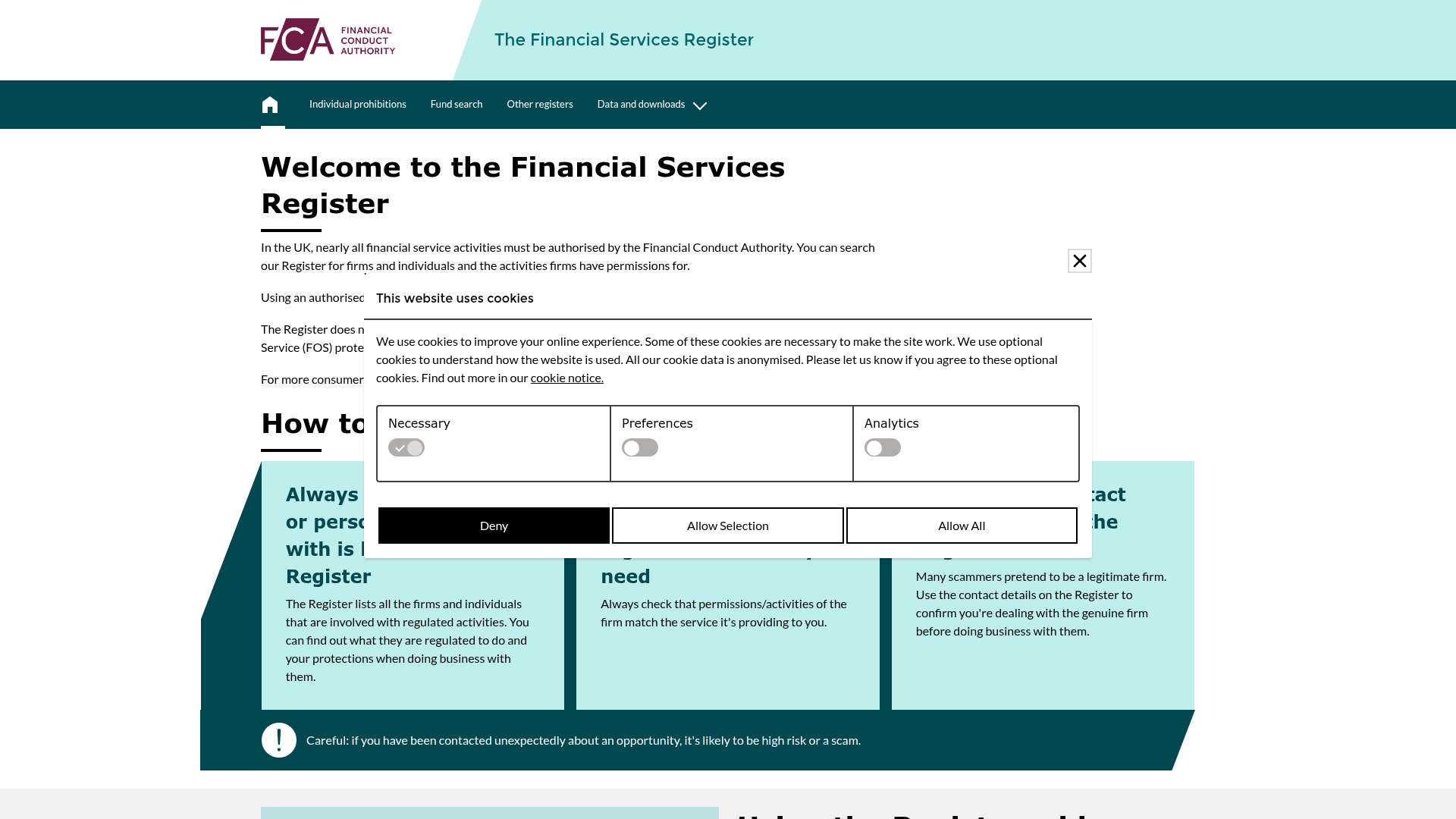
The page we check
This is the authority's own page, captured as we found it. Open it and run the same search yourself — nothing on this register replaces the source.
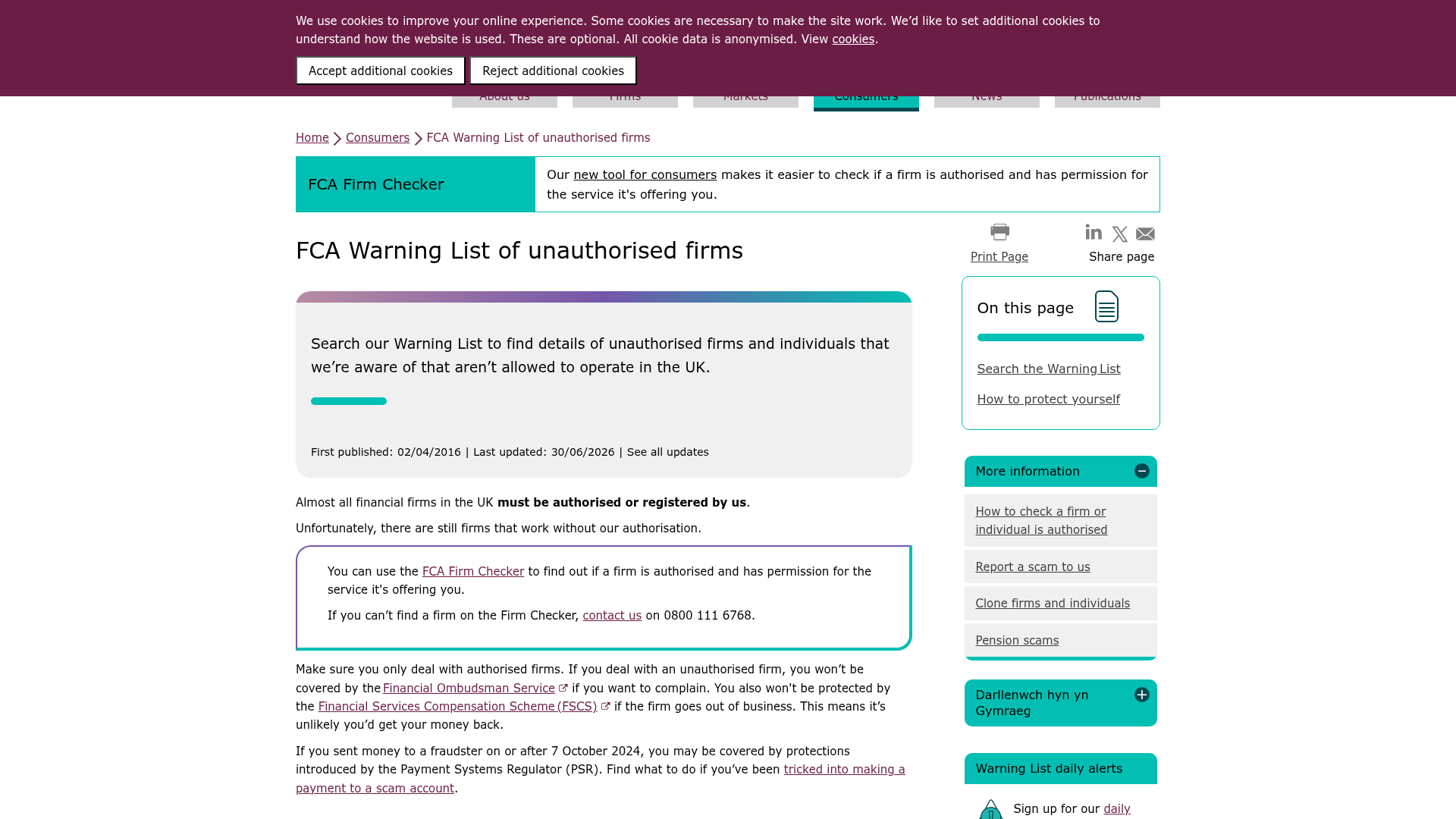
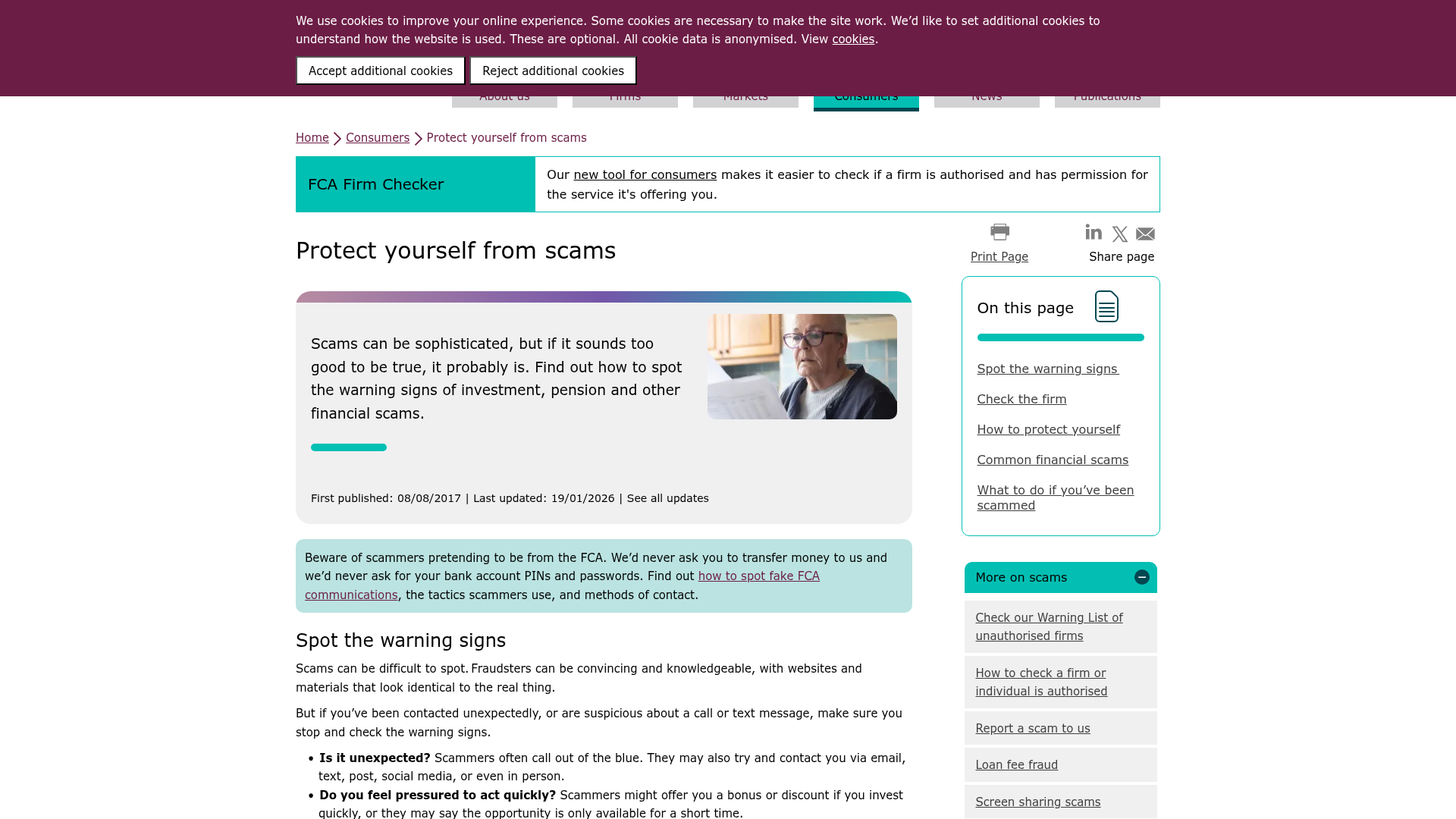
Other registers used in checks of this kind. Each opens the authority's own page.
Primary sources
Every claim above can be checked against the authority's own page. These open on the regulator's site, not ours.
- Financial Conduct Authority — Financial Services Registerregister.fca.org.ukhttps://register.fca.org.uk/
- NFA BASIC — background affiliation statusnfa.futures.orghttps://www.nfa.futures.org/basicnet/
- Action Fraud (UK) — reportingactionfraud.police.ukhttps://www.actionfraud.police.uk/
- CFTC — Customer advisories on fraudcftc.govhttps://www.cftc.gov/LearnAndProtect/AdvisoriesAndArticles/index.htm
- FBI IC3 — Internet Crime Reportic3.govhttps://www.ic3.gov/AnnualReport/Reports
Frequently asked
What exactly is a 'discretionary account manager'?
A legitimate discretionary account manager is an individual or entity authorised by a licensed investment firm and explicitly by the client through a signed agreement to make investment decisions and execute trades on the client's behalf without requiring specific approval for each transaction.
How can I tell if my account manager is legitimate?
Verify their identity and the firm they represent directly through official regulatory registers like the FCA Financial Services Register or NFA BASIC. Ensure they have explicit permission to manage your account and that this is documented by your broker.
My 'account manager' guarantees high returns. Is this normal?
No. Any guarantee of high, consistent returns, particularly those that sound too good to be true, is a significant warning sign of potential fraud. Legitimate investment professionals are prohibited from guaranteeing returns.
What if I shared my login details with someone who claimed to be my account manager?
Immediately change your password, enable two-factor authentication, and contact your brokerage firm's fraud department. Report the incident to relevant financial authorities like Action Fraud or the FTC.
Can my broker be held responsible for unauthorised trades?
If a regulated broker allows unauthorised trading on your account without proper discretionary authorisation or fails to implement adequate security measures, they may bear some responsibility. However, if you negligently shared credentials, your recourse might be limited.
How long do I have to report unauthorised trading?
Timeframes vary, but generally, you should report any suspicious activity as soon as you notice it. Delays can complicate investigation and recovery efforts, so act promptly.
Is social trading or copy trading the same as discretionary trading?
No, they are distinct. Social or copy trading typically involves you choosing to automatically replicate the trades of another trader, maintaining control over your account. Discretionary trading involves a manager making decisions on your behalf.